A Boost Leak Test is the fastest way to find where your diesel engine is losing pressurized air before it ever reaches the cylinders, and skipping it is why so many turbo complaints get misdiagnosed. When a truck feels sluggish, burns more fuel, or throws a P0299, a leak in the charge air system is one of the first things a sharp mechanic checks. At PT Turbo we have been in the turbocharger business for more than 45 years, and we can tell you that many of the “bad turbos” that come in for testing are actually healthy units starving for air because of a cracked boot or a loose clamp.
This guide walks through what a boost leak is, how to test for one properly, and how to fix it without throwing parts at the problem. It applies to Cummins, Detroit, Volvo, CAT, Duramax, Power Stroke, and just about any turbodiesel running a pressurized intake tract.
What a Boost Leak Actually Is
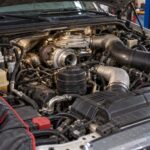
Your turbocharger compresses intake air and pushes it through the charge air cooler, the piping, and the intake manifold. Every joint, clamp, boot, and gasket in that path is a potential leak point. When one fails, boost pressure escapes to atmosphere instead of filling the cylinders.
The engine’s MAP sensor sees less pressure than the ECM commands, so the ECM keeps asking for more boost. On variable geometry setups the vanes swing hard, on wastegated units the actuator stays closed longer, and the turbo works harder to compensate. You end up with a turbo running past its efficiency island, higher exhaust temps, and a driver complaining about no power.
Common leak points on a heavy-duty diesel include:
- Silicone intake boots that harden and crack with heat cycling
- Worn T-bolt and worm-gear clamps that lose tension
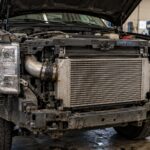
- Cracked charge air cooler end tanks or internal tube failures
- Failed intake manifold gaskets
- Damaged O-rings at the compressor outlet and CAC connections
- Deteriorated EGR and crossover pipe gaskets
Symptoms of a Boost Leak by Severity
Not every leak throws a code. Small leaks often hide as a fuel economy problem for months before anyone notices. Use the table below to gauge how bad the leak likely is based on what the truck is doing.
| Severity | Symptoms | Typical Cause |
|---|---|---|
| Minor | Slight MPG drop, faint whistle under load, no codes | Loose clamp, aging boot, minor O-ring seep |
| Moderate | Noticeable power loss, higher EGT, occasional P0299 | Cracked boot, weak clamp, small CAC crack |
| Severe | Heavy black smoke, hard derate, loud hiss, persistent underboost codes | Blown boot, split CAC tank, failed manifold gasket |
If you are chasing an underboost code specifically, read our full P0299 turbocharger underboost diagnosis guide. A boost leak and a failing actuator produce nearly identical symptoms, so you want to rule out the cheap fixes first.
How to Perform a Boost Leak Test
The concept is simple. You seal off the intake tract, apply regulated shop air, and listen for where it escapes. Here is how we do a proper Boost Leak Test in the shop.
What You Need
- A boost leak tester adapter sized to your intake or CAC inlet, or a fabricated block-off plate with an air fitting
- Regulated shop air, set low to start
- Soapy water in a spray bottle
- A helper or a mechanic’s stethoscope for listening
Step-by-Step Procedure
1. Locate the test points. Disconnect the intake piping at the compressor inlet or the charge air cooler inlet. Most techs cap the cold-side pipe going into the intake and pressurize from the turbo outlet side.
2. Install the adapter. Seal the open ends of the charge air system so the only opening is your air fitting. Do not forget the crankcase and any sensor ports that vent into the tract.
3. Apply air slowly. Start around 5 psi and work up to the engine’s normal peak boost, but never exceed it. On many medium and heavy-duty diesels that is 25 to 40 psi. Overpressurizing can pop a healthy boot or damage the CAC.
4. Listen and look. A steady hiss points you to the leak. Spray soapy water on every joint, clamp, and seam. Bubbles reveal leaks you cannot hear over shop noise.
5. Watch the gauge. If pressure holds steady with the air valve closed, the system is tight. If it bleeds down, you have a leak, even if you have not found the exact spot yet.
A properly sealed charge air system should hold pressure with only a slow, gradual drop. Rapid pressure loss means a significant leak that will absolutely affect performance.
Ruling Out the Turbo and Actuator
Once the piping and CAC pass the test, turn your attention to the turbo itself. A worn wastegate, a sticking VGT mechanism, or a failed actuator can mimic a boost leak because the turbo never builds commanded pressure.
The variable geometry turbocharger depends on a healthy actuator to position the vanes. If the actuator diaphragm ruptures or the linkage seizes, boost control goes out the window. On pneumatic units, disconnect the signal line and apply regulated air to confirm the actuator strokes fully and holds.
Swapping a tired actuator often restores full boost without touching the turbo itself, which is exactly the kind of money-saving diagnosis a good Boost Leak Test leads you to.
You can browse manufacturer specs directly at Garrett Motion and BorgWarner if you need to confirm part fitment before ordering.
Fixing the Leak the Right Way
Once you have pinpointed the leak, fix the root cause rather than patching it. Here is how we handle each type.
Clamps and Boots
Replace worn worm-gear clamps with T-bolt clamps where the application allows. They apply even clamping force around the full circumference and hold up far better under vibration. Any boot that is hard, cracked, or oil-swollen gets replaced, not reused.
Charge Air Cooler
A cracked CAC end tank or a split internal tube cannot be reliably repaired in the field. Pressure test the cooler off the truck if you suspect it, and replace it if it fails. A weeping CAC will only get worse under road vibration.
Gaskets and O-Rings
Intake manifold and crossover gaskets should be replaced with OEM-quality parts and torqued to spec. Never reuse a compressed O-ring at the compressor outlet. These are cheap parts that cause expensive misdiagnoses.
The Turbo Itself
If testing shows the turbo is worn, shaft play is excessive, or the VGT is coked up, replacement or a rebuild is the fix. Our turbo rebuild service restores units to spec, and we also stock quality remanufactured turbochargers ready to ship. You can also shop all turbos by application.
New vs Remanufactured: What Makes Sense
When a leak turns out to be a failed turbo, the next question is new or reman. Both have their place depending on budget and how long you plan to keep the truck.
| Factor | New Turbocharger | Remanufactured Turbocharger |
|---|---|---|
| Upfront cost | Highest | 30 to 50 percent less |
| Components | All new | New wear parts, inspected core |
| Warranty | Full OEM | Backed warranty from PT Turbo |
| Best for | New builds, long-haul fleets | Cost-conscious repairs, older trucks |
For platform-specific advice, our application guides cover the most common heavy-duty units.
The right call usually comes down to how the numbers pencil out against the truck’s remaining service life. A reman unit with new wear parts and a backed warranty carries most trucks through many more years of hard work, while a fresh build or a high-mileage fleet truck often justifies the full new cost up front.
Whatever you land on, the Boost Leak Test is what keeps you from spending that money before you have to. Confirm the piping, the CAC, and the actuator are tight first, and you will know the turbo is the real problem instead of guessing at it.
Frequently Asked Questions
What is a boost leak test?
A boost leak test pressurizes the charge air system to reveal where a diesel engine is losing boost before it reaches the cylinders. It’s the fastest way to diagnose leaks that cause power loss and codes like P0299.
What are the symptoms of a boost leak on a diesel truck?
Common symptoms include sluggish acceleration, reduced power, increased fuel consumption, excessive smoke, and a P0299 underboost code. A hissing sound under load can also indicate a leak.
How do you find a boost leak?
You pressurize the intake system with a boost leak tester and listen or spray soapy water to locate escaping air at hoses, clamps, intercooler connections, or gaskets. Any bubbling or hissing points to the leak.
Need a Turbocharger?
PT Turbo has rebuilt and sold turbochargers since 1978. We stock remanufactured units for Cummins, Duramax, Power Stroke, Detroit Diesel, and more — backed by a 12-month unlimited mileage warranty and same-week shipping from San Bernardino, CA.
📞 (909) 824-1020 · 346 S I St. #3, San Bernardino, CA 92410 · [email protected]