How a Failed EGR Kills Your Turbocharger: Symptoms & What to Replace First
Understanding how a failed EGR kills your turbocharger starts with one simple fact: the two systems share the same exhaust stream, and when the EGR valve or cooler fails, everything downstream pays the price. At PT Turbo, we have been rebuilding turbochargers since 1978, and we regularly tear down units where the root cause was never the turbo at all. It was a clogged, stuck, or leaking Exhaust Gas Recirculation system feeding the turbine soot, carbon, and heat it was never designed to handle.
This article breaks down the mechanical connection between these two components, the symptoms that show up first, and exactly what you should inspect and replace before you spend money on a new center cartridge.
How the EGR and Turbocharger Share a Fate
The EGR system recirculates a portion of exhaust gas back into the intake to lower combustion temperatures and cut NOx emissions. On most modern diesels, that recirculated gas is pulled from the exhaust manifold before or around the turbine housing.
When the EGR valve sticks open or the cooler cracks, the balance of exhaust flow changes. Exhaust that should have driven the turbine wheel is diverted into the intake instead, and the extra EGR raises soot output from combustion. Over time that sootier exhaust coats the variable geometry vanes, the actuator linkage, and the turbine housing itself.
A healthy turbocharger depends on clean, consistent exhaust flow to spool correctly. Disrupt that flow with a failed EGR and you get uneven thermal loading, carbon buildup, and eventually a seized VGT mechanism.
How a Failed EGR Kills Your Turbocharger: The Chain of Damage
Not every EGR fault ends in a failed turbo, but when it does, the failure rarely happens all at once. It is a progression, and knowing the stages helps you catch it before the turbo is destroyed.
Stage 1: Carbon Fouling on the VGT Vanes
A leaking or stuck-open EGR valve sends too much exhaust back into the intake; the engine then burns dirtier, and more soot leaves through the turbine. On a variable-geometry turbocharger, that soot cakes onto the movable vanes. The vanes start to stick, boost response gets lazy, and you feel a flat spot on acceleration.
Stage 2: Sticking Actuator and Linkage
As carbon accumulates, the actuator that moves the vane ring has to fight increasing resistance. It over-strokes, hunts for position, and eventually throws boost pressure codes. This is the point where many owners replace the turbo when the actual failure is a worn-out actuator on a vane mechanism that still moves freely, which could have been swapped for a fraction of the cost.
Stage 3: Overspeed and Thermal Fatigue
A stuck-closed vane position drives the turbine past its target speed, causing overboost and overspeed. Combined with the higher exhaust temperatures that poorly cooled EGR gas causes, you get thermal fatigue cracks in the turbine housing and bearing wear from the excess RPM.
Stage 4: Total Failure
The final stage is a seized center cartridge, a bent shaft, or a cracked housing. By now the repair is a full rebuild or replacement, when a far cheaper part earlier in the timeline would have saved the whole unit.
Symptoms of EGR-Induced Turbo Failure by Severity
Catching this early is the difference between a cheap actuator swap and a full turbo replacement. Here is how the symptoms line up with the stage of damage.
| Severity | Symptoms | Likely Fix |
|---|---|---|
| Early | Sluggish throttle response, mild loss of boost, occasional black smoke | Clean EGR valve, inspect and clean VGT vanes |
| Moderate | Boost pressure codes (P0299/P0234), actuator hunting, whistling under load | Replace actuator, service EGR cooler |
| Severe | Limp mode, heavy smoke, oil in intake, loud grinding or whining | Remanufactured turbo or full rebuild |
If you are chasing a P0299 (underboost) or P0234 (overboost) code, do not assume the turbo is dead. In our experience, the actuator or a fouled vane ring is the culprit more often than a spun bearing.
What to Replace First: Start With the Actuator
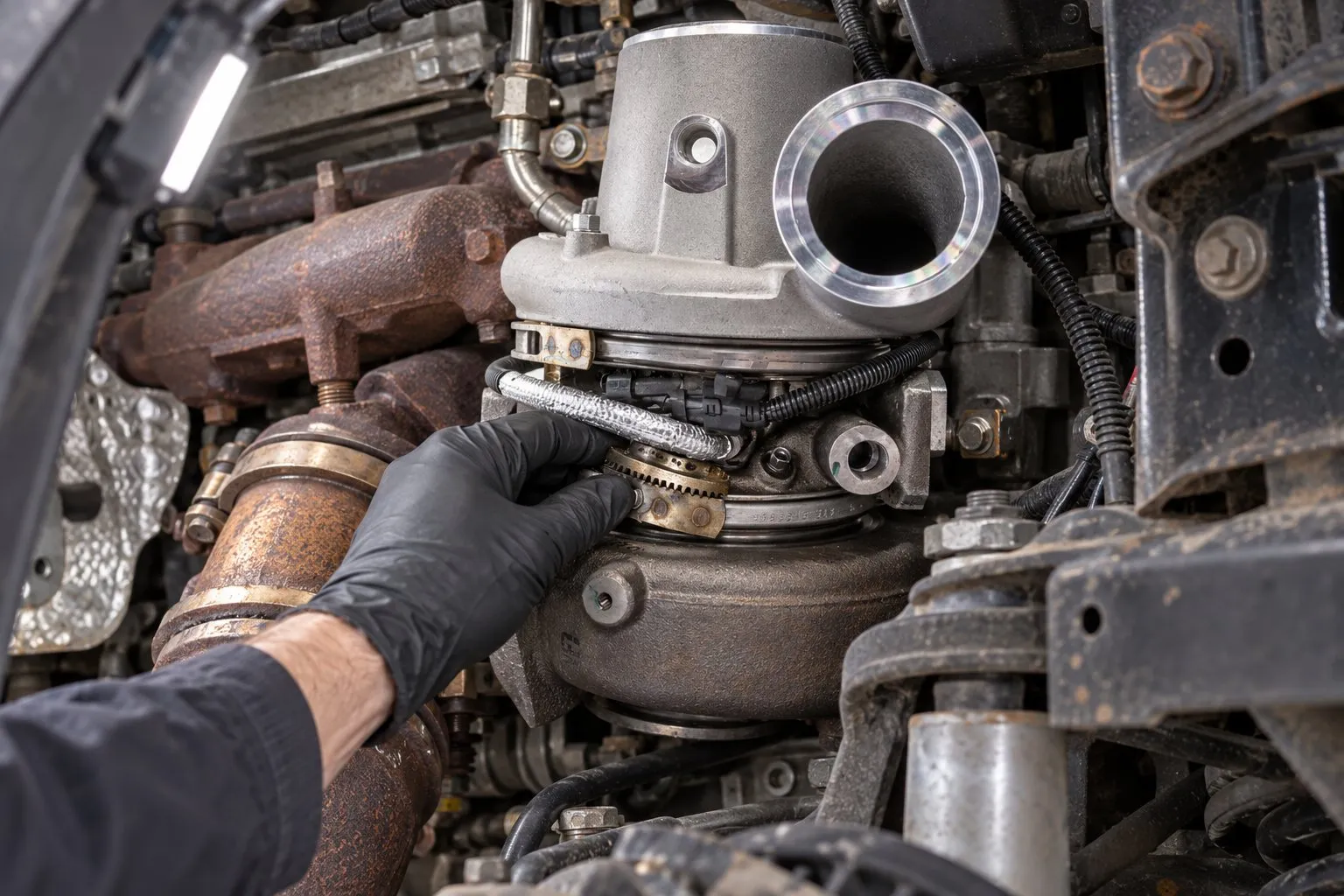
Before you condemn a turbocharger, the smart money is on the turbo’s actuator or vane control and the EGR components. A sticking or failed actuator produces nearly identical symptoms to a failing turbo, but it costs far less to replace.
The actuator controls vane position on the VGT unit. When carbon from a failed EGR builds up, it binds the vane mechanism inside the turbo, and the actuator that has to move it takes the abuse. Check that the mechanism moves freely first; if it does, a new actuator is a straightforward repair that often restores full boost.
Match the actuator to your turbo model and part number before ordering. If you are not sure which unit you have, our team can cross-reference it for you through our contact page.
Inspecting and Servicing the EGR Itself
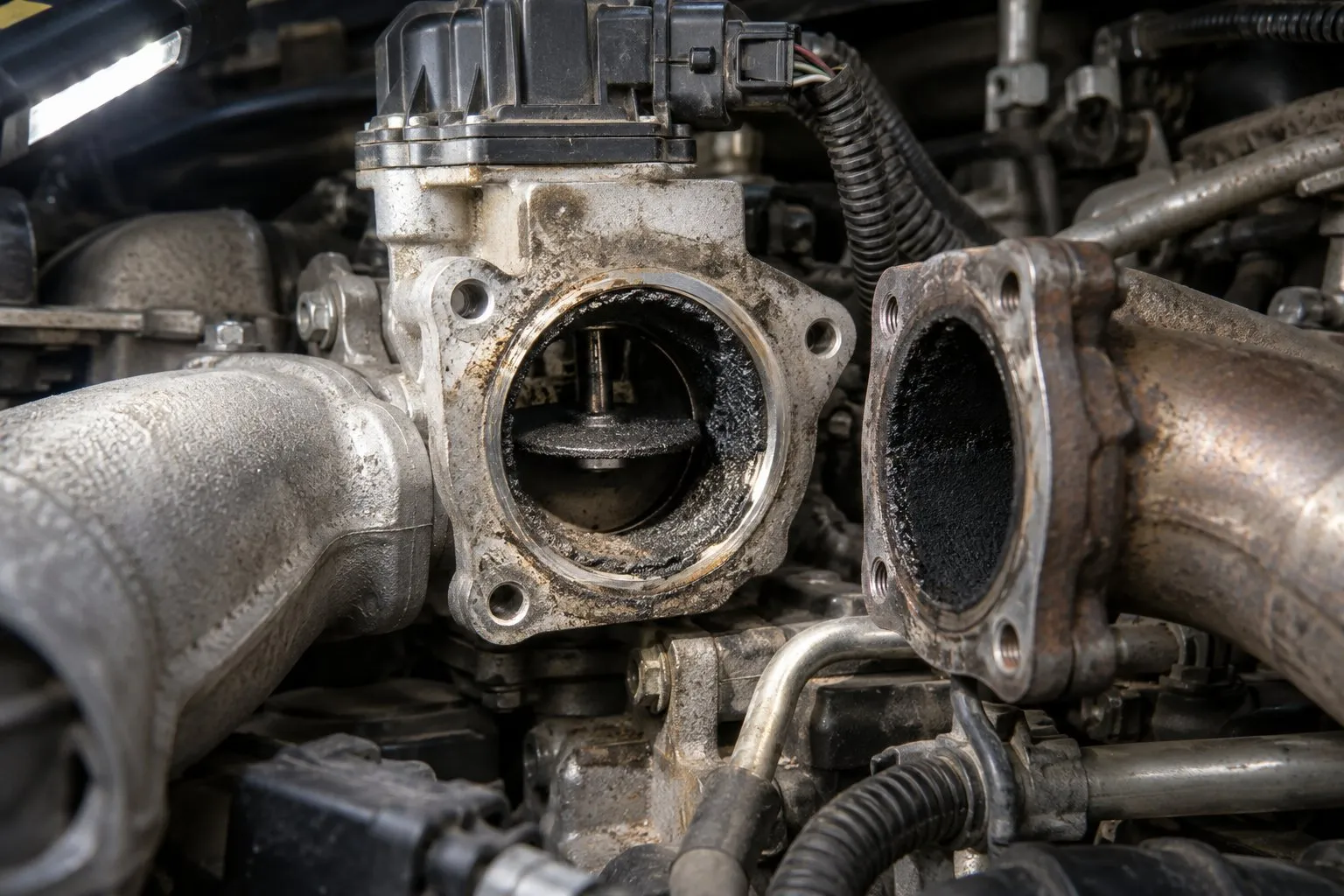
Replacing the actuator without fixing the EGR is like changing your oil without replacing the filter. The soot source is still there, and it will foul the new part.
Follow this inspection order once you have the symptoms diagnosed:
- EGR valve: Check for carbon buildup and confirm it seats fully closed. A valve stuck open floods the intake with exhaust gas, which raises soot output and black smoke.
- EGR cooler: Pressure test for internal cracks. A leaking cooler puts coolant into the EGR gas and on into the cylinders, causing coolant loss, white smoke and a hydrolock risk.
- Intake and charge piping: Look for oil and soot accumulation, a sign the problem has been going on for a while.
- VGT vanes: Manually check for free movement. Sticky vanes show heavy soot in the exhaust, which a stuck-open EGR valve can add to.
If your diesel is also equipped with a diesel particulate filter, a failing EGR will drive up DPF regeneration frequency too, so watch for frequent regens as an early warning sign.
When the Turbo Is Already Gone: Reman vs New
If you caught the failure late and the center cartridge is toast, you have two solid options: a remanufactured unit or a full rebuild of your existing turbo. Both restore factory performance when done correctly.
Our remanufactured turbochargers are built to OEM tolerances with new bearings, seals, and balanced rotating assemblies. If you prefer to keep your original housing and core, our turbocharger rebuild service handles it in house.
| Option | Typical Cost | Lead Time | Best For |
|---|---|---|---|
| Brand New OEM Turbo | Highest | Immediate if in stock | Warranty-sensitive fleets, latest models |
| Remanufactured Turbo | Lower than new | Ships from stock | Best value with OEM reliability |
| Rebuild Your Core | Lowest | Turnaround by application | Keeping matched original hardware |
Because PT Turbo stocks both new and remanufactured parts across Holset, BorgWarner, Garrett, Mitsubishi, and more, you are not stuck waiting on a single supplier. Browse everything on our turbo shop or reach out for a cross-reference.
Preventing Repeat Failures
Once the turbo and EGR are back in service, a few habits keep the cycle from repeating.
- Service the EGR valve and cooler on schedule instead of running them to failure.
- Use quality fuel and allow the turbo to cool down before shutdown to reduce carbon coking.
- Address boost codes immediately rather than clearing them and driving on.
- Check the vane mechanism and actuator during any EGR service, since soot from a faulty EGR is a common reason they stick.
None of these habits take much shop time, but together they break the carbon cycle that takes out EGR components and turbos in the same stroke. The operators who log the fewest repeat failures are the ones treating the EGR and turbo as a single system, not two separate repairs.
Stay ahead of the soot and you protect the one expensive part in the chain. Catch the actuator and EGR early, and the turbo has a far better chance of reaching a full service life.
Frequently Asked Questions
Can a bad EGR valve really damage my turbocharger?
Yes. A failed EGR valve or cooler sends carbon buildup and improper exhaust flow downstream, which can clog and destroy your turbocharger over time.
What are the symptoms of a failed EGR affecting the turbo?
Common signs include loss of power, excessive smoke, poor fuel economy, unusual noises, and check engine lights tied to boost or exhaust flow issues.
Should I replace the EGR or the turbocharger first?
Always diagnose the EGR system first, since a faulty EGR is often the root cause. Replacing only the turbo without fixing the EGR will lead to repeat failures.
Need a Turbocharger?
PT Turbo has rebuilt and sold turbochargers since 1978. We stock remanufactured units for Cummins, Duramax, Power Stroke, Detroit Diesel, and more — backed by a 12-month unlimited mileage warranty. Units in stock at our shop in San Bernardino, CA ship the same day when ordered before 2 PM Pacific, Monday through Friday.
📞 (909) 824-1020 · 346 S I St. #3, San Bernardino, CA 92410 · [email protected]