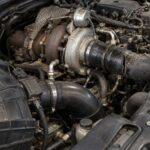
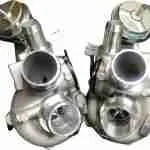
Turbine wheel damage from foreign object ingestion is one of the most common catastrophic failures we see come across the bench at PT Turbo, and it almost never happens because the turbo itself was defective. Something entered the exhaust stream, or worse, the intake stream, and slammed into a wheel spinning north of 100,000 RPM. The result is bent blades, chunks of missing metal, and a turbo that either underperforms or grenades entirely.
Understanding how this damage occurs, how to diagnose it correctly, and what your real repair options are will save you from throwing parts at a problem that keeps coming back. After 45+ years rebuilding turbochargers, we have learned that the failed turbo is usually the symptom, not the disease.
How Foreign Objects Destroy a Turbine Wheel
A turbocharger has two wheels: the compressor wheel on the cold side (intake) and the turbine wheel on the hot side (exhaust). The turbine wheel is driven by exhaust gas, so anything that breaks loose upstream of it, valve fragments, injector tips, glow plug pieces, or carbon chunks, gets fired directly into those blades.
At operating speed, even a small piece of debris carries enormous kinetic energy. A fragment the size of a rice grain can shear a blade tip clean off. Once one blade is compromised, the wheel goes out of balance, and the resulting vibration destroys the bearings and seals within seconds.
The compressor side sees a different threat. Rags, shop towels, bolts left in the intake tract, or a collapsed air filter get pulled into the compressor wheel. If you see damage on the cold side, the problem originated in the intake plumbing, not the engine.
Common Sources of Turbine-Side Debris
- Broken exhaust valve or valve seat fragments
- Failed injector tip or pre-cup material
- Piston or ring land failure sending debris out the exhaust port
- Glow plug tips (common on light-duty diesels)
- Carbon buildup breaking loose after an aggressive regen cycle
- EGR system debris migrating through the exhaust path
Diagnosing Turbine Wheel Damage from Foreign Object Ingestion
Before you condemn the turbo, confirm the damage and find the source. A visual inspection tells you almost everything if you know what to look for.
Pull the exhaust downpipe or the turbine housing outlet and shine a light on the turbine wheel. Rotate it by hand. Look for bent, folded, or missing blade tips. Nicks and gouges on the leading (inlet) edge of the blades are the signature of ingested debris. From the outlet you see the exit side of the blades, so look through the turbine inlet as well, with the up-pipe off or with a borescope.
Next, check the shaft. Grab the wheel and push in, out, and side to side. Excessive axial or radial play means the bearings are already gone. Any grinding or roughness when you spin it confirms internal contact.
Symptom Severity Chart
| Severity | What You’ll See | Driving Symptoms | Turbo Salvageable? |
|---|---|---|---|
| Minor | Small nicks on 1-2 blade tips, no shaft play | Slight loss of boost, minor whistle | Only with a new wheel and a rebalance |
| Moderate | Multiple bent blades, minor shaft play | Noticeable power loss, boost codes, smoke | Rebuild recommended |
| Severe | Missing blades, heavy shaft play, oil leak | No boost, loud grinding, blue/black smoke | Replace core |
| Catastrophic | Wheel disintegrated, housing scored | Sudden power loss, metal in intercooler | Full replacement |
If the ECM has logged boost-related codes, they help confirm the story. A P0299 underboost code is extremely common with turbine damage because the wheel can no longer make target boost. On the flip side, variable geometry stuck in the closed position can throw a P0234 overboost code. Either way, read the freeze-frame data before you start wrenching.
Find the Source Before You Replace Anything
This is the step most shops skip, and it is why the second turbo fails just like the first. If you install a fresh turbo without finding where the debris came from, you are feeding it right back into the wheel.
Trace the debris path. Turbine-side damage means you inspect upstream: the exhaust manifold, the exhaust ports, valves, and cylinders. Borescope every cylinder. Check for a dropped valve, broken glow plug, or piston failure.
Compressor-side damage means you inspect the intake tract from the air filter box forward. Look for a torn filter, missing hardware, or a collapsed intake hose.
Do not forget the intercooler and charge pipes. If the compressor wheel shed material, those fragments are sitting in the intercooler waiting to get sucked into the engine. Flush the intercooler thoroughly or replace it.
Repair vs. Replace: Your Real Options
Once you have confirmed the damage and the source, you have three legitimate paths forward. The right choice depends on severity and your budget.
Option 1: Professional Rebuild
If the damage is limited to the wheel and the housing is intact, a professional rebuild is the most cost-effective route. A proper rebuild includes new bearings, seals, a new shaft and wheel in place of the damaged one, and a balanced rotating assembly. Our turbo rebuild service handles this on a wide range of Garrett, BorgWarner, Holset, and Mitsubishi units.
Balancing is non-negotiable here. A rebuilt turbo that is not VSR (high-speed) balanced will vibrate itself to death. This is where a shop with 45+ years of experience separates itself from a parts-swapper.
Option 2: Remanufactured Turbo
When the core is too far gone or you need the truck back on the road fast, a remanufactured turbocharger is the smart move. Reman units are torn down to the core, cleaned, fitted with new internals, and tested to OEM spec. You get near-new reliability at a fraction of new-unit cost.
Option 3: New Turbocharger
For a catastrophic failure or a critical fleet application where downtime is not an option, a new turbo makes sense. You can browse our full inventory in the PT Turbo shop, where we stock both new and remanufactured units.
| Option | Relative Cost | Turnaround | Best For |
|---|---|---|---|
| Rebuild | Lowest | 3 to 5 business days after inspection | Light-to-moderate damage, intact housing |
| Remanufactured | Mid | Same/next day (in stock) | Severe damage, fast turnaround |
| New | Highest | In stock or ordered | Catastrophic failure, critical fleet units |
Don’t Overlook the Actuator
Foreign object damage often coincides with a failed or sticking actuator, especially on wastegated and variable-geometry turbos. If debris caused an overspeed event, the actuator may have been overworked, and a worn actuator can cause the boost swings that mask or worsen turbine problems. If you are chasing a P003A boost control code, check the vane control at the same time as the turbo.
Matching the correct actuator to your turbo model is critical for proper boost control.
Preventing a Repeat Failure
The best repair is the one you only do once. A few habits keep foreign objects out of your turbine and compressor wheels for good.
- Inspect and replace air filters on schedule, and never run a torn or collapsed element
- Cap all intake and exhaust openings during any engine service
- Address engine mechanical issues (valve, injector, piston wear) before they shed debris
- Keep up with regen and EGR maintenance to reduce carbon buildup
- After any internal engine failure, flush the intercooler and charge pipes completely
The common thread in every one of these habits is simple: debris does not appear out of nowhere. It comes from a worn component, a skipped inspection, or an open port left exposed on the bench. Catch those conditions early and the wheel never sees the hit.
When you do pull a damaged turbo, treat it as evidence. Document which side took the hit, where the blades are missing, and what you found upstream or downstream. That record tells you whether you actually fixed the root cause or just reset the clock on the next failure.
Frequently Asked Questions
What causes turbine wheel damage from foreign object ingestion?
It happens when debris in the exhaust stream strikes the turbine wheel spinning over 100,000 RPM. Common culprits include broken engine components, loose hardware, or debris left during service.
Is foreign object damage a sign the turbo was defective?
No. This type of catastrophic failure is almost never due to a defective turbo itself, but rather external debris entering the airflow and impacting the wheel.
Can a turbo with turbine wheel damage be repaired?
It depends on the severity, but bent blades and missing metal typically require replacing the affected components or the entire cartridge to restore proper balance and performance.
Need a Turbocharger?
PT Turbo has rebuilt and sold turbochargers since 1978. We stock remanufactured units for Cummins, Duramax, Power Stroke, Detroit Diesel, and more — backed by a 12-month unlimited mileage warranty and same-week shipping from San Bernardino, CA.
📞 (909) 824-1020 · 346 S I St. #3, San Bernardino, CA 92410 · [email protected]