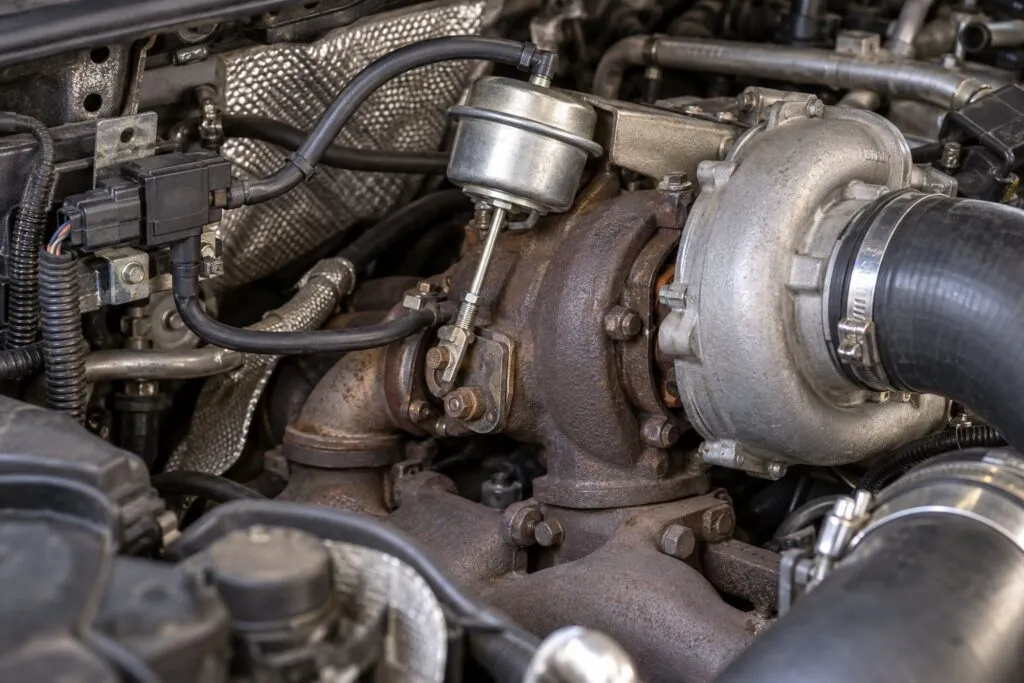
The P0243 Turbocharger Wastegate Solenoid A Malfunction code is one of the most misdiagnosed boost-control faults we see come through our shop, and too often the truck ends up with a replaced turbo it never needed. This code points to an electrical or control problem in the wastegate boost-control solenoid circuit, not necessarily a blown turbocharger. Getting the diagnosis right saves you hundreds, sometimes thousands, of dollars in unnecessary parts.
At PT Turbo we have been rebuilding and supplying turbochargers since 1978, more than 45 years of hands-on diesel experience. Below is exactly how we trace this code, what actually causes it, and what it costs to fix it properly.
What the P0243 Code Actually Means
P0243 is a generic OBD-II powertrain code that the ECM sets when it detects a fault in the “A” wastegate solenoid control circuit. The solenoid is the electrical valve that regulates boost pressure by controlling the vacuum or pressure signal sent to the wastegate turbocharger actuator.
When the ECM commands the solenoid and does not see the electrical response it expects, or the circuit reads open, shorted, or out of range, it logs P0243. The “A” designation simply identifies the primary solenoid on engines that use more than one boost-control device.
Important distinction: P0243 is a circuit code. It is telling you something in the electrical control loop is wrong. It is not the same as an overboost or underboost performance code. If you are also chasing high-boost symptoms, read our breakdown of the P0234 turbocharger overboost code alongside this one.
Common Symptoms of a P0243 Fault
The check engine light is the obvious flag, but drivability symptoms tell you how far the problem has progressed. Here is how they typically break down by severity.
| Severity | Symptoms | What It Usually Points To |
|---|---|---|
| Mild | CEL only, no noticeable power loss | Intermittent wiring, corroded connector |
| Moderate | Sluggish acceleration, delayed boost, poor fuel economy | Failing solenoid (a cracked vacuum line adds boost codes) |
| Severe | Limp mode, hard limit on boost, black smoke or no power | Open or shorted solenoid circuit; a stuck wastegate adds P0234 or P0299 |
Limp mode is the ECM’s protection strategy. When it cannot trust the boost-control circuit, it caps fueling and boost to prevent engine damage. That is why a $90 solenoid or actuator failure can feel like a dead truck.
What Causes a P0243 Turbocharger Wastegate Solenoid A Malfunction
Two faults set this code and three more usually turn up beside it. Work through all five in this order and you will find the fault fast.
1. Failed or Sticking Wastegate Solenoid
The solenoid itself is a wear item. Internal windings burn out, or the valve gums up with soot and oil vapor from the crankcase ventilation system. When it stops switching cleanly, the ECM sees the circuit misbehave and sets P0243.
2. Wiring and Connector Faults
Diesel engine bays are brutal on wiring. Heat, vibration, and road salt attack the solenoid connector and harness. Corroded pins, chafed insulation, and broken grounds are the single most common cause of this code, and they are frequently overlooked in favor of replacing hardware.
3. Failed Pneumatic Actuator
On wastegate-style turbos, the solenoid controls a pneumatic actuator that physically moves the wastegate flap. If the actuator diaphragm ruptures or the rod seizes, boost control goes haywire. That sets boost codes (P0234 or P0299) rather than P0243, but the two often show up together on a neglected truck.
4. Vacuum or Pressure Line Leaks
Cracked, collapsed, or disconnected control lines between the solenoid and actuator bleed off the signal pressure. They do not set P0243 by themselves (it is an electrical code), but they cause the boost faults that usually come with it. This is a five-minute inspection that saves a lot of parts-swapping.
5. Stuck or Carboned Wastegate
On high-mileage diesels the wastegate mechanism itself can carbon up and bind. P0243 is an electrical code for the solenoid circuit, so a stuck gate does not set it by itself: it shows up as overboost (P0234) or underboost (P0299). If one of those is stored with P0243, check that the gate moves freely. A carboned gate is more common on engines that also run an EGR system feeding soot back through the intake.
How to Diagnose P0243 Step by Step
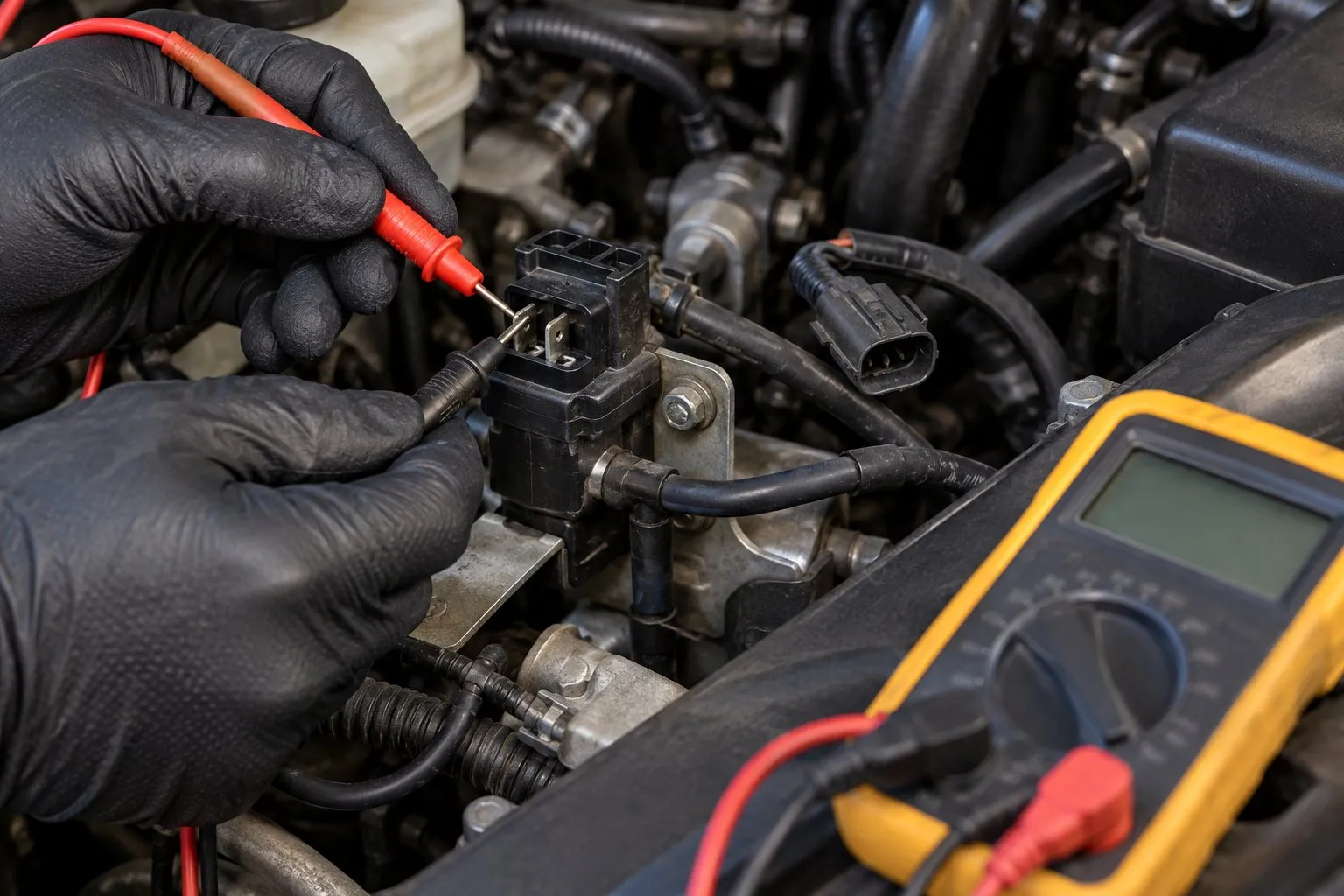
Do not throw parts at this code. Follow a logical sequence with a multimeter and a scan tool that reads live data.
- Step 1: Scan for all stored codes. If you have companion codes like P0234, P0299, or actuator-position codes, note them, they narrow the search.
- Step 2: Inspect the solenoid connector for corrosion, spread pins, and a locked-in latch. Wiggle-test the harness with live data streaming.
- Step 3: Measure solenoid resistance against spec. The figure differs by vehicle (an Audi N75 valve, for example, is given as 25 to 35 ohms), so use the one in the service information. An open circuit or a reading near zero means replace it.
- Step 4: Check for battery voltage and a good ground at the connector with the key on.
- Step 5: Inspect all vacuum and pressure lines for cracks and disconnections.
- Step 6: Actuate the wastegate by hand or with a pressure tester. It should move smoothly through full travel and hold pressure.
If the actuator will not hold pressure or move the wastegate, it is the cause of the boost code stored alongside P0243; P0243 itself still needs an electrical cause. Replacing the actuator is a straightforward, affordable repair compared to a full turbo replacement.
Repair Options and Parts
Once you have isolated the fault, matching the right part to your turbo is critical. Actuators are calibrated to a specific boost spec, so the correct part number matters. Send us your turbo part number and we will confirm the correct actuator.
You can learn more about Garrett’s boost-control hardware at garrettmotion.com.
Cost Comparison: What This Repair Really Costs
| Repair Path | Typical Cost | When It Makes Sense |
|---|---|---|
| New solenoid only | $50 to $200 | Solenoid tests bad, turbo is healthy |
| New pneumatic actuator | see actuator prices | Actuator leaks or wastegate will not move |
| Wiring or connector repair | $20 to $150 | Corrosion or chafed harness found |
| Remanufactured turbo | $525 to $8,461 (259 listings) | Turbo also shows shaft play or damage |
Price ranges in this article are general estimates to help with budgeting, not PT Turbo quotes. Our current prices are on each product listing, and our rebuild prices are on the turbo rebuild price list.
If your diagnosis reveals the turbo itself is worn, replacing just the actuator is a false economy. Check for shaft play, oil in the compressor housing, and wheel damage before you commit. Our guides on turbocharger bearing failure and compressor wheel damage show you exactly what to look for.
When to Replace vs Rebuild the Turbo
P0243 rarely means the turbo core is dead, but sometimes a boost-control fault is a symptom of a bigger problem. If you find heavy oil contamination or bearing wear, the root cause may be lubrication related. Our write-up on turbo oil starvation covers those damage patterns in detail.
When the core is compromised, you have two solid options. A turbocharger rebuild service restores your original unit to spec, and a remanufactured turbocharger gives you a tested, ready-to-install replacement backed by warranty.
PT Turbo stocks both new and remanufactured parts, so you are not forced into an overpriced dealer unit when a properly rebuilt turbo does the same job for less. If you are unsure which part matches your application, contact our team with your turbo part number and we will confirm the correct fit before you buy.
Looking for a different code? Our list of turbocharger fault codes gives the standard definition of every boost-related code and the kind of fault it points to.
Frequently Asked Questions
What does the P0243 code mean?
P0243 indicates an electrical or control problem in the turbocharger wastegate boost-control solenoid A circuit. It usually points to a solenoid or wiring fault, not necessarily a failed turbocharger.
Can I drive with a P0243 code?
You can typically drive short distances, but you may experience reduced power, poor boost control, or limp mode. It’s best to diagnose and repair the issue promptly to avoid further engine strain.
What are the most common causes of P0243?
The most common causes are a faulty wastegate solenoid and damaged wiring or connectors. Vacuum or boost line leaks cause boost control faults, but not this electrical circuit code. A blown turbocharger is rarely the actual cause.
Need a Turbocharger?
PT Turbo has rebuilt and sold turbochargers since 1978. We stock remanufactured units for Cummins, Duramax, Power Stroke, Detroit Diesel, and more — backed by a 12-month unlimited mileage warranty and same-week shipping from San Bernardino, CA.
📞 (909) 824-1020 · 346 S I St. #3, San Bernardino, CA 92410 · [email protected]