How to Pressure Test Your Intercooler and Find Boost Leaks
A boost leak—any air loss between the turbocharger compressor outlet and the intake manifold—can cause the exact same symptoms as a failing turbocharger: loss of power, black smoke, a P0299 code, and a truck that feels like it is not pulling. Before spending money on a turbo replacement, spend 20 minutes pressure testing the charge piping. Many diagnosis stories end here.
Tools You Need
You have three main options for pressurizing the system:
Smoke machine (preferred): A smoke machine injects smoke under low pressure through the charge piping. Leaks are visible as smoke escaping. Clean, fast, and works even on leaks that are too small to hear. Costs $80–$200 to own or can be rented.
Pressurized shop air with a test cap: Cap the turbo inlet (compressor side) or throttle body, connect regulated shop air at 25–30 PSI, and listen/feel for leaks. Spray soapy water on all connections and watch for bubbles.
DIY pressure cap: For basic testing, a properly sized rubber cap or PVC plug on the turbo inlet and a bicycle pump or regulated air source can pressurize the system enough to find major leaks.
Step-by-Step Procedure
- Let the engine cool completely.
- Fit the test cap to the turbo inlet (or, with the charge pipe off, to the pipe that comes off the compressor outlet, depending on your access point).
- Connect your pressure source. Regulate to no more than 30 PSI, and never above the engine’s normal peak boost—most charge piping is rated for higher, but clamps and gaskets are not always.
- Pressurize the system and hold pressure. A healthy system should hold without continuous input.
- Work systematically from the turbo outlet to the intake manifold: all hose boots, all clamp connections, the intercooler core and end tanks, EGR connections, and the intake manifold gasket.
- Mark any leak sources with tape or a marker.
- Depressurize before making repairs.
Where Boost Leaks Commonly Hide
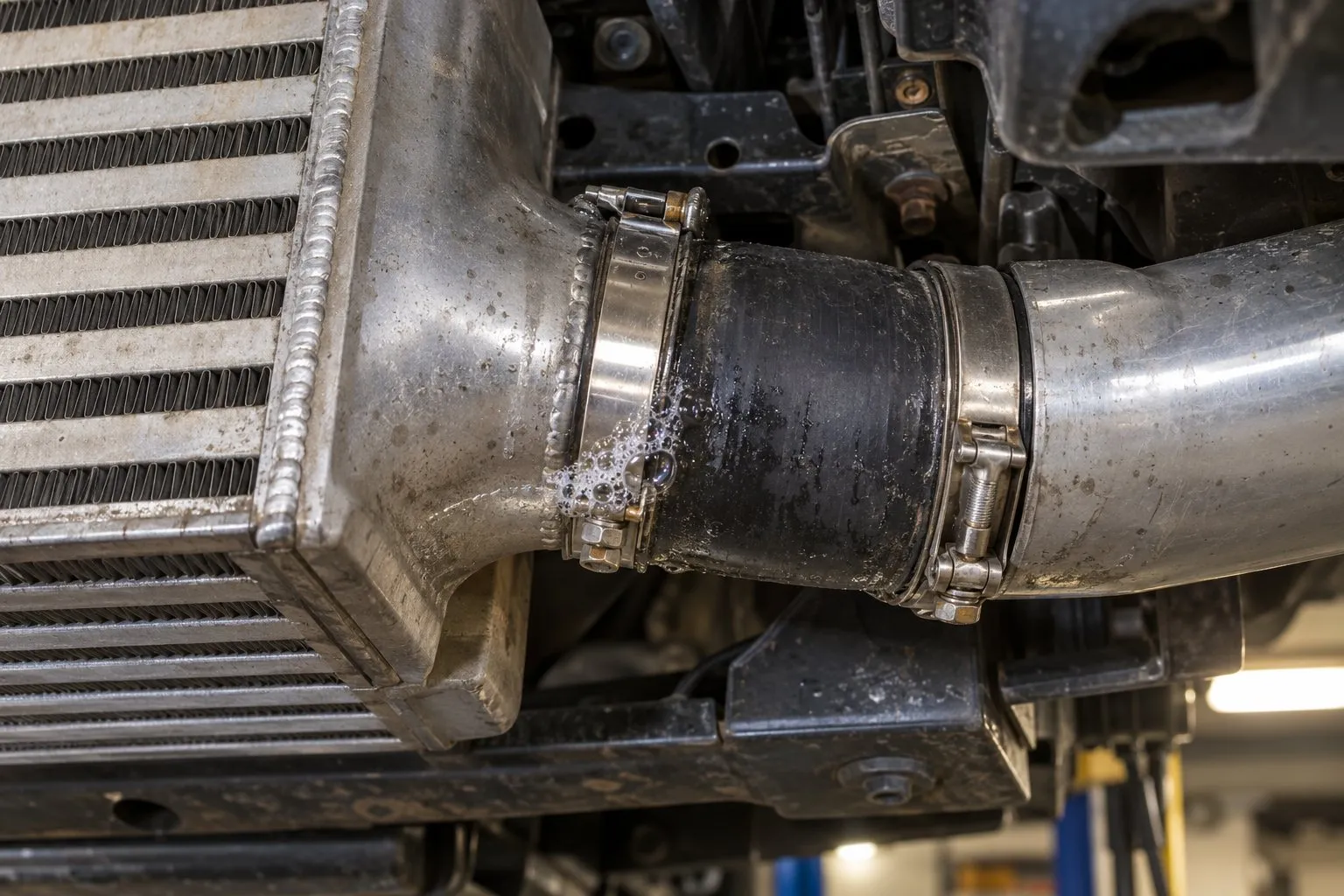
- Silicone coupler boots: The flexible sections between the aluminum charge piping and the turbo or intercooler. These split along their length or crack at the ends, especially on high-mileage trucks.
- Hose clamp connections: Clamps loosen over time from heat cycling and vibration. The leak is often at the edge of the clamp where the hose has hardened and pulled away.
- Intercooler end tanks: Cast end tanks (common on older trucks) can crack at seams or at the fitting boss. Plastic end tanks on some light-duty trucks crack under heat cycling.
- EGR cooler and pipe connections: EGR piping intersects the charge air circuit on many platforms and can leak at gaskets or flex connectors.
If the Intercooler Itself Is Leaking
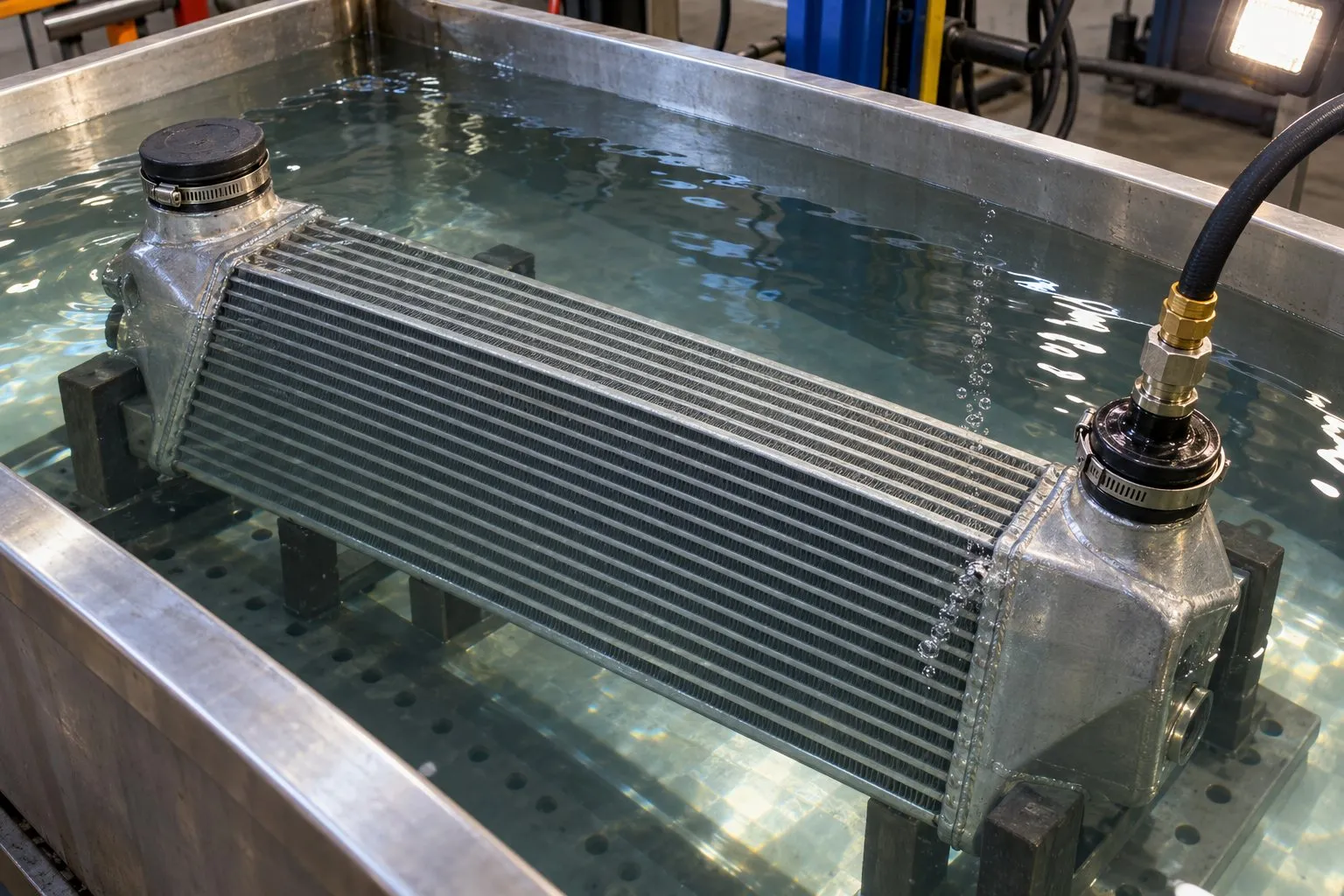
If your pressure test reveals the leak is in the intercooler core rather than the piping, remove the intercooler and pressure test it submerged in water. Bubbles will pinpoint the leak location. Internal core damage is not field-repairable and the intercooler must be replaced or welded by a radiator shop.
If you have completed a thorough pressure test and found no leaks, the turbocharger may be at fault. PT Turbo can help you diagnose next steps by phone. Call (909) 824-1020 or contact us here.
Shop PT Turbo: Browse our turbocharger parts catalog — OEM-spec replacements with a 12-month, unlimited-mile warranty. Most orders ship within 1–2 business days.
Frequently Asked Questions
How much air pressure should be used for a boost leak test?
Regulated shop air at 25 to 30 PSI: no more than 30 PSI, and never above the engine’s normal peak boost. Most charge piping is rated for higher pressure, but clamps and gaskets are not always. A healthy system should hold pressure without continuous input.
What are the symptoms of a boost leak on a diesel?
Loss of power, black smoke, a P0299 code and a truck that feels like it is not pulling. These are the same symptoms as a failing turbocharger, which is why the charge piping should be pressure tested before a turbo is replaced.
Can a leaking intercooler be repaired?
Not in the field. When the leak is in the core, the intercooler is removed and pressure tested under water so the bubbles pinpoint the spot. Internal core damage means the intercooler must be replaced or welded by a radiator shop.
Further Reading
- P0299 Underboost Code: Step-by-Step Diagnosis & Fix
- What’s Normal Turbo Boost Pressure for Diesel Engines?
- 7 Warning Signs Your Turbocharger Is Failing
- Diesel Turbo Lag: Causes, Diagnosis & Fixes
- Turbocharger Oil Seal Failure: Causes & Diagnosis
If the test reveals turbo damage rather than a boost leak, PT Turbo’s turbo rebuild service can repair it.
Need a Turbocharger?
PT Turbo has rebuilt and sold turbochargers since 1978. We stock remanufactured units for Cummins, Duramax, Power Stroke, Detroit Diesel, and more — backed by a 12-month unlimited mileage warranty. Units in stock at our shop in San Bernardino, CA ship the same day when ordered before 2 PM Pacific, Monday through Friday.
📞 (909) 824-1020 · 346 S I St. #3, San Bernardino, CA 92410 · [email protected]