Diesel Turbo Lag: What Causes It and What Actually Fixes It
Turbo lag is the delay between pressing the throttle and feeling full boost pressure. Every turbocharged diesel has some amount of it, but when lag becomes excessive it affects towing performance, merging safety, and driver confidence. Here is what actually causes it—and what actually fixes it.
The Physics of Turbo Spool-Up
A turbocharger’s turbine wheel is spun by exhaust gas energy. At idle or low RPM, there is not much exhaust energy to drive the turbine. When you press the throttle, the engine produces more fuel, more exhaust, more turbine speed—and boost pressure climbs. The time between throttle input and reaching peak boost is lag.
The key variables are turbine and compressor wheel mass (lighter spools faster), turbine housing A/R ratio (smaller builds boost earlier at the expense of flow), and exhaust gas temperature and volume (more energy = faster spool).
VGT vs Fixed Geometry Lag Characteristics
Variable geometry turbochargers were developed specifically to address lag. By closing the vanes at low RPM, VGT units concentrate exhaust energy on the turbine wheel and spool significantly faster than a comparable fixed-geometry design. A healthy VGT on a stock diesel should have minimal perceivable lag from a rolling start.
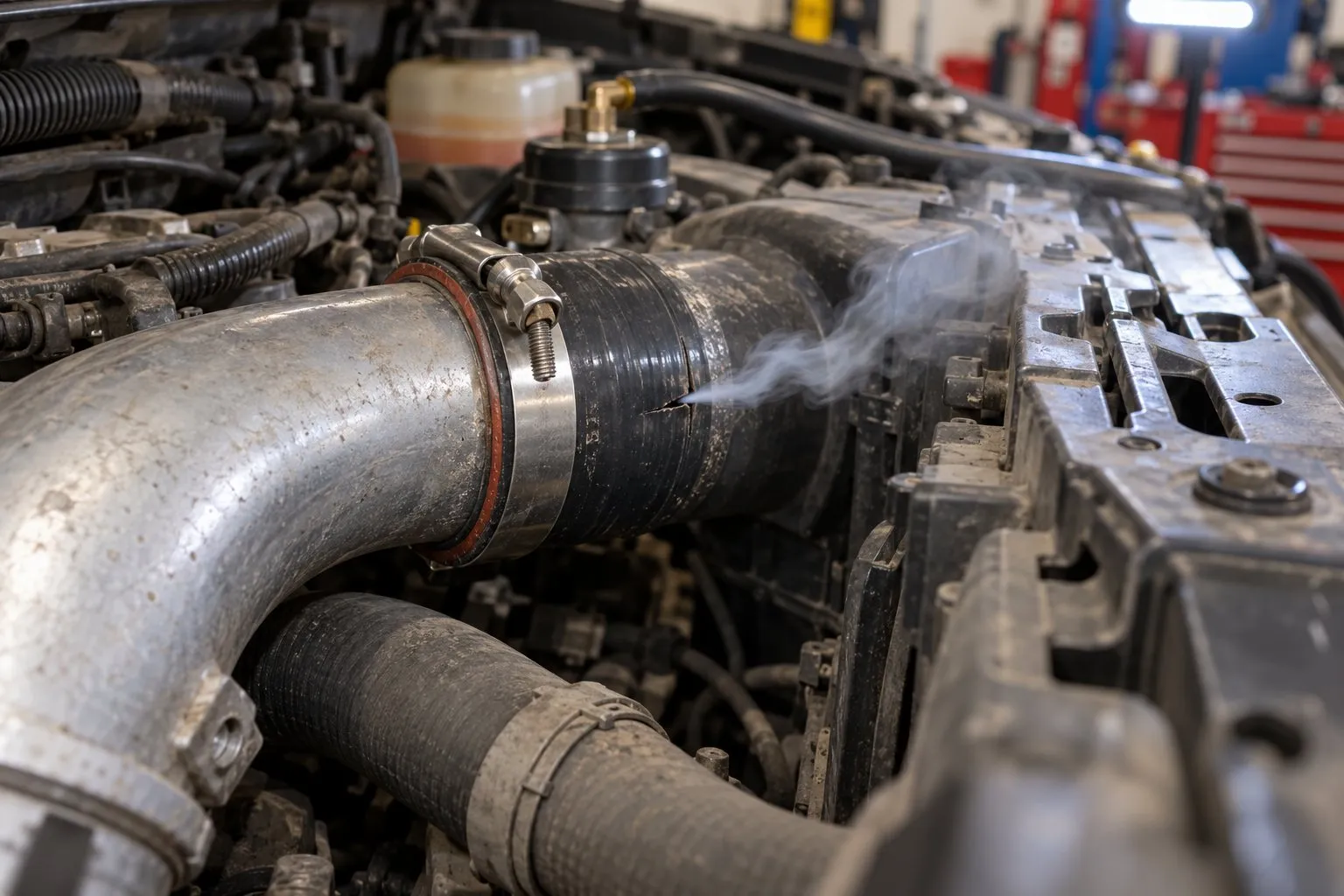
If your VGT diesel has noticeable lag and it did not before, that is a diagnostic flag—not a performance characteristic. Sticking vanes, a failing actuator, or a boost leak in the charge piping will all cause what feels like increased lag. Diagnosing a P0299 code is a good starting point.
What Actually Reduces Lag
- Properly sized turbocharger: A turbo too large for the engine’s displacement and RPM range will always lag. If you have upgraded injectors or other power adders, a matching turbo upgrade may be appropriate.
- Reducing charge piping volume: Shorter, smaller-diameter intercooler piping reduces the volume the compressor has to fill before boost reaches the intake manifold. This is an OEM engineering consideration, not a practical aftermarket mod for most trucks.
- VGT actuator service: A sticky or sluggish VGT actuator is one of the most common causes of lag on high-mileage diesels and is directly fixable.
- Fresh oil and a clean air filter: These do not eliminate lag but a restricted air filter forces the compressor to work harder and slows spool time measurably.
What Does Not Help
Most products marketed as “turbo lag eliminators” or “boost controllers” for stock diesels do not address any of the physical causes of lag. Electronic throttle controllers that make the throttle feel more responsive are not reducing lag—they are changing the input signal while the turbo behavior is identical. Performance exhaust systems can marginally reduce exhaust backpressure, which helps power output but has a minimal effect on spool time on a stock-displacement engine.
If your truck has developed noticeable lag recently, the cause is almost always a VGT issue or a boost leak—not something that a spray can will fix. PT Turbo can diagnose your turbo over the phone. Call (909) 824-1020 or contact us here. Also see our guide to finding boost leaks.
Shop PT Turbo: Browse our turbocharger catalog — OEM-spec replacements with a 12-month, unlimited-mile warranty. Most orders ship within 1–2 business days.
Frequently Asked Questions
Why would a diesel suddenly have more turbo lag than before?
Sticking vanes, a failing actuator or a boost leak in the charge piping are the usual causes. A healthy VGT on a stock diesel should have minimal perceivable lag from a rolling start, so new lag is a diagnostic flag and not a performance characteristic.
Does a throttle controller get rid of turbo lag?
No. An electronic throttle controller makes the pedal feel more responsive by changing the input signal, but the turbo behaves exactly as before. Most products sold as lag eliminators for stock diesels do not address any of the physical causes of lag.
Does a bigger turbo cause more lag?
Yes, when it is too large for the engine. A turbo oversized for the displacement and RPM range of the engine will always lag, and heavier turbine and compressor wheels spool more slowly than lighter ones.
Further Reading
- Variable Geometry Turbocharger (VGT) Explained
- VGT Actuator Replacement Guide for Diesel Turbochargers
- P0299 Underboost Code: Step-by-Step Diagnosis & Fix
- How to Find Boost Leaks in Diesel Trucks: Full Guide
- Turbocharger Shaft Play & Bearing Wear: What’s Normal?
If the lag comes from a worn turbo, PT Turbo’s turbo rebuild service can restore its response.
Need a Turbocharger?
PT Turbo has rebuilt and sold turbochargers since 1978. We stock remanufactured units for Cummins, Duramax, Power Stroke, Detroit Diesel, and more — backed by a 12-month unlimited mileage warranty. Units in stock at our shop in San Bernardino, CA ship the same day when ordered before 2 PM Pacific, Monday through Friday.
📞 (909) 824-1020 · 346 S I St. #3, San Bernardino, CA 92410 · [email protected]