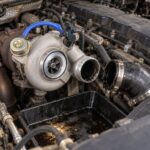
Knowing how to calibrate a VGT actuator after replacement is the difference between a truck that drives right and one that throws limp-mode codes before it leaves the shop. A variable geometry turbo is only as good as its actuator, and on Cummins, Duramax, and Detroit platforms the calibration procedure is not optional. Skip it and the ECM has no idea where the vanes actually sit, so it commands positions it can never hit and logs a fault within minutes.
At PT Turbo we have been rebuilding and calibrating turbochargers since 1978, more than 45 years, and actuator setup is one of the jobs we see done wrong most often. This guide walks through the real procedure by engine family, the tools you need, and the specs that matter.
Why VGT Actuators Need Calibration at All
A variable-geometry turbocharger changes the effective area of the turbine housing by moving a set of vanes or a sliding nozzle ring. The actuator drives that movement, and the ECM relies on a learned position map to know where zero percent (fully open) and 100 percent (fully closed) really are.
When you install a new or remanufactured actuator, that map is meaningless. The new unit has its own mechanical end stops, gear lash, and position sensor offset. Calibration teaches the ECM the fresh mechanical limits so vane commands translate into accurate boost control.
There are two broad actuator types. Electric actuators (Cummins HE351VE, HE300VG, the Duramax L5P) use an internal motor and position sensor and require a software relearn. Pneumatic actuators, still common on many Detroit and light-duty applications, are set mechanically by rod length and reference pressure. The 2004.5-2016 Duramax is a third case: its vanes are moved by engine oil through a control solenoid, and a separate vane position sensor reports where they are.
Symptoms of an Uncalibrated or Failing Actuator
| Symptom | Severity | Likely Cause |
|---|---|---|
| Sluggish throttle, low boost | Moderate | Vanes stuck open, wrong learned min |
| Overboost then derate | High | Vanes commanded past learned max |
| Immediate limp mode after install | Critical | Calibration never performed |
| Rough regen, high EGT | Moderate | Actuator not holding commanded position |
| Rattling actuator on startup | Low to moderate | Self-test running, or worn gear train |
Tools and Prep Before You Start
You cannot calibrate an electric VGT actuator with a code reader that only clears faults. You need bidirectional software capable of running the manufacturer relearn or override routine.
- Cummins INSITE or a comparable J2534 tool for HE351VE and HE300VG
- GM GDS2 / Tech2 or equivalent for LLY through L5P Duramax
- Detroit Diesel Diagnostic Link (DDDL) for Series 60 EGR units (the DD13 and DD15 have no variable geometry turbo to calibrate)
- Digital multimeter and a known-good 12V reference
- For pneumatic units: a hand vacuum or pressure pump and a dial indicator
Confirm the actuator connector is clean, the harness has no chafed wires, and battery voltage is above 12.4V. Low voltage during a relearn is one of the top reasons calibration fails and the ECM stores an aborted-learn code.
How to Calibrate a VGT Actuator After Replacement on Cummins
The 6.7L Cummins ISB and its Ram pickup cousins use the Holset HE351VE and later HE300VG. Both carry an electric actuator with an integrated position sensor and a self-calibration routine that runs at key-on.
Connect INSITE and run the actuator installation routine with the new actuator plugged in but not yet bolted to the turbo. Then mount it and run the VGT actuator calibration without cycling the key in between. The actuator will sweep the vanes to both mechanical stops, record the endpoints, and store the new offset. Cycle the key and verify the fault codes clear.
If you are working on a 5.9L that was converted or a fixed-geometry swap, calibration is not required, but you should still confirm wastegate and boost behavior. Our 5.9L Cummins turbocharger guide breaks down the HX35, HY35 and HE351CW differences.
For the 6.7L, the choice between the earlier HE351VE and the newer HE300VG matters for both parts and calibration behavior. See our complete HE351VE vs HE300VG comparison and the broader 6.7L Cummins turbocharger guide with replacement cost. If you want the operational deep dive, our ISB 6.7L variable geometry guide covers common failure modes.
Cummins Quick Steps
- Key on, engine off: connect INSITE and plug the new actuator into the harness before it is mounted
- Run the actuator installation step so its gear moves to the install position, then mount the actuator and torque the fasteners to spec
- Run VGT actuator calibration / relearn
- Wait for the vane sweep to complete (roughly 30 seconds)
- Clear codes, key cycle, road test and confirm boost tracking
Duramax VGT Calibration (LLY, LBZ, LMM, LML, L5P)
The 2004.5-2016 Duramax (LLY, LBZ, LMM, LML) uses a Garrett variable nozzle turbo whose vanes are moved by engine oil through a control solenoid, with a vane position sensor reporting to the ECM. There is no electric actuator to calibrate on these trucks; what has to be learned is the vane position. The 2017 and later L5P uses a BorgWarner turbo with an electric actuator. GM does not always publish a discrete “calibrate” button, so the relearn happens through the vane position learn routine in GDS2 or by allowing the ECM to run its automatic learn cycle over several drive cycles.
The cleaner path is to force the learn with a scan tool. Command the actuator through its full range, verify the commanded versus actual position tracks within a few percent, then let the ECM store the adaptives. If commanded and actual diverge by more than about 5 percent, suspect a mechanical bind or a bad sensor before you blame the ECM.
Garrett publishes turbo data through Garrett Motion. On the 2004.5-2016 trucks, match the vane position sensor and control solenoid to the turbo part number; on the L5P, match the actuator. The wrong part will learn the wrong endpoints and drive poor boost control even when no code sets.
Detroit Diesel and Pneumatic Actuator Setup
Many Detroit applications, along with a large share of medium-duty and industrial turbos, use a pneumatic actuator rather than an electric one. These do not relearn through software. You set them mechanically, then verify with the ECM watching boost feedback.
Pneumatic actuators are calibrated by rod length and diaphragm response to a reference vacuum or pressure. With the turbo on the bench or the actuator accessible on the engine, apply the specified control pressure and measure rod travel with a dial indicator against the OEM stroke value. Adjust the clevis or rod end until stroke and pre-load match spec.
We stock a full range of pneumatic units. The Garrett Pneumatic Actuator 757979-5102 is available from PT Turbo for $240.94. It fits the Garrett GTA45V variable geometry turbo of the Detroit Diesel Series 60.
Pneumatic Calibration Steps
- Note OEM stroke length and reference pressure for your unit
- Apply control pressure with a hand pump
- Measure rod travel with a dial indicator
- Adjust rod length until stroke and pre-load match spec
- Lock the adjustment and re-verify under pressure
New vs Remanufactured Actuators: What to Choose
Electric VGT actuators can often be rebuilt, but the calibration circuitry and position sensor are the parts that fail. A quality remanufactured actuator or complete reman turbo is frequently the better value on high-mileage trucks.
| Option | Typical Cost | Calibration Needed | Best For |
|---|---|---|---|
| New OEM actuator | Highest | Yes (software or rod) | Warranty-critical fleets |
| Reman actuator | Moderate | Yes | Most repairs, best value |
| New pneumatic actuator | see actuator prices | Mechanical only | Detroit, medium-duty |
| Complete reman turbo | Varies | Yes, pre-flowed | Worn center section too |
If the turbine, shaft, or bearing is also worn, replacing just the actuator is a short-term fix.
In that situation a complete reman turbo almost always wins. You pay once, the center section is already flowed and balanced, and the new actuator arrives matched to the housing it will control. Bolting a fresh actuator onto a tired cartridge just moves the failure a few thousand miles down the road.
Whichever route you take, the calibration step is the same non-negotiable it has always been. Electric units get the software relearn, pneumatic units get the rod set to stroke, and every install ends with a road test confirming commanded and actual boost track together. Do that and the truck leaves the shop driving right, with no limp mode waiting at the end of the block.
Frequently Asked Questions
Why do I need to calibrate a VGT actuator after replacement?
Calibration teaches the ECM the exact position of the turbo vanes, so without it the engine has no reference point and will often trigger limp-mode codes.
Can I calibrate a VGT actuator without a scan tool?
On most Cummins, Duramax, and Detroit platforms you need a compatible diagnostic scan tool to initiate the actuator learn or calibration procedure. Some actuators may perform a limited self-calibration on key cycle, but this is not a reliable substitute.
What happens if you skip VGT actuator calibration?
Skipping calibration leaves the ECM unaware of the vane position, which commonly causes limp mode, reduced power, poor boost control, and fault codes before the truck leaves the shop.
PT Turbo handles VGT actuator and cartridge work as part of its turbo rebuild service.
Need a Turbocharger?
PT Turbo has rebuilt and sold turbochargers since 1978. We stock remanufactured units for Cummins, Duramax, Power Stroke, Detroit Diesel, and more — backed by a 12-month unlimited mileage warranty and same-week shipping from San Bernardino, CA.
📞 (909) 824-1020 · 346 S I St. #3, San Bernardino, CA 92410 · [email protected]