Blue or gray smoke from the exhaust, oil in the intake piping, and an oily residue at the turbo compressor outlet are classic symptoms of turbocharger oil seal failure. This is one of the most frequently misunderstood turbo conditions we see at PT Turbo. Here is the truth about what oil seals actually are and why they fail.
What Turbocharger Oil Seals Actually Are
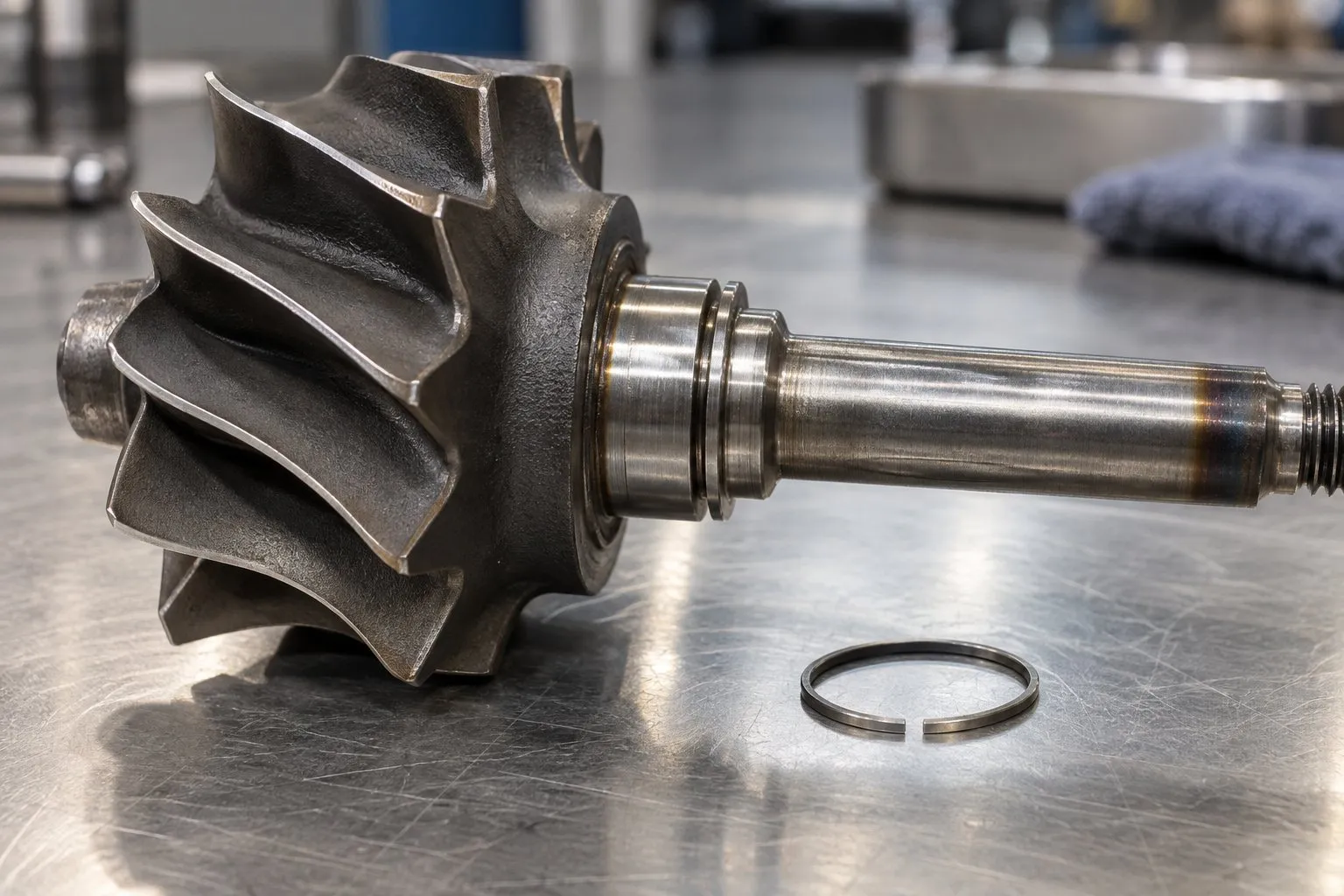
Contrary to popular belief, turbocharger “oil seals” are not rubber O-rings or conventional gasket-style seals. They are piston ring seals—small metal rings, similar in concept to the piston rings in your engine’s cylinders, that fit into grooves at each end of the rotating assembly: on the thrust spacer at the compressor end and on the shaft at the turbine end.
These rings work by maintaining a labyrinth of close tolerances between the rotating shaft and the bearing housing walls. They do not create a positive seal. They slow oil migration by creating a pressure differential: compressed air on the compressor side and exhaust gas on the turbine side both push inward against any oil attempting to migrate outward.
The Real Cause of Seal Failure
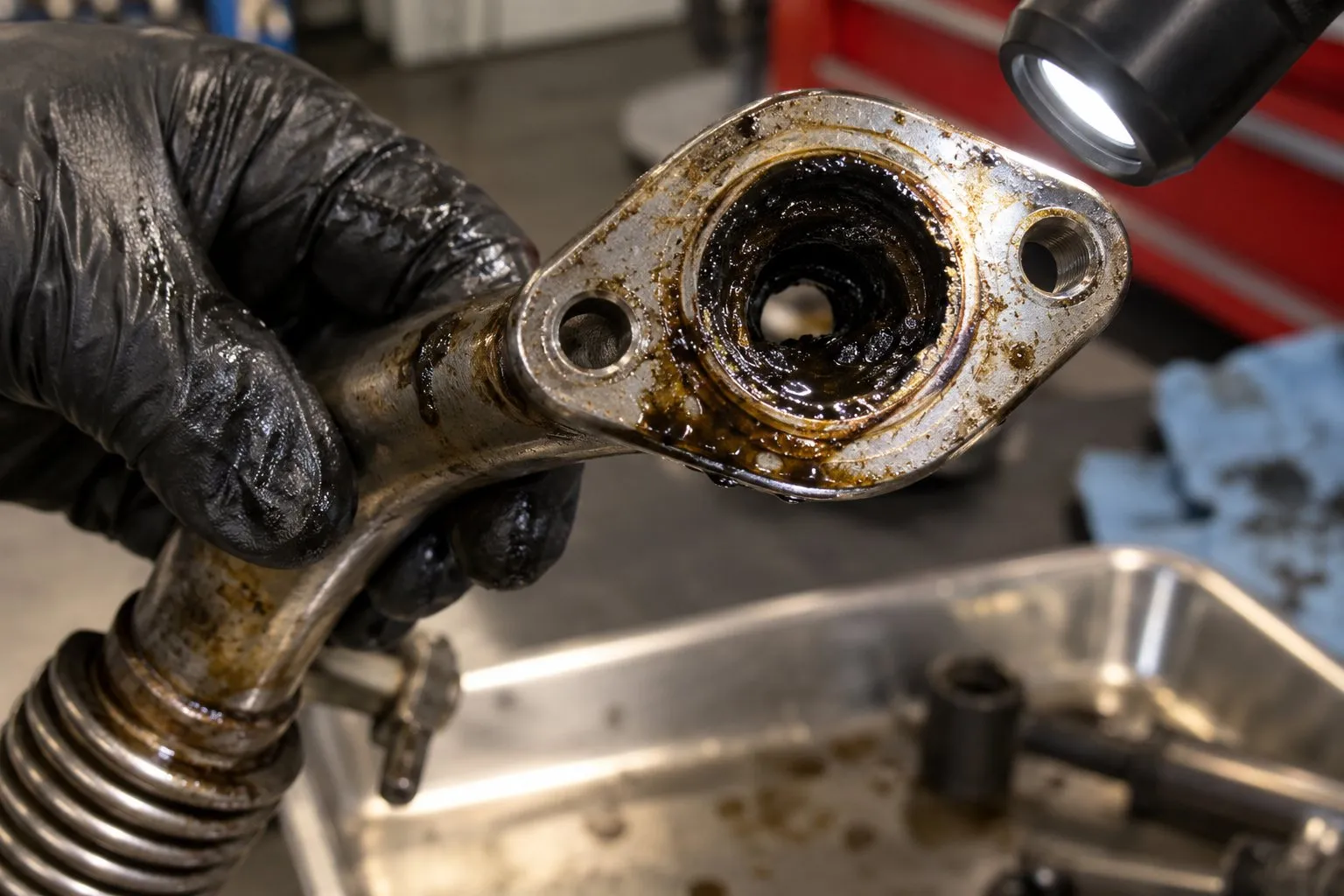
This is where most diagnoses go wrong. Piston ring seals wear slowly and rarely fail spontaneously in a low-mileage turbo. When you see blue smoke from a turbo that is not excessively high-mileage, the cause is almost always not worn seals—it is crankcase pressure or oil drain restriction.
The turbo oil drain line routes engine oil from the center section back down to the oil pan by gravity. If this line becomes partially blocked with carbon deposits, or if positive crankcase pressure (from worn piston rings) is pushing upward against the drain, oil backs up in the center section. When the oil level in the center section rises above the piston ring grooves, oil floods the seal rings and gets past them—producing blue smoke.
Before condemning the turbo, inspect and clean the oil drain line and check crankcase pressure.
How to Diagnose: Seal Failure vs Worn Bearings
- Smoke only at startup: Oil has pooled in the turbo housing overnight. May clear after a minute of running. Often a drain restriction issue rather than seal wear.
- Smoke during deceleration: When you lift off the throttle at speed, low pressure at the compressor can pull oil past a worn seal. This is more indicative of actual seal wear.
- Constant blue smoke under load: Combined with shaft play, this suggests both bearing wear and seal compromise. The turbo needs rebuild or replacement.
- Oil in the compressor inlet only: Without blue smoke, this may indicate a crankcase ventilation (CCV) system problem rather than a turbo seal issue.
Can You Replace Seals Only?
Yes, but only in the context of a complete rebuild. Replacing the piston ring seals without also servicing the bearings and performing VSR balancing is not recommended—the seals are replaced as part of a comprehensive rebuild, not as a standalone repair.
If the diagnosis points to a drain restriction rather than worn seals, cleaning the drain line may resolve the smoking without any turbo work at all.
PT Turbo inspects turbos and gives straight answers. If you are seeing blue smoke, call us before ordering parts. Our technicians can help you determine whether you have a turbo issue, a drain issue, or a crankcase pressure issue. Call (909) 824-1020 or contact us here.
Shop PT Turbo: Browse our turbocharger rebuild kit catalog and our turbocharger gasket catalog — OEM-spec replacements with a 12-month, unlimited-mile warranty. In-stock units available for same-day shipping.
Frequently Asked Questions
Are turbo oil seals made of rubber?
No. Turbocharger oil seals are split metal piston rings that sit in machined grooves, similar in concept to the piston rings in an engine. They do not form a positive seal; they slow oil migration with close tolerances and a pressure differential.
Why is a turbo leaking oil when the seals are not worn?
A restricted oil drain or crankcase pressure is almost always the reason on a turbo that is not excessively high-mileage. When the drain line is partly blocked with carbon, or crankcase pressure pushes against the drain, oil backs up in the center section, floods the seal rings and gets past them.
Does oil in the intake pipe mean the turbo is bad?
Not necessarily. Some oil film in the charge pipes is normal on any engine with closed crankcase ventilation, and oil at the compressor inlet without blue smoke may point to a crankcase ventilation problem. Check the breather, air filter, oil level and drain before blaming the seal.
Further Reading
- Turbocharger Oil Lines: Feed, Return & Drain Explained
- 7 Root Causes of Turbocharger Failure in Diesel Engines
- 7 Warning Signs Your Turbocharger Is Failing
- How to Make Your Turbocharger Last 150,000+ Miles
- How to Break In a Rebuilt Turbocharger the Right Way
When oil seals fail, PT Turbo’s turbo rebuild service replaces the full seal and bearing system.
Need a Turbocharger?
PT Turbo has rebuilt and sold turbochargers since 1978. We stock remanufactured units for Cummins, Duramax, Power Stroke, Detroit Diesel, and more — backed by a 12-month unlimited mileage warranty and same-week shipping from San Bernardino, CA.
📞 (909) 824-1020 · 346 S I St. #3, San Bernardino, CA 92410 · [email protected]
More From PT Turbo
- How to Remove Stuck Turbocharger Exhaust Manifold Bolts Without Breaking Them
- How to Check Turbocharger Shaft Play with a Dial Indicator
- How to Match a Turbocharger Replacement Using Cast Numbers When the Part Number Is Gone
 How to Flush an Intercooler After Turbocharger Failure: Preventing Re-Contamination