How to Make Your Turbocharger Last: 7 Habits That Extend Turbo Life
A well-maintained turbocharger can last a long time, and a neglected one can fail early. The difference comes down to a handful of simple habits that most diesel truck owners either do not know about or underestimate. Here is what 40+ years of turbocharger rebuilding has taught us at PT Turbo.
1. Warm Up the Engine Before Boosting
Turbocharger bearings are lubricated by engine oil. At cold start, oil takes a few seconds to reach the turbo’s center section, and during that window the bearings spin with minimal lubrication. Idle only until oil pressure reads normal, then drive gently until the engine is warm; long warm-up idling is not what the engine makers advise.
Avoid aggressive throttle inputs until the oil temperature gauge shows the engine is warming up. Oil warms up more slowly than coolant, so a coolant gauge that has started to climb is not proof the oil is ready; without an oil gauge, keep the load light for the first several minutes of driving.
2. Let the Engine Cool Before Shutting Down
After hard driving — towing, highway runs, or spirited acceleration — the turbo’s turbine housing can reach 1,500°F or higher. Shutting the engine off immediately stops oil flow to the bearings while heat soaks into the center section, cooking the oil and accelerating bearing wear.
Idle for a few minutes after hard use before shutting down, as your engine maker gives it (Cummins and Ram: about 3 to 5 minutes after full-load work). If you frequently forget, consider a turbo timer. This single habit dramatically extends bearing life on high-mileage trucks.
3. Change Your Oil on Schedule — or Earlier
Degraded engine oil is the number one cause of premature turbo failure. Heat cycles break down oil faster than mileage alone. For turbocharged diesels, use oil that meets your engine maker’s specification (API CK-4 on current diesels), follow the maker’s oil change schedule (its severe-service schedule when you tow or work in dust), and always replace the oil filter at every change.
Never run your turbo on oil past its change interval; diesel oil darkens quickly as it holds soot, so go by the interval, not the color. The cost of an oil change is trivial compared to a turbo rebuild.
4. Use Quality Oil Filters
The turbo’s oil feed line is tiny — usually 3/8″ or smaller. Low-quality filters can bypass under cold conditions, sending unfiltered oil directly to the bearings. Use OEM-spec or premium filters (Wix, Fleetguard, Baldwin) on turbocharged applications.
5. Check the Air Filter Regularly
A clogged air filter causes the turbo to work harder to pull air through the restriction, increasing compressor wheel stress and temperature. On dusty job sites or unpaved roads, check the air filter often and replace it when the restriction indicator says so.
6. Inspect the Oil Feed and Return Lines
The turbo oil feed line supplies pressurized oil to the bearings. The return line drains it back to the pan. Both must be unrestricted. A partially blocked return line causes oil to back up into the center section, forcing it past the seals — producing the blue smoke owners often mistake for burning oil. Read our full guide to turbocharger oil feed and return lines for inspection steps.
Inspect these lines whenever you do an oil change. Look for soft spots, kinks, or carbon buildup at the return fitting.
7. Address Boost Leaks Immediately
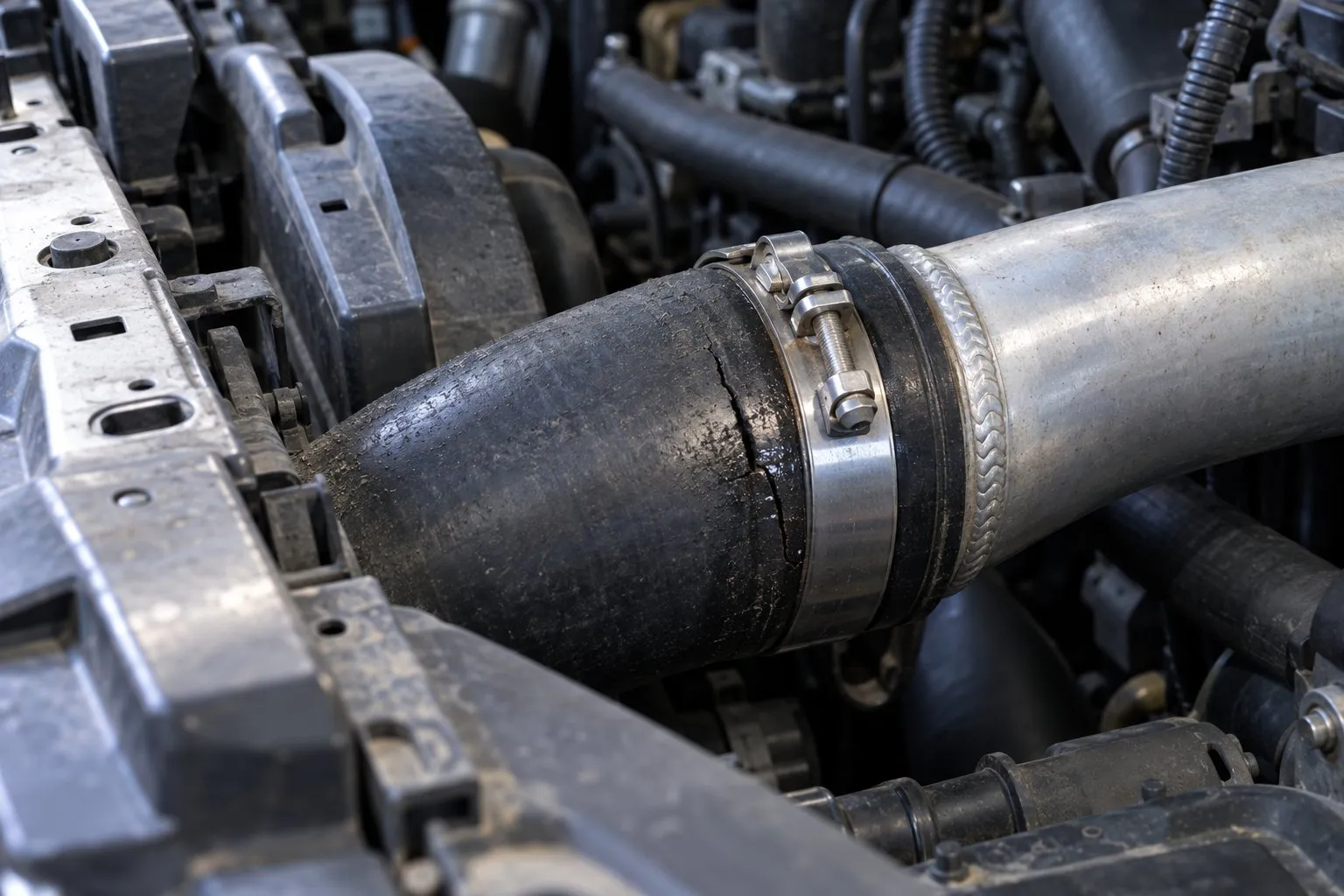
A boost leak — a cracked intercooler hose, loose clamp, or failed coupler — reduces boost pressure and can cause the turbo to overspeed trying to compensate. If you notice a hissing sound under boost or a sudden loss of power, learn how to pressure-test your charge piping for boost leaks before assuming the turbo is at fault.
When It Is Time for a Rebuild
Even with perfect maintenance, turbochargers are wear items. Watch for the 7 warning signs your turbocharger is failing. When shaft play exceeds specifications or oil consumption begins, a professional rebuild restores the turbo to better-than-new condition at a fraction of turbocharger replacement cost. If you’re weighing options, see our guide on turbocharger rebuild vs replace, and once you install a fresh unit, follow the first-start steps to protect your investment.
PT Turbo has been rebuilding turbochargers since 1978. Our technicians can diagnose your turbo over the phone and give you a straight answer on whether a rebuild, replacement core, or new unit makes the most sense for your application. Contact us today or call (909) 824-1020.
Frequently Asked Questions
How long should a diesel idle before shutdown after towing?
Follow your engine maker: Cummins and Ram give about 3 to 5 minutes after towing at full load or extended high-power running, and Ford’s 7.3L Power Stroke supplement about 7 to 10 minutes at low idle after extended high-speed or maximum-weight running; after normal driving little or none is needed. Shutting off immediately stops oil flow to the bearings while heat soaks into the center section, which cooks the oil and speeds up bearing wear.
How many miles does a turbocharger usually last?
No maker publishes a mileage figure: a well-maintained turbo can last a long time, while a neglected one can fail early. The difference comes down to simple habits: warming up, cooling down, changing oil on time, keeping the air filter clean and keeping the oil lines unrestricted.
How often should the oil be changed on a turbocharged diesel?
Follow your engine maker’s schedule or the oil life monitor, using the severe-service schedule when you tow heavy or work in dust, with a new oil filter at every change. Use oil that meets the maker’s specification (API CK-4 on current diesels), because degraded oil is a leading cause of premature turbo failure.
Further reading: Learn more about turbocharger technology.
And when a turbo finally does wear out, rebuilding it is usually smarter than replacing it. See PT Turbo’s turbocharger rebuild service for what that involves.
Need a Turbocharger?
PT Turbo has rebuilt and sold turbochargers since 1978. We stock remanufactured units for Cummins, Duramax, Power Stroke, Detroit Diesel, and more — backed by a 12-month unlimited mileage warranty. Units in stock at our shop in San Bernardino, CA ship the same day when ordered before 2 PM Pacific, Monday through Friday.
📞 (909) 824-1020 · 346 S I St. #3, San Bernardino, CA 92410 · info@ptturbo.com