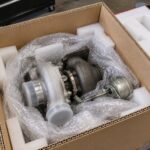
Knowing how to perform a boost leak test on a diesel engine is one of the most valuable diagnostic skills a mechanic can have, because a single cracked hose or loose clamp can rob a turbo diesel of power, kill fuel economy, and trigger a string of confusing fault codes. At PT Turbo, we’ve spent 45+ years rebuilding turbochargers and troubleshooting boost problems for fleets, owner-operators, and shops across the country. This guide walks you through the entire process the way we’d do it on the bench and in the field.
A boost leak is exactly what it sounds like: pressurized air escaping the intake tract somewhere between the turbo compressor outlet and the intake valves. On a healthy system, every PSI the turbo makes should reach the cylinders. When it leaks, the engine works harder for less power and the ECU never gets the airflow it commands.
Why Boost Leaks Matter on a Diesel
Diesel engines run high boost pressures, often 25 to 35 PSI on modern diesel pickups and more on heavy trucks. That pressure has to travel through charge pipes, intercooler end tanks, silicone couplers, and clamps before it ever reaches the head. Every joint is a potential failure point.
When boost escapes, the mass airflow the ECU sees no longer matches the fuel it’s delivering. That mismatch causes sluggish acceleration, black smoke, higher exhaust gas temperatures, and reduced EGR and emissions system performance.
Left unchecked, a chronic boost leak can also mask a failing turbo. Before you condemn a unit, it pays to rule out the cheap stuff first. If you do end up needing a replacement, our remanufactured turbochargers are a cost-effective option.
Common Symptoms of a Boost Leak by Severity
| Severity | Leak Size | Symptoms You’ll Notice |
|---|---|---|
| Minor | Weeping clamp or hairline crack | Slight power loss under load, small MPG drop, occasional soft codes |
| Moderate | Loose coupler or split boot | Noticeable turbo lag, black smoke, elevated EGTs, boost codes |
| Severe | Blown intercooler pipe or split hose | Major power loss, loud hissing under boost, limp mode, P0299 underboost |
Tools and Parts You’ll Need
You don’t need exotic equipment to test for boost leaks, but you do need the right adapters to seal the intake tract. Here’s the short list.
- A boost leak tester adapter that fits your turbo inlet or a charge pipe (many are shop-made from PVC end caps)
- A regulated shop air supply with a gauge, capable of 30 to 40 PSI
- A quality tire chuck and hose to feed air into the adapter
- Soapy water in a spray bottle
- A helper or a good ear for hissing
- New T-bolt clamps and silicone couplers on hand for repairs
Never exceed the manufacturer’s rated boost pressure when pressurizing the system. Overpressurizing can pop a coupler that was otherwise serviceable or damage the compressor seal.
How to Perform a Boost Leak Test on a Diesel Engine: Step-by-Step
Work through these steps in order. The whole test takes 20 to 30 minutes once you have the adapter ready.
Step 1: Let the Engine Cool and Depressurize
Always test on a cold or warm engine, never scalding hot. Charge pipes, the intercooler, and exhaust components near the turbo can cause burns. Make sure the engine is off and the key is out.
Step 2: Locate a Sealing Point
The two best places to introduce air are the turbo compressor inlet or a charge pipe downstream of the compressor. If you seal at the compressor inlet, you’ll test the entire pressure side including the compressor housing.
Remove the intake hose or charge pipe and fit your test adapter with a fresh clamp so it seals tight.
Step 3: Introduce Air Slowly
Connect your air line and bring the pressure up gradually to about 25 to 30 PSI, or whatever matches your engine’s peak boost. Watch the regulator gauge. On a sealed system, pressure should hold steady with minimal air input.
If the regulator shows the system won’t hold pressure and you hear air rushing, you have a leak. A slow bleed-down is normal on some engines because the intake valves aren’t perfectly sealed, but rapid loss points to a leak in the tract.
Step 4: Listen and Feel for the Leak
With the system pressurized, walk the intake tract from the turbo to the intake manifold. Listen for hissing at every clamp, coupler, and joint. Run your hand near suspect areas to feel escaping air.
Pay close attention to intercooler end tanks, which crack from vibration and thermal cycling, and to the boots at each end of the charge pipes.
Step 5: Spray Soapy Water on Suspect Areas
Where you can’t pinpoint the hiss by ear, spray soapy water on clamps and seams. Escaping air will blow bubbles right at the source. This trick finds pinhole cracks and marginal seals that are easy to miss.
Step 6: Check the Actuator and Wastegate Side
Don’t forget the turbo’s boost control. A leaking or failed pneumatic actuator can cause boost control problems that mimic or compound a leak. Inspect the actuator diaphragm and the control line for cracks and leaks while the system is pressurized.
Step 7: Repair, Reseal, and Retest
Once you find the leak, replace the failed coupler, tighten or upgrade the clamp, or repair the cracked pipe. Reassemble, then repeat the pressure test to confirm the system now holds. Never assume a single repair fixed everything, because multiple leaks are common on high-mileage trucks.
Where Boost Leaks Hide Most Often
Over thousands of diagnostic jobs, we see the same failure points again and again. Check these first.
- Intercooler couplers: Silicone boots harden and split, especially near heat.
- T-bolt and worm clamps: They loosen from vibration and thermal cycling.
- Intercooler end tanks: Cast or plastic tanks crack at the seams.
- Charge pipe welds: Aftermarket and OEM pipes crack at weld joints.
- EGR and throttle body gaskets: Often overlooked leak paths.
- Turbo compressor housing: A worn seal or damaged housing leaks under boost.
If your testing points back to the turbo itself, our turbocharger rebuild service can restore your unit to spec. For a deeper look at fixing leaks in the field, see our companion guide on how to find and fix boost leaks on diesel trucks.
New vs Remanufactured Turbo Parts: What Makes Sense
When a boost leak test reveals a damaged turbo or actuator, you have options. Here’s how new and remanufactured stack up.
| Factor | New OEM | Remanufactured |
|---|---|---|
| Cost | Highest | 30 to 50% less |
| Availability | Can involve long lead times | Often in stock and ready to ship |
| Quality | Factory spec | Rebuilt to OEM tolerances with new wear parts |
| Best for | Warranty-critical builds | Cost-conscious repairs and fleets |
PT Turbo has been in business since 1978, and we stock both new and remanufactured parts so you can pick what fits your budget and timeline. You can shop all turbos or contact our team if you need help matching a part number.
Confirming the Fix on the Road
After repairs, a static leak test tells you the tract holds pressure at rest, but real confirmation comes under load. Install a boost gauge and verify the engine reaches its rated boost during acceleration. Our guide on how to test turbocharger boost pressure with a gauge walks through that process.
Watch the gauge closely as the turbo spools. A properly sealed system will build boost smoothly and hold it steady under sustained load without falling off at the top. If boost climbs but then drops or plateaus below spec, you’ve either missed a leak or you’re dealing with a boost control issue upstream.
Keep an eye on your fault codes too. A clean scan after a few heat cycles and some loaded pulls is the final proof that the tract is sealed and the ECU is finally getting the airflow it commands.
Frequently Asked Questions
What is a boost leak test on a diesel engine?
A boost leak test pressurizes the intake and turbo system to find cracked hoses, loose clamps, or failing seals that allow boost pressure to escape. It helps diagnose power loss, poor fuel economy, and turbo-related fault codes.
What tools do I need to perform a boost leak test?
You typically need a boost leak tester adapter that fits your intake, an air compressor with a regulator, and soapy water to spot escaping air. A pressure gauge helps confirm how quickly the system loses pressure.
What are the signs of a boost leak in a diesel engine?
Common symptoms include reduced power, sluggish acceleration, black smoke, poor fuel economy, and turbo or boost pressure fault codes. A hissing sound under the hood may also indicate escaping boost.
Need a Turbocharger?
PT Turbo has rebuilt and sold turbochargers since 1978. We stock remanufactured units for Cummins, Duramax, Power Stroke, Detroit Diesel, and more — backed by a 12-month unlimited mileage warranty and same-week shipping from San Bernardino, CA.
📞 (909) 824-1020 · 346 S I St. #3, San Bernardino, CA 92410 · [email protected]