Knowing how to use an engine oil analysis report is one of the cheapest and most accurate ways to catch turbocharger wear before it turns into a grenaded center section and a four-figure repair bill. A $25 oil sample can tell you what’s happening inside your turbo, bearings, and bushings long before you hear a whine or see blue smoke. At PT Turbo, we’ve been rebuilding and diagnosing turbochargers for over 45 years, and we’ve seen countless failures that an oil report flagged weeks in advance.
This guide breaks down exactly which numbers matter, what wear metals point to turbo trouble, and how to act on the data before it costs you an engine.
Why Oil Analysis Catches Turbo Wear Early
A turbocharger spins at speeds from 100,000 to over 250,000 RPM, riding on a thin film of pressurized engine oil. The journal bearings, thrust bearing, and seals all live in that oil stream. When any of those components start to wear, microscopic metal particles shed into the oil.
Those particles circulate through the entire lubrication system and get captured when you pull a sample. A lab measures them in parts per million (ppm), giving you a quantified look at internal wear that no visual inspection can match.
The key is trend data. A single report tells you something, but three or four reports over time tell you whether wear is stable or accelerating. That trend is what separates a healthy turbo from one about to fail.
How to Use an Engine Oil Report to Spot Turbo-Specific Wear Metals

Not every wear metal points to the turbo. The skill is isolating the elements that come specifically from turbocharger components versus the rest of the engine.
Turbo bearings and bushings are typically made from bronze, brass, or similar copper alloys. The shaft and thrust components contribute iron and sometimes chromium. When these climb together, the turbo is a prime suspect.
| Wear Metal | Common Source in Turbo | Normal Range (ppm) | Investigate Above |
|---|---|---|---|
| Copper (Cu) | Journal bearings, bushings, thrust washers | 0 to 25 | 40 ppm |
| Iron (Fe) | Shaft, turbine wheel, housing contact | 0 to 50 | 100 ppm |
| Chromium (Cr) | Shaft plating, seal rings | 0 to 5 | 10 ppm |
| Aluminum (Al) | Compressor wheel, bearing housing | 0 to 15 | 25 ppm |
| Lead (Pb) | Bearing overlay material | 0 to 15 | 30 ppm |
Ranges vary by engine and oil change interval, so always compare against your engine manufacturer’s baseline and your own historical samples. A spike in copper alongside rising iron is one of the most reliable early signatures of turbo bearing wear.
The Copper and Iron Combination
When copper and iron rise together over consecutive samples, the turbo’s bearing system is almost always involved. Copper leads the way because the softer bearing material wears first, then iron follows as the shaft and harder components start to make contact.
If copper spikes alone with stable iron, check for oil cooler or bushing issues elsewhere first. Context is everything, which is why trend lines beat single readings.
Silicon, Soot, and the Secondary Clues
Beyond wear metals, two contamination markers help confirm a turbo diagnosis.
Silicon (Si) indicates dirt ingestion, usually from a failed air filter, leaking intake boot, or cracked charge pipe. Silicon is abrasive, and elevated silicon followed by rising aluminum and iron means dirt is grinding down your compressor wheel and bearings. Fix the air leak or the new turbo will fail the same way.
Soot and oxidation point to combustion issues and EGR-related contamination that thickens oil and starves the turbo of proper lubrication. Thick, sooty oil doesn’t flow through tight bearing clearances the way it should, accelerating wear over time.
- High silicon + rising aluminum: Dirt ingestion damaging the compressor side
- High soot + high viscosity: Poor oil flow starving turbo bearings
- Fuel dilution + low viscosity: Thinned oil film breaking down under shaft load
- Coolant/sodium present: Possible oil cooler breach affecting lubrication quality
Reading Severity: When to Watch vs When to Act
A good report tells you something is changing. Your job is deciding whether to monitor, inspect, or replace. Use the severity framework below based on how fast values are trending across samples.
| Severity | What the Report Shows | Recommended Action |
|---|---|---|
| Normal | Wear metals stable, within baseline | Continue routine sampling |
| Marginal | Copper or iron trending up 20 to 40% | Shorten sample interval, inspect intake system |
| Warning | Copper above 40 ppm, iron climbing fast | Physical inspection: check shaft play and seals |
| Critical | Multiple metals spiking, metal visible in filter | Pull turbo, rebuild or replace now |
When you hit the warning stage, do a hands-on inspection. Pull the intake and exhaust ducting, then check for axial and radial shaft play. Excessive end play or shaft wobble confirms what the oil report predicted.
Also inspect the variable geometry or wastegate actuator at this point. A sticking or failing actuator forces the turbo to operate outside its design envelope, which accelerates bearing load and wear. If your actuator is weak or leaking, replacing it is far cheaper than another failed turbo.
Matching the Diagnosis to the Right Parts
Once oil analysis confirms turbo wear, the fix depends on severity. Sometimes the issue is a worn or leaking pneumatic actuator that’s been overworking the turbo. Other times the center section is gone and you need a rebuild or a replacement unit.
For actuator replacement, PT Turbo stocks both OEM and quality aftermarket units. The Garrett Pneumatic Actuator 757979-5102 is available for $240.94 and is a common fit on many Garrett commercial applications. For heavier-duty Garrett platforms, the Garrett Pneumatic Actuator 445963-0040 runs $465.52.
On Mitsubishi turbos, the Mitsubishi TD03 Pneumatic Actuator 49S3118761 is priced at $104.33, while the Mitsubishi Pneumatic Actuator 4918918935 is just $83.99. Replacing a tired actuator early often prevents the bearing wear that oil analysis first flagged.
If the report shows critical bearing failure, you have two solid paths: a full turbocharger rebuild service using your existing core, or a ready-to-install remanufactured turbocharger. Here’s how those options compare.
| Option | Typical Cost | Lead Time | Best For |
|---|---|---|---|
| New OEM turbo | Highest | In stock to several weeks | Warranty-sensitive or newest platforms |
| Remanufactured turbo | 30 to 50% less than new | Usually in stock | Fast turnaround, proven value |
| Rebuild your core | Lowest when core is good | Based on shop schedule | Keeping your original matched unit |
Having rebuilt turbos since 1978, our team can match your oil analysis findings to the correct repair. If you’re unsure which route fits your application and budget, contact PT Turbo with your part number and sample data.
Building a Sampling Routine That Works
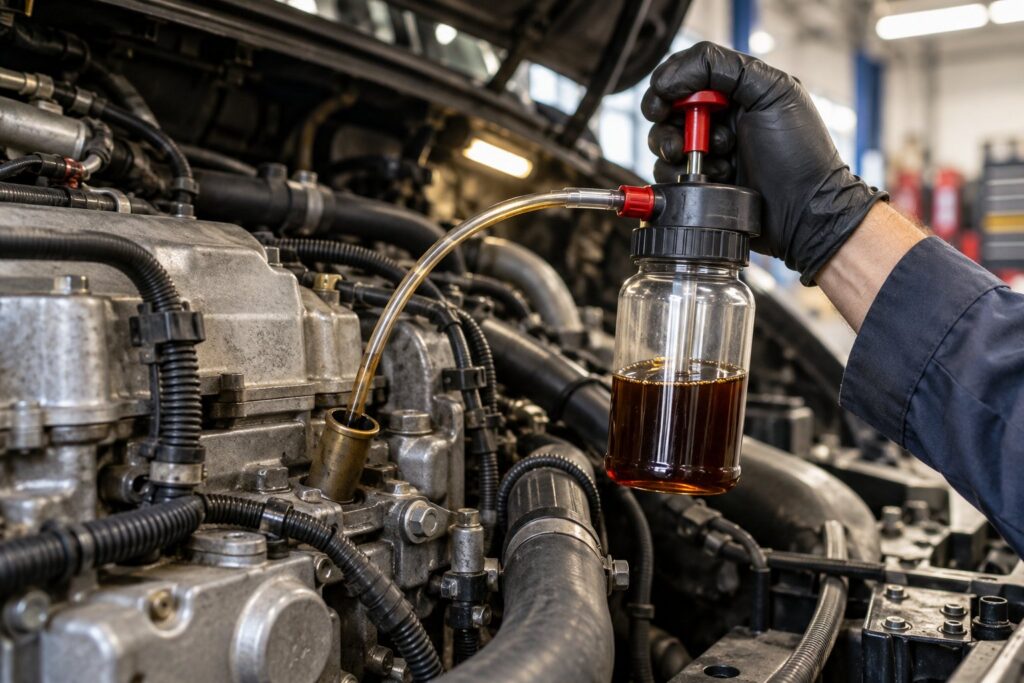
Oil analysis only works if you do it consistently. Pull samples at every oil change, same point in the interval, same sampling method, so your data stays comparable.
For fleets, tag each sample to a specific unit and engine hours. For owner-operators, keep a simple log of mileage and any symptoms. The goal is a clean trend line you can read at a glance.
Use a reputable lab and stick with the same one. Different labs use slightly different methods, and switching mid-stream muddies your trend data.
Once you have that clean trend line, the payoff is lead time. A turbo that’s trending toward the warning stage lets you schedule the repair on your terms, order the right actuator or reman unit ahead of time, and avoid a breakdown that strands a truck and a load. That planning window is the whole reason a $25 sample pays for itself many times over.
Treat the oil report as part of your regular maintenance paperwork, not a one-off test you run after a problem shows up. Mechanics who read every sample the day it comes back are the ones catching bearing wear while it’s still cheap to fix.
Frequently Asked Questions
What does an oil analysis report reveal about turbocharger wear?
An oil analysis measures wear metals like aluminum, chromium, and iron that indicate failing turbo bearings and bushings. Rising levels signal internal wear long before you hear a whine or see blue smoke.
How much does an engine oil analysis cost?
A typical oil sample analysis costs around $25, making it one of the cheapest ways to diagnose potential turbocharger problems. It can help you avoid a four-figure repair bill from a failed center section.
Which metals in an oil report point to turbo problems?
Elevated aluminum, chromium, and copper often point to worn turbo bearings and thrust components. Comparing these values against baseline readings helps confirm turbocharger wear.
Cross-Reference & Superseded Part Numbers
The turbochargers covered in this article match or supersede the following OEM and manufacturer part numbers. If you are searching by part number, these are the units stocked by PT Turbo for this application:
12530339 • 2882109RX-RMN • 4047597-RMN • 888883-6001 • 893516-6001 • PTT-ACS-046 • PTT-MS3-002
Can’t find your number above? Contact PT Turbo — our team has been matching part numbers since 1978.
Need a Turbocharger?
PT Turbo has rebuilt and sold turbochargers since 1978. We stock remanufactured units for Cummins, Duramax, Power Stroke, Detroit Diesel, and more — backed by a 12-month unlimited mileage warranty and same-week shipping from San Bernardino, CA.
📞 (909) 824-1020 · 346 S I St. #3, San Bernardino, CA 92410 · [email protected]