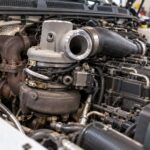
This Marine Diesel Turbocharger Guide covers the three engine families that dominate recreational and commercial waters: Volvo Penta, Yanmar, and Cummins. If you run boats, work barges, or maintain a fleet of commercial vessels, you already know a marine turbo lives a harder life than any on-road unit. Saltwater, constant high load, and limited cooling airflow make correct part selection and maintenance non-negotiable.
At PT Turbo we have been rebuilding and supplying turbochargers since 1978, more than 45 years of hands-on experience across diesel, marine, and heavy equipment applications. We stock both new and remanufactured units, plus the actuators, cartridges, and hardware that keep marine engines running. Here is what you need to know before you order.
Why Marine Turbochargers Fail Differently Than On-Road Units
A truck turbo cools down during highway cruising and idle. A marine turbo often runs at 80 to 100 percent load for hours with no relief. That sustained heat load is the number one reason marine center cartridges cook their bearings and coke their oil.
Saltwater intrusion is the second killer. Seawater aftercooling and raw-water exhaust systems put corrosive moisture close to compressor and turbine housings. Aluminum compressor covers corrode, and cast turbine housings develop scale that throws off wheel balance.
The third factor is oil quality. Marine diesels frequently sit for weeks between use. Acidic combustion byproducts settle in cold oil, then get pumped straight into a 700-degree bearing housing on the next start. If you want a technical primer on how a turbocharger functions under these loads, the fundamentals apply directly to marine service.
Volvo Penta Turbocharger Applications
Volvo Penta covers everything from the compact D2 sailboat auxiliary to the D13 commercial engine. On the classic TMD, TAMD, KAD and KAMD engines the turbo is almost always a KKK unit, a brand that now belongs to BorgWarner. Smaller and newer engines use IHI and Holset turbos.
Volvo Penta engines and the turbos PT Turbo lists for them:
- D2-75: IHI RHF4
- TMD40, TAMD40, TAMD31, TMD41, TAMD41, KAD42, KAD43, KAMD44: BorgWarner (KKK) K26
- TAMD60, TAMD61, TAMD63, TAMD71, TAMD73: BorgWarner (KKK) K27
- TAMD74: BorgWarner (KKK) K31
- D13: Holset HE500WG, wastegated
The KAD and KAMD engines also carry a belt-driven supercharger for low-speed response. It is a separate unit from the turbo, and each can fail on its own.
On the wastegated versions, actuator failure often mimics a bad turbo: low boost, black smoke, sluggish throttle response. Before you condemn the whole assembly, check the actuator and the wastegate.
Yanmar Marine Turbocharger Applications
Yanmar builds some of the most reliable marine diesels in the world, but the turbos still wear. Yanmar fits IHI turbochargers on nearly all of them: the RHB52 on the 4JH series, the RHC61W on the 4LH and 4LHA, the RHE62W on the 6LP and 6LPA, and the RHC7W on the 6LY series.
The 4JH series is the sailboat and small trawler workhorse. When one of these engines loses boost or smokes under load, check the air filter, the exhaust mixing elbow for carbon restriction and the wastegate before the turbo itself.
Three of the Yanmar turbos PT Turbo lists:
- The IHI RHB52 B51CND-S0035B for the 4JH-TE, $1,574.84
- The IHI RHC61W C61CAD-S0090B for the 4LHA-STE, $2,714.72
- The IHI RHC7W C72CAD-S0033B for the 6LY2-STE and 6LY2-STP, $4,462.06
Yanmar’s larger 6LY engines produce serious output for their size. On these, we recommend cartridge inspection at every major service interval because the higher exhaust gas temperatures accelerate turbine-side wear. The 6CX uses a Holset HX50.
What This Marine Diesel Turbocharger Guide Recommends for Yanmar Owners
Do not run a Yanmar turbo dry on startup. After an oil change, crank with the fuel shutoff engaged until oil pressure registers before you let it fire. That single habit prevents the majority of premature Yanmar bearing failures we see on the bench.
Cummins Marine Turbocharger Applications
Cummins marine engines, the 6BTA, 6CTA, QSB, QSC, and QSM families, use Holset turbochargers, made by Cummins Turbo Technologies, almost exclusively. These are the same rugged frames found in on-road trucks and industrial equipment, which makes parts availability excellent: the H1C, H1E and HX35 on the 6BTA, the H1E and H2D on the 6CTA, and the HX40 on the marine QSB.
The marine 6BTA 5.9 shares DNA with the truck 5.9L Cummins, and much of what applies to the road engine carries over. If you want deeper background on those frames, our 5.9L Cummins turbocharger guide covering the HX35, HY35 and HE351CW breaks them down in detail.
Marine ratings of these engines use fixed geometry or wastegated turbos. The variable geometry Holset units (the HE300VG, the HE431VE and similar) belong to the industrial and on-road versions of the QSB, QSC and QSL. If you work on those as well, our Cummins ISB 6.7L variable geometry turbocharger guide explains their failure modes, and the HE351VE vs HE300VG comparison covers the two most common frames.
For more on where Holset comes from, see our article on Cummins Turbo Technologies.
New vs Remanufactured Marine Turbochargers
Marine owners often ask whether a remanufactured turbo is safe for saltwater service. The answer is yes, provided the reman is done correctly with new bearings, seals, and a balanced rotating assembly. A properly remanufactured unit meets the same VSR balance spec as new.
| Factor | New OEM Turbo | Remanufactured Turbo |
|---|---|---|
| Typical cost | Highest | 40 to 60 percent less |
| Rotating assembly | New | New bearings and seals, balanced |
| Availability | Can be back-ordered | Usually in stock |
| Warranty | Full | Full warranty at PT Turbo |
| Best for | Warranty-critical new engines | Repower, refit, cost control |
PT Turbo stocks a full range of remanufactured turbochargers built to OEM tolerances. If you have a core, our turbocharger rebuild service can restore your original unit, which matters when an exact OEM replacement is discontinued or hard to source for older Volvo Penta and Yanmar hulls.
Marine Turbo Failure Symptoms by Severity
Catching a problem early on the water saves you from a dead engine miles from the dock. Use this triage guide to prioritize.
| Severity | Symptom | Likely Cause |
|---|---|---|
| Low | Slight boost lag, minor oil in intake | Seal wear, actuator drift |
| Medium | Black smoke under load, reduced top RPM | Failed wastegate actuator, restricted exhaust elbow |
| High | Whistling or grinding, blue smoke | Bearing failure, wheel contact |
| Critical | Sudden power loss, oil in exhaust water | Turbine or compressor wheel failure |
Many medium-severity issues trace back to the actuator, not the turbo core.
Maintenance That Extends Marine Turbo Life
Marine turbos reward disciplined maintenance. These practices extend turbo service life.
- Idle before shutdown. Let the engine run at low RPM for three to five minutes after a hard pull. This drops bearing-housing temperature and prevents the oil from coking in a heat-soaked cartridge.
- Change oil on a calendar, not just hours. Because marine diesels sit idle for long stretches, acidic byproducts attack bearings between seasons. Fresh oil before layup protects the center section through months of non-use.
- Flush the raw-water side. Keep aftercoolers and raw-water exhaust components free of salt scale so corrosive moisture stays away from the turbine and compressor housings.
- Inspect the actuator at every service. A sticking or drifting actuator is cheap to catch early and expensive to ignore. Check travel and wastegate seating before it starts throwing smoke and killing top-end RPM.
Stay ahead of shaft play, too. A few minutes with the inlet pipe off, checking for radial and axial movement in the wheel, tells you whether the bearings are still tight. Catch that wear before it becomes wheel contact and you turn a cartridge job into a full housing replacement.
Frequently Asked Questions
Why do marine turbochargers wear out faster than on-road units?
Marine turbos face saltwater exposure, constant high engine loads, and limited cooling airflow, all of which accelerate wear compared to automotive applications. Correct part selection and regular maintenance are essential to extend their service life.
Which engine brands does this Marine Diesel Turbocharger Guide cover?
This guide focuses on the three engine families that dominate recreational and commercial waters: Volvo Penta, Yanmar, and Cummins. It helps boat owners and fleet operators choose the right turbo for each application.
How do I select the correct turbocharger for my marine diesel engine?
Match the turbo to your specific engine model, application, and load profile using the manufacturer’s part numbers for Volvo Penta, Yanmar, or Cummins. Proper selection ensures reliable performance and prevents premature failure in demanding marine conditions.
Need a Turbocharger?
PT Turbo has rebuilt and sold turbochargers since 1978. We stock remanufactured units for Cummins, Duramax, Power Stroke, Detroit Diesel, and more — backed by a 12-month unlimited mileage warranty and same-week shipping from San Bernardino, CA.
📞 (909) 824-1020 · 346 S I St. #3, San Bernardino, CA 92410 · [email protected]
More From PT Turbo
- What Is a Turbocharger SuperCore? When It Is the Right Replacement Option
- School Bus Turbocharger Guide: International DT466 & Cummins B-Series Replacement
- New Turbocharger vs Rebuilt vs Remanufactured: What Is the Actual Difference?
 Turbocharger Rebuild Cost Breakdown: What You Are Actually Paying For