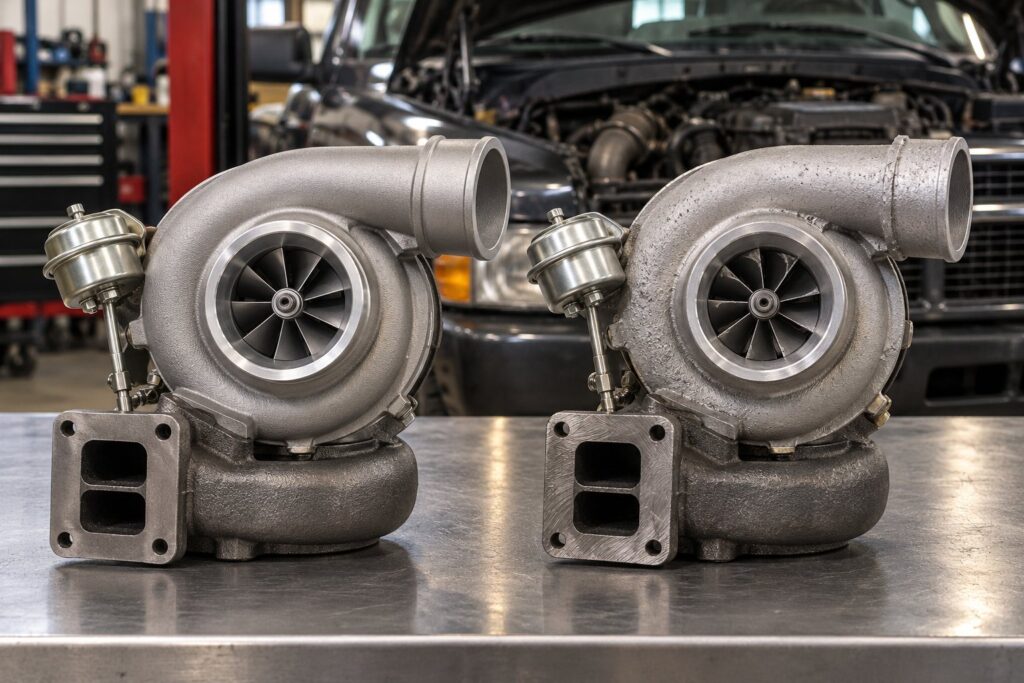
Knowing how to spot a counterfeit turbocharger is one of the most valuable skills a diesel mechanic or fleet manager can have, because a fake Holset, Garrett, or BorgWarner unit can destroy an engine faster than a worn-out original ever will. The counterfeit market has exploded alongside online marketplaces, and the fakes have gotten good enough to fool a quick glance. They copy the castings, the stickers, even the boxes. What they cannot copy is the metallurgy, the balancing tolerances, and the quality control that make a genuine turbo survive 400,000 miles behind a diesel.
PT Turbo has been in the turbocharger business since 1978, more than 45 years of handling real units across the bench every single day. That experience is exactly what it takes to separate a legitimate core from a clever imitation. Below is the field knowledge we use to catch counterfeits before they ever reach an engine.
Why Counterfeit Turbos Are a Real Threat, Not a Rumor
A turbocharger spins its compressor and turbine wheels at speeds past 100,000 RPM while handling exhaust gas temperatures that can exceed 1,200 degrees Fahrenheit. The margin for error in the shaft balance, wheel casting, and bearing system is measured in microns. A counterfeit cuts corners in exactly those areas you cannot see.
The usual failure pattern with a fake is sudden and catastrophic. A poorly balanced rotating assembly lets the compressor wheel contact the housing, or the turbine wheel grenades and sends fragments downstream. On a modern diesel that debris travels straight into the diesel particulate filter and aftertreatment system, turning a turbo problem into a five-figure repair.
Counterfeiters target the highest-volume models because that is where the money is. Holset HX35 turbochargers and HX40 turbochargers for Cummins applications are heavily faked, along with Garrett GT-series units and BorgWarner S300 turbochargers and S400 turbochargers. If it sells in volume, someone is copying it.
How to Spot a Counterfeit Turbocharger by the Nameplate and Markings
The nameplate is where most fakes fall apart under inspection. Genuine manufacturers use laser-etched or precisely stamped data plates with consistent font, depth, and alignment. Counterfeits often use printed stickers, shallow etching, or fonts that are slightly off in weight and spacing.
Check these details against a known-good reference:
- Part number format. Holset uses a consistent numbering scheme, and the CHRA, compressor cover, and nameplate numbers should correlate. Mismatched or nonsensical numbers are a red flag.
- Serial number depth and clarity. Genuine serials are crisp and uniform. Fakes smear, double-strike, or print unevenly.
- Logo quality. Compare the Holset, Garrett, or BorgWarner logo edges under magnification. Counterfeit logos show pixelation, rough edges, or incorrect proportions.
- Casting marks. Real housings carry foundry marks, date codes, and part identifiers cast directly into the metal. Fakes often grind these off or reproduce them poorly.
Garrett has added holographic authenticity labels and QR verification to many of its current units. You can validate markings against the information published at garrettmotion.com. BorgWarner publishes similar guidance at borgwarner.com. If a label looks like it could, it probably should not be trusted.
Physical Giveaways: Weight, Casting, and Machining
Pick the turbo up. A genuine unit has a specific heft because the housings are cast from the correct grade of iron and the rotating assembly uses proper materials. Many counterfeits feel noticeably lighter because they use inferior alloys with lower density and heat tolerance.
Then look at the machined surfaces. Genuine turbos have clean, consistent machining on the mounting flanges, the bore, and the wheel contours. Counterfeits show tooling chatter, rough casting flash left unremoved, porosity in the aluminum, and uneven surface finish.
Spin the shaft by hand. A real cartridge rotates smoothly with controlled, even endplay and radial play within spec. A fake frequently feels gritty, notchy, or has sloppy play that you can feel immediately if you have handled good cores before.
| Inspection Point | Genuine Turbocharger | Counterfeit Turbocharger |
|---|---|---|
| Nameplate | Laser-etched, uniform font, correlating part numbers | Printed sticker or shallow etch, mismatched numbers |
| Casting quality | Clean, crisp foundry marks and date codes | Rough, porous, ground-off or faked marks |
| Weight | Correct heft for the model | Often noticeably lighter |
| Shaft feel | Smooth rotation, in-spec endplay and radial play | Gritty or notchy, loose or inconsistent play |
| Compressor wheel | Precision-balanced, clean blade finish | Visible balance marks, rough or uneven blades |
| Packaging | Consistent branding, correct labels, security features | Blurry print, wrong colors, missing holograms |
The Wheels Tell the Truth
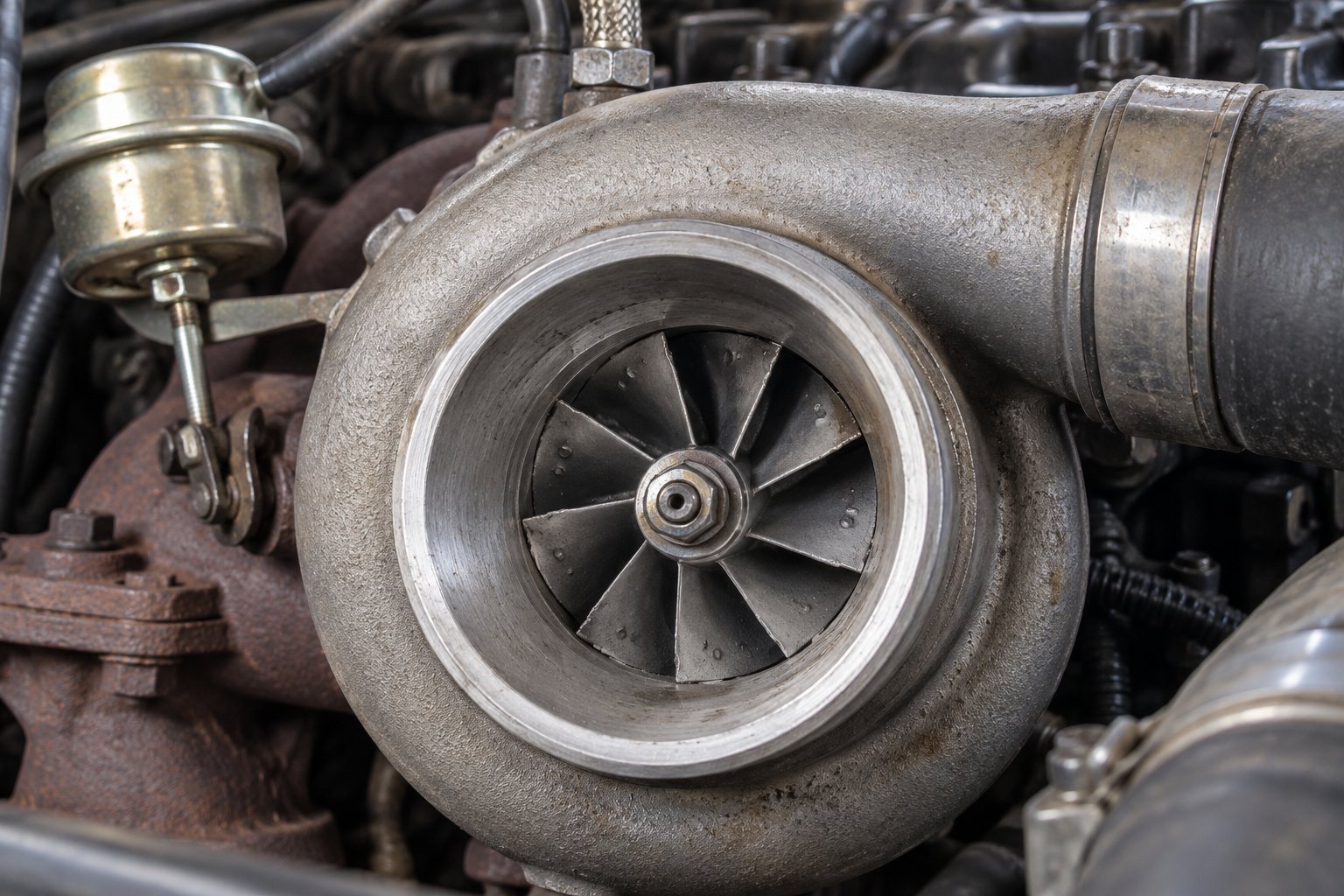
The compressor and turbine wheels are where counterfeiters cannot hide. A genuine compressor wheel is machined or cast to tight tolerances and precision-balanced, with clean blade geometry and a consistent surface finish across every blade.
Pull the inlet and look closely. Counterfeit wheels show inconsistent blade thickness, rough edges, casting defects between the blades, and crude balance correction. Some fakes use the wrong number of blades or an incorrect blade profile entirely for that model, which changes the compressor map and kills performance.
On variable-geometry units, the problem compounds. A genuine variable-geometry turbocharger like the Holset HE351VE or the Garrett GT3788VA depends on a precisely built nozzle ring and actuator. Counterfeit VGT mechanisms bind, stick, and fail to hold calibration, which triggers boost faults and derates. If you are diagnosing a VGT issue, our Duramax LLY GT3788VA guide walks through how a healthy unit should behave.
Where Counterfeits Come From and How to Avoid Them
Fakes almost always enter through the cheapest channels. Unknown online sellers, auction listings with stock photos, and prices far below market are the common threads. When a brand-new Holset or Garrett is priced at a fraction of what the real part costs, the discount is the warning, not the deal.
Protect yourself with a few simple rules:
- Buy from established specialists with a verifiable history and a real phone number, not anonymous marketplace accounts.
- Be suspicious of any price that undercuts the market dramatically. Genuine turbos have a floor cost in materials alone.
- Match the full part number across the nameplate, housings, and your application before you install.
- Ask whether the unit is genuine new, genuine remanufactured, or aftermarket, and get the answer in writing.
This is exactly why so many fleets and owner-operators buy their remanufactured turbochargers from a known source. When PT Turbo remanufactures a core, it starts with a verified genuine housing and rotating assembly, gets rebuilt to OEM spec, and is balanced on calibrated equipment. You know exactly what is in the box.
What to Do If You Suspect a Fake
If a turbo is already in hand and you have doubts, do not install it. Pull the data plate numbers and verify them with the manufacturer or a trusted rebuilder. Compare the physical unit against a known-good reference of the same model.
If you need a straight answer, send us the numbers and photos. With 45-plus years on the bench and both new and remanufactured parts in stock, PT Turbo can usually identify a counterfeit from clear photos of the nameplate, wheels, and castings. Reach us through the contact page or call (909) 824-1020.
When a suspect turbo turns out to be genuine but worn, rebuilding a verified core is often the smartest move. Our turbo rebuild service restores a known-good unit to spec, and you can see model-by-model pricing on the rebuild price list rather than gambling on an unknown part. You can also browse verified units in our turbo store.
Model-Specific Notes on Commonly Faked Turbos
Certain platforms draw more counterfeits because of their install base. Cummins ISX and Signature engines run BorgWarner S400 and Holset units that are widely copied. Detroit Diesel Series 60 owners should know their real options, covered in our Series 60 S300 guide.
Caterpillar C9 applications rely on the BorgWarner S200, detailed in our C9 turbocharger guide, and these mid-range units get faked for the construction and agricultural market. Volvo D12 owners should cross-check against our D12 K31 guide before buying anything that looks too cheap to be real. For background on how these systems interact with emissions hardware, the fundamentals of exhaust gas recirculation are worth understanding, since counterfeit VGT failures often cascade into EGR and aftertreatment faults.
Frequently Asked Questions
Can a counterfeit turbocharger really damage my engine?
Yes, and the damage is often severe. Poor balancing and inferior metallurgy lead to wheel contact and shaft failure, which sends debris into the intake or exhaust. On emissions-equipped diesels, turbine fragments can wreck the DPF and aftertreatment, turning a turbo swap into a much larger bill.
How can I verify a Garrett or BorgWarner turbo is genuine before installing it?
Check the nameplate for laser etching, uniform fonts, and part numbers that correlate across the housings and cartridge. Garrett and BorgWarner publish authentication guidance and security features on their official sites. If anything looks off, send the numbers and photos to a trusted rebuilder like PT Turbo for verification before the unit goes on the engine.
Is a remanufactured turbo safer than a cheap new one online?
A properly remanufactured turbo from an established shop is built on a verified genuine core, rebuilt to OEM spec, and balanced on calibrated equipment, so you know exactly what you are getting. A suspiciously cheap new unit from an unknown seller carries real counterfeit risk. For known-good parts, buy from a specialist with a long track record rather than an anonymous listing.
Need a Turbocharger?
PT Turbo has rebuilt and sold turbochargers since 1978. We stock remanufactured units for Cummins, Duramax, Power Stroke, Detroit Diesel, and more — backed by a 12-month unlimited mileage warranty and same-week shipping from San Bernardino, CA.
📞 (909) 824-1020 · 346 S I St. #3, San Bernardino, CA 92410 · [email protected]