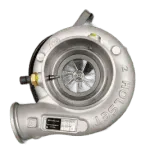
Caterpillar 3126 Turbocharger Guide: School Bus & Medium Duty Replacement
If you run a fleet of school buses, dump trucks, or medium duty rigs, you already know the Caterpillar 3126 turbocharger is the heart of one of the most widely deployed diesels of the late 1990s and 2000s. The 3126 and its 3126B/3126E variants powered everything from Blue Bird and Thomas school buses to Freightliner FL70s and countless box trucks. When that turbo starts smoking, surging, or losing boost, the whole vehicle goes down, and a down bus or delivery truck costs you money every day it sits. This guide breaks down how the 3126 turbo works, how to spot a failing unit, what your replacement options actually cost, and the install hardware you need to do the job right the first time.
Caterpillar 3126 Turbocharger: Engine Background and Specs
The CAT 3126 is a 7.2-liter inline-six, the first electronically controlled mid-range diesel Caterpillar built, replacing the mechanical 3116. In trucks and buses it was rated from about 170 to 330 horsepower depending on rating and model year (marine versions went as high as 420 hp), with the higher-output versions leaning hard on the turbocharger to make their numbers. Most 3126 applications run a single wastegated turbo, typically a BorgWarner (Schwitzer) S200G or S300G unit (some marine versions use Garrett) feeding an air-to-air charge cooler.
Here are the core specs a tech needs to know before ordering parts:
| Specification | Detail |
|---|---|
| Displacement | 7.2 L (442 cu in) |
| Configuration | Inline-6, turbocharged, charge air cooled |
| Horsepower range | About 170 to 330 hp (trucks and buses) |
| Turbo type | Single wastegated (BorgWarner/Schwitzer S200G or S300G on trucks and buses) |
| Typical peak boost | 22 to 28 psi depending on rating |
| Common applications | School buses, Freightliner FL60 and FL70, Ford and GMC medium-duty trucks, dump and box trucks |
| Production years | Mid-1990s to 2003, when the C7 replaced it |
Because the 3126 was sold across so many chassis and power ratings, there is no single “3126 turbo.” The compressor housing, turbine A/R, and wastegate actuator setting vary by application. Always match by the turbo part number on the nameplate and the CAT part number on the original unit (a casting number alone does not identify a turbo), not just the engine model. If you are unsure which variant you have, the team at PT Turbo can cross-reference your numbers. Contact PT Turbo here with your turbo part number and serial number.
Common 3126 Turbocharger Failure Symptoms
The 3126 turbo is a durable unit, but at 300,000-plus miles or after years of stop-and-go school bus duty, wear catches up with it. Bearing failure, wastegate problems, and oil seal leaks are the big three. Here is how the symptoms break down by severity so you can triage before you tear into it.
| Severity | Symptom | Likely Cause |
|---|---|---|
| Early | Slight whistle, minor power loss on grades | Boost leak, loose clamp, early wastegate wear |
| Moderate | Blue/gray smoke, oil in intake piping, rising oil consumption | Failing turbine or compressor oil seals |
| Severe | Grinding/screeching, shaft play, no boost, metal in oil | Worn or seized center bearing, contacted wheels |
| Critical | Runaway risk, heavy smoke, oil pouring from exhaust | Catastrophic seal failure feeding crankcase oil to intake |
A quick field check: with the engine cold, pull the intake boot and grab the compressor wheel. Any axial play you can feel by hand or any radial play that lets the blades touch the housing means the center cartridge is done. Check the wheel edges for impact damage too. If the tips are chewed up, you have ingested debris and need to find the source before installing a new turbo, or you will kill it the same way.
Diagnosing Before You Condemn the Turbo
Many of the “bad turbos” we see returned were never the problem. Before you spend money, rule out the cheap stuff. Low boost on a 3126 frequently traces back to a leaking charge air cooler, a cracked boost tube, or a stuck wastegate actuator rather than the turbo itself.
- Pressure-test the charge air cooler. A cracked CAC or blown boot mimics a dying turbo perfectly. Pressurize to 30 psi and listen for leaks.
- Check the wastegate actuator. Apply regulated air to the actuator and confirm the rod strokes freely. A seized rod can hold the gate open and dump boost; a torn diaphragm leaves it shut and boost runs high.
- Inspect the air filter and intake. A clogged filter creates restriction that starves the compressor and looks like turbo lag.
- Pull the exhaust side. Excessive backpressure from a plugged catalytic converter, a retrofitted particulate filter or a collapsed muffler will choke the turbine.
- Scan for codes. The 3126 monitors boost pressure. Codes for low boost or intake manifold pressure narrow the search fast.
Once you have confirmed the turbo is genuinely worn, the next decision is new, remanufactured, or rebuild.
Replacement Options: New, Remanufactured, or Rebuild
You have three honest paths on a 3126, and the right one depends on your downtime tolerance and budget. PT Turbo has been in the turbocharger business for over 45 years, and we stock both brand-new and remanufactured units along with full rebuild service, so you are not boxed into one option.
| Option | Typical Cost | Best For |
|---|---|---|
| New OEM/aftermarket turbo | Quoted by part number | Newer trucks, max service life, warranty-sensitive fleets |
| Remanufactured turbo | $1,039 to $1,361 (13 listings) at PT Turbo | Best value, proven cores, fast turnaround |
| Rebuild your existing core | From $575 at PT Turbo (price list) | Hard-to-find castings, keeping your matched unit |
Price ranges in this article are general estimates to help with budgeting, not PT Turbo quotes. Our current prices are on each product listing, and our rebuild prices are on the turbo rebuild price list.
For most school bus and medium duty operators, a remanufactured 3126 turbocharger is the sweet spot. A properly remanufactured unit gets a new center cartridge, balanced wheels, fresh seals and bearings, and is run on a VSR balancing machine to OE tolerances. You get the reliability of new at a fraction of the price. If your application uses an uncommon housing combination and you want to keep your exact unit, our turbocharger rebuild service restores your core to spec with the same precision balancing.
If you also run other mid-range diesels in your fleet, our application guides for the Cummins ISC HX40 and Cummins ISL cover the same kind of bus and medium duty replacement decisions.
Don’t Skip the Install Kit: Gaskets and Hardware That Matter
This is where a lot of turbo jobs go wrong. Reusing old gaskets, hardened oil lines, and stretched studs is the fastest way to turn a good turbo into a repeat failure. An exhaust gasket leak heats the bearing housing, and a partially blocked oil feed line will starve the new cartridge and spin a bearing within hours. Always install a complete kit with fresh gaskets, seals, and fasteners.
PT Turbo stocks Ajusa Caterpillar installation kits to match the various 3126 and related CAT turbo configurations. Match your kit to the specific gasket set your application requires:
- Installation kits are listed by turbo part number: send us the number on your turbo and we will match the kit.
For under fifty dollars in gaskets and hardware, you protect a turbo investment ten times that amount. There is no good reason to skip it.
3126 Turbo Installation Best Practices
Get these right and your replacement turbo will outlast the truck. Skip them and you will be back under the hood in a week.
- Prime the bearing. Before bolting up the oil feed, pour clean engine oil into the center housing oil inlet and spin the shaft by hand. Dry start is the number one cause of premature failure.
- Replace the oil feed line. Old supply lines coke up internally. A restricted line on a fresh cartridge equals a spun bearing. Replace it, do not just reuse it.
- Clean the oil drain return. A blocked or kinked drain backs oil up into the bearing housing and pushes it past the seals, giving you blue smoke on a brand-new unit. Make sure it flows free and runs downhill into the block.
- Torque the mounting hardware in sequence. Snug the turbine flange fasteners evenly and bring them to spec in a cross pattern. Uneven clamping warps the flange and opens an exhaust leak right where you cannot afford one.
- Idle before you load it. After the install, let the engine idle for several minutes so oil pressure stabilizes through the new cartridge before you rev it or put the vehicle under load.
None of this adds real time to the job, but every step protects the center section from the failure modes that bring turbos back. Do the diagnosis up front, install with fresh hardware, and prime and bed in the new unit properly, and a 3126 turbo replacement will stay buttoned up for the long haul.
Turbos we list for the S200G
Listings for the turbo models named in this guide that can be ordered online today. Several part numbers can fit one engine by year and rating, so match the number on your turbo’s tag, or call (909) 824-1020 and we will match it for you.
Frequently Asked Questions
What vehicles use the Caterpillar 3126 turbocharger?
The 3126 and its 3126B/3126E variants powered Blue Bird and Thomas school buses, Freightliner FL70s, dump trucks, and many medium duty box trucks built from the mid-1990s to the early 2000s.
How do I know if my 3126 turbocharger needs replacing?
Common signs include loss of power, excessive exhaust smoke, whining or grinding noises, oil leaks, and increased fuel consumption. A boost pressure test can confirm a failing turbo.
Are 3126B and 3126E turbochargers interchangeable?
Not always—while the 3126 variants share a platform, turbocharger fitment can differ by horsepower rating and application. Always verify your part number and engine specs before ordering a replacement.
Further reading: Learn more about turbocharger technology.
Need a Turbocharger?
PT Turbo has rebuilt and sold turbochargers since 1978. We stock remanufactured units for Cummins, Duramax, Power Stroke, Detroit Diesel, and more — backed by a 12-month unlimited mileage warranty. Units in stock at our shop in San Bernardino, CA ship the same day when ordered before 2 PM Pacific, Monday through Friday.
📞 (909) 824-1020 · 346 S I St. #3, San Bernardino, CA 92410 · [email protected]
More From PT Turbo
- Isuzu 4HK1 Turbocharger Guide: NPR, NQR & Construction Equipment Applications
 Cummins ISX Turbocharger Guide: HE400VG, HE451VE & HE561VE Differences Explained
- Volvo VNL Turbocharger Replacement Guide: D13 Applications by Model Year
- Isuzu 6HK1 Turbocharger Guide: FTR & FVR Medium Duty Truck Applications