How to Remove a Turbocharger on a 6.7L Cummins: Ram 2500 & 3500 Step-by-Step
Knowing How to Remove a Turbocharger on a 6.7L Cummins is one of the most valuable skills a Ram 2500 or 3500 owner can have, whether you’re replacing a failed unit, swapping in a rebuilt turbo, or servicing the variable geometry components underneath. The 6.7L Cummins uses a Holset variable-geometry turbo that bolts to the exhaust manifold on the passenger side of the engine. Most of the work is done from above, and it’s a completely doable job in a driveway with the right tools and a methodical approach.
At PT Turbo we’ve been rebuilding and supplying turbochargers since 1978, over 45 years of hands-on experience with Holset, Garrett, Mitsubishi, and BorgWarner units. This guide walks you through the full removal procedure, the tools you’ll need, the common bolts that fight you, and what to inspect before your new or remanufactured turbo goes back on.
Before You Start: Tools, Parts & Safety
The 6.7L Cummins runs either the HE351VE (2007.5 to 2012) or the HE300VG (2013 and up) variable-geometry turbocharger. Both are electronically actuated units, so you’ll be disconnecting a VGT actuator connector rather than a vacuum line. If you’re not sure which turbo you have, our 6.7L Cummins turbocharger guide breaks down the differences and replacement costs.
Gather these before you lift a wrench:
- Metric sockets and wrenches: 8mm, 10mm, 13mm, 15mm, plus deep sockets
- 3/8″ and 1/2″ drive ratchets with a good breaker bar
- Swivel/universal joints and long extensions
- Deep sockets for the turbo mounting nuts on the manifold studs
- Penetrating oil and an anti-seize compound for reassembly
- New turbo-to-manifold gasket, turbo drain gasket, and sealing washers for the oil and coolant line fittings
- Fresh engine oil and a clean feed line
Let the engine cool completely. Exhaust components hold heat for hours and the turbine housing can exceed 1,000°F under load. Disconnect the negative battery terminals on both batteries before you touch any electrical connector.
How to Remove a Turbocharger on a 6.7L Cummins: Step-by-Step
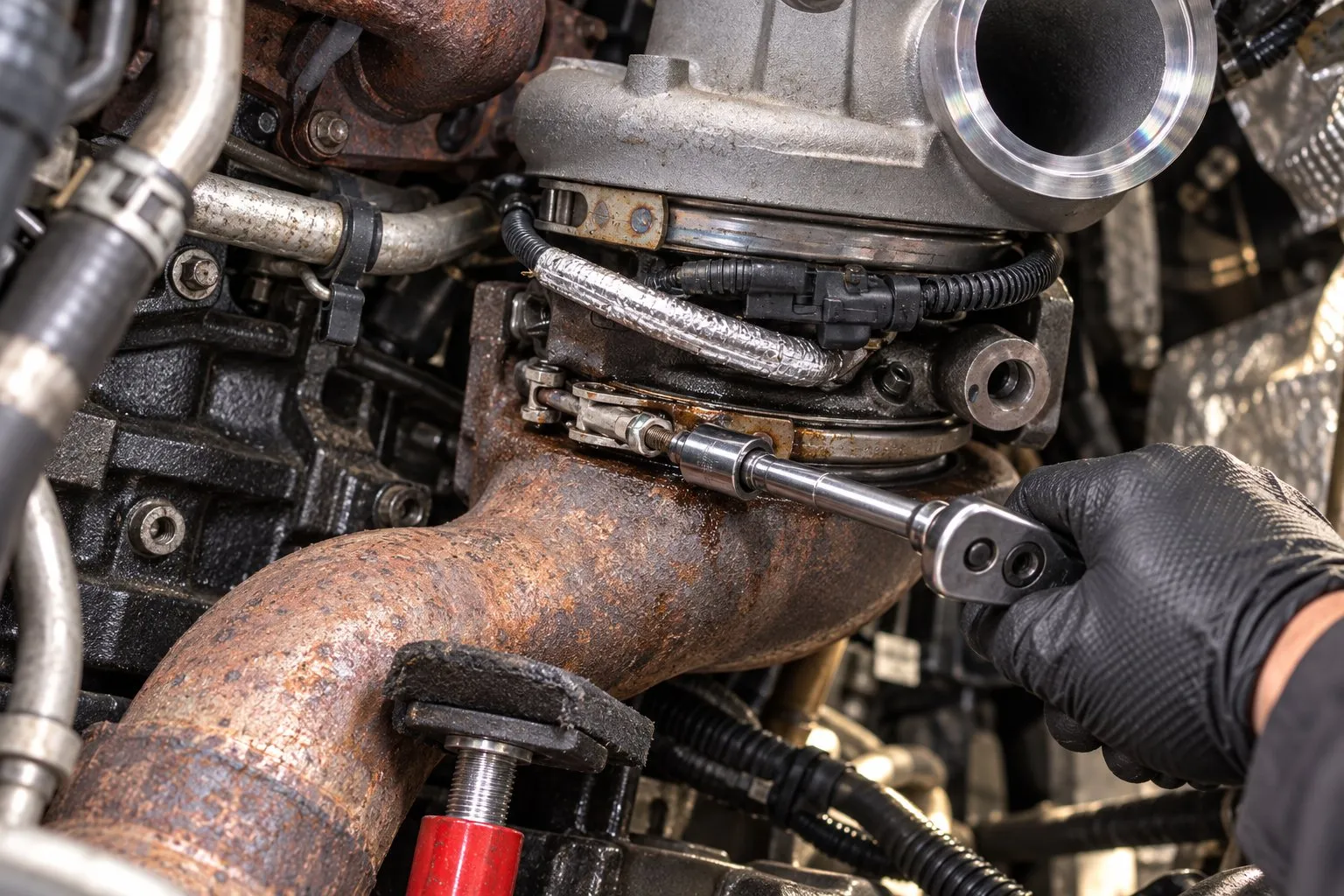
Work from the top down and take photos as you go. The 6.7L is accessible from above for most of the job, though a few fasteners are easier from underneath with the truck on ramps or a lift.
Step 1: Drain Coolant and Remove the Air Intake
Drain enough coolant to clear the turbo coolant lines, roughly two gallons. Remove the intake tube and the charge air (boost) tube from the compressor outlet. Cover the openings with clean rags so nothing drops into the compressor wheel or intake.
Step 2: Disconnect the VGT Actuator and Sensors
Unplug the electronic VGT actuator connector on the turbo. Release the wiring harness clips and move the loom clear. If your actuator has been sticking or throwing codes, this is the perfect time to inspect it.
Step 3: Remove the Exhaust Down-Pipe / V-Band Clamp
Loosen the V-band clamp connecting the turbine outlet to the down-pipe. These clamps corrode, so hit the nut with penetrating oil first. Support the down-pipe once it’s free so it doesn’t hang on the DPF piping.
Step 4: Disconnect Oil and Coolant Lines
Remove the oil feed line from the top of the center housing and the oil drain tube at the bottom. Then disconnect the two coolant lines. Have a drain pan ready, residual oil and coolant will spill. Cap the oil feed fitting immediately to keep debris out.
Step 5: Remove the Exhaust Manifold-to-Turbo Fasteners
The turbo mounts to the exhaust manifold with nuts on studs. These see extreme heat cycling and are the most likely to seize or snap. Soak them, apply steady pressure, and back them out slowly. If one starts to twist, stop and re-soak rather than shearing it off.
Step 6: Lift the Turbo Free
With all lines, the clamp, and the mounting fasteners removed, work the turbocharger up and out of the engine bay. It’s heavy and awkward, around 50 pounds with the actuator, so get a firm two-handed grip. Cap every port on the old unit for cleanliness and to keep it intact if it’s a rebuild core.
Inspect Before You Reinstall
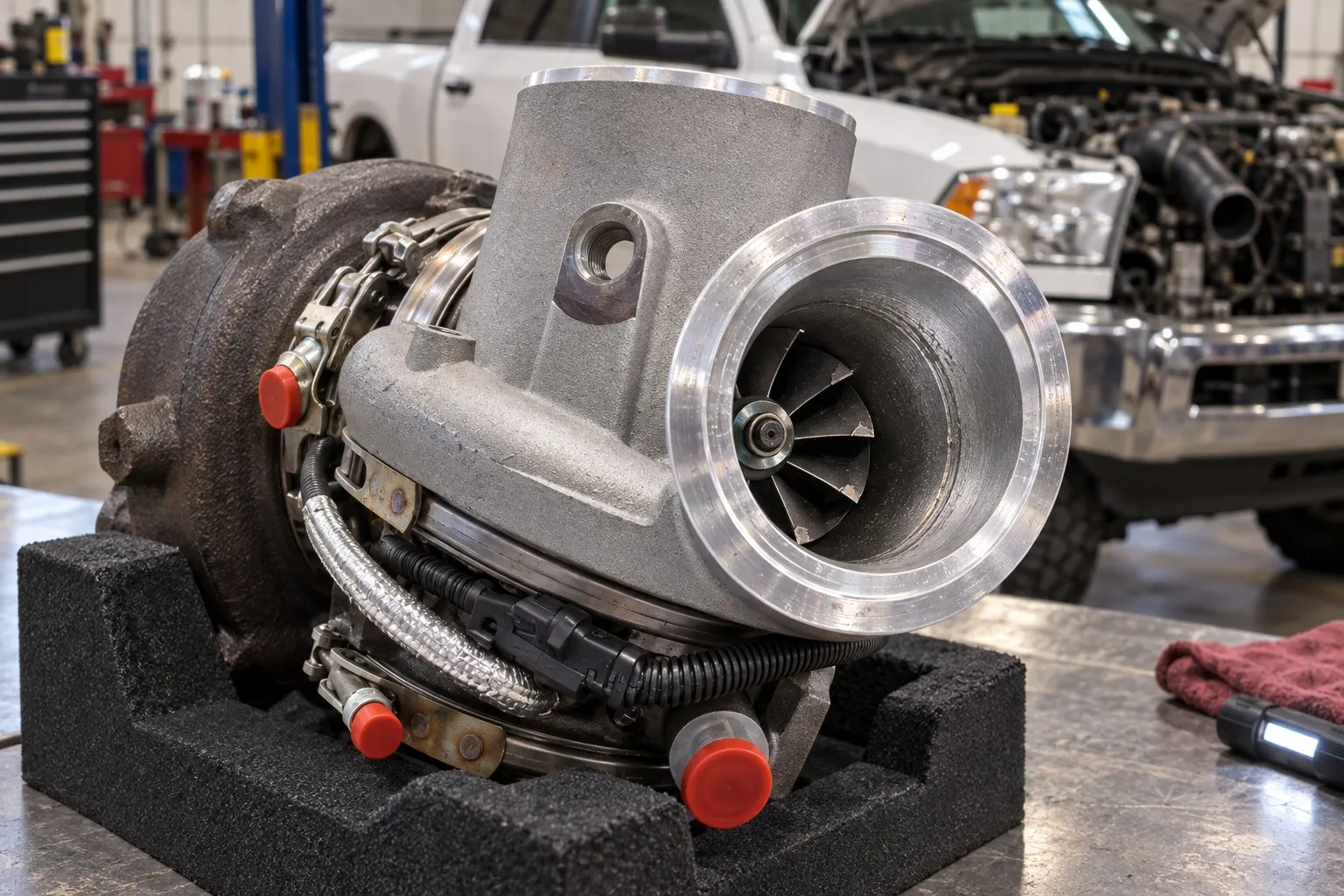
Never bolt a turbo, new or old, onto a dirty or damaged system. A failed turbo often takes debris downstream, and a bad oil supply will kill the replacement in minutes.
- Oil feed line: Flush or replace it. Coked, restricted feed lines are the number one cause of repeat turbo failure.
- Compressor and turbine wheels: Check for contact marks, bent blades, or excessive shaft play.
- Charge air cooler: Inspect for oil pooling, which indicates a blown seal upstream.
- VGT vanes: Soot buildup jams the variable-geometry mechanism. This is a leading failure mode covered in depth in our Cummins ISB 6.7L turbocharger guide.
The Holset variable-geometry design uses a sliding nozzle ring to control exhaust flow across the RPM range. If you want the engineering background, this overview of variable-geometry turbochargers explains the mechanism well.
New vs. Remanufactured: What Goes Back On
Once the old turbo is out, you’ve got options. A quality remanufactured unit costs far less than OEM new and, when built to spec, performs identically. Here’s how the choices compare for a 6.7L Cummins.
| Option | Typical Cost | Warranty | Best For |
|---|---|---|---|
| OEM New (dealer) | $1,713 to $9,680 (47 listings) at PT Turbo | Factory | Warranty-covered trucks |
| Remanufactured (PT Turbo) | $2,415 to $5,931 (22 listings) at PT Turbo | Backed warranty | Best value for most owners |
| Rebuild your core | Labor + parts | Backed warranty | Keeping your matched unit |
| Cheap import new | $500 to $800 (estimate) | Limited/none | Rarely worth the risk |
Price ranges in this article are general estimates to help with budgeting, not PT Turbo quotes. Our current prices are on each product listing, and our rebuild prices are on the turbo rebuild price list.
Our remanufactured turbochargers are built and balanced to OEM tolerances, and if you’d rather keep your original housing we offer a full turbo rebuild service. Either way you’re getting parts backed by more than four decades of turbo experience.
Actuator Replacement: A Common Fix
Sometimes the turbo itself is fine and the actuator is the failure point. A sticking or dead actuator throws boost and VGT position codes and mimics a full turbo failure. Replacing just the actuator can save hundreds if the CHRA is healthy. A replacement actuator must be calibrated to the turbo with a scan tool after install.
Not sure which actuator or turbo matches your VIN and build date? Contact PT Turbo with your part numbers and we’ll confirm the correct fit, or browse our full catalog on the shop page. Owners running older trucks can also compare setups in our 5.9L Cummins turbocharger guide.
Reinstallation Tips That Prevent Comebacks
Reassembly is the reverse of removal, but a few habits separate a job that lasts from one that fails early.
- Prime the new turbo with clean engine oil through the feed port before connecting the line. Spin the shaft by hand to coat the bearings.
- Use new gaskets everywhere. Never reuse the turbo mounting gasket, the drain gasket, or the line sealing washers.
- Apply high-temp anti-seize to the exhaust fasteners and torque them to spec in sequence.
- Idle the engine for several minutes after startup before revving. This lets oil pressure build and bleeds air from the feed line.
One more habit worth building in: after that initial idle, take the truck for an easy drive and watch for boost codes, oil weeping at the feed and drain connections, and any whistle that signals a leaking charge pipe or loose V-band. Catching a seep now is a five-minute fix. Catching it after a long tow is a tow bill.
Done methodically, this is a job most owners can knock out in a weekend. Take your time on the seized exhaust fasteners, keep every port capped until the moment you connect it, and give the new unit clean oil to live on. Do that and the replacement will outlast whatever took down the original.
Frequently Asked Questions
Where is the turbocharger located on a 6.7L Cummins?
The Holset variable-geometry turbo bolts to the exhaust manifold on the passenger side of the engine. Most of the job is done from above, with a few fasteners easier to reach from underneath.
How long does it take to remove a turbocharger on a 6.7L Cummins?
For a DIY mechanic with the right tools, removal typically takes 3 to 5 hours. Experienced technicians may complete the job faster.
What tools do I need to remove a 6.7L Cummins turbocharger?
You’ll need standard metric sockets and wrenches, a torque wrench, penetrating oil, and possibly a swivel or extension set to reach tight bolts. A vehicle lift or jack stands make access much easier.
Need a Turbocharger?
PT Turbo has rebuilt and sold turbochargers since 1978. We stock remanufactured units for Cummins, Duramax, Power Stroke, Detroit Diesel, and more — backed by a 12-month unlimited mileage warranty. Units in stock at our shop in San Bernardino, CA ship the same day when ordered before 2 PM Pacific, Monday through Friday.
📞 (909) 824-1020 · 346 S I St. #3, San Bernardino, CA 92410 · [email protected]