Ford 6.0L Powerstroke Turbocharger Replacement Cost: Full Price Breakdown
Understanding the Ford 6.0L Powerstroke Turbocharger Replacement Cost is the first step toward making a smart repair decision instead of an expensive mistake. The 6.0L’s Garrett GT3782VA variable geometry turbo is one of the most failure-prone components on this engine, and when it goes, the bill can swing wildly depending on whether you buy new, reman, or repair just the failed part.
At PT Turbo, we have been rebuilding and supplying diesel turbochargers since 1978. Over 45 years in the business has taught us exactly where owners overspend and where they can save without cutting corners. This breakdown covers every real cost involved, from the unit itself to labor, gaskets, and the small parts that actually cause most failures.
What Turbo Does the 6.0L Powerstroke Use?
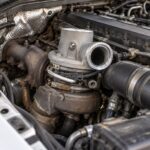
The 2003 to 2007 Ford 6.0L Powerstroke runs a Garrett GT3782VA, a single variable geometry turbocharger (VGT). Unlike a fixed-geometry turbo, it uses movable vanes in the exhaust housing controlled by a hydraulic actuator and the VGT solenoid.
This design gives the 6.0L strong low-end response and sharp throttle, but the moving vanes are also the Achilles’ heel. Soot buildup, sticking unison rings, and failed VGT solenoids account for most of the complaints we see come through the shop.
If you are not sure whether your turbo is actually failing or whether the problem is the VGT control circuit, start with our guide on 8 warning signs of 6.0L turbo failure before you spend a dime on parts.
Ford 6.0L Powerstroke Turbocharger Replacement Cost: The Full Breakdown
Turbocharger replacement cost depends almost entirely on which route you take. There are three realistic paths: buy a brand-new OEM turbo, install a quality remanufactured unit, or repair the specific failed component such as the VGT solenoid or the unison ring.
Here is how the real-world numbers compare in today’s market.
| Replacement Option | Parts Cost at PT Turbo | Labor (shop estimate) |
|---|---|---|
| New Garrett GT3782VA | $944 to $1,016 (3 listings) | Ask your shop |
| Remanufactured GT3782VA | $801 to $1,217 (4 listings) | Ask your shop |
| Rebuild your own turbo | $575 (turbo rebuild price list) | Ask your shop |
The spread is dramatic. A new turbo installed at a dealer costs the most, and rebuilding your own turbo costs the least in parts. The key is correctly diagnosing what actually failed.
Why Remanufactured Is the Sweet Spot
For most owner-operators and fleet managers, a quality remanufactured turbocharger hits the best balance of price and reliability. A properly remanufactured GT3782VA is disassembled, cleaned, fitted with new bearings, seals, and a balanced CHRA, then tested on a VSR balancing machine.
You get essentially new performance for less than OEM. When the core is rebuilt correctly, the VGT mechanism is cleaned of soot and the vanes move freely again, which is where the stock unit originally failed.
We cover the full comparison of new versus reman versus upgraded units in our companion article, 6.0L Powerstroke turbocharger failure symptoms, replacement, and best options.
Vane Control: The Part That Fails Most Often
Here is the money-saving truth: many “failed” 6.0L turbos are not failed turbos at all. They are a unison ring stuck with rust and carbon, or a failed VGT control solenoid. Before you buy a complete turbo, verify whether the vane control is the real culprit.
The VGT control solenoid meters the engine oil that moves the vanes. When it sticks or fails electrically, or when rust and carbon bind the unison ring, you lose boost control, trigger VGT codes, and get the classic surging and low-power complaints. A solenoid, or a cleaning of the vane mechanism, costs far less than a turbo.
Not sure which solenoid or part matches your exact turbo? Send us the part number from the turbo’s tag Contact our team with your part number and we will confirm fitment before you order. Guessing on parts is the fastest way to waste money.
Labor: What Shops Actually Charge
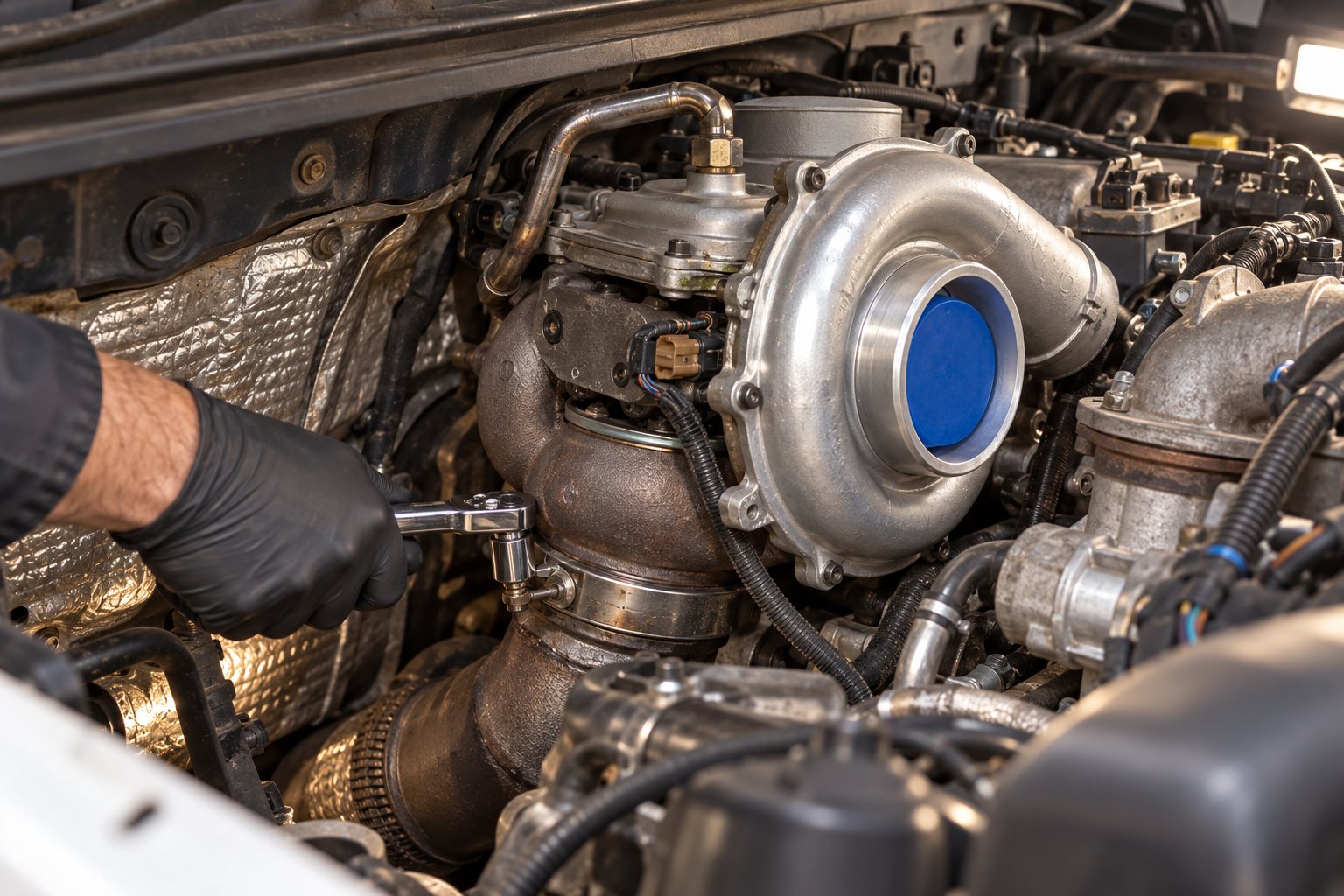
The 6.0L turbo sits on its mounting pedestal at the rear of the engine valley, surrounded by the EGR cooler, oil lines, and air ducting. It is not a 30-minute job, but it is far from the worst diesel turbo swap out there.
Most independent diesel shops bill 4 to 7 hours of labor for a complete turbo replacement on the 6.0L. Labor depends on the shop’s book time and hourly rate; ask for both before you approve the job.
A VGT solenoid swap is far cheaper because the turbo can often stay on the engine, or at worst come out quickly. Expect 1 to 3 hours of labor for solenoid-only work.
Parts You Should Replace at the Same Time
When you have the turbo out, replace the supporting parts while you are in there. Doing it twice costs double in labor.
- Turbo mounting pedestal O-rings and gaskets
- Oil feed and drain lines (a clogged feed line starves the bearings; a restricted drain backs oil up and pushes it past the seals)
- Up-pipe gaskets
- VGT solenoid (if it tests out of spec)
- Air intake and intercooler boots if cracked
A clogged oil feed line is one of the top causes of repeat turbo failure. If your original turbo failed from oil starvation, replacing the turbo without the lines will kill the new unit too.
What Causes 6.0L Turbo Failure in the First Place
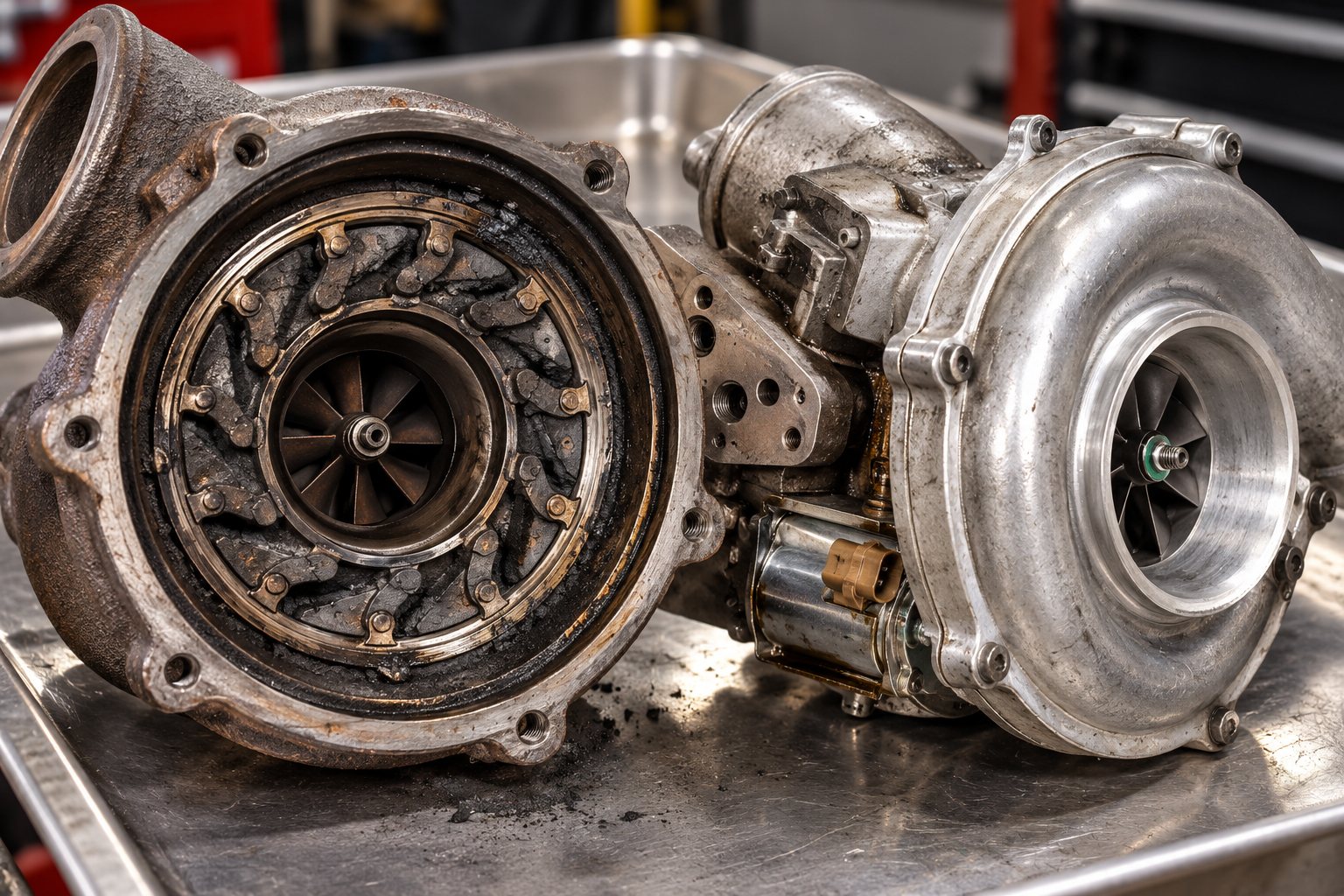
The GT3782VA fails for predictable reasons, and understanding them helps you avoid paying twice. Soot accumulation on the VGT vanes is number one, usually driven by excessive idling, short trips, and a failing EGR system dumping extra soot into the exhaust stream.
Oil starvation from clogged feed lines is number two, followed by VGT solenoid failures. The Garrett VGT design is sound, but on a neglected 6.0L it simply cannot stay clean. You can read more about variable geometry and turbo basics on Garrett Motion’s site and the general turbocharger overview on Wikipedia.
If you drive hard, tow heavy, or run deleted and tuned, consider upgrading to a larger aftermarket turbo rather than replacing stock with stock. The cost difference is often smaller than people expect once labor is factored in.
Should You Rebuild Instead of Replace?
If your turbo housing and center section are in good shape, rebuilding is often the smartest spend. Our turbocharger rebuild service restores your original unit with new bearings, seals, and a balanced rotating assembly, and we clean and free up the VGT mechanism in the process.
Rebuilding keeps your original matched core, avoids core charges, and typically costs less than a new OEM turbo. For fleets running multiple 6.0L trucks, sending cores in for rebuild is usually the lowest cost per mile over time.
If you are weighing the 6.0L against its successor, our 6.4L Powerstroke twin turbo guide and our breakdown of 6.4L high-pressure vs low-pressure turbos are worth a read.
The honest answer comes down to diagnosis and condition. If the shaft is scored, the housing is cracked, or the VGT is seized solid, a reman or new unit is the better long-term call. If the core is sound and the failure was a solenoid or soot buildup, rebuilding saves real money without any drop in reliability.
Whatever route you choose, pin down the actual failure first. Throwing a complete turbo at a bad solenoid, or reinstalling a fresh unit on clogged oil lines, is how owners end up paying for this job twice.
Price ranges in this article are general estimates to help with budgeting, not PT Turbo quotes. Our current prices are on each product listing, and our rebuild prices are on the turbo rebuild price list.
Turbos we list for the GT3782VA
Listings for the turbo models named in this guide that can be ordered online today. Several part numbers can fit one engine by year and rating, so match the number on your turbo’s tag, or call (909) 824-1020 and we will match it for you.
Frequently Asked Questions
How much does a Ford 6.0L Powerstroke turbocharger replacement cost?
The total depends on whether you choose a new, remanufactured, or repaired turbo and on local labor rates. This guide shows today’s part prices and the typical labor hours.
Why does the 6.0L Powerstroke turbocharger fail so often?
The Garrett GT3782VA variable geometry turbo is prone to sticking vanes from soot buildup and oil contamination, making it one of the engine’s most failure-prone parts.
Is it cheaper to repair or replace a 6.0L Powerstroke turbo?
Repairing just the failed component, like the VGT solenoid or unison ring, can be cheaper, but a full reman or new turbo offers better long-term reliability.
Need a Turbocharger?
PT Turbo has rebuilt and sold turbochargers since 1978. We stock remanufactured units for Cummins, Duramax, Power Stroke, Detroit Diesel, and more — backed by a 12-month unlimited mileage warranty. Units in stock at our shop in San Bernardino, CA ship the same day when ordered before 2 PM Pacific, Monday through Friday.
📞 (909) 824-1020 · 346 S I St. #3, San Bernardino, CA 92410 · [email protected]
More From PT Turbo
 Stage 1 vs Stage 2 Turbocharger Upgrades for Diesel Trucks: When It Makes Sense
- How a Clogged DPF Destroys Your Turbocharger: The Relationship Explained
- Construction Equipment Turbocharger Guide: CAT, Komatsu & John Deere Reference
- RV and Motorhome Diesel Turbocharger Guide: Cummins ISB & Freightliner Chassis