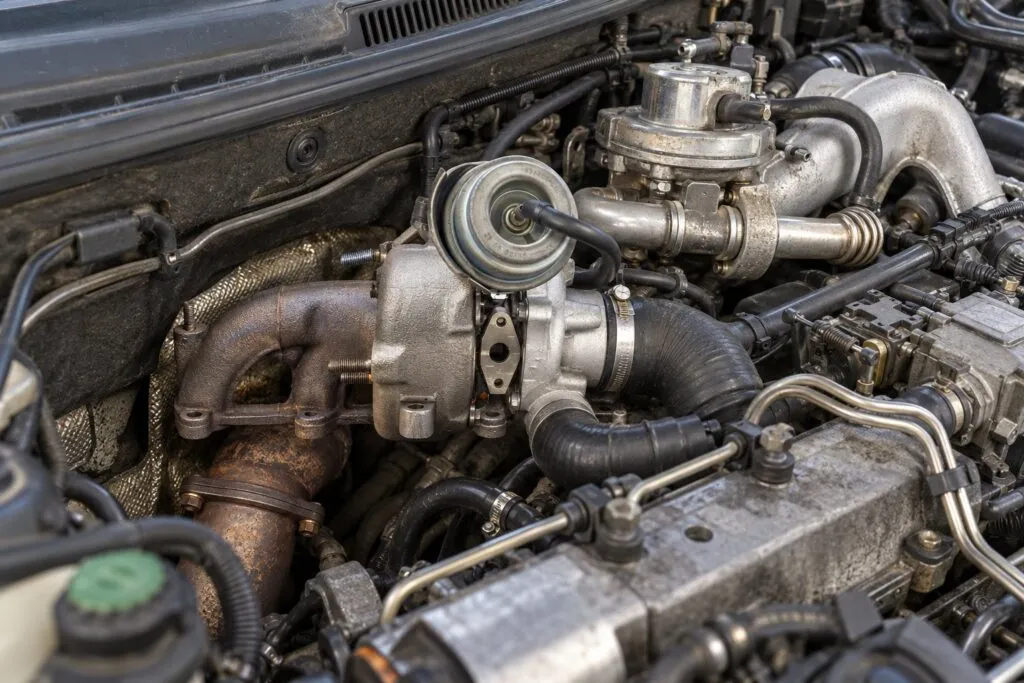
This VW 1.9L TDI Turbocharger Guide is built for the mechanics, owner-operators, and independent shops who keep these engines running long past 200,000 miles. The 1.9-liter TDI is one of the most durable diesel powerplants Volkswagen ever built, but the turbocharger is almost always the first major component to demand attention. Knowing exactly which turbo, actuator, and part number matches your ALH, BEW, or BRM engine saves hours of guesswork and prevents expensive mismatched installs.
At PT Turbo we have been rebuilding and supplying turbochargers since 1978, more than 45 years of hands-on experience across Garrett, BorgWarner, Mitsubishi, and IHI units. Below is the practical reference we wish every TDI owner had before they started pulling parts.
The Three 1.9L TDI Engine Codes Explained
All three engines share the same 1,896cc displacement and inline-four architecture, but they differ in injection system, emissions hardware, and turbocharger design. Getting the engine code right is the single most important step before ordering a turbo.
The ALH is the earlier rotary-pump (VE) engine. The BEW and BRM are Pumpe Düse (PD) unit-injector engines with higher injection pressures and different turbo mapping. You cannot swap a PD turbo onto an ALH and expect correct boost control.
| Engine Code | Years (US) | Injection | Power | Common Vehicles |
|---|---|---|---|---|
| ALH | 1998–2003 | VE rotary pump | 90 hp / 155 lb-ft | Golf, Jetta, New Beetle |
| BEW | 2004–2006 | Pumpe Düse (PD) | 100 hp / 177 lb-ft | Golf, Jetta, New Beetle |
| BRM | 2005.5–2006 | Pumpe Düse (PD) | 100 hp / 177 lb-ft | Jetta (A5 body) |
Turbocharger Specs and Part Numbers by Engine
Each engine code carries a specific variable-geometry turbocharger. VGT technology lets the vanes adjust exhaust flow across the RPM range, which is why these small turbos deliver strong low-end torque. If you want a deeper primer on how the vane mechanism works, see the reference on variable-geometry turbochargers.
ALH: Garrett GT1749V
The ALH runs a Garrett GT1749V. The VW number on US-market cars is 038253019C, and Garrett’s 454232 and 713672 numbers cover it. This is a vacuum-actuated VNT-15 unit and the most common 1.9 TDI turbo on the road. It is well supported for both new and remanufactured supply.
BEW: BorgWarner KP39
The BEW uses a BorgWarner KP39 with variable vanes, VW numbers 038253019S and 038253014E. It is a different turbo from the ALH’s Garrett, with its own manifold and vacuum actuator, so the two do not interchange.
BRM: BorgWarner BV39
The BRM uses a BorgWarner BV39 (KP39) turbo, part number 54399880031, VW number 038253014Q. This is a smaller, quicker-spooling unit designed to work with the BRM’s revised emissions setup, including EGR strategy. For background on BorgWarner’s small-frame VGT designs, our BorgWarner Schwitzer Turbocharger Guide covers the K-series lineage these units come from.
The Real Failure Point: Actuators and Sticking Vanes
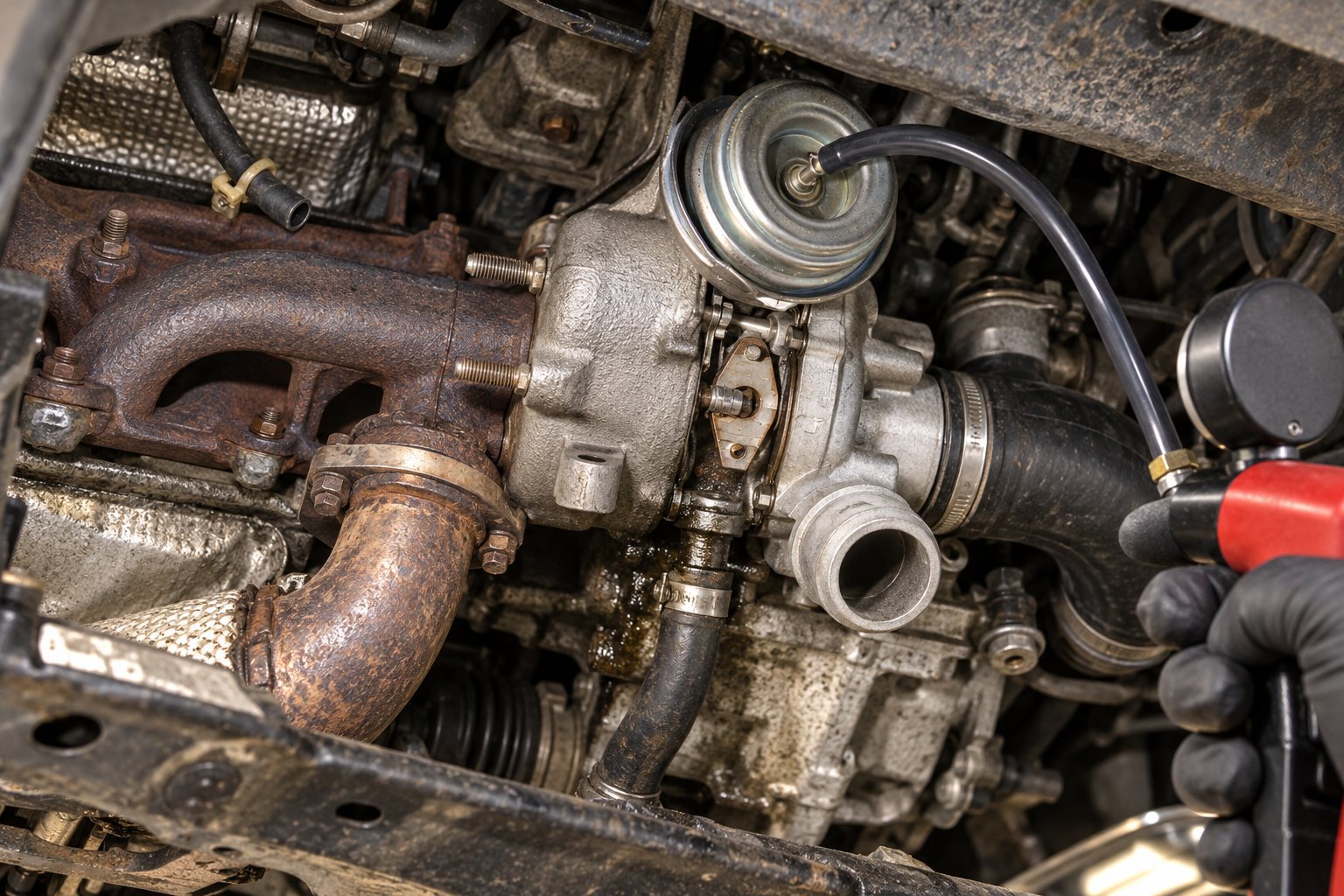
Here is the truth from the bench: most 1.9 TDI turbos do not fail because the shaft or wheels wore out. They fail because the vane mechanism sticks with carbon and soot, and because the pneumatic actuator loses its ability to hold vacuum and move the vanes accurately.
When the actuator diaphragm cracks or the linkage seizes, you get overboost codes, underboost codes, limp mode, or that classic “surge then die” hesitation. Before condemning an entire turbo, always test the actuator and free the vanes.
Not sure which actuator matches your exact turbo casting? Send us your part number through the PT Turbo contact page and we will match it to the correct unit before you order.
Symptoms of Turbo Failure, By Severity
Diagnosing a 1.9 TDI turbo correctly means reading the symptoms in order. A sticking vane behaves very differently from a blown center section. Use this chart to triage before you pull anything.
| Severity | Symptoms | Likely Cause | Typical Fix |
|---|---|---|---|
| Mild | Occasional limp mode, mild underboost, hesitation | Sticking VNT vanes, dirty actuator linkage | Clean vanes, replace actuator |
| Moderate | Repeated P0299/P0234 codes, poor throttle response | Failed actuator diaphragm, vacuum leak | Replace actuator, verify vacuum lines |
| Severe | Blue/black smoke, whistling, oil in intake | Worn shaft, damaged seals, bearing failure | Rebuild or replace turbocharger |
| Critical | Loud grinding, no boost, metal in exhaust | Wheel contact, complete bearing failure | Replace turbo, inspect for debris |
A note on EGR: heavy carbon buildup from the exhaust gas recirculation system is the number one reason these vanes gum up. Cleaning or upgrading the EGR path when you service the turbo extends the life of the new unit dramatically.
VW 1.9L TDI Turbocharger Guide: New vs Remanufactured Cost Breakdown
The biggest decision most owners face is whether to buy new, buy remanufactured, or rebuild the existing core. All three are legitimate paths, and the right choice depends on your budget and how long you plan to keep the vehicle.
| Option | Typical Cost | Best For | Warranty Confidence |
|---|---|---|---|
| New OEM turbo | $608 to $2,844 (26 listings) at PT Turbo | Long-term keepers, fleet reliability | Highest |
| Remanufactured turbo | $640 to $702 (2 listings) at PT Turbo | Best value for most owners | High |
| Rebuild your core | $575 at PT Turbo (price list) | Original casting, budget builds | High |
Price ranges in this article are general estimates to help with budgeting, not PT Turbo quotes. Our current prices are on each product listing, and our rebuild prices are on the turbo rebuild price list.
For most owners keeping a 1.9 TDI past 200,000 miles, a quality remanufactured unit hits the sweet spot between cost and reliability. You get fresh bearings, new seals, and a properly calibrated vane mechanism without paying the full OEM premium. Just make sure the reman carries the correct casting number for your engine code so boost control stays accurate.
Rebuilding your original core makes the most sense when the housing and castings are clean and undamaged, since you keep the exact factory fitment and spend the least. The catch is that a rebuild is only as good as the shop doing it, so send the core to someone who balances the rotating assembly and tests the actuator before it ships back.
Whichever route you take, replace the actuator and address the EGR carbon at the same time. A fresh turbo bolted onto a sooted-up intake path will stick its vanes again, and you will be back under the hood chasing the same codes you just fixed.
Frequently Asked Questions
Which turbocharger fits the VW 1.9L TDI ALH engine?
The ALH engine typically uses the Garrett GT1749V variable geometry turbocharger. Always verify the exact part number against your specific vehicle before ordering a replacement.
What is the difference between BEW and BRM turbochargers?
The BEW and BRM engines use different VNT turbo variants and actuator setups despite sharing the 1.9L TDI platform. Matching the correct part number and actuator is essential for proper fitment and performance.
How do I know when my VW 1.9L TDI turbocharger needs replacement?
Common signs include loss of power, excessive smoke, whistling noises, and boost pressure faults. The turbo is usually the first major component to require attention as these engines pass 200,000 miles.
A worn ALH, BEW or BRM turbo is usually rebuildable. PT Turbo’s turbo rebuild service can restore it.
Need a Turbocharger?
PT Turbo has rebuilt and sold turbochargers since 1978. We stock remanufactured units for Cummins, Duramax, Power Stroke, Detroit Diesel, and more — backed by a 12-month unlimited mileage warranty and same-week shipping from San Bernardino, CA.
📞 (909) 824-1020 · 346 S I St. #3, San Bernardino, CA 92410 · [email protected]
More From PT Turbo
 VW TDI 2.0L Turbocharger Guide: Jetta, Golf, Passat & Tiguan Replacement
- Garrett T04B Turbocharger: Classic Garrett Design & Modern Fitment
- Garrett GT2056V Turbocharger: Mercedes OM642 & Dodge Sprinter Application Guide
- Land Rover TDV6 3.0L Turbocharger Guide: Discovery, Range Rover & Sport Applications