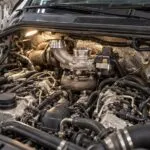
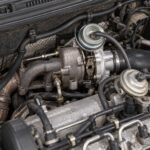
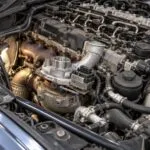
This BorgWarner Schwitzer Turbocharger Guide exists because decades of mergers, rebrands, and cross-referenced part numbers have left even seasoned mechanics guessing which turbo actually bolts to their engine. Schwitzer and KKK (also written 3K) both live under the BorgWarner umbrella now, and the naming conventions overlap in ways that cause ordering mistakes and downtime. At PT Turbo, we have been sorting out these part numbers since 1978, and this guide lays out the S-Series, K-Series, and KKK families in plain language.
Whether you run a fleet of on-highway trucks or maintain heavy equipment, knowing how these turbo families relate saves money and prevents mismatched installs. Let’s break down the lineage, the frame sizes, and the parts you actually need to keep these units running.
How Schwitzer and KKK (3K) Became BorgWarner
Schwitzer was an American turbocharger manufacturer with roots going back to the early 20th century. It built a reputation for rugged diesel turbos used in trucks, construction equipment, and industrial engines.
KKK (Kühnle, Kopp & Kausch), also written 3K, was a German turbocharger maker. Through acquisitions in the late 1990s, BorgWarner consolidated Schwitzer and KKK under its BorgWarner Turbo Systems division.
The practical result: an old Schwitzer casting number, a KKK part number, and a current BorgWarner reference can all point to the same physical turbocharger. That is why cross-referencing matters so much on these units.
If you want the fundamentals of how these machines move air, this turbocharger overview covers the basics. Everything below assumes you already know a compressor wheel from a turbine wheel.
The S-Series: Schwitzer’s Diesel Workhorses
The S-Series is the backbone of BorgWarner’s medium and heavy-duty diesel lineup. These are the turbos you find on Caterpillar, John Deere, International, Mack and Detroit Diesel engines and on countless industrial ones; on Cummins engines, whose factory turbos are Holset, they are a popular upgrade. The “S” stands for Schwitzer, and the number that follows indicates the frame size.
Frame size climbs with airflow capacity. An S200 handles smaller displacement engines, while an S400 moves enough air for large-bore diesels making serious horsepower.
S-Series Frame Reference
| Frame | Typical Engine Range | Common Applications |
|---|---|---|
| S200 | 4.5L to 9L | Caterpillar 3116, 3126 and C7, John Deere 6068, Deutz, Volvo Penta |
| S300 | 5.9L to 12L | John Deere 6068, 6081 and 6090, International DT466 and DT570, Caterpillar 3126E and (as the S310) C9, C10 and C12, Mack E7 |
| S400 | 10L to 16L | Mack E7 and ASET, Detroit Series 60, John Deere 6125, Mercedes-Benz OM457, OM460 and OM501, large Caterpillar engines (S410) |
| S500 | 15L and up | Mining, marine, power generation |
The S200 is a favorite in machine and truck applications alike, from the Caterpillar 3126 and C7 to the John Deere 6068. The Caterpillar C9 uses the larger S310: our Caterpillar C9 Turbocharger Guide walks through the exact fitments and rebuild considerations for that platform.
The S300 is arguably the most versatile turbo BorgWarner ever built. Its huge selection of compressor and turbine wheel combinations makes it a go-to for both OEM fitment and performance builds. Our full BorgWarner S300 Application Guide breaks down which variant fits John Deere, International, Caterpillar and Mack engines.
For Detroit Diesel operators specifically, the Series 60 Turbocharger Guide covers S400 replacement and the costs involved.
The K-Series and KKK: German Engineering Under BorgWarner
The K-Series carries the KKK heritage. You see these on European diesels, most notably Volvo, Mercedes, MAN, and various passenger and light commercial applications. The “K” frames run K03, K04, K16, K24, K27, K29, K31, and up.
Smaller K frames like K03 and K04 dominate light-duty gasoline and small diesel applications. Larger frames like K27, K29, and K31 handle heavy truck diesels.
Common K-Series Frame Sizes
| Frame | Class | Typical Use |
|---|---|---|
| K03 / K04 | Light-duty | Passenger cars, small commercial diesels |
| K16 | Medium | Vans, mid-range engines |
| K27 / K29 | Heavy | MAN, Mercedes, marine diesels |
| K31 | Heavy truck | MAN and Mercedes-Benz trucks, Volvo Penta marine, generator sets |
The K31 is a European heavy-engine turbo: MAN, the Mercedes-Benz OM501LA and Volvo Penta marine engines. Our BorgWarner K31 guide covers fitment, symptoms of failure, and replacement pricing. The Volvo D12 truck engine, often linked to the K31 by mistake, uses Holset and Garrett turbos: see the Volvo D12 Turbocharger Guide.
KKK numbers are written in groups of four, three and four digits (for example 5331-970-7101). These map directly to BorgWarner references today, so if you have an old KKK number, we can cross it for you.
Actuators: The Part That Fails Before the Turbo Does
On wastegated S-Series and K-Series turbos the gate is moved by a pneumatic actuator. The variable geometry versions, such as the S300BV, use an electronic actuator instead. When boost control goes haywire, the actuator is often the culprit, not the turbo itself.
A sticking or leaking actuator throws boost codes, causes limp mode, and kills fuel economy. Replacing the actuator instead of the whole turbo saves real money when the cartridge is still healthy.
An actuator is matched to the turbo part number. Send us the number on your turbo and we will tell you whether the actuator is available on its own.
Before you condemn a turbo on a variable geometry unit, verify the actuator and the vane mechanism. If you are unfamiliar with how these systems modulate boost, this variable-geometry turbocharger reference is a solid primer.
New vs Remanufactured: What Makes Sense
Nearly every S-Series, K-Series, and KKK turbo we handle is available both new and remanufactured. For fleet operators watching cost per mile, a properly rebuilt turbo is often the smarter buy.
A quality reman uses new bearings, seals, and a balanced center cartridge. When it is done right, it performs to the same spec as new. The key phrase is “done right,” which is where our 45-plus years of experience matters.
| Factor | New | Remanufactured |
|---|---|---|
| Cost | Highest | 30 to 50 percent less |
| Lead time | Varies by OEM stock | Often same-day if in stock |
| Performance | OEM spec | OEM spec when properly balanced |
| Warranty | Full manufacturer | Backed by rebuilder |
Browse our remanufactured turbochargers to see what is in stock for your frame size. If you would rather send us your core, our turbocharger rebuild service restores your existing unit to spec.
Reading and Cross-Referencing Your Part Number
Every BorgWarner Schwitzer Turbocharger Guide comes down to one thing: getting the right number off the unit. There are usually two or three tags or stamps to check.
- The compressor cover stamp often shows the frame size, such as S300 or K31.
- The nameplate on the compressor housing carries the full BorgWarner or Schwitzer assembly number, which is the one we cross from.
- The old KKK stamp, if present, shows the grouped KKK number on the bearing housing or turbine side.
Pull all the numbers you can find before you call, even the ones that look worn or partial. A single frame stamp is not enough on these families, because the same frame covers dozens of wheel and housing combinations. The assembly number is what pins down the exact unit.
If the tag is unreadable or gone, give us the engine make, model, and year along with any casting marks on the housings. Between those details and our cross-reference records going back decades, we can match the correct Schwitzer, KKK, or BorgWarner turbo to your engine without guesswork.
Frequently Asked Questions
What is the difference between Schwitzer and KKK (3K) turbochargers?
Schwitzer and KKK (also written 3K) are legacy turbo brands now unified under the BorgWarner umbrella. Their overlapping naming conventions often cause cross-referencing confusion when ordering replacement parts.
How do I identify which BorgWarner turbocharger fits my engine?
Match your turbo using the part number, series designation (S-Series or K-Series), and engine specifications. Cross-referencing older KKK or Schwitzer numbers to current BorgWarner equivalents ensures the correct fit.
What is the difference between S-Series and K-Series turbochargers?
S-Series turbos are typically used for larger commercial and industrial diesel applications, while K-Series units cover a broad range of automotive and light-duty engines. Each series has distinct frame sizes and mounting configurations.
Need a Turbocharger?
PT Turbo has rebuilt and sold turbochargers since 1978. We stock remanufactured units for Cummins, Duramax, Power Stroke, Detroit Diesel, and more — backed by a 12-month unlimited mileage warranty and same-week shipping from San Bernardino, CA.
📞 (909) 824-1020 · 346 S I St. #3, San Bernardino, CA 92410 · [email protected]