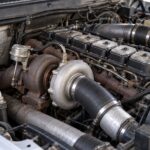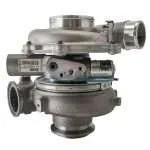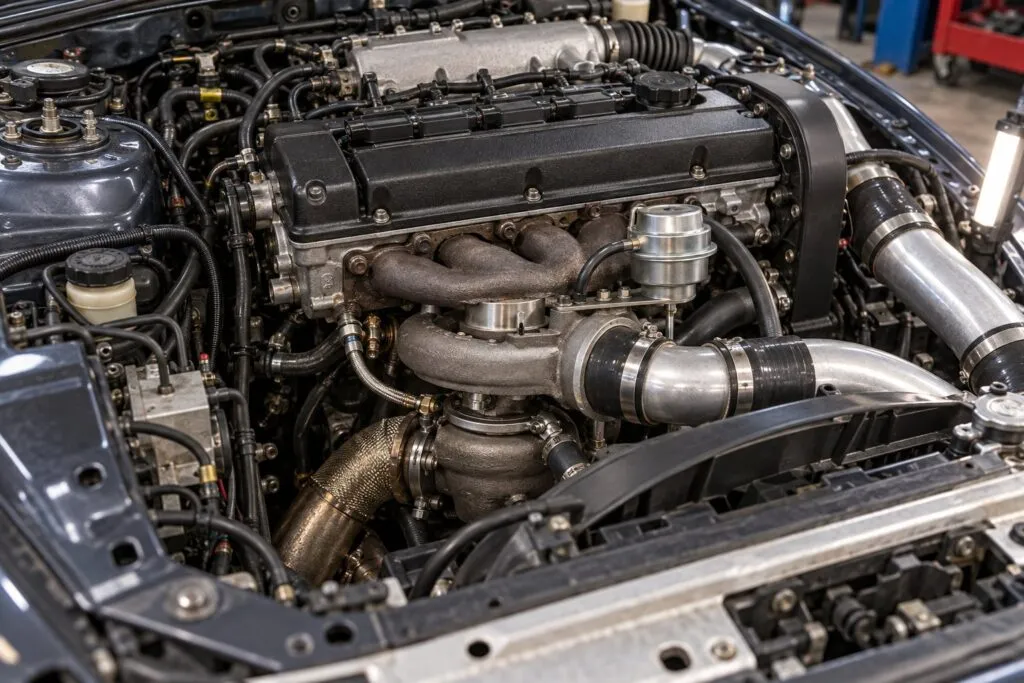
The Mitsubishi TD06 Turbocharger is one of the most versatile frame-size units Mitsubishi Heavy Industries ever produced, showing up in everything from marine diesels and industrial gensets to the tuner-favorite 4G63 and 6G72 engines. If you run diesel equipment or build performance cars, understanding how the TD06 platform works, what it fits, and how to keep it alive is worth real money in uptime and horsepower.
At PT Turbo, we have been rebuilding and supplying turbochargers since 1978, more than 45 years of hands-on experience across marine, industrial, and performance applications. This guide breaks down the TD06 the way a mechanic would explain it on the shop floor.
What Is the Mitsubishi TD06 Turbocharger?
The TD06 sits in the middle of Mitsubishi’s TD-series lineup, above the smaller TD04 and TD05 units and below the larger TD07 and TD08. The number references the compressor and turbine frame size, not a single fixed spec. That is why you will see the TD06 sold in dozens of compressor and turbine wheel combinations.
These turbos use a journal-bearing center section, water and oil cooling on most variants, and a wide range of A/R turbine housings. That flexibility is exactly why the TD06 family bridges three very different worlds: displacement-hungry marine diesels, steady-load industrial engines, and high-boost performance builds.
If you are new to how a turbocharger actually converts exhaust energy into intake pressure, the basic turbocharger overview is a solid primer before you get into TD06-specific tuning.
Common TD06 Wheel and Housing Combinations
The TD06 is often referenced by its trim, such as TD06-20G, TD06H-20G, or TD06SL2-20G. The letters after TD06 (H, SL2) name the turbine wheel version, and 20G names the compressor wheel.
| Trim | Approx. Compressor Inducer | Typical Flow Ceiling | Best Application |
|---|---|---|---|
| TD06-17C | ~47 mm | ~350 hp | Industrial, small marine |
| TD06-20G | ~52 mm | ~450 hp | Performance, mid marine |
| TD06SL2-20G | ~52 mm | ~500 hp | High-boost performance |
| TD06-25G | ~60 mm | ~600 hp | Large-displacement builds |
Flow ceilings are practical estimates on pump diesel or pump gasoline, not dyno-queen peaks. On a properly built engine with supporting fuel and cooling, these are the ranges you can plan around.
Marine Applications: Why the TD06 Holds Up at Sea
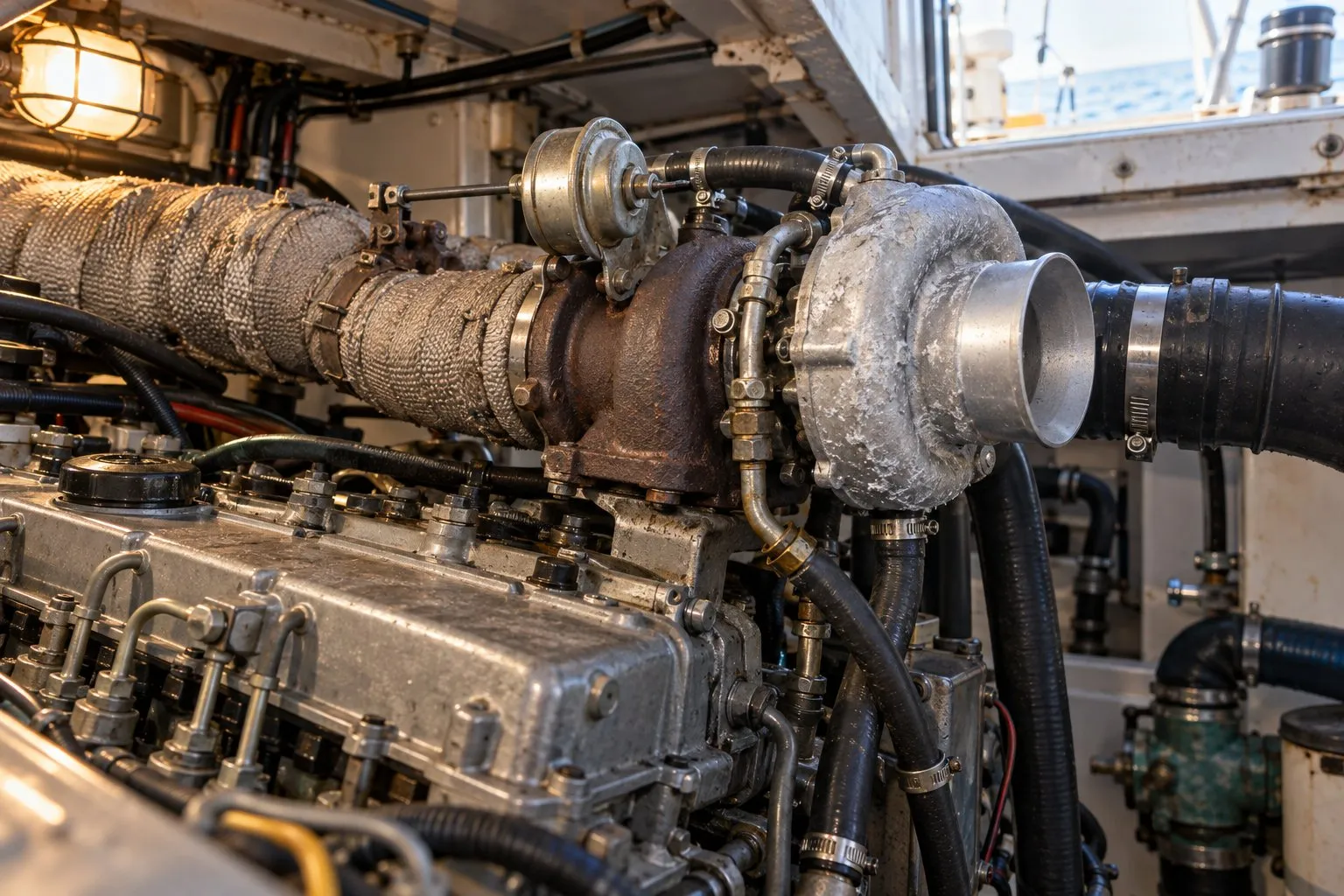
Marine diesels punish turbochargers with sustained high load, salt-laden air, and constant thermal cycling. The TD06’s water-cooled center housing is a big reason it survives this environment, since coolant flow prevents oil coking in the bearing housing after shutdown.
On marine auxiliary engines and smaller propulsion diesels in the 4 to 7 liter range, the TD06-17C and TD06-20G are common OEM fitments. Fleet operators like them because parts availability is strong and rebuild costs stay reasonable compared to larger frames.
The biggest enemies in marine service are salt corrosion on the compressor cover and worn seals from long idle periods. If your boost is soft or you see oil in the intake tract, the center section usually needs attention before the wheels do.
For heavier marine and construction diesels that outgrow the TD06, our Cummins QSB turbocharger guide for marine, industrial, and construction applications covers the next tier of workboat and equipment power.
Industrial and Generator Applications
Industrial engines love the TD06 because it delivers flat, dependable boost under steady load. Gensets, pumps, compressors, and stationary power units running Mitsubishi, Isuzu, and Caterpillar-based diesels frequently use TD06 variants for exactly this reason.
In these applications, the turbo rarely sees the RPM swings a performance engine does. Instead it runs for thousands of hours at a fixed operating point, which means bearing wear and shaft play are the failure modes to watch, not surge or overspeed.
Many industrial TD06 units use a pneumatic wastegate actuator to hold a precise boost target. When that actuator diaphragm fails or the linkage seizes, boost drifts and the engine loses power under load. Related Mitsubishi actuators are a common wear item across the TD03 and TD-series line.
If your unit uses variable geometry instead of a fixed wastegate, understanding variable-geometry turbocharger operation helps you diagnose stuck vanes versus actuator faults.
Performance Applications: TD06 on the 4G63 and 6-Cylinder Builds
In the performance world, the TD06 earned its reputation on the Mitsubishi 4G63 platform found in the Eclipse, Talon, and Evo, as well as 6G72 and RB-series swaps. It became the go-to upgrade for enthusiasts chasing 350 to 500 wheel horsepower without jumping to a full ball-bearing race turbo.
The TD06-20G and TD06SL2-20G are the sweet spot for a street-and-strip 4G63. They spool later than a stock TD05 but pull hard on top, which suits a built engine with cams and supporting fuel.
Choosing the Right Mitsubishi TD06 Turbocharger Trim
Trim selection comes down to displacement and target power. A 2.0-liter 4G63 running a 20G will feel laggy below 3,500 RPM but rewards you above it. Move to a larger 3.0-liter engine and that same 20G lights up early and feels perfect.
- 2.0L, up to 400 whp: TD06-20G or TD06SL2-20G
- 2.0L, 400 to 500 whp: TD06SL2-20G with upgraded manifold and fueling
- 2.5L to 3.0L street: TD06-20G for strong midrange
- Large displacement, 500 hp target: TD06-25G
Cross-shopping other platforms is smart at this power level. If you also run Dodge or Cummins iron, our Cummins ISB 5.9L HX35 vs HE351CW guide and our BorgWarner performance and fitment guide cover comparable upgrade paths.
New vs Remanufactured TD06: What Makes Sense
Whether to buy new or remanufactured depends on your application and budget. For a hard-working marine or industrial unit, a properly rebuilt TD06 with new bearings, seals, and a balanced CHRA performs identically to new at a lower cost.
| Factor | New TD06 | Remanufactured TD06 |
|---|---|---|
| Cost | Highest | 30 to 50% less |
| Lead time | Can be long for OEM | Often in stock |
| Performance | Factory spec | Factory spec when done right |
| Best for | New builds, warranty jobs | Fleet uptime, budget rebuilds |
PT Turbo stocks both new and remanufactured units. Browse our remanufactured turbochargers or send us your core for our turbocharger rebuild service, where every unit is disassembled, inspected, and balanced to spec.
Common TD06 Failure Symptoms and Fixes
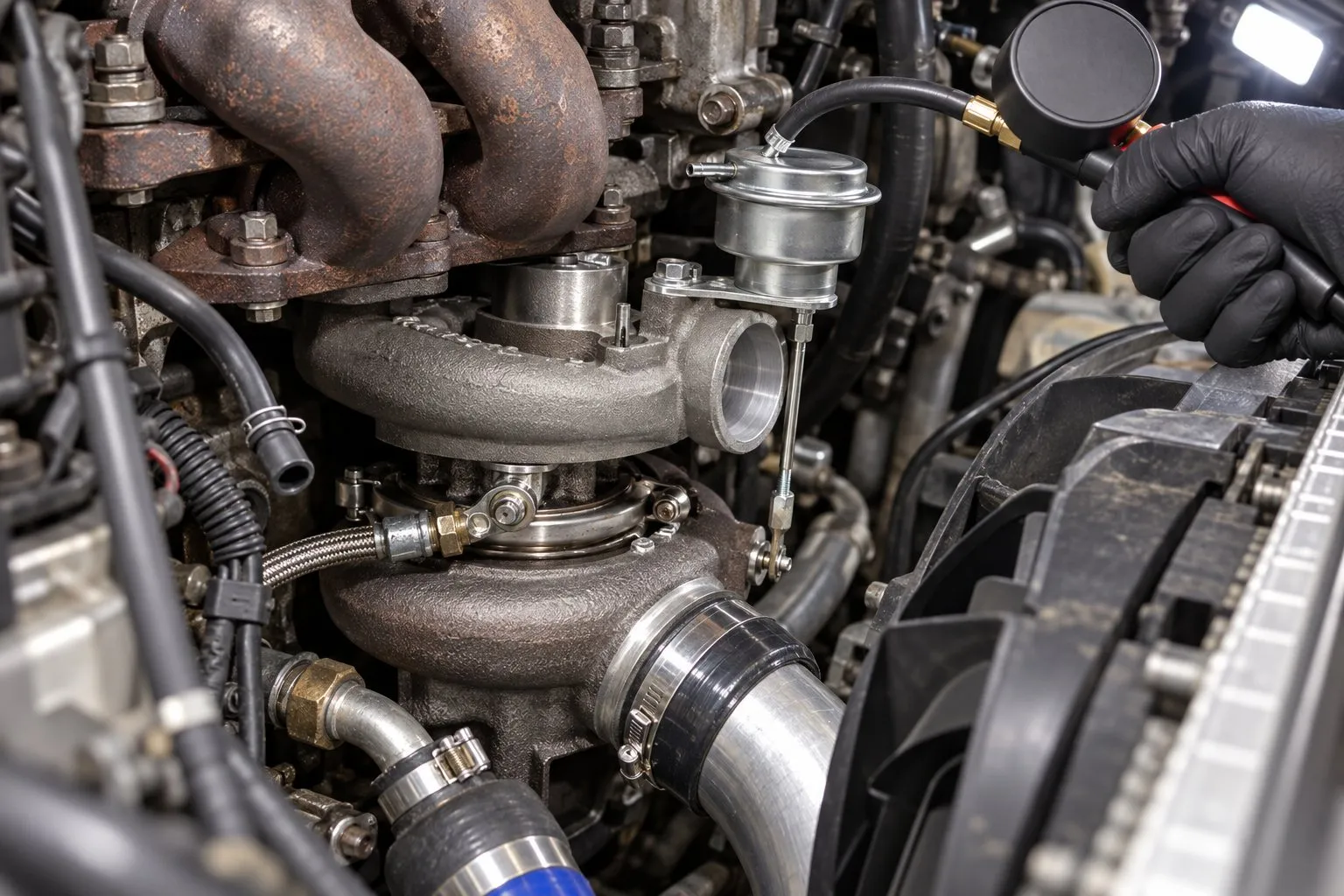
Catching problems early saves the engine, not just the turbo. Oil in the intake, excessive smoke, and boost that will not hold are the three warnings you should never ignore.
| Symptom | Likely Cause | Severity |
|---|---|---|
| Whining or grinding noise | Worn journal bearings, shaft play | High |
- Oil in the intake tract: Failed seals on the compressor side, usually from worn bearings or long idle periods letting the shaft wander. On marine units this shows up first.
- Excessive smoke under load: Oil getting past the turbine seal or a soft boost condition leaning or richening the charge, depending on your fuel setup.
- Boost that will not hold: On wastegated units, start at the actuator and linkage before you condemn the CHRA. A drifting target is far more often a tired diaphragm than a bad wheel.
The common thread with every one of these is the center section. Shaft play and bearing wear drive most TD06 failures, so once you confirm movement in the shaft or see oil where it does not belong, the CHRA needs to come apart. Catch it at the whine stage and you save the wheels. Ignore it and you risk the compressor contacting the housing and sending debris straight into the engine.
Frequently Asked Questions
What engines use the Mitsubishi TD06 turbocharger?
The TD06 is found on marine diesels, industrial gensets, and popular performance engines like the Mitsubishi 4G63 and 6G72. Its versatile frame size makes it a common choice across many applications.
Is the TD06 turbo good for performance builds?
Yes, the TD06 is a tuner favorite for 4G63 and 6G72 engines, offering strong airflow potential for increased power. Proper sizing and supporting mods are key to getting the most from it.
How do you maintain a Mitsubishi TD06 turbocharger?
Regular oil changes, clean air filtration, and proper cool-down cycles help extend its lifespan. Monitoring for shaft play and oil leaks can catch issues before they cause failure.
Shopping by part number?
Every part number we stock for the Mitsubishi TD06 is on one page, with live prices and stock: Mitsubishi TD06 turbos and parts.
Need a Turbocharger?
PT Turbo has rebuilt and sold turbochargers since 1978. We stock remanufactured units for Cummins, Duramax, Power Stroke, Detroit Diesel, and more — backed by a 12-month unlimited mileage warranty and same-week shipping from San Bernardino, CA.
📞 (909) 824-1020 · 346 S I St. #3, San Bernardino, CA 92410 · [email protected]