Mitsubishi TD05 Turbocharger: Medium Diesel & Industrial Applications
The Mitsubishi TD05 Turbocharger is one of the most recognizable medium-frame Mitsubishi (MHI) chargers, best known from performance gasoline engines but also fitted to truck and industrial diesels, while the larger commercial diesel sizes belong to its TD06 and TD08 relatives. Knowing what the “TD05” name actually describes, and what it does not, keeps you from ordering the wrong wheel or the wrong frame. This guide breaks down the naming, the real wheel dimensions, how the turbo fails, and how to decide between a new unit and a rebuild.
At PT Turbo we have been rebuilding turbochargers since 1978, more than 45 years, and we stock both new and remanufactured units along with cartridges and parts. The information below is meant to help diesel mechanics, fleet managers and equipment owners match the right Mitsubishi frame to the tag on the housing, not a guess based on an engine name.
What the Mitsubishi TD05 Turbocharger Actually Is
On a Mitsubishi TD-series charger, the frame is the turbine side and the compressor wheel is called out by a separate suffix. The “TD05” (and the more common TD05H) names the turbine-side frame; the letters and numbers after it, such as 14B, 16G, 18G, 20G or 25G, name the compressor wheel riding on the other end of the shaft.
That distinction matters because people say “I need a 16G” when the 16G is only the compressor wheel. The full part is a TD05H frame fitted with a 16G wheel. The Mitsubishi TD05H turbochargers page lists the exact units and parts we carry so you can match by number rather than by nickname.
The TD05H turbine wheel measures roughly 56.0 mm inducer by 49.2 mm exducer. That fixes the frame’s exhaust-side flow capacity. Housing numbers that begin with 49178 fall in the TD05 family, which is a quick sanity check when a casting has lost its data plate, though a casting number only narrows the search. The number on the turbo’s tag, confirmed against wheel sizes and the turbine housing A/R, is what actually identifies the unit.
Decoding the Compressor Wheel: 14B, 16G, 18G, 20G, 25G
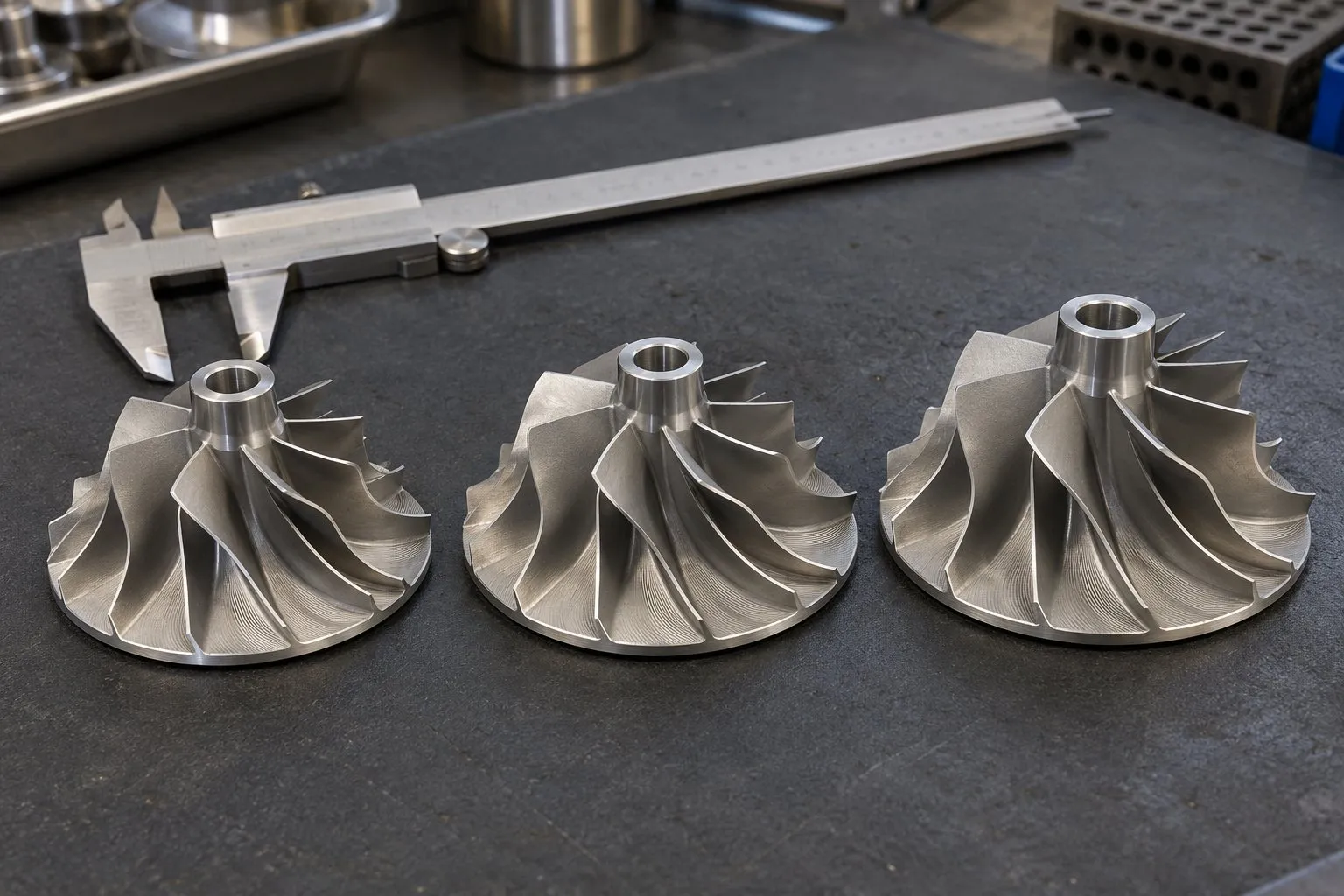
The suffix is where most ordering mistakes happen. These are compressor wheels, not frames, and they slot onto the TD05 (and the larger TD06) frame depending on the airflow a given engine needs. Larger wheels move more air and support more fuel, but spool later.
| Compressor wheel | Inducer / exducer | Relative airflow | Notes |
|---|---|---|---|
| 14B | See maker’s figure | Smallest in this list | TD05H-14B on 1990-1994 Eclipse, Talon and Laser turbo manual cars and the 1991-1992 Galant VR-4 |
| 16G | 48.3 / 68 mm (common figure; 16G versions vary) | Baseline high-flow | The factory Lancer Evolution turbo is a TD05H / TD05HR already carrying a 16G-family wheel |
| 18G | 50.3 / 68 mm | More than 16G | Same 68 mm exducer, larger inducer |
| 20G | 52.3 / 68 mm | More than 18G | Still on the 68 mm exducer family |
| 25G | 60.5 / 78 mm | Largest in this list | Steps up to a 78 mm exducer; pushes toward the TD06 range |
Two practical takeaways. First, 16G, 18G and 20G share the same 68 mm exducer and differ at the inducer, so the airflow steps between them are modest. Second, the 25G jumps to a 78 mm exducer and is really the bridge into the next frame up. If you are unsure which wheel you have, measure it or read the tag; do not assume from the model number, because a TD05H does not have 05 mm anything.
TD05 Frame Family Across Diesel and Industrial Use
The TD05 itself is most familiar from Mitsubishi gasoline turbo cars, including the plain TD05-12A on the Starion and Conquest, though TD05H units also fit diesels such as the Mitsubishi 4D34T and 4M50T truck engines and the Kubota V4702 and V6108 industrial engines. For bigger engines the frame family reaches into medium commercial and industrial work when you move to the larger turbine sizes. The TD06, for example, is used on Fuso FK and FM trucks with the 6M60 engine, not only on marine and industrial units, and the Mitsubishi TD06 turbochargers page covers those.
For the turbine side, the TD06SL2 runs about 61.0 / 54.1 mm and the TD06H about 67 / 58.8 mm, both larger than the TD05H’s 56.0 / 49.2 mm wheel. That is the logic of the family: as the engine gets bigger and needs more exhaust flow, you move up a frame, not just up a compressor wheel. On medium-duty diesels and industrial power units these are typically fixed geometry chargers, with a wastegate on some ratings, so the thing to confirm is the full part number on the data plate.
Because one Mitsubishi frame name covers many ratings and housings, a wrong engine match is worse than no match. If your unit is on a commercial diesel or an industrial engine, send us the number off the tag rather than the engine model so we pull the exact frame, wheel and housing A/R you are running.
How the Mitsubishi TD05 Turbocharger Fails
Like any journal-bearing charger, most TD05 failures trace back to the oil supply rather than to the turbo itself. A turbocharger lives on clean oil at the right pressure, and when that supply is interrupted or contaminated the bearings go first. Before you condemn a unit, work through the basics.
- Oil feed and drain. A restricted or coked feed line starves the bearings; a blocked or kinked drain backs oil up and pushes it past the seals at both ends. The drain must run downhill and enter the pan above the oil level.
- Shaft play. Some side-to-side rock is normal on a journal-bearing turbo with no oil pressure. Condemn the unit for in-and-out play you can feel, for wheel contact with the housing, or for play beyond the maker’s limit, never for any movement at all.
- Oil in the piping. A light oil film in the charge pipes is normal with closed crankcase ventilation. Check the breather, air filter, oil level and drain before blaming a seal; oil reaches the intake only past the compressor seal and the exhaust only past the turbine seal.
- Compressor or turbine damage. Debris hitting the compressor comes from the inlet side; damage to the turbine inlet edges comes from upstream. A wheel with blade damage is replaced, never rebalanced and reused.
Low boost on a fixed geometry turbo usually shows as black or dark gray smoke from a rich mixture, not white smoke. White smoke points to coolant or, on a cold engine, unburned fuel. If you want a deeper primer on how a turbocharger works, that overview pairs well with what is covered here.
New vs Remanufactured TD05 Units
Whether you buy new or remanufactured comes down to availability, downtime and cost. Both routes are sound when the parts are right and the balancing is done properly. Here is how they compare in practice.
| Factor | New unit | Remanufactured unit |
|---|---|---|
| Core required | No | Yes, returned within 30 days (you pay return shipping) |
| Internals | All new | New bearings, seal rings and thrust parts; inspected housings and wheels |
| Balancing | Balanced at build | Cartridge balanced on a VSR rig to the model’s pass limit |
| Warranty | 12 months, unlimited mileage | 12 months, unlimited mileage |
| Lead time | In-stock items ship same day when ordered before 2 PM Pacific; otherwise most orders ship within 1 to 2 business days | Most rebuilds ship in 3 days or less once your core and inspection are done |
If you already have the core and want to keep your exact housing and A/R, our turbo rebuild service covers the Mitsubishi frames, and the turbo rebuild price list shows pricing by model. If you would rather swap in a finished unit, our remanufactured turbochargers ship ready to bolt on. For commercial diesel comparisons on adjacent platforms, our Cummins ISC turbocharger guide and Cummins QSB guide walk through similar medium-duty and industrial sizing logic.
On first start after any rebuild or replacement, follow the maker’s first-start steps: fill the oil inlet with clean engine oil, turn the wheel by hand, and crank or idle a few minutes before putting the engine under load. There is no break-in mileage schedule and no early oil change to worry about.
Turbos we list for the TD05H and TD06
Listings for the turbo models named in this guide that can be ordered online today. Several part numbers can fit one engine by year and rating, so match the number on your turbo’s tag, or call (909) 824-1020 and we will match it for you.
Frequently Asked Questions
Is the Mitsubishi TD05 a diesel or a gasoline turbo?
Both, depending on the wheel and frame. The TD05 name is most familiar from Mitsubishi gasoline performance engines, and TD05H units also run on diesels such as the Mitsubishi 4D34T and 4M50T truck engines and the Kubota V4702 and V6108 industrial engines. Bigger diesels move up to the larger TD06 and TD08 frames. Match the number on your data plate rather than the engine name, and call us at (909) 824-1020 if you are not sure which frame you have.
What is the difference between a 16G and an 18G?
They are both compressor wheels, not frames, and they both use a 68 mm exducer. The 16G is 48.3 mm at the inducer and the 18G is 50.3 mm, so the 18G moves a bit more air and spools slightly later. Either one rides on the same TD05H turbine-side frame.
How do I know if my TD05 needs rebuilding or replacing?
Check the oil feed and drain, then the shaft for in-and-out play you can feel or any wheel contact with the housing; some side-to-side rock is normal with no oil pressure. Visible oil smoke, audible bearing noise under load, or blade damage on a wheel are signs the cartridge is done. Send us the unit or the tag number and we will tell you whether a rebuild or a replacement is the better call.
Need a Turbocharger?
PT Turbo has rebuilt and sold turbochargers since 1978. We stock remanufactured units for Cummins, Duramax, Power Stroke, Detroit Diesel, and more — backed by a 12-month unlimited mileage warranty. Units in stock at our shop in San Bernardino, CA ship the same day when ordered before 2 PM Pacific, Monday through Friday.
📞 (909) 824-1020 · 346 S I St. #3, San Bernardino, CA 92410 · [email protected]