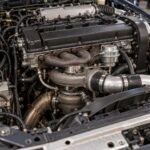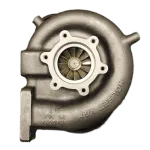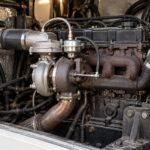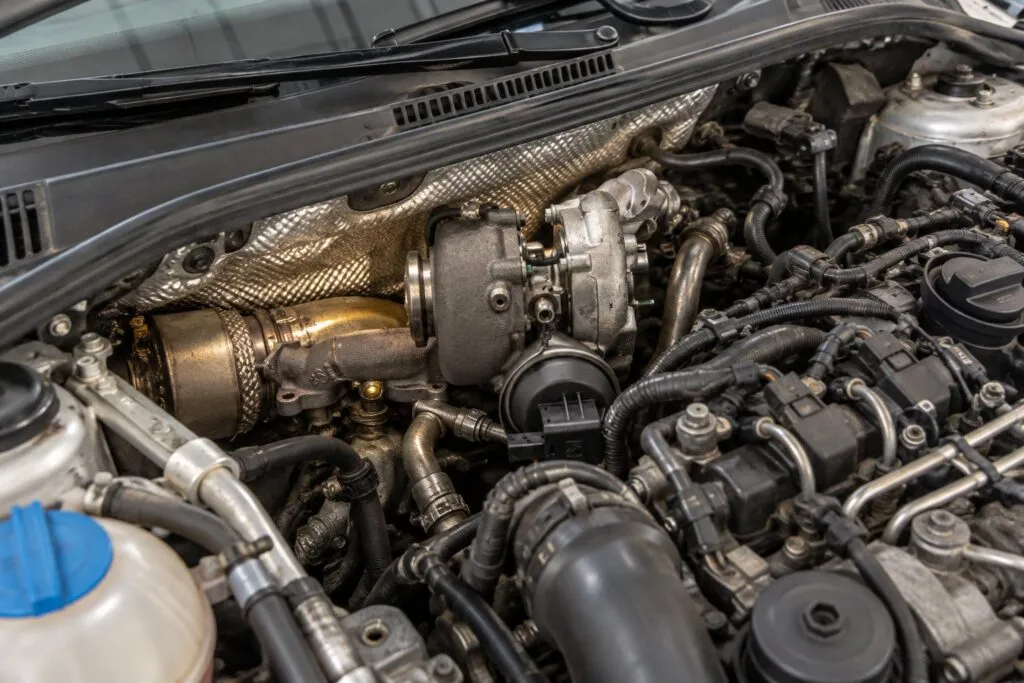
This VW TDI 2.0L Turbocharger Guide covers everything a mechanic or owner-operator needs to diagnose, source, and replace the turbocharger on Volkswagen’s popular 2.0-liter diesel across the Jetta, Golf, Beetle, and Passat platforms. Whether you’re chasing a P0299 underboost code or a screeching bearing, the goal here is simple: get you the right part, the first time.
PT Turbo has been rebuilding and supplying turbochargers since 1978. That’s 45-plus years of hands-on experience with variable-geometry units exactly like the ones bolted to these VW diesels. We stock both new and remanufactured turbos and actuators, so this guide points you to parts you can actually buy today.
Which Turbocharger Is on Your 2.0L TDI?
The 2.0L TDI has run across several engine families over the years: the pump-injector engine of the 2004 to 2005 Passat (BHW), the common-rail EA189 (CBEA and CJAA, and CKRA in the Passat), and the later EA288 (CVCA, CRUA) on 2015 model year cars, the 2015 Passat and Beetle included, so a 2015 Passat does not take the CKRA turbo. The BEW and BRM engines of the Jetta and Golf are 1.9L and are covered in our 1.9L TDI guide. Each generation used different turbo hardware from more than one maker, so order by the part number on the turbo: getting this wrong is the number one cause of returned parts.
Most 2.0L TDI engines use a variable-geometry turbocharger, or VGT. If you’re unfamiliar with how the moving vanes control boost across the rpm range, this overview of variable-geometry turbochargers is a solid primer. The vane mechanism is also the most common failure point on these units.
Here’s a quick reference for matching your vehicle to its turbo family:
| Vehicle | Model Years | Engine Code | Turbo Type |
|---|---|---|---|
| Passat TDI | 2004–2005 | BHW | Variable geometry |
| Jetta / Golf TDI | 2009–2014 (Golf from 2010) | CBEA / CJAA | Variable geometry |
| Passat TDI | 2012–2014 | CKRA | Variable geometry |
| Jetta TDI | 2015 | CVCA | Variable geometry (EA288) |
| Golf TDI | 2015 | CRUA | Variable geometry (EA288) |
Always confirm your exact engine code from the vehicle emissions sticker or the block casting before ordering. A BRM turbo will not interchange with a CJAA unit: the BRM is a 1.9L engine and the CJAA a 2.0L common rail.
Symptoms of a Failing TDI Turbocharger
Turbo failure on the 2.0L TDI rarely happens all at once. You usually get warning signs, and catching them early can save the engine from ingesting oil or metal.
The most common trigger is the actuator or the VGT vane mechanism sticking from soot buildup. Carbon migrates from the EGR system and gums up the vanes, and the actuator can no longer sweep them freely.
Symptoms by severity
| Severity | Symptoms | Likely Cause |
|---|---|---|
| Early | Slight power loss, sluggish throttle, occasional limp mode | Sticking VGT vanes / lazy actuator |
| Moderate | P0299 underboost, P2563 position sensor range/performance, black smoke | Failed actuator or carbon-locked vanes |
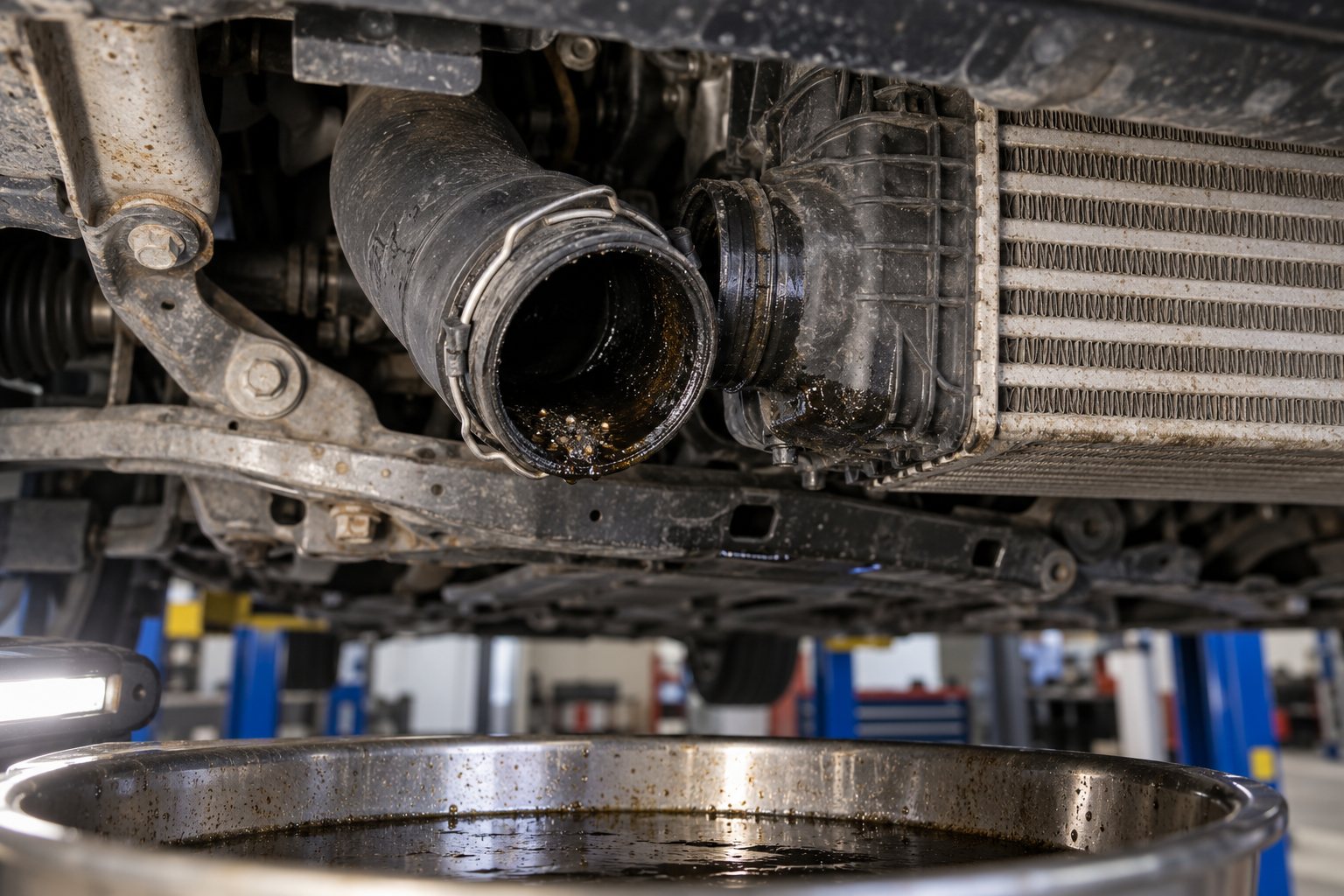
| Severe | Whining/grinding noise, blue smoke, oil in intercooler piping | Worn center bearing, failed shaft seals |
| Critical | Shaft play, compressor wheel contact, no boost | Complete bearing failure |
Here’s the key diagnostic point: not every “turbo problem” needs a new turbo. If the cartridge spins clean with no shaft play and no oil, look at the control side next: the vacuum supply and its lines, the N75 valve, then the actuator itself. That’s a far cheaper fix.
Actuator vs. Full Turbo Replacement
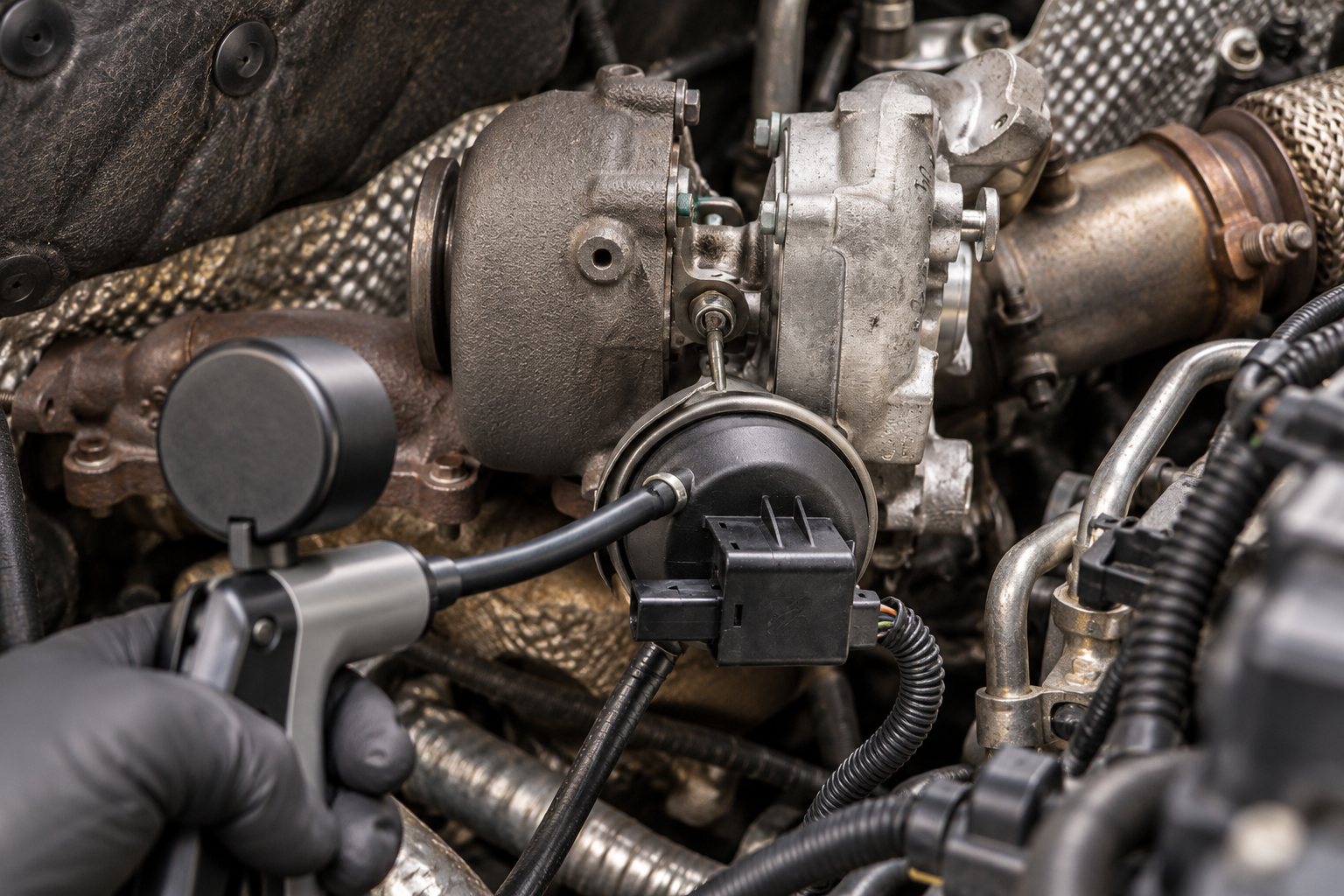
The pneumatic or electronic actuator is what positions the VGT vanes. When it fails or falls out of calibration, you get underboost and limp mode even though the turbo itself is mechanically fine. Replacing just the actuator can restore full function at a fraction of the cost of a complete turbo.
PT Turbo stocks the correct actuators for these applications.
One caution: any time you replace an actuator on a VGT turbo, it must be calibrated to sweep the vanes through their full range. An uncalibrated actuator will throw the same underboost codes as the old one.
VW TDI 2.0L Turbocharger Guide to New vs. Remanufactured
When the cartridge is toast, you have three real options: new OEM, quality remanufactured, or a bargain aftermarket unit. For fleet operators and owner-operators watching cost per mile, remanufactured is usually the smart middle ground.
A properly remanufactured turbo is disassembled, cleaned, inspected, fitted with new bearings, seals, and often a new CHRA cartridge, then balanced on a VSR machine. Done right, it performs to OEM spec. Done cheap, it fails in 20,000 miles.
| Option | Typical Price Range | Warranty | Best For |
|---|---|---|---|
| New OEM unit | Quoted by part number | Full mfr warranty | Warranty work, low-mileage keepers |
| Quality Remanufactured | Quoted by part number | 12+ months | Best value, fleet & daily drivers |
| Cheap Aftermarket | $300–$550 | 30–90 days (if any) | Short-term / flip vehicles only |
Price ranges in this article are general estimates to help with budgeting, not PT Turbo quotes. Our current prices are on each product listing, and our rebuild prices are on the turbo rebuild price list.
PT Turbo builds and stocks remanufactured turbochargers to true OEM balance specs. If you’d rather keep your original core, our turbocharger rebuild service restores your exact unit, which matters on VGT turbos where core matching and calibration are critical.
Replacement Tips and Common Mistakes
Replacing a turbo on the 2.0L TDI is straightforward if you respect a few details. Rushing the install is how good turbos die early.
- Prime the oil feed. Before final startup, crank with the fuel disabled or prime the turbo center section with clean oil. Dry starts kill new bearings instantly.
- Replace the oil feed and drain lines. Clogged or coked feed lines are a top cause of repeat failures. Don’t reuse a restricted line on a new turbo.
- Change the oil and filter. Debris from the old failure circulates in the system. Fresh oil is cheap insurance.
- Inspect the intercooler and piping. If the old turbo shed oil or metal, clean the charge piping and check the intercooler for debris.
- Address the root cause. If EGR carbon locked your vanes, clean or service the EGR and intake, or you’ll be back here again.
- Calibrate the actuator. Use VCDS or a factory-level scan tool to run the VGT basic setting after any actuator or turbo replacement.
Also inspect your diesel particulate filter condition. A clogged DPF raises exhaust backpressure and can accelerate turbo and vane wear, so it’s worth checking during a turbo job.
Not sure which part your engine code takes? Our team has been sourcing these units since the 1970s.
Have your engine code, build date, and the casting or part number off the old turbo ready before you order. On these VGT units that information is the difference between a bolt-on fit and a returned core, especially across the EA189 and EA288 changeover where the hardware looks similar but does not interchange.
Match the turbo to the exact engine family, sort out the actuator-versus-cartridge question before you spend a dime, and clean up the EGR and intake carbon that caused the failure in the first place. Do those three things and the replacement will outlast the reason you were under the hood.
Frequently Asked Questions
What does a P0299 code mean on a VW TDI 2.0L?
A P0299 code indicates a turbocharger underboost condition, meaning the engine isn’t producing enough boost pressure. It’s often caused by a failing turbo, boost leaks, or a stuck variable geometry mechanism.
Which VW models share the same 2.0L TDI turbocharger?
The 2.0-liter diesel turbocharger is used across the Jetta, Golf, Beetle, and Passat platforms, though exact part numbers can vary by model year and engine code, so always verify fitment before ordering.
What are the signs of a failing VW TDI 2.0L turbocharger?
Common symptoms include a screeching or whining bearing noise, loss of power, excessive smoke, and underboost trouble codes like P0299. Catching these early can prevent further engine damage.
Need a Turbocharger?
PT Turbo has rebuilt and sold turbochargers since 1978. We stock remanufactured units for Cummins, Duramax, Power Stroke, Detroit Diesel, and more — backed by a 12-month unlimited mileage warranty and same-week shipping from San Bernardino, CA.
📞 (909) 824-1020 · 346 S I St. #3, San Bernardino, CA 92410 · [email protected]