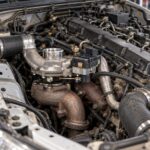
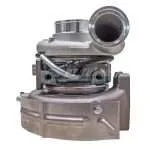
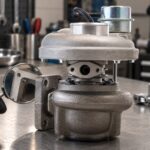
Holset H2C Turbocharger: Early Cummins Applications & Cross-Reference Guide
The Holset H2C Turbocharger is a fixed geometry, H-series unit from Cummins’ in-house turbo brand, built for the mid-displacement diesel engines that put Cummins on the map before the HX-series took over. If you are tracking down a replacement for one of these older turbos, the hard part is almost never the turbo itself. It is matching the exact part number to your engine, because the H-series spanned a wide range of frames and housings that look alike but do not interchange.
PT Turbo has been rebuilding turbochargers since 1978, more than 45 years, and we stock both new and remanufactured Holset units. This guide walks through where the H2C sits in Holset’s lineup, how to read its data plate, what fails on an older fixed geometry turbo, and how to cross-reference the number on the tag so you order the right part the first time.
Where the H2C fits in Holset’s H-series
Holset’s early turbochargers were named by frame size: H1, H2, H3 and up, with letter suffixes marking variations in the housings, wheels and control. A larger leading number means a larger frame and a higher flow capacity. The H1-frame turbos served the 5.9L six-cylinder; the H2 frame sits above it for larger or higher-output engines.
The H2C is a fixed geometry turbo. There are no pivoting vanes, no sliding nozzle and no actuator to calibrate. The exhaust drives a single turbine, the compressor feeds the intake, and boost rises with engine load and RPM. That simplicity is exactly why these turbos stay in service for decades.
One point on Holset naming that trips people up: the letter W marks a wastegated unit, not a water-cooled one. A plain H-series turbo without a W has no wastegate. If your data plate reads a W variant, that turbo carries an exhaust wastegate; a tag without it does not. Always go by what is stamped on your turbo rather than the general model family.
Holset itself was founded in 1952 in Huddersfield, England, and Cummins bought the company in 1973. It has operated as Cummins Turbo Technologies since 2006. The H-series was the workhorse line through that era before the HX-series became the standard on later Cummins engines.
Early Cummins applications
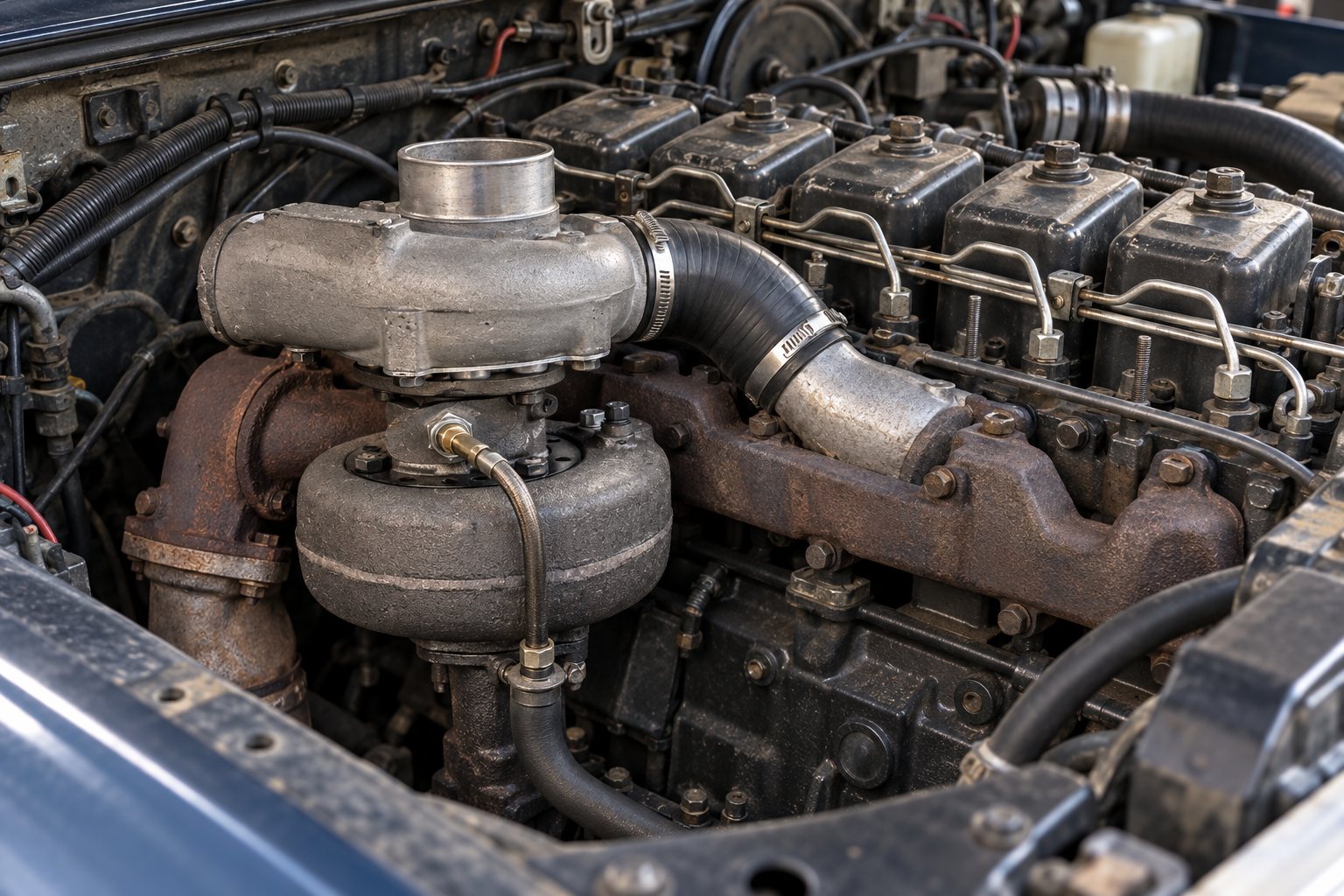
The H-series turbos were fitted across Cummins’ mechanical diesel engines of the 1980s and early 1990s, along with marine and industrial ratings. The H1C, for example, is the factory turbo on the 1989 to 1993 Dodge Ram 5.9L 12-valve. H-series units such as the H1C, H1E and H2D also appear on Cummins marine ratings with fixed geometry or wastegated housings.
Because the H2 frame covered larger engines and higher ratings, the same model designation was used with different turbine and compressor housings depending on the application. That is the key thing to understand before you buy: the model name alone does not define your exact part. Two turbos both tagged in the H2 family can carry different housings, A/R sizing and wheels. Among the H2C listings in our catalog that name an engine, the most common is the Cummins L10 (L10, LT10 and LTA10), a 10-liter six; the rest are truck, industrial and marine diesels from makers such as Leyland, Iveco, Renault, Mack and Volvo. Each listing names its engines in its Applications table, so check yours there.
These are mechanical-era turbos. There are no OBD-II trouble codes to pull, no boost solenoid and no electronic feedback. Diagnosis is done the old way: a boost gauge, a close look at the wheels and housings, and a check of the oil feed and drain.
Reading the data plate and cross-referencing the Holset H2C Turbocharger
Every Holset turbo carries a data plate on the compressor housing. On it you will find the Holset assembly number (seven digits plus a letter suffix) and, on factory-fitted turbos, the engine maker’s customer number listed as a separate field. The assembly number is what defines the complete turbo: frame, housings, wheels and control.
Do not order by the casting numbers raised into the turbine or compressor housings. One casting serves many different turbos, so a casting number only narrows the search. Confirm the match with the assembly number on the tag, backed up by wheel sizes and housing A/R if you are comparing units.
When you send us the number off your tag, we can confirm the exact replacement or rebuild the core you have. If the plate is missing or unreadable, measure the compressor and turbine wheels and note the housing A/R markings, then call us and we will work from there.
| Holset H-series model | Relative frame | Geometry | Wastegate |
|---|---|---|---|
| H1C | H1 (smaller) | Fixed | No (plain C suffix) |
| H1E | H1 | Fixed | No (plain E suffix) |
| H2A | H2 | Fixed | No (plain A suffix) |
| H2C | H2 (larger) | Fixed | No (plain C suffix) |
| H2D | H2 | Fixed | No (plain D suffix) |
The W-marked variants of these models (for example the WH1C) add a wastegate. If your tag shows a W, treat it as a different part from the plain version.
Common failures on a fixed geometry Holset
On a fixed geometry turbo there are no vanes or actuator to stick, so failures come down to the bearing system, the seals and the wheels. Most turbo failures trace back to the oil supply, so that is where any investigation should start.
- Oil starvation or contamination. A restricted or coked oil feed line wipes out the journal bearings. After any bearing failure, fit a new oil feed line rather than flushing and reusing the old one.
- Blocked oil drain. The drain is a gravity return that must run downhill and enter the block above the oil level. A restricted drain backs oil up past the seals and pushes oil into the intake or exhaust; a leaking drain gasket shows up as an external leak.
- Shaft play. Some side-to-side rock at the wheel nose is normal on a journal-bearing turbo. Condemn the unit for in-and-out play you can feel, for wheel contact with the housing, or for play beyond Holset’s limit, never for any movement at all.
- Foreign object damage. Debris through the compressor or turbine nicks the blade leading edges. A wheel with blade damage is replaced, not rebalanced and reused.
Blue-gray smoke usually means oil past a seal, but check the crankcase breather, air filter, oil level and the drain before you blame the turbo. A light oil film in the charge piping is normal on any engine with closed crankcase ventilation. For background on how the bearing and seal system works, the general turbocharger overview is a solid primer.
New, remanufactured or rebuilt
With an older turbo like the H2C you have three practical paths, and all three keep the correct part on the engine.
| Option | What you get | Best when |
|---|---|---|
| New replacement | A complete new turbo matched to your part number | Core is damaged beyond repair or you want the longest service life |
| Remanufactured | A ready-to-fit unit, inspected and balanced on a VSR rig | You need a turbo now and want a tested unit with a core exchange |
| Rebuild your core | Your exact turbo rebuilt with new bearings, seals and thrust parts | You want to keep your original housings and matched hardware |
We stock remanufactured turbochargers and offer in-house turbo rebuild service. Most rebuilds ship in 3 days or less, the rebuild price is confirmed after inspection and before any work starts, and every unit carries a 12-month unlimited-mileage warranty. For the cost of rebuilding your specific turbo, see our turbo rebuild price list rather than relying on a ballpark.
If your H2C core is unavailable or beyond saving, call the shop. We can usually source a new or reman unit, or arrange a rebuild, by phone at (909) 824-1020.
Frequently Asked Questions
How do I confirm I have an H2C and not another H-series turbo?
Read the data plate on the compressor housing. The seven-digit Holset assembly number plus its letter suffix defines the complete turbo, and the engine maker’s customer number is listed separately. Casting numbers on the housings are not part numbers, so use them only to narrow the search and confirm with the assembly number, wheel sizes and housing A/R.
Does the Holset H2C have a wastegate or variable vanes?
The plain H2C is a fixed geometry turbo with no variable vanes and no actuator. A wastegate is present only on variants marked with a W (as in the WH1C, where the W leads the name), since the W in a Holset name marks a wastegated unit. Match the exact name on your tag, because the plain and W versions are different parts.
Can you rebuild my original H2C instead of selling me a new one?
Yes. We rebuild cores in-house with new bearings, seals and thrust parts, balance them on a vibration sorting rig, and return your matched housings. Send us the number off the tag and we will confirm the rebuild, or discuss a new or remanufactured replacement if the core is too far gone.
Shopping by part number?
Every part number we stock for the Holset H2C is on one page, with live prices and stock: Holset H2C turbos and parts.
Need a Turbocharger?
PT Turbo has rebuilt and sold turbochargers since 1978. We stock remanufactured units for Cummins, Duramax, Power Stroke, Detroit Diesel, and more — backed by a 12-month unlimited mileage warranty. Units in stock at our shop in San Bernardino, CA ship the same day when ordered before 2 PM Pacific, Monday through Friday.
📞 (909) 824-1020 · 346 S I St. #3, San Bernardino, CA 92410 · [email protected]
More From PT Turbo
 BorgWarner S410 Turbocharger: High-Flow Semi Truck & Industrial Applications
- Nissan YD25 2.5L Diesel Turbocharger Guide: Navara & Pathfinder Replacement
- Holset HE341VE Turbocharger: 5.9L Cummins Application, Specs & Replacement Guide
- Garrett GT25 Series Turbocharger: Light Diesel Application & Fitment Guide