Subaru EE20 2.0L Diesel Turbocharger Guide: Outback & Forester Applications
This Subaru EE20 2.0L Diesel Turbocharger Guide covers everything a technician or owner needs to know about the boxer diesel found in the Outback, Forester, and Legacy models sold in Europe and Australia. The EE20 is unique. It is the only horizontally opposed diesel Subaru ever mass produced, and its compact turbo setup gives it strong low-end torque but also a handful of well-documented failure points.
PT Turbo has been rebuilding and supplying turbochargers since 1978, more than 45 years in the trade. We stock both new and remanufactured units along with the actuators and hard parts that keep these engines running. Below is the practical, no-nonsense breakdown of the EE20 turbo system.
EE20 Engine and Turbocharger Overview
The EE20 is a 1,998cc DOHC common-rail diesel using a boxer (flat-four) layout. It debuted in 2008 in the European Legacy and Outback and later spread to the Forester and Impreza/XV lines. Output is 150 PS (147 PS in the later Forester), with 350 Nm of torque.
The EE20 has used a variable-geometry turbocharger (VGT) since its launch in 2008: an IHI unit of the RHV4 family with a pneumatic actuator and a position sensor. Later Euro 5 and Euro 6 versions revised the turbo and its control. If you want the background on how VGT vanes work, this variable-geometry turbocharger overview is a solid primer.
Knowing which version you have is the first step. The turbos of the different emissions versions are not interchangeable: the actuator, control strategy, and part numbers differ.
EE20 Turbo Specifications by Model Year
| Model Years | Turbo Type | Emissions Standard | Typical Output |
|---|---|---|---|
| 2008–2013 | Variable-geometry (IHI RHV4) | Euro 4 / Euro 5 | 150 PS (147 PS in the later Forester) / 350 Nm |
| 2013–2017 | Variable-geometry (VGT) | Euro 5; Euro 6 from 2015 | 150 PS (147 PS in the later Forester) / 350 Nm |
| 2017–2020 | Variable-geometry (VGT) | Euro 6 | 150 PS (147 PS in the later Forester) / 350 Nm |
Common EE20 Turbocharger Failure Points
The EE20 turbo is generally durable, but three issues account for most of the failures we see come across the bench. Understanding them saves you from throwing parts at a problem.
Oil supply and coking. The boxer layout runs the turbo close to a tight, hot packaging area. Extended oil change intervals or short-trip driving lead to carbon buildup in the oil feed line and center housing. Starved bearings then spin out, and you get shaft play and smoke.
Actuator and VGT vane sticking. Soot builds up on the variable vanes and the mechanism binds. The pneumatic actuator can no longer sweep the vanes correctly, throwing boost pressure fault codes and putting the car in limp mode.
DPF-related back pressure. A clogged diesel particulate filter raises exhaust back pressure and hammers the turbo with heat and load. Many EE20 turbo failures are downstream symptoms of a neglected DPF or failed regeneration cycles.
Symptom Severity Guide
| Symptom | Likely Cause | Severity |
|---|---|---|
| Slight whistle, normal power | Boost leak or loose clamp | Low |
| Limp mode, boost fault code | Sticking VGT vanes or actuator | Medium |
| Blue/gray smoke, oil use | Failed seals, worn bearings | High |
| Metallic rattle, no boost | Spun bearing, shaft failure | Critical |
Diagnosing the Actuator Before Condemning the Turbo
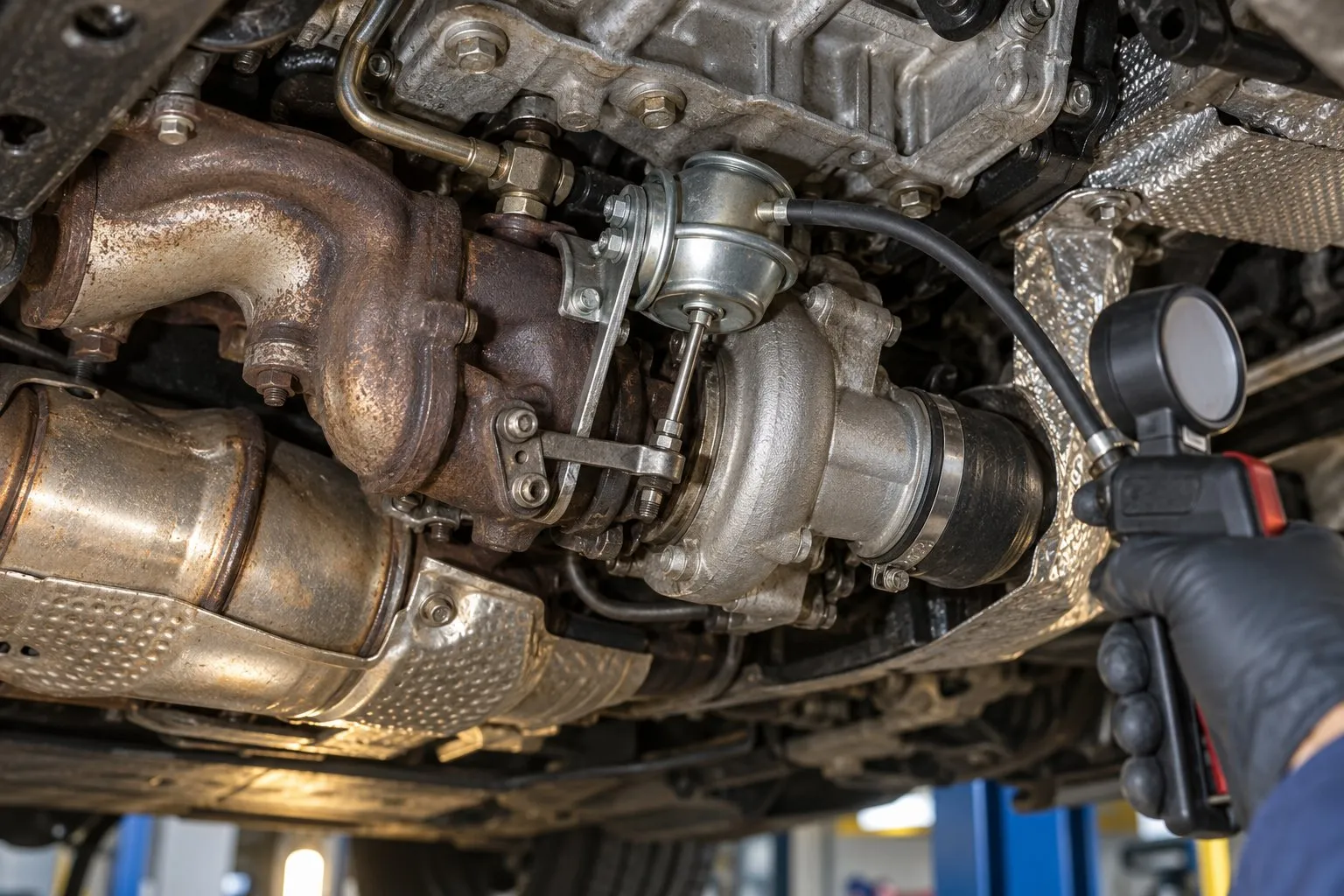
Here is where a lot of money gets wasted. On the EE20, a boost pressure fault often points to the actuator or the vane mechanism, not the core itself. Test before you replace.
Check the actuator rod travel with the engine off. It should move freely through its full stroke without binding. A sticking rod usually means carbon in the vanes, and sometimes a clean and re-lube restores function. A dead actuator that will not hold or move needs replacing.
Matching the correct actuator to your turbo is essential. The actuator is specific to the turbo part number, and choosing the wrong one throws off the calibration.
Not Sure Which Actuator You Need?
If you are unsure which actuator matches your turbo, contact PT Turbo with your part number and we will confirm the fit.
New vs Remanufactured: What Makes Sense for the EE20
A brand-new OEM EE20 turbo is expensive and often on extended lead times outside Japan and Europe. A quality remanufactured unit gives you the same performance at a fraction of the cost, which matters when the vehicle itself is 8 to 12 years old.
Every remanufactured turbo from PT Turbo is fully disassembled, cleaned, fitted with new bearings, seals, and thrust components, then balanced on a VSR machine and flow tested. That is the difference between a rebuild and a proper reman.
| Option | Typical Cost | Lead Time | Warranty |
|---|---|---|---|
| New OEM turbo | Quoted by part number | Ask the shop | Manufacturer |
| Remanufactured turbo | Quoted by part number | In stock / fast | PT Turbo warranty |
| Rebuild your core | From $575 at PT Turbo (price list) | Turnaround based | PT Turbo warranty |
Browse our remanufactured turbochargers or send us your existing unit through our turbo rebuild service. If your core is intact and the wheels are undamaged, a rebuild is usually the most economical path.
EE20 Turbo Replacement and Installation Tips
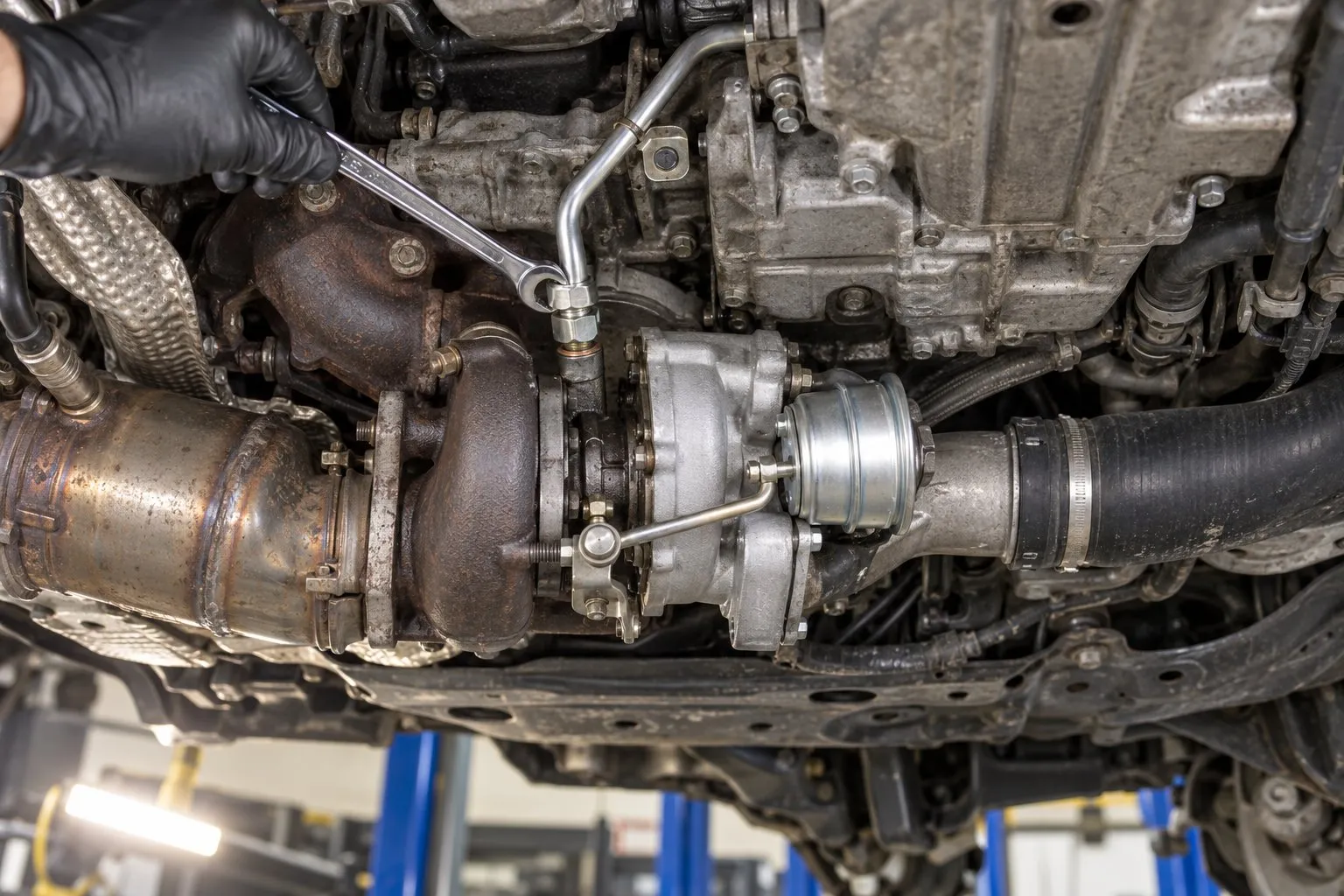
The boxer layout makes turbo access tighter than an inline engine, so plan the job properly. Rushing the install is how repeat failures happen.
- Always replace the oil feed line, not just the turbo. A partially coked line will kill a new unit within weeks.
- Flush the oil cooler and change oil and filter with the correct low-SAPS diesel spec oil.
- Prime the turbo with clean oil before startup and crank without firing to build oil pressure.
- Inspect the DPF and EGR system. A clogged EGR circuit accelerates soot loading on the vanes.
- Reset adaptive learning values and verify actuator calibration with a scan tool after fitment.
Confirm the vane sweep and boost targets under a road test load. A turbo that passes at idle can still fail under demand if the vanes are lazy.
How the EE20 Compares to Other Diesel Turbo Platforms
The EE20 is a light-duty passenger diesel, so its turbo is small and boost-response focused rather than built for sustained heavy loads. If you work across mixed fleets, it helps to understand where it sits relative to the bigger commercial platforms.
Compared to a medium or heavy-duty commercial turbo, the EE20 unit runs smaller wheels, lighter shaft components, and tighter oil clearances. That is what gives it quick spool and good low-end torque in a car, but it also means it has far less thermal headroom. Abuse that would barely register on a truck turbo will finish an EE20 core quickly.
The practical takeaway for anyone running mixed equipment is that the EE20 demands clean oil and healthy exhaust flow more than raw durability from the turbo itself. On a commercial platform you can often limp through a neglected service interval. On this engine, a coked feed line or a soot-loaded DPF takes the turbo with it.
Treat the EE20 turbo as part of a system, not a standalone part. Keep the oil fresh, the DPF regenerating properly, and the EGR circuit clean, and these units deliver the kind of service life the rest of the boxer diesel is capable of.
Frequently Asked Questions
Which Subaru models use the EE20 2.0L diesel engine?
The EE20 boxer diesel is found in the Subaru Outback, Forester, and Legacy models sold in Europe and Australia. It is the only horizontally opposed diesel Subaru ever mass produced.
What are common turbocharger problems on the Subaru EE20 diesel?
Common issues include boost inconsistency, oil contamination, and wear from restricted oil supply or clogged filters. Regular oil changes and monitoring boost levels help prevent premature turbo failure.
Does the Subaru EE20 turbo produce good low-end torque?
Yes, the EE20’s compact turbo setup delivers strong low-end torque, making it responsive at lower RPMs. This design is ideal for the everyday driving and towing demands of Outback and Forester owners.
Need a Turbocharger?
PT Turbo has rebuilt and sold turbochargers since 1978. We stock remanufactured units for Cummins, Duramax, Power Stroke, Detroit Diesel, and more — backed by a 12-month unlimited mileage warranty. Units in stock at our shop in San Bernardino, CA ship the same day when ordered before 2 PM Pacific, Monday through Friday.
📞 (909) 824-1020 · 346 S I St. #3, San Bernardino, CA 92410 · [email protected]
More From PT Turbo
 Land Rover TD4 2.0L Turbocharger Guide: Defender, Discovery Sport & Range Rover Evoque
- Holset HX60 Turbocharger: Cummins QSX & Heavy Industrial Applications
- Garrett GT1749V Turbocharger: VW TDI & Audi A4 Common Failure & Replacement
- Garrett vs Holset vs BorgWarner: Which Diesel Turbo Brand Lasts Longest?