Nissan ZD30 3.0L Diesel Turbocharger Guide: Patrol & Navara D22 Common Failures
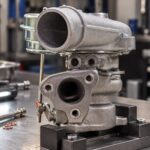
This Nissan ZD30 3.0L Diesel Turbocharger Guide covers everything diesel techs, fleet managers, and Patrol and Navara owners need to diagnose, repair, and replace the turbo on one of Nissan’s most widely used, and most argued-about, four-cylinder diesel engines. At PT Turbo we have been rebuilding and supplying turbochargers since 1978, and the ZD30 crosses our bench often enough that we know exactly where these units fail and why.
The ZD30 powered the Patrol GU/Y61, Navara D22, and a long list of light commercial vehicles across Australia, Asia, Europe, and the Middle East. Get the turbo setup right and it is a durable engine. Get it wrong, and you chase boost problems, oil consumption, and blown head gaskets for years.
ZD30 Turbocharger Variants: DDTi vs Common Rail
There are two ZD30 turbo setups that look alike but do not interchange, and confusing them is the single biggest mistake we see when people order parts.
The early ZD30 DDTi (direct injection, electronic) fitted to the Patrol GU (the Navara D22 had the non-intercooled ZD30DDT) typically ran a Garrett GT2052V or a fixed-geometry unit depending on market and year. The later ZD30 CRD (common rail) kept a Garrett variable-nozzle turbo, in most listings again of the GT2052V family with a vacuum-operated actuator.
The distinction matters because the variable geometry mechanism, the actuator, and the control strategy differ between generations, even where the turbo family is the same. A variable-geometry turbocharger uses moving vanes in the turbine housing to change exhaust flow, which is precisely where most ZD30 turbo failures originate.
| Feature | ZD30 DDTi (early) | ZD30 CRD (later) |
|---|---|---|
| Fuel system | Direct injection, electronic | Common rail |
| Common turbo | GT2052 / GT2052V | GT2052V variable nozzle |
| Boost control | Wastegate / VNT pneumatic | VNT, vacuum actuator |
| Typical peak boost | ~14-18 psi | ~18-22 psi |
| Failure hotspot | Actuator, oil feed | Sticking VNT vanes, actuator |
Common ZD30 Turbocharger Failures
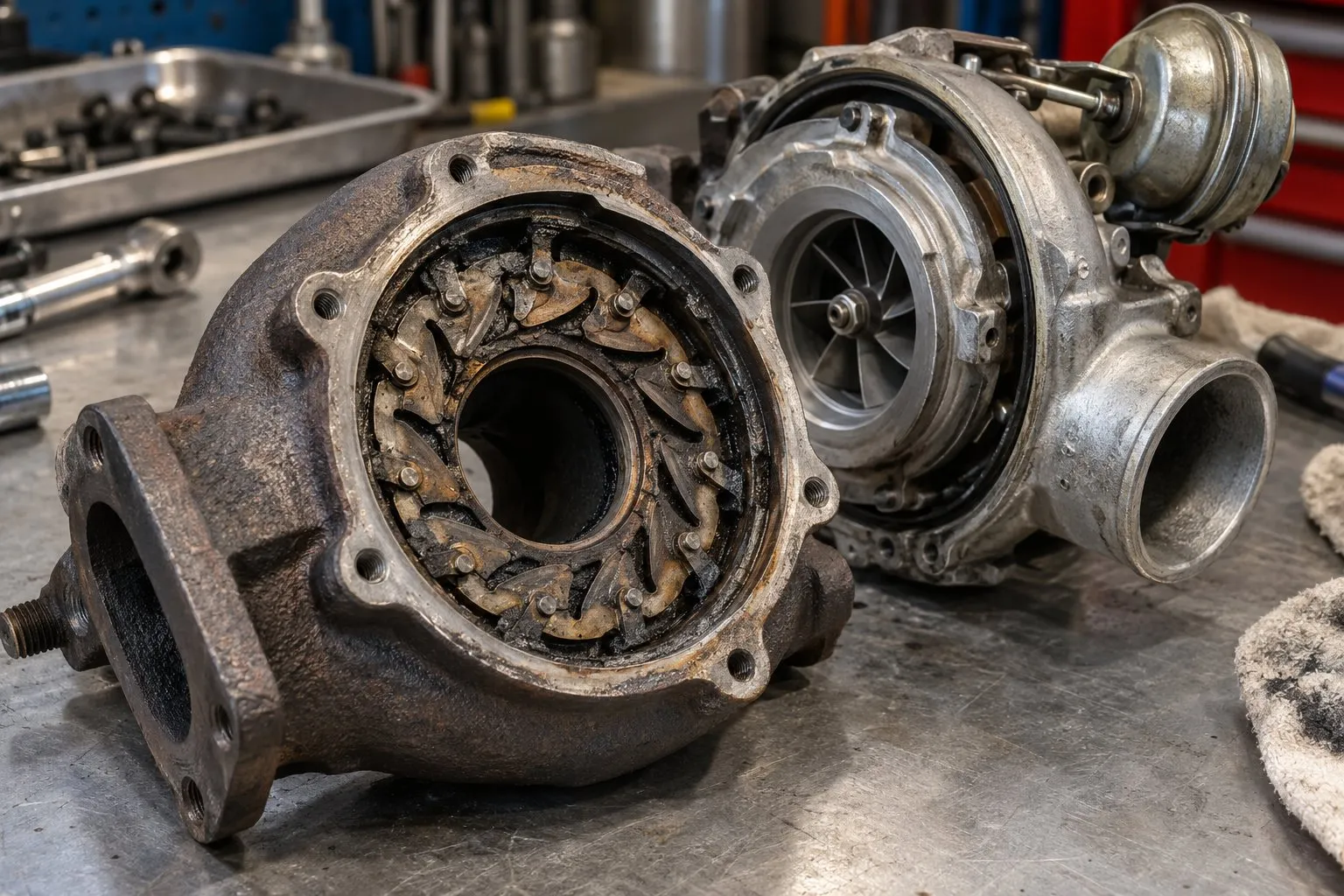
The ZD30 has a reputation, and most of it traces back to the turbo and boost control system rather than the block itself. Here is what actually fails, in the order we see it.
1. Sticking VNT vanes and carbon buildup
Soot and oil vapor bake onto the variable-nozzle vanes and the unison ring. The vanes seize partially open or closed, and boost becomes erratic. You get overboost spikes, limp mode, or a total loss of low-end response.
This is the number one killer on common-rail ZD30 turbos. High exhaust gas recirculation flow accelerates the carbon accumulation, especially on vehicles that spend their life at light throttle.
2. Actuator failure
The pneumatic actuator that moves the VNT mechanism is a wear item. Diaphragms crack, the rod seizes, and the actuator can no longer hold the calibrated position against exhaust pressure. Result: overboost, underboost, or a boost signal that never stabilizes.
A failed actuator is frequently misdiagnosed as a bad turbo. In many cases the cartridge is fine and only the actuator needs replacing, which is a far cheaper repair.
3. Oil starvation and shaft play
ZD30 turbos are sensitive to oil quality and feed-line restriction. A partially blocked oil feed banjo or a collapsing feed line starves the center bearing, spins the bearings dry, and destroys the shaft. Once you have measurable radial or axial play, the cartridge is done.
4. Oil leaks and boost leaks
Worn seals push oil into the intake, which the engine then burns, contributing to the runaway risk the ZD30 is infamous for. Cracked intercooler piping and loose clamps create boost leaks that mimic turbo failure but cost nothing to fix.
Symptoms by Severity
Use this to triage a ZD30 complaint before you pull anything apart.
| Severity | Symptoms | Likely cause |
|---|---|---|
| Mild | Slight lag, minor whistle, small boost drop | Boost leak, worn clamps, early vane fouling |
| Moderate | Limp mode, inconsistent boost, black smoke | Sticking VNT vanes, failing actuator |
| Severe | Blue smoke, oil in intake, whine or grinding | Failed seals, worn bearings, shaft play |
| Critical | Engine runaway risk, no boost, metal debris | Cartridge failure, oil feed to intake |
Any blue smoke combined with rising idle should be taken seriously on a ZD30. The engine can ingest its own crankcase or turbo oil and run away, which ends in catastrophic failure if the intake is not shut off.
Nissan ZD30 3.0L Diesel Turbocharger Guide: Replacement Actuators and Parts
The good news for this platform: in most moderate-severity cases you can restore correct boost control with an actuator, not a whole turbo. PT Turbo stocks both new and remanufactured components, and we match the actuator to your exact turbo variant before it ships.
Not sure which actuator or turbo you have? Send us your part number or a photo of the compressor housing tag through the PT Turbo contact page and we will identify it before you spend a cent.
Replace the Actuator, Rebuild, or Replace the Turbo?
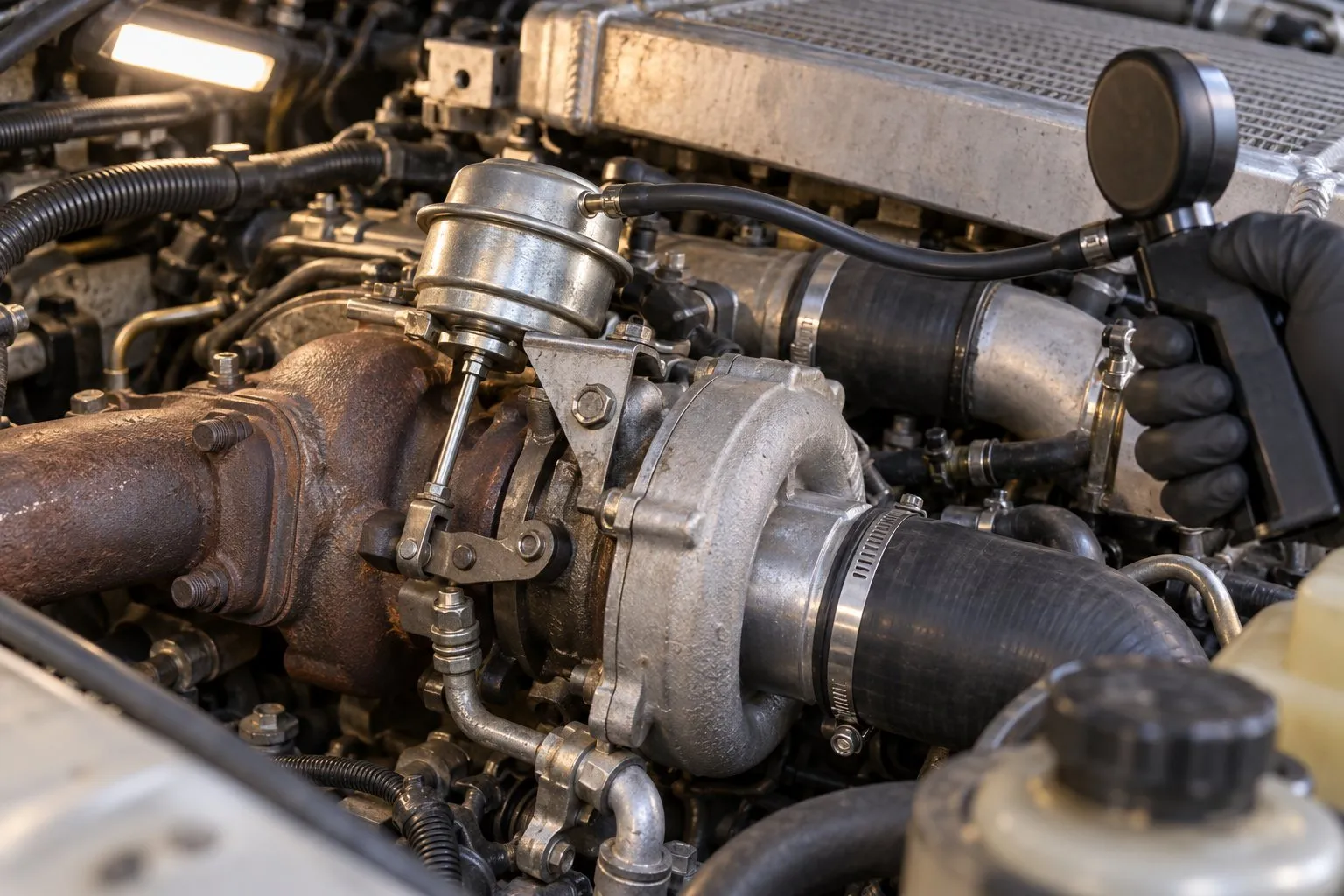
The right call depends on shaft condition and how badly the vanes are carboned. Here is how we advise ZD30 customers.
- Actuator only: Boost control problems with shaft play within the maker’s limits and clean vanes. The cheapest fix.
- Rebuild: Vanes are fouled or seals are leaking, but the housing and shaft are serviceable. Our turbocharger rebuild service replaces the CHRA components, cleans and frees the VNT mechanism, and balances the assembly.
- Replace: Measurable shaft play, wheel contact damage, or a cracked housing. A remanufactured turbocharger restores factory spec at a fraction of new pricing.
| Option | Typical outcome | Relative cost |
|---|---|---|
| New actuator | Restores boost control, keeps existing turbo | $ |
| Rebuild service | Fresh CHRA, cleaned VNT, balanced | $$ |
| Remanufactured turbo | Complete unit, tested, warranty backed | $$ |
| New OEM turbo | Factory unit, longest lead time | $$$$ |
For a full range of options across every diesel platform, you can also shop all turbos at PT Turbo.
Frequently Asked Questions
What causes turbocharger failure on the Nissan ZD30 3.0L diesel?
Common causes include oil supply issues, overboosting, worn actuators, and carbon buildup on the variable geometry vanes. Many failures trace back to poor maintenance or oil contamination.
Which vehicles use the Nissan ZD30 turbocharger?
The ZD30 3.0L diesel is fitted to the Nissan Patrol and Navara D22, among other models. It is one of Nissan’s most widely used four-cylinder diesel engines.
Can a Nissan ZD30 turbocharger be rebuilt instead of replaced?
Yes, in many cases the ZD30 turbo can be rebuilt if the core is serviceable. Rebuilding is often more cost-effective than fitting a brand-new unit.
Need a Turbocharger?
PT Turbo has rebuilt and sold turbochargers since 1978. We stock remanufactured units for Cummins, Duramax, Power Stroke, Detroit Diesel, and more — backed by a 12-month unlimited mileage warranty. Units in stock at our shop in San Bernardino, CA ship the same day when ordered before 2 PM Pacific, Monday through Friday.
📞 (909) 824-1020 · 346 S I St. #3, San Bernardino, CA 92410 · [email protected]