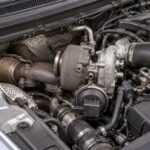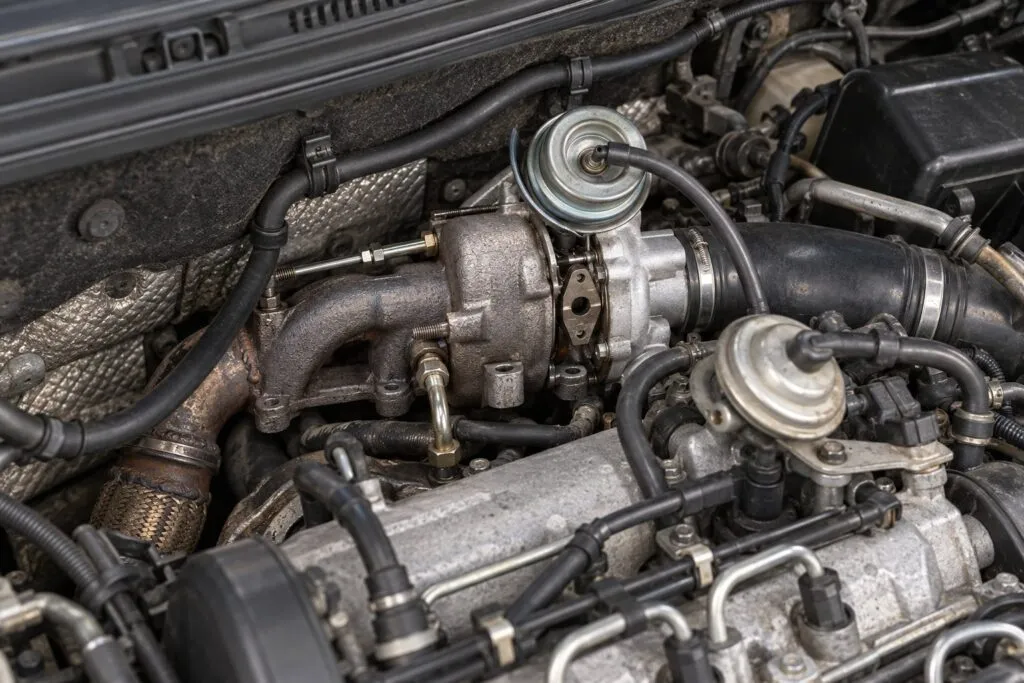
The Garrett GT1749V Turbocharger is one of the most widely fitted variable geometry turbos in the diesel world, powering millions of Volkswagen TDI and Audi A4 engines built from the late 1990s through the 2000s. If you turn wrenches on European diesels, you already know this unit intimately, because you have almost certainly diagnosed one that lost boost, thrown a limp-mode code, or started belching black smoke on hard acceleration.
At PT Turbo we have been rebuilding and supplying turbochargers since 1978, more than 45 years of hands-on experience across everything from over-the-road heavy trucks to compact European passenger diesels. This guide breaks down exactly why the GT1749V fails, how to diagnose it correctly, and what it costs to fix it right the first time.
What the Garrett GT1749V Turbocharger Powers
The GT1749V is a variable nozzle turbine (VNT) design, meaning it uses moving vanes in the exhaust housing to control exhaust gas velocity across the engine’s rev range. This gives strong low-end response and reduced turbo lag compared to older wastegated units.
You will find the GT1749V and its close relatives on a broad range of applications, including:
- VW Golf, Jetta and New Beetle with the 1.9L ALH TDI engine
- Audi A4 1.9 TDI and 2.0 TDI
- Various Skoda, SEAT, and Ford diesel platforms sharing the VAG PD engine family
The variable geometry mechanism is what makes this turbo effective, and it is also its primary weakness. You can read a solid technical overview of the concept on the variable-geometry turbocharger reference page, but the short version is that anything with moving parts inside a 1,300-degree exhaust stream will eventually gum up or seize.
Common Garrett GT1749V Turbocharger Failure Modes
Nearly every GT1749V failure traces back to one of a handful of root causes. Knowing which one you are dealing with saves you from throwing a full turbo at a problem that an actuator would have solved.
1. Sticking or Seized VNT Vanes
Carbon and soot build up on the variable vanes and the unison ring that moves them. On TDI engines run on short trips or low-quality fuel, this happens faster because the exhaust never gets hot enough to burn off deposits.
Symptoms include intermittent limp mode, surging under load, and inconsistent boost. In early stages the vanes stick occasionally; left alone, they seize solid and the turbo cannot regulate boost at all.
2. Actuator Failure
The pneumatic actuator controls vane position via engine vacuum. The diaphragm inside can rupture, the linkage can wear, or the actuator can lose its calibration. When this happens the turbo either overboosts or underboosts, both of which trigger a fault code and limp mode.
A failed actuator is often mistaken for a failed turbo. Before condemning the whole unit, test the actuator with a hand vacuum pump. The rod should move smoothly and hold vacuum. If it does not, you have found your problem.
3. Worn Center Bearing / Shaft Play
Oil starvation, extended oil change intervals, or hot shutdowns kill the center bearing. Excessive shaft play lets the compressor or turbine wheel contact the housing, and you will see oil in the intake or hear a distinct grinding or whining.
4. Oil Leaks and Coking
Blocked oil return lines and coked feed lines cause oil to leak past the seals into the intake or exhaust. Blue smoke on startup and oil pooling in the intercooler piping are the telltale signs.
Symptom Severity Chart
Use this quick reference to gauge how urgent a repair is and where to start diagnosing.
| Symptom | Likely Cause | Severity |
|---|---|---|
| Intermittent limp mode, resets after restart | Sticking VNT vanes (early) | Moderate |
| Constant underboost / overboost code | Failed actuator or seized vanes | High |
| Whining or grinding noise from turbo | Worn center bearing, shaft play | Critical |
| Blue smoke, oil in intercooler piping | Failed seals, blocked oil return | High |
| Black smoke under acceleration | Vanes stuck open, low boost | Moderate |
Diagnosing Before You Replace
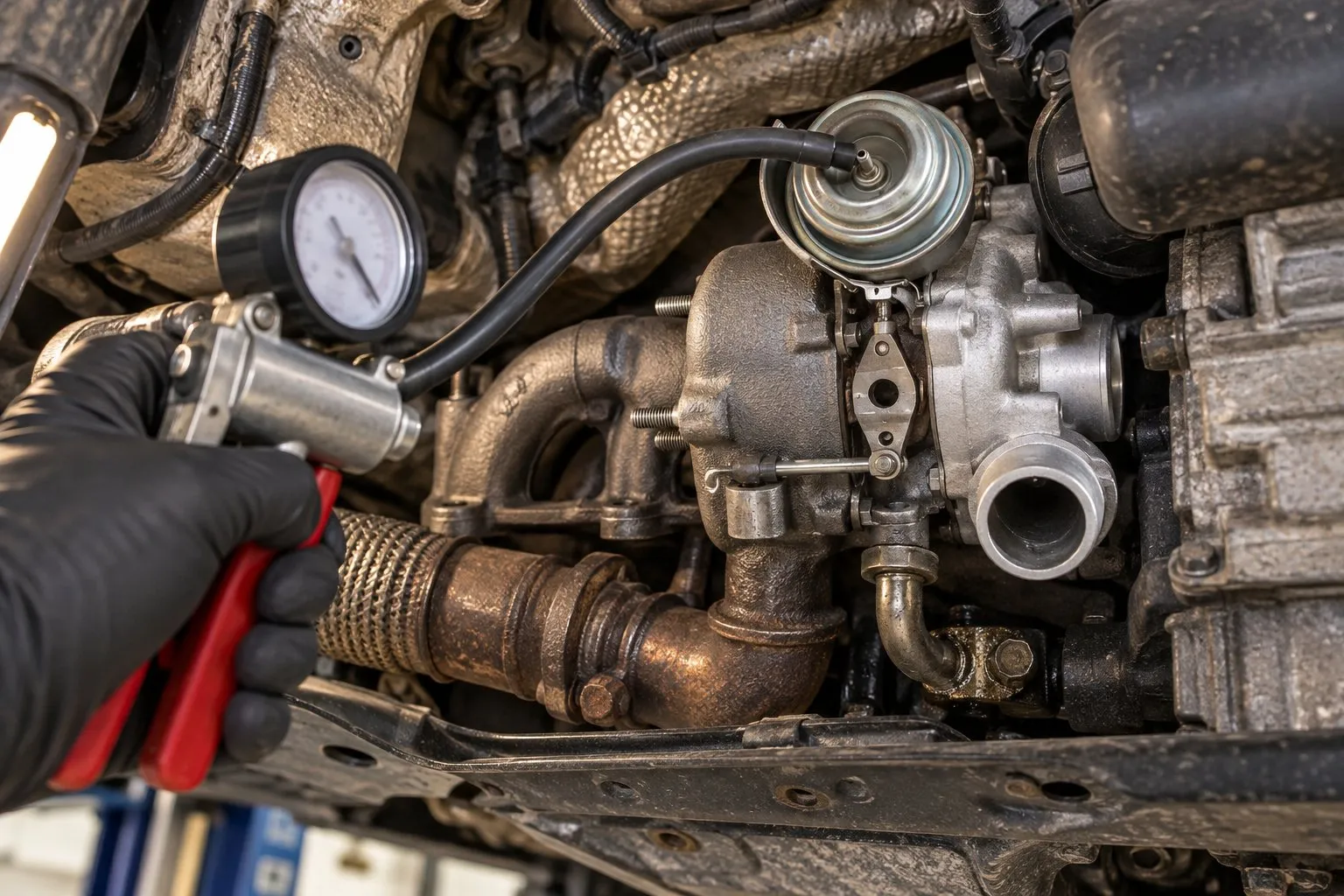
A proper diagnosis on a GT1749V starts with a scan tool that reads live data. Pull actual boost versus requested boost. A large deviation points to the VNT system, either the vanes or the actuator.
Next, inspect the actuator mechanically. With the engine off, apply vacuum to the actuator and watch the rod travel. It should move fully and hold. Sticky or partial movement means carbon-bound vanes or a tired actuator.
Finally, check shaft play by hand at the compressor wheel. A small amount of side-to-side movement is normal, but if you can feel in-and-out play, or the wheel contacts the housing or feels gritty, the cartridge is done. This same VNT diagnostic logic applies across many modern diesels, and we cover it in depth in our Cummins ISB 6.7L variable geometry turbocharger guide.
Replacing the Garrett GT1749V Turbocharger Actuator
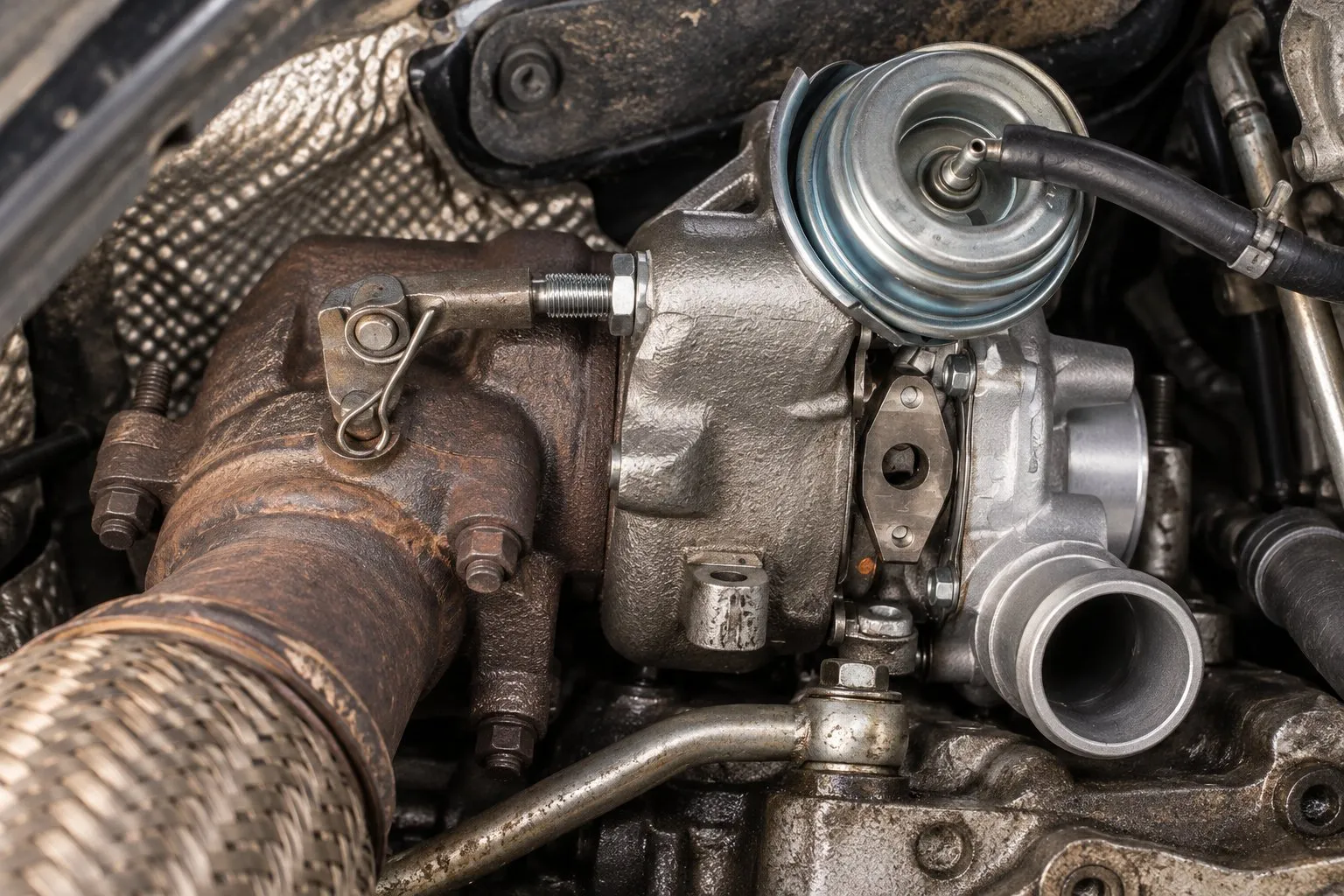
If your vanes still move freely but boost control is erratic, the actuator is very often the fix, and it is far cheaper than a full turbo. Garrett offers genuine replacement pneumatic actuators calibrated to spec, which matters because a miscalibrated actuator will never hold correct boost.
When you install a new actuator, it must be calibrated to the correct rod length and vane position. Genuine Garrett actuators come pre-set, but always verify against the OEM spec before locking the linkage. An actuator off by even a couple of millimeters will throw the same overboost or underboost codes you were trying to eliminate.
New vs Remanufactured: What Makes Sense
When the cartridge itself is worn or the vanes are seized, you are looking at either a new complete turbo or a quality remanufactured unit. Both are valid, and the right choice depends on budget and how long you plan to keep the vehicle.
| Option | Typical Cost | Best For |
|---|---|---|
| New Garrett turbo | $703 to $1,426 (5 listings) at PT Turbo | Warranty vehicles, long-term keepers |
| Quality remanufactured turbo | $640 to $702 (2 listings) at PT Turbo | Best value, most TDI owners |
| Actuator only (if vanes are good) | see actuator prices | Boost control faults, healthy cartridge |
| Rebuild your existing core | Varies by core | Rare or hard-to-source units |
A properly remanufactured GT1749V uses new bearings, seals, and a balanced CHRA, and it performs identically to new at a fraction of the price. Browse our remanufactured turbochargers or, if you have a serviceable core, ask about our turbocharger rebuild service. You can also shop all turbos to match your exact part number.
Installation Tips That Prevent Repeat Failures
The number one cause of a repeat turbo failure is not the turbo, it is the oil supply. Before you bolt on any replacement, address the conditions that killed the first one.
- Replace the oil feed line, since coked lines starve the new bearing on day one
- Verify the oil return line is clear and unrestricted
- Prime the new turbo with clean oil before startup
- Change oil and filter with a quality diesel-rated oil
- Clean or replace the EGR system, since excess soot accelerates vane fouling
Deposits from a clogged EGR system are a major contributor to vane sticking. If you want the background on how that soot enters the intake charge, the exhaust gas recirculation overview lays it out clearly. On DPF-equipped later TDI engines, incomplete regeneration adds to the problem as well.
After installation, let the engine idle for several minutes before driving, and always allow a proper cool-down at idle after hard runs.
Price ranges in this article are general estimates to help with budgeting, not PT Turbo quotes. Our current prices are on each product listing, and our rebuild prices are on the turbo rebuild price list.
Frequently Asked Questions
What are the common failure symptoms of the Garrett GT1749V turbocharger?
Typical symptoms include loss of boost, limp mode, excessive smoke, and whistling or grinding noises. These often stem from stuck variable geometry vanes or a failing actuator.
Which vehicles use the Garrett GT1749V turbocharger?
It is fitted to millions of Volkswagen TDI and Audi A4 diesel engines built from the late 1990s through the 2000s. It is one of the most widely used variable geometry turbos in the diesel world.
Can the GT1749V turbocharger be repaired instead of replaced?
In some cases, cleaning the variable geometry vanes or replacing the actuator can restore function. However, worn shaft bearings or damaged internals usually require full replacement.
Shopping by part number?
Every part number we stock for the Garrett GT1749V is on one page, with live prices and stock: Garrett GT1749V turbos and parts.
Need a Turbocharger?
PT Turbo has rebuilt and sold turbochargers since 1978. We stock remanufactured units for Cummins, Duramax, Power Stroke, Detroit Diesel, and more — backed by a 12-month unlimited mileage warranty and same-week shipping from San Bernardino, CA.
📞 (909) 824-1020 · 346 S I St. #3, San Bernardino, CA 92410 · [email protected]
More From PT Turbo
 Audi 2.0L TDI Turbocharger Guide: A3, A4, A5 & Q3 Common Failures & Replacement
- What Is a Variable Geometry Turbocharger (VGT) and How Does It Work?
- Holset Turbocharger Complete Model Guide: Every Series from HX to HE Explained
- BorgWarner K31 Turbocharger: MAN, Mercedes-Benz & Volvo Penta Application Guide