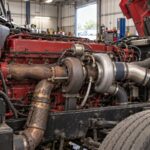
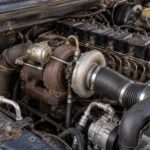
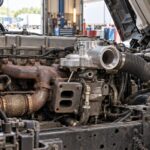
New Holland CR Combine Turbocharger Guide: Twin Rotor Harvester Applications
This New Holland CR combine turbocharger guide is for the people who keep Twin Rotor machines cutting through harvest: shop mechanics, custom harvesters running several machines, and farmers who cannot afford a lost day in the field. A CR works its turbocharger hard for long hours in dust and chaff, then parks it for months. That pattern decides how these turbos fail and what you should check first.
PT Turbo has been rebuilding turbochargers since 1978, more than 45 years as a family-owned shop. This guide covers how to identify the turbo on a CR’s engine, how combine turbos fail, what to rule out before you pull one, and how to replace or rebuild it so it is ready before the crop is.
What Twin Rotor Harvesting Asks of a Turbocharger
On a Twin Rotor combine, two long rotors running front to back do the threshing and separating. The engine also turns the cleaning fan, the straw chopper and spreader, the unloading auger and the hydrostatic ground drive. In heavy crop the engine sits near rated speed under steady high load for hours. That is a harder duty cycle than most on-road trucks see, because there is no downhill or traffic light to give the turbo a break.
A turbo under that load runs at high shaft speed and high exhaust temperature for long stretches. Diesel exhaust temperature climbs with more fuel or less air, so anything that cuts airflow, such as a loaded air filter or a boost leak, pushes the turbine side hotter still. Good oil, clean air and tight plumbing matter more on a combine than almost anywhere else.
Then there is the air itself. The precleaner and air filter are the only things between a cloud of dust and chaff and the compressor wheel. When the filter, its seals or the inlet ducting let dirt through, the turbocharger is the first part to take it.
Identifying the Turbo on Your CR’s Cursor Engine
CNH combines, the New Holland CR series among them, commonly run FPT Industrial Cursor engines from the Iveco Cursor family. The engine plate tells you which Cursor and which rating your machine has. The turbo tag gives you the number you order by.
Parts listings tie several turbo families to Cursor engines. The Holset HX52 turbochargers are listed for the Cursor 9 and the Holset HX55 turbochargers for the Cursor 13. The wastegated Holset HX55W turbochargers are listed mainly for Cursor combines. None of this tells you which number is on your machine, because rating and emissions level change the turbo number on the same engine family.
| Turbo on the tag | Listed for | Boost control | What to check first |
|---|---|---|---|
| Holset HX52 | Iveco Cursor 9 (also Volvo D12, Volvo / Mack 11 liter, Scania) | Fixed geometry, no W in the name, so no wastegate | Shaft play, compressor inlet blades, oil drain |
| Holset HX52W | Earlier Case IH Magnum Cursor 9 tractors | Fixed geometry with wastegate | Gate opening, flapper seating, actuator and linkage |
| Holset HX55 | Iveco Cursor 13 (also Cummins M11, ISM, Volvo, Mack, Scania) | Fixed geometry, no wastegate | Shaft play, wheel condition, drain |
| Holset HX55W | Mainly Cursor combines, by part number | Fixed geometry with wastegate | Gate opening, flapper seating, actuator and linkage |
| Garrett GTC4088V (841805-5020S) | Tier 4B Cursor 9 tractors, 2020 on | Variable geometry, electric actuator | Actuator checked with a scan tool; never force the arm by hand |
The Holset data plate sits on the compressor housing. It shows the Holset assembly number, seven digits plus a letter suffix, and the engine maker’s (customer) number as separate fields. Garrett numbers read as six digits, a dash, four digits and an S. Casting numbers on the housings are not part numbers, since one casting serves many turbos.
Cross-brand engine families do not make turbos interchangeable. Our Holset HX52W turbochargers listing 3787091H, for example, names a CNH Magnum tractor with an 8.7L engine. A similar engine in a combine does not make that the combine’s turbo. If the tag is burned or painted over, send photos of what is left along with the engine plate and we will work from there.
Turbos we list for the HX55W and HX52W
Listings for the turbo models named in this guide that can be ordered online today. Several part numbers can fit one engine by year and rating, so match the number on your turbo’s tag, or call (909) 824-1020 and we will match it for you.
How Combine Turbos Fail
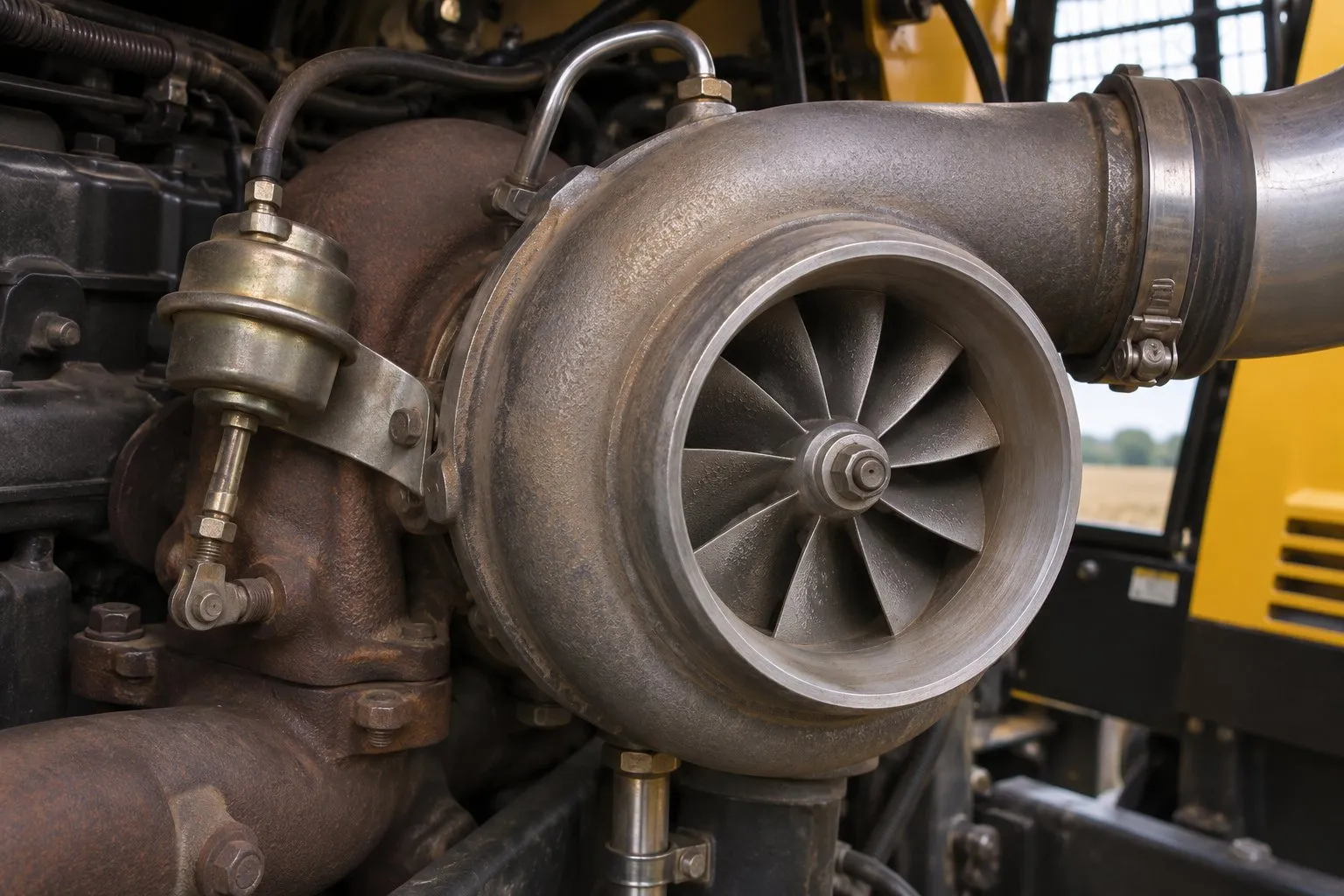
Dust and foreign objects
Dust that gets past the filter sandblasts the compressor wheel, which shows up as pitting on the inlet blades. The pipe between the air filter and the turbo is under suction. A crack or loose clamp there lets dirt in. It cannot leak boost. Bent or chipped blades are impact damage from a solid object, so look for a broken filter element, a loose clamp or debris left in the ducting.
Oil supply and oil condition
Garrett states that more than 90 percent of turbo failures come from oil starvation or oil contamination. Starvation comes from hard acceleration on a cold engine, blocked or leaking oil lines, or a turbo that was never primed at installation. Contamination comes from carbon, engine wear debris, dirt let in during service and degraded oil. Shutting down hot after a heavy run cokes oil inside the center housing, and that carbon then wears the bearings.
Turbo journal bearings are bronze, so copper is the bearing wear metal to watch in an oil report. Compare each sample with your own baseline and the lab’s limits. Change oil on the maker’s schedule, or its severe-service schedule for dusty, long-hour harvest work.
Wastegate faults on HX52W and HX55W units
A wastegate flapper that does not seat lets exhaust bypass the turbine, which gives low boost and slow response. Where the gate is opened by a diaphragm actuator fed with boost, a leaking diaphragm makes the gate open late, which gives overboost. A seized linkage can hold the gate shut or open depending on where it stuck.
Exhaust leaks and the oil drain
A leak at the manifold or turbine inlet lets exhaust escape before the turbine. The result is low boost, slow spool and higher exhaust temperature. The oil drain works by gravity. It must run downhill and enter the pan above the oil level. A restricted drain backs oil up past the seals and shows up as oil at both ends of the turbo.
| Symptom | Likely causes | Check first |
|---|---|---|
| Low power, black or dark gray smoke | Low boost: restricted air filter, charge-air leak, exhaust leak before the turbine, wastegate not seating | Restriction indicator, boots and clamps, manifold joints |
| Blue-gray smoke, pooled oil in charge pipes | Restricted drain, crankcase pressure, plugged air filter, low or high oil level, then turbo seals | Breather, drain line routing, oil level, filter |
| Whine or siren under load | Exhaust leak before the turbine, boost leak, wheel rubbing the housing | Every joint, then wheel contact by hand |
| Overboost | Wastegate opening late or not at all (leaking diaphragm, seized linkage) | Actuator, linkage, gate movement |
| Oil wet outside the center housing | Leaking feed or drain gasket or line, not the seals | Gaskets and fittings |
Checks Before You Condemn the Turbo
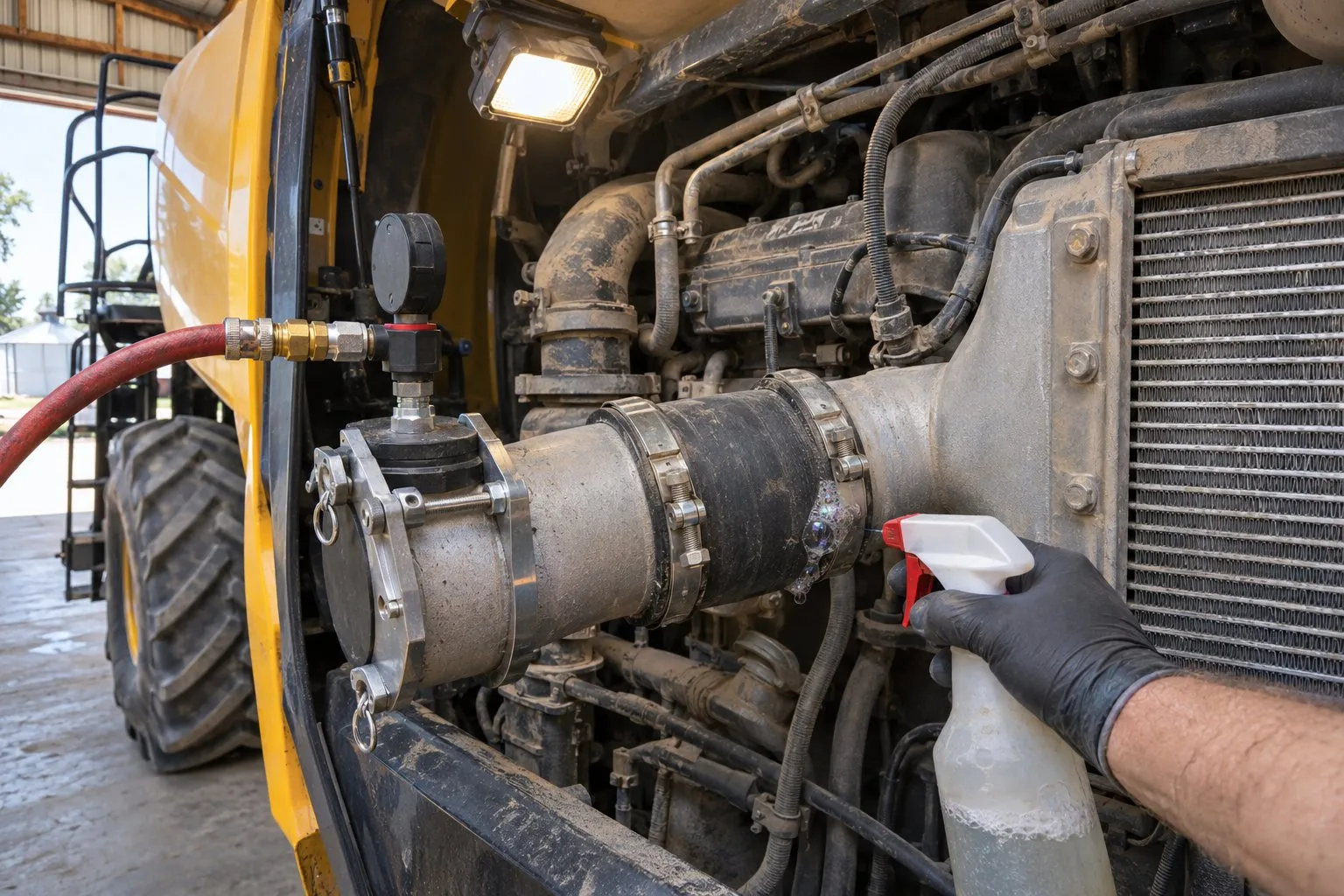
Turbos get replaced for problems that live elsewhere. Work through the system before the turbo comes off.
- Air intake: replace the filter when the restriction indicator calls for it, check the precleaner, and inspect every inlet clamp and duct. After storage, check the air cleaner housing and intake for nesting material and debris before the first start.
- Charge-air system: check boots, clamps, pipes and the cooler. Pressure-test at the engine maker’s test pressure. Keep chaff off the outside of the cooler pack as the operator’s manual directs, since a packed core hurts cooling.
- Exhaust joints: look for soot trails at the manifold, turbine inlet and outlet.
- Oil in the intake: a light film is normal crankcase vapor. Pooled oil is not. Check the breather, oil level and drain before blaming a seal.
- Shaft play: some side-to-side rock is normal on a journal bearing turbo. In-and-out play you can feel, or a wheel that touches its housing, condemns it. Use Holset’s limit for that unit if you measure.
- Wheels: dust pits the compressor inlet blades, and debris damage on the turbine shows on the inlet edges. A wheel with blade damage is replaced, never rebalanced and reused.
- Fault codes: read what the combine’s display reports and look it up in CNH service information. Off-highway machines do not use the generic truck P-codes.
Chaff and dust that settle on a hot turbo and exhaust are a fire risk. Clean the engine compartment on the interval the operator’s manual gives, and more often in dry, heavy crop.
Replacing or Rebuilding Before Harvest
If the turbo failed on its bearings or coked its oil, fit a new oil feed line rather than reusing the old one. If the compressor wheel came apart, replace the charge air cooler as well. MAHLE’s guidance is that metal in the fins cannot be flushed out reliably. Use new gaskets and no sealant on the oil inlet or drain, and keep the drain within about 15 to 20 degrees of straight down.
Follow Garrett’s first-start steps. Fill the oil inlet with clean engine oil and turn the wheel by hand. Crank 10 to 15 seconds without starting, with fueling disabled by the engine maker’s procedure. Then idle 3 to 4 minutes and check for oil, exhaust and air leaks before you load the engine. A turbo needs no break-in mileage and no early oil change.
Day to day, let oil pressure come up before load and avoid full throttle on a cold engine. After a heavy run, idle the engine before shutdown for the time FPT or CNH gives in the operator’s manual. Never shut down straight from full load.
The off-season is the right time to deal with a tired turbo. Our in-house turbocharger rebuild service VSR balances every unit and finishes with a final quality inspection: a leak test, a visual inspection and a wastegate or actuator function check. Most rebuilds ship in 3 days or less. The rebuild price is confirmed after inspection and before work starts, and our turbo rebuild price list shows rebuild pricing by turbo. Rebuilds carry a 12-month, unlimited-mileage warranty.
For a replacement, search the PT Turbo store by the number on your turbo tag. Also check the remanufactured turbochargers section, where availability depends on core supply. Current pricing is on each product page, or call (909) 824-1020. Core returns on remanufactured units are due within 30 days. If you need longer, call ahead and the shop can usually work with you. Custom harvesters and fleets can arrange priority or rush turnaround and stocking of common cores by phone or through our contact page.
Frequently Asked Questions
Which turbocharger fits my New Holland CR combine?
The one whose number matches the tag on the turbo now on the engine. On Holset units the data plate is on the compressor housing and shows the Holset assembly number and the engine maker’s number. The engine plate confirms the Cursor family and rating. Do not go by model name or housing casting numbers alone.
Can I use a turbo listed for a Case IH machine with a Cursor engine?
Only if its part number matches your tag or cross-references to it. CNH shares engine families across brands, but the turbo number changes with rating and emissions level. A turbo listed for a Magnum tractor is not automatically right for a CR combine.
How fast can a CR combine turbo be rebuilt before harvest?
Most PT Turbo rebuilds ship in 3 days or less after the core arrives, and the price is confirmed after inspection. Sending the turbo in during the off-season removes the timing risk. Fleets and custom harvesters can arrange priority turnaround by phone at (909) 824-1020.
Need a Turbocharger?
PT Turbo has rebuilt and sold turbochargers since 1978. We stock remanufactured units for Cummins, Duramax, Power Stroke, Detroit Diesel, and more — backed by a 12-month unlimited mileage warranty. Units in stock at our shop in San Bernardino, CA ship the same day when ordered before 2 PM Pacific, Monday through Friday.
📞 (909) 824-1020 · 346 S I St. #3, San Bernardino, CA 92410 · info@ptturbo.com