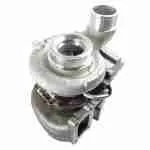
The Holset HX55 turbocharger is the workhorse boost unit bolted to millions of large displacement Cummins engines, and if you turn wrenches on ISM, M11, or QSM11 platforms you already know it by heart. This is the turbo that keeps 11-liter fleet trucks moving freight, and when it starts smoking, surging, or leaving power on the table, you need the right specs and the right parts fast. This guide breaks down the HX55 as it applies specifically to the Cummins ISM large displacement family, covering airflow ratings, the wastegated HX55W variant, actuator service, and how to tell a rebuildable core from scrap.
PT Turbo has been rebuilding and supplying Holset units since 1978, over 45 years in the turbocharger business, and we stock both new and remanufactured HX55 assemblies along with the actuators and hard parts that fail first. Here is what you need to know before you pull one off the pedestal.
HX55 and HX55W: Where the ISM Fits
The HX55 is a fixed-geometry, single-stage turbocharger built for engines in the 10 to 15 liter range. On the Cummins ISM (a 10.8-liter inline-six making anywhere from 280 to 500 horsepower depending on rating), you will most often find the wastegated HX55W. The wastegate is what lets a single frame size cover a wide power band without overspeeding the compressor at higher RPM.
Here is how the HX55 stacks up against its Holset siblings that share bay space in Cummins shops:
| Model | Typical Engine | Compressor Inducer | Approx. Airflow (lb/min) | Wastegated |
|---|---|---|---|---|
| HX35 | 6BT / ISB 5.9L | ~54 mm | ~55 | Optional |
| HX50 | L10 / M11 | ~66 mm | ~75 | Optional |
| HX55 / HX55W | ISM / M11 10.8L | ~76 mm | ~95 to 110 | Yes (HX55W) |
| HX60 | N14 / ISX 15L | ~83 mm | ~120+ | Yes |
The HX55W on a typical ISM will support roughly 95 to 110 lb/min of airflow, which is plenty for the stock ratings and leaves headroom for moderate tuning. The key point: on these ISM engines the turbo is fixed geometry with a mechanical wastegate. The EGR-era ISM (2002 on) moved to the variable geometry HE531V with an air-operated actuator, which is a different turbo. If you are cross-shopping against modern pickup applications, the difference in operation is significant, and our Cummins ISB 6.7L VGT guide covers how the variable-geometry side works.
How the HX55W Wastegate and Actuator Work
The wastegate on the HX55W is boost-referenced through a pneumatic actuator mounted to the compressor housing. As boost climbs toward the calibrated threshold, pressure acts on the actuator diaphragm, the rod extends, and the wastegate valve cracks open to bypass exhaust around the turbine wheel. That caps turbine speed and prevents overboost that would otherwise crack ring lands or spike drive pressure.
The actuator is the single most common failure point on any wastegated Holset. The diaphragm hardens and tears, the rod seizes from heat cycling and corrosion, or the calibration drifts. Symptoms include:
- Overboost / high drive pressure: wastegate stuck closed, actuator diaphragm not moving the rod.
- Low boost / sluggish spool: wastegate stuck open or actuator preload lost.
- Boost surge or hunting: torn diaphragm leaking reference pressure.
- Rattle at the actuator: worn rod end joint or seized pivot.
Before condemning an entire turbo, test the actuator. Apply regulated shop air to the reference port and watch the rod. It should begin to move at the rated setpoint and travel smoothly to full stroke without sticking. A dead actuator on an otherwise healthy core is the cheapest fix in the diesel world.
Replacement Pneumatic Actuators for Turbo Service
When you rebuild or refresh a wastegated turbo, the actuator gets replaced, period. The HX55W uses a Holset-specific canister, and matching the correct setpoint and stroke to the turbo part number matters more than the brand on the can.
Getting the actuator right the first time saves a comeback, and if you are not sure which setpoint your build needs, contact PT Turbo with your engine data plate and we will match it.
Common HX55 Failure Modes on the ISM
The HX55 is a durable unit, but 10.8-liter engines run hard and long. The failures we see most on cores that come across the bench break down by severity:
| Severity | Symptom | Likely Cause | Typical Fix |
|---|---|---|---|
| Minor | Low boost, no smoke | Failed wastegate actuator | Replace actuator |
| Moderate | Blue smoke, oil in charge pipe | Worn seals / plugged drain | Rebuild CHRA, clear drain |
| Moderate | Whine, shaft play | Worn journal bearings | Rebuild with new bearings |
| Severe | Metallic grind, no boost | Compressor/turbine contact, oil starvation | Reman core or replacement |
| Severe | Object damage to wheels | Ingested debris, upstream failure | Replace, inspect intake tract |
A big one on the ISM: oil drain restriction. A cooked or restricted turbo oil drain line will pressurize the center housing and push oil past both seals, giving you blue smoke that mechanics chase for weeks by replacing the turbo when the drain line was the culprit. Always inspect and flush the drain when you service the unit.
The other repeat offender is oil starvation from delayed oil pressure at cold start or a clogged feed line. If a core comes in with bluing on the shaft and scored bearings, check the feed line before you install the reman, or you will kill the new one too.
New vs Remanufactured HX55: What Makes Sense
For most fleet and owner-operator applications, a properly remanufactured HX55 is the smart buy. A quality reman uses a balanced CHRA, new bearings, new seals, and a new actuator, and it is dyno-verified and VSR balanced before it ships. You get new-turbo reliability at a meaningful discount, and the core charge comes back when you return your old unit.
| Option | Cost Level | Warranty | Best For |
|---|---|---|---|
| New OEM Holset | Highest | Full OEM | Warranty-critical, spec-exact builds |
| Remanufactured | Moderate | Reman warranty | Most fleet & owner-operator work |
| In-house rebuild | Lowest (labor) | Shop warranty | Rebuildable core, actuator/seal jobs |
PT Turbo stocks both new and remanufactured turbochargers for Cummins large displacement engines. If you have a solid core with only bearing or seal wear, our turbo rebuild service can return it to spec, balanced and tested, often for less than a full replacement. Browse the full range on our turbo shop page.
Frequently Asked Questions
What engines use the Holset HX55 turbocharger?
The Holset HX55 is commonly bolted to large displacement Cummins engines including the ISM, M11, and QSM11 platforms. It’s a standard boost unit for 11-liter fleet trucks.
What are common signs of a failing HX55 turbocharger?
Typical symptoms include excessive smoking, turbo surging, and a noticeable loss of power. These issues usually mean the turbo needs the correct replacement parts or a rebuild.
Can the Holset HX55 turbocharger be rebuilt?
Yes, the HX55 can be rebuilt using the correct cartridge and seal kits matched to your Cummins application. Rebuilding is often more cost-effective than a full replacement.
Further reading: Learn more about turbocharger technology.
Shopping by part number?
Every part number we stock for the Holset HX55 is on one page, with live prices and stock: Holset HX55 turbos and parts.
Need a Turbocharger?
PT Turbo has rebuilt and sold turbochargers since 1978. We stock remanufactured units for Cummins, Duramax, Power Stroke, Detroit Diesel, and more — backed by a 12-month unlimited mileage warranty and same-week shipping from San Bernardino, CA.
📞 (909) 824-1020 · 346 S I St. #3, San Bernardino, CA 92410 · [email protected]
More From PT Turbo
 BorgWarner EFR Series Turbocharger: Performance Diesel Applications Guide
- Nissan ZD30 3.0L Diesel Turbocharger Guide: Patrol & Navara D22 Common Failures
- Garrett GT2056V Turbocharger: Mercedes OM642 & Dodge Sprinter Application Guide
- HE351VE vs HE300VG: Complete Comparison for Ram 2500 & 3500 Cummins Owners