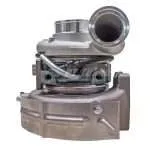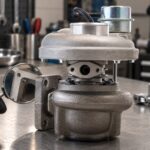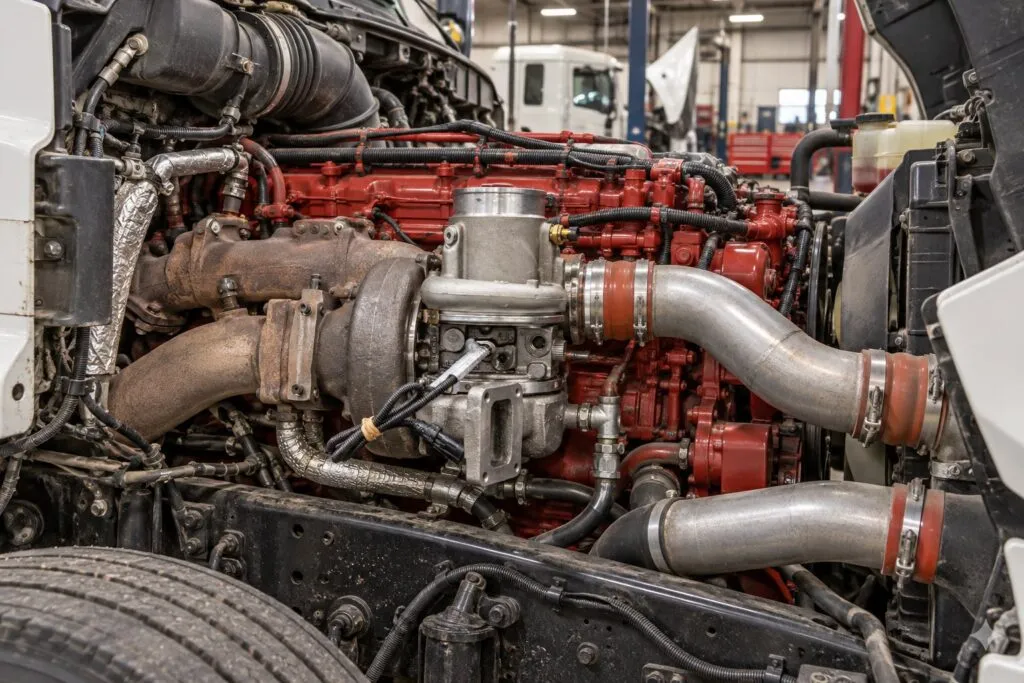
The Holset HE451VE Turbocharger is a factory variable-geometry turbo of the Cummins ISX15 from the 2010 emissions generation on, and it is one of the most demanding turbo applications in the Class 8 world. The HE451VE pairs Holset’s sliding-nozzle VGT system with an electronic actuator. It is not the only ISX15 turbo: other engines of the same years carry the similar-looking HE400VG, and the two do not interchange. When it works, it delivers strong low-end torque and clean emissions. When it fails, it takes fuel economy, EGT control, and uptime down with it.
This guide breaks down how the HE451VE works on the ISX15, the failure symptoms fleet techs see most, actuator and calibration details, and how to choose between new, remanufactured, and rebuilt units. PT Turbo has been supplying and rebuilding heavy-duty turbochargers for over 45 years, so the specs and part guidance here come straight from the bench.
What the Holset HE451VE Does on the Cummins ISX15
The HE451VE is a variable-geometry turbocharger, meaning it changes the effective area of the turbine housing on the fly. Instead of a wastegate dumping exhaust, a sliding nozzle ring moves inside the turbine housing to speed up or slow down exhaust flow across the turbine wheel. That gives you fast spool at low RPM and controlled boost at high RPM without a separate wastegate circuit.
On the ISX15, this matters for three reasons: transient throttle response under load, exhaust brake performance, and EGT management for the aftertreatment system. The VGT closes down to build backpressure for the engine brake and to drive EGR flow, then opens up under full fueling to prevent overspeed. If you want the fundamentals, this overview of variable-geometry turbochargers covers the core principle.
HE451VE Key Specifications
| Attribute | Detail |
|---|---|
| Engine application | Cummins ISX15 from 2010 (CM2250 and CM2350 controls) |
| Turbo type | Single VGT (sliding nozzle ring) |
| Actuation | Electronic VGT actuator with position feedback |
| Emissions integration | EGR + DPF/SCR aftertreatment |
Because the VGT position is tied directly into the engine’s emissions strategy, the HE451VE is not a “bolt it on and go” turbo. Actuator calibration and correct nozzle-ring movement are non-negotiable for passing regen cycles and keeping the diesel particulate filter from loading up.
Common HE451VE Failure Symptoms on the ISX15
The two most common failure paths on this turbo are the VGT mechanism sticking from soot and carbon, and the actuator losing calibration or dying outright. Bearing and shaft failures happen too, usually from oil contamination, oil starvation, or overspeed after a fueling problem.
Here is how the symptoms typically break down by severity so you can triage before you pull the turbo.
| Severity | Symptoms | Likely Cause |
|---|---|---|
| Early | Sluggish throttle response, weak engine brake, minor MPG drop | Nozzle ring starting to carbon up, actuator drift |
| Moderate | VGT fault codes, boost pressure deviation codes, frequent regens | Sticking sliding ring, actuator position error |
| Severe | Derate, no boost or overboost, whistle/grinding, blue smoke | Seized VGT, failed actuator, bearing or shaft failure |
A stuck VGT often throws boost-related fault codes because the ECM commands a nozzle position the mechanism cannot reach. Before condemning the turbo, verify the actuator is moving through its full range and that oil supply and drain lines are clear. Coked oil in the center housing is a warning sign that a bearing failure is coming.
Do not ignore repeat regens
If a truck is regenerating far more often than normal, the VGT may not be closing enough to drive EGT for passive regen. That extra fuel burn shows up on the fuel card long before a hard fault code does. Catch it early and you often save the aftertreatment system as well as the turbo.
The VGT Actuator: The Part That Fails First
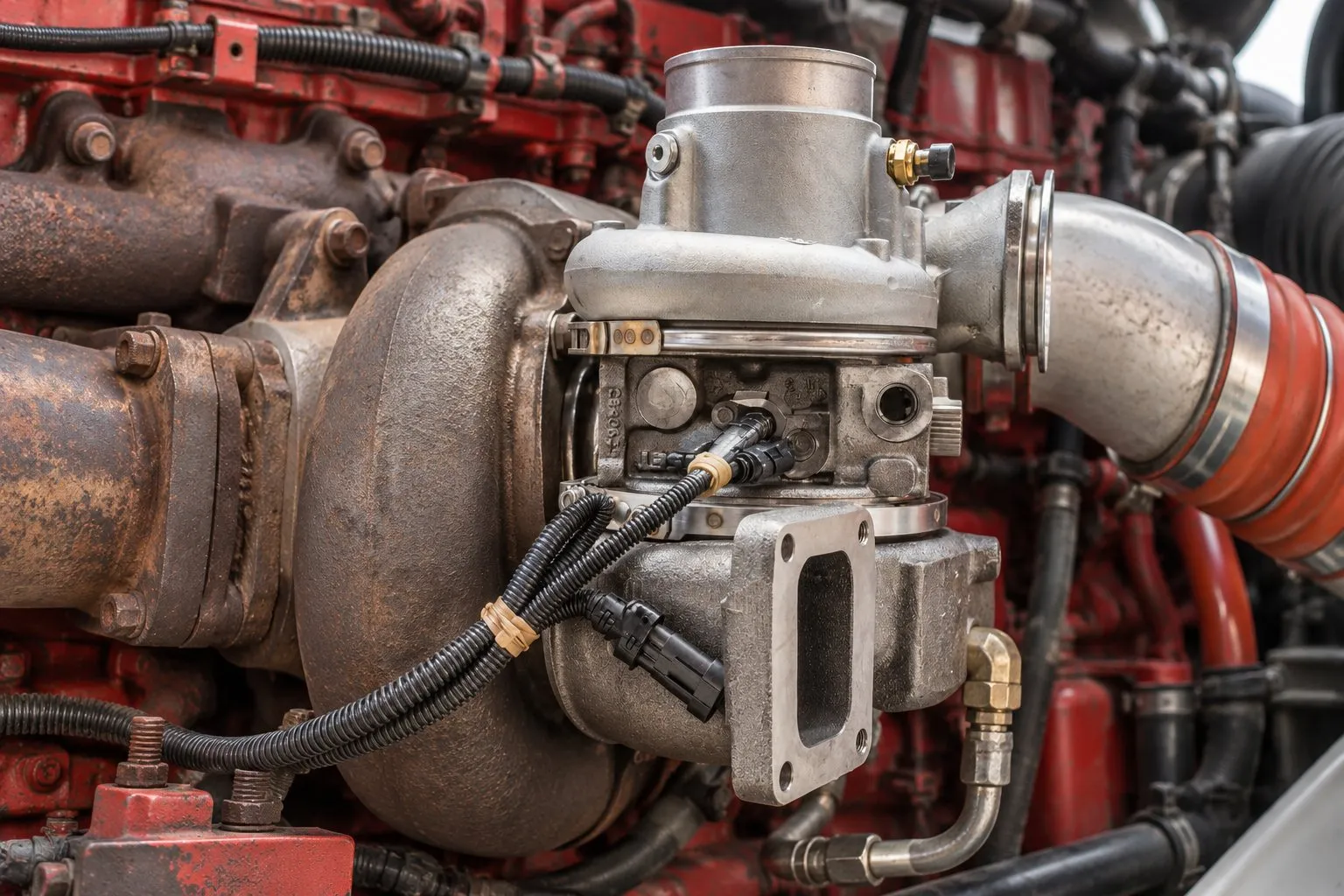
On Holset VGT turbos, the actuator is frequently the first thing to fail, and it is often replaceable without swapping the whole turbo. The actuator drives the crank arm that slides the nozzle ring, and it reports position back to the ECM. When the internal electronics fail, you get position-error codes and driveability problems even when the turbine and compressor are perfectly healthy.
PT Turbo lists electronic actuators for Holset variable geometry turbos. When you are diagnosing a VGT position fault, matching the correct actuator to the turbo and calibrating it is the difference between a fix that lasts and a comeback.
Not sure which actuator or turbo matches your VIN and calibration? The team at PT Turbo can cross-reference it for you, just reach out through our contact page with your engine serial and current part number.
New vs Remanufactured vs Rebuilt HE451VE
For a 15-liter over-the-road truck, downtime is the real cost, not the turbo itself. That is why most owner-operators and fleets weigh a remanufactured turbo or a professional rebuild against a brand-new unit. Each has a place depending on your budget and how long you plan to keep the truck.
| Option | Typical Cost | Best For | Notes |
|---|---|---|---|
| New Holset | $4,119 to $8,944 (10 listings) at PT Turbo | Trucks under warranty, long-haul keepers | Longest expected service life, highest upfront cost |
| Remanufactured | $3,883 to $8,981 (5 listings) at PT Turbo | Fleets balancing cost and reliability | New wheels/bearings, tested and calibrated to spec |
| Rebuild your core | $900 (price list) | Owners with a good original housing | Keeps your matched hardware, balanced to VSR spec |
A quality remanufactured turbocharger is rebuilt with new bearings, seals, and often new wheels, then balanced and flow-tested. Done right, a reman HE451VE performs like new for a meaningful discount. The key word is “done right,” which is where the shop matters.
If your original center section and housings are sound, our turbo rebuild service lets you keep your matched hardware while we replace wearables, clean the VGT mechanism, balance the rotating assembly, and calibrate the actuator. That is often the best value for a truck with an otherwise healthy turbo that simply suffered actuator or bearing failure.
Installation and Calibration Notes for the HE451VE
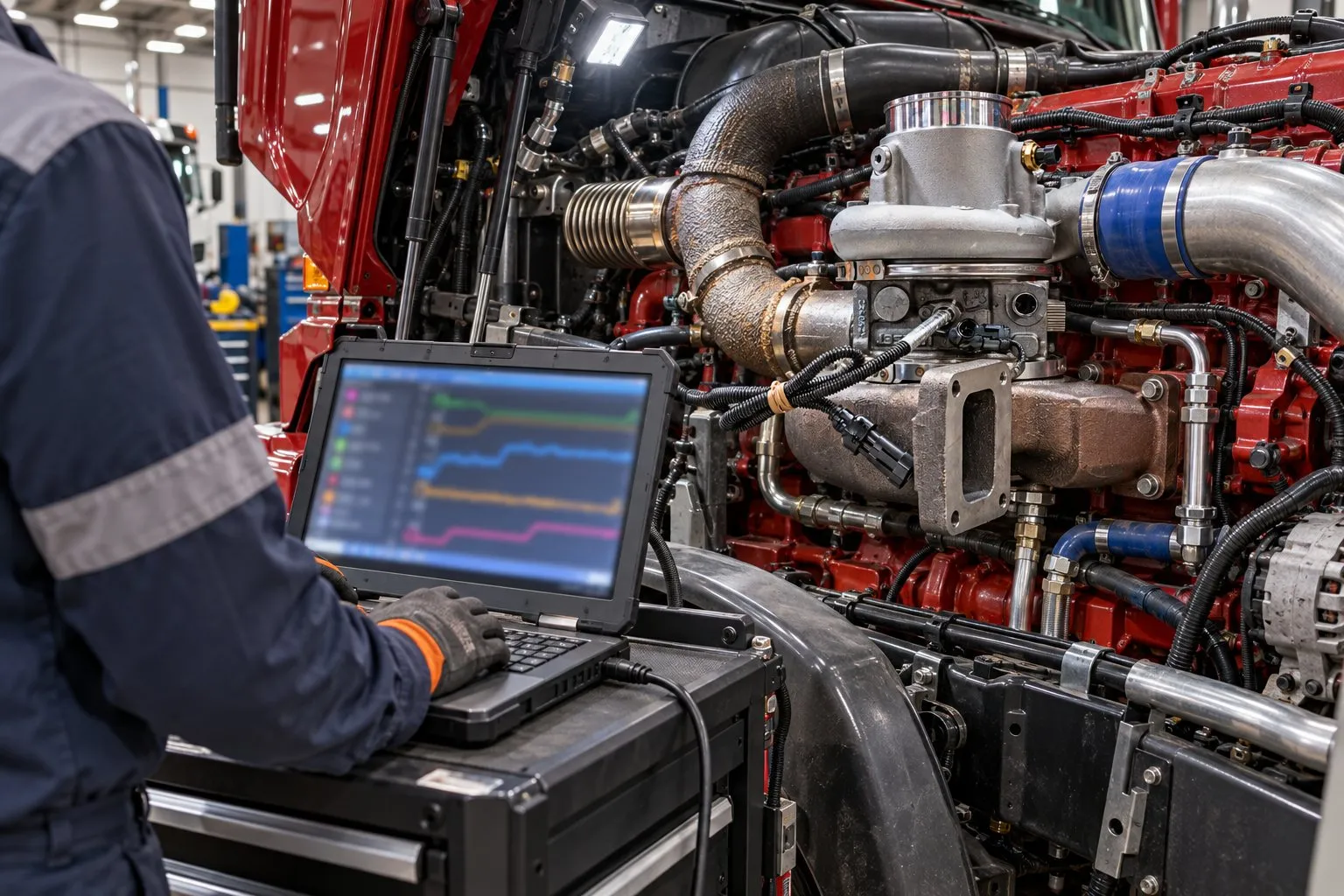
Whether you install new, reman, or rebuilt, the same fundamentals protect your investment. The number one killer of replacement turbos is contaminated oil and blocked drains, so address the root cause before bolting on the new unit.
- Prime the oil feed. Pre-lube the center housing before startup to avoid a dry-start bearing wipe.
- Inspect the oil drain. A restricted drain pressurizes the center housing and blows the seals. Clean or replace it.
- Verify the EGR and charge-air system. Excess soot loading accelerates VGT sticking. Fix leaks and a dirty EGR cooler first.
- Calibrate the actuator. The ECM must relearn VGT end-stops. Skip this and you will chase phantom position codes.
One more thing that bites techs on the ISX15: do not reuse a tired oil supply line or a clogged banjo screen. If the old turbo failed from oil starvation, that screen is loaded with debris and your new unit will die the same way. Replace the feed line and clear every passage before the first crank.
After calibration, bring the engine up and watch actual versus commanded VGT position on your scan tool through a full range sweep. If the nozzle tracks clean with no deviation and the engine brake builds properly, the install is sound. A few minutes verifying movement on the bench side of the job saves a comeback and another day of downtime.
Price ranges in this article are general estimates to help with budgeting, not PT Turbo quotes. Our current prices are on each product listing, and our rebuild prices are on the turbo rebuild price list.
Frequently Asked Questions
What engine uses the Holset HE451VE turbocharger?
The Holset HE451VE is a factory variable-geometry turbo of the Cummins ISX15 from the 2010 emissions generation on. Other ISX15 engines of the same years carry the HE400VG, so go by the part number on the turbo tag.
Does the HE451VE interchange with the HE400VG?
No. Both are fitted to ISX15 engines, but the compressor cover and the actuator are different. Order by the part number on the turbo tag or by the engine serial number.
What type of VGT system does the Holset HE451VE have?
It uses Holset’s sliding-nozzle VGT system, which adjusts exhaust flow across the turbine for optimal boost response and efficiency.
Shopping by part number?
Every part number we stock for the Holset HE451VE is on one page, with live prices and stock: Holset HE451VE turbos and parts.
Need a Turbocharger?
PT Turbo has rebuilt and sold turbochargers since 1978. We stock remanufactured units for Cummins, Duramax, Power Stroke, Detroit Diesel, and more — backed by a 12-month unlimited mileage warranty and same-week shipping from San Bernardino, CA.
📞 (909) 824-1020 · 346 S I St. #3, San Bernardino, CA 92410 · [email protected]
More From PT Turbo
 Holset HE341VE Turbocharger: 5.9L Cummins Application, Specs & Replacement Guide
- Hino J08 Turbocharger Guide: Medium Duty Truck Replacement & Common Failures
- BorgWarner S400 Turbocharger: High-Flow Applications & Fitment Reference
- Garrett GT25 Series Turbocharger: Light Diesel Application & Fitment Guide