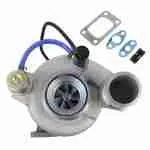
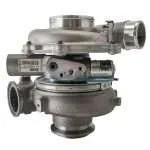
Isuzu 4HK1 Turbocharger Guide: NPR, NQR & Construction Equipment Applications
If you run an Isuzu NPR or NQR, or you’ve got a 4HK1 buried in an excavator or wheel loader, sooner or later you’ll be staring at the turbocharger wondering why boost dropped off and the truck won’t pull a grade. The Isuzu 4HK1 turbocharger, a variable-geometry unit on the later trucks, lives a hard life in medium-duty delivery trucks and construction iron alike, and when it acts up it takes drivability and fuel economy with it. This guide breaks down the 4HK1 turbo system, the actuators that fail, what real turbocharger replacement costs run, and how to get the truck back to work.
The 4HK1 Engine and Its Turbocharger
The Isuzu 4HK1 is a 5.2L inline-four turbodiesel that has powered NPR and NQR cabovers, GMC/Chevy W-Series trucks, and a long list of Hitachi, Case, and JCB construction equipment since the early 2000s. Depending on year and application you’ll find it rated anywhere from roughly 150 to 215 horsepower, with the highest outputs coming from the common-rail, variable-geometry turbo (VGT) versions.
Later 4HK1 trucks use an IHI variable geometry turbo, the RHF55V; many machine engines and earlier trucks are listed with the RHF55 (no V), so check the model on the tag. The variable geometry lets the turbo behave like a small, fast-spooling unit at low RPM and a large, high-flow unit up top, which is exactly what a stop-and-go delivery truck or a load-cycling excavator needs. On the IHI RHF55V the vanes are moved by an electronic actuator (earlier wastegated turbos use a pneumatic wastegate actuator), and that actuator is where most of your trouble is going to start.
Key things to know before you diagnose or order:
- Turbo type varies by year and emissions package. Pre-DPF, DPF, and later EGR-heavy configurations don’t all share the same turbo or actuator.
- The VGT actuator is a serviceable part. On many 4HK1 units you can replace the actuator without replacing the whole turbo, which saves serious money.
- Construction 4HK1 engines see more heat soak and idle time than the truck versions, which accelerates coking and actuator wear.
Common 4HK1 Turbo Failure Symptoms
The 4HK1 turbo rarely grenades without warning. Instead it degrades, and the symptoms track directly to the VGT system. Here’s how the failures usually present, sorted by how bad things have gotten.
| Severity | Symptoms | Likely Cause |
|---|---|---|
| Early | Slow spool, mild power loss, hazy exhaust under load | Vane coking / sticking, actuator drifting |
| Moderate | Boost codes (P0045/P0046/P2563), limp mode, poor fuel economy | Actuator failure, VGT position sensor fault |
| Severe | Overboost/underboost DTC, heavy smoke, whistling or grinding | Seized vanes, shaft play, bearing failure |
| Terminal | Oil in intake, blue smoke, metallic noise, no boost | Destroyed bearings, compromised seals, wheel contact |
The most common real-world complaint on NPR and NQR trucks is intermittent limp mode with a boost-related code, usually because the VGT actuator has lost calibration or the vanes are gummed up with soot and oil vapor. Before you condemn the turbo, confirm whether the actuator alone is the problem. On a lot of these engines, it is.
VGT Actuators: The Part That Fails First
The actuator commands the variable vanes. When it sticks, drifts, or dies, the ECU sees a boost target it can’t hit and throws the truck into a derate. Pneumatic wastegate actuators on the earlier turbos fail from ruptured diaphragms and weak return springs. Electronic actuators fail from internal motor and gear wear.
The good news: replacing the actuator is a fraction of the cost of a full turbo, and PT Turbo stocks the right units.
Confirm your turbo part number and actuator style before ordering. The 4HK1 came in enough emissions variants that a visual match to your existing actuator plus the part number on the turbo’s tag is the safest route. If you’re not sure which one fits your truck or machine, contact PT Turbo with your VIN or turbo part number and we’ll match it.
Diagnose Before You Replace
An actuator swap only fixes things if the vanes still move freely. Pull the intake elbow and check for oil pooling and soot buildup. With the actuator rod disconnected, the vane mechanism should move through its full travel by hand with light, even resistance. If it’s stiff or locked, the actuator will just fail again against a jammed nozzle ring. In that case the turbo needs a rebuild or replacement, not just an actuator.
New vs Remanufactured 4HK1 Turbos
When the core is compromised, you’ve got three paths: a new OEM turbo, a quality remanufactured unit, or a rebuild of your existing core. For fleet economics, reman almost always wins.
| Option | Typical Cost Range | Best For | Notes |
|---|---|---|---|
| New OEM turbo | $689 to $2,205 (8 listings) at PT Turbo | Warranty-critical, new-truck downtime | Highest cost, longest lead times on some part numbers |
| Remanufactured turbo | Quoted by part number | Most fleet and owner-operator jobs | Built to OEM spec, balanced, tested; strong value |
| Rebuild your core | From $575 at PT Turbo (price list) | Repairable cores, cost-sensitive jobs | Keeps your original casting, fast turnaround with a good shop |
| Actuator only | see actuator prices | Vanes free, actuator faulted | Cheapest fix when the core is healthy |
Price ranges in this article are general estimates to help with budgeting, not PT Turbo quotes. Our current prices are on each product listing, and our rebuild prices are on the turbo rebuild price list.
A properly remanufactured turbo is machined, rebalanced, fitted with new bearings and seals, and flow-tested. It is not a cleaned-up used part. PT Turbo has been rebuilding and reman’ing turbochargers for over 45 years, and our remanufactured turbochargers are built to hold OEM boost targets without the OEM sticker shock. If you’d rather keep your original core, our turbocharger rebuild service covers VGT units including the actuator calibration that most local shops can’t do.
Installation and Longevity Tips
A 4HK1 turbo that failed from oil starvation or contamination will kill its replacement fast if you skip the basics. Whether you install an actuator, a reman unit, or a fresh rebuild, do this:
- Change the oil and filter and inspect the oil feed line for restriction or coking. VGT bearings don’t tolerate dirty oil.
- Clean the intake and charge-air system. If the old turbo shed material, debris downstream will come back to haunt you.
- Prime the turbo with clean oil at the feed port before startup, then crank without starting to build pressure.
- Verify VGT calibration. On electronic setups the ECU needs to relearn actuator travel. On wastegated turbos, confirm the pressure signal and full rod travel.
- Fix the root cause. A plugged DPF, failing EGR, or air leak that caused the original failure will take out the new turbo too.
For operators running mixed fleets, the diagnostic logic here carries over to other platforms. If you also run Cummins or Cat iron, our Cummins QSB construction turbo guide and Caterpillar C9 turbo guide cover similar VGT and wastegate diagnosis. Medium-duty and bus operators will also find the Cummins ISL turbocharger guide and the Cummins ISB 5.9L guide useful for comparison.
The pattern across all these platforms is the same: a VGT turbo rarely dies on its own. It dies because something upstream or downstream was left unaddressed, and the new unit inherits the same conditions that killed the old one. Treat the actuator fault or the bearing failure as a symptom, not the whole job.
Get the oil clean, the vanes free, the air path sealed, and the calibration confirmed, and a reman or rebuilt 4HK1 turbo will run as long as the original did. Skip those steps and you’ll be back under the truck before the next PM interval.
The six-cylinder engine in the older FTR and FVR trucks (the FTR sold from 2017 uses the 4HK1 covered here) has its own Isuzu 6HK1 turbocharger guide.
Turbos we list for the RHF55V and RHF55
Listings for the turbo models named in this guide that can be ordered online today. Several part numbers can fit one engine by year and rating, so match the number on your turbo’s tag, or call (909) 824-1020 and we will match it for you.
Frequently Asked Questions
What type of turbocharger does the Isuzu 4HK1 use?
Later 4HK1 truck engines use a variable-geometry turbocharger (VGT), the IHI RHF55V, that adjusts vane position to optimize boost across the RPM range. This design improves both low-end torque and high-end power on the trucks that have it.
Why is my Isuzu 4HK1 losing boost and power on grades?
Boost loss on the 4HK1 is often caused by sticking VGT vanes, a failing actuator, or carbon buildup restricting movement. Leaking intake pipes and clogged intercoolers can also reduce boost and hurt pulling power.
Is the 4HK1 turbocharger the same in NPR trucks and construction equipment?
Later NPR/NQR trucks use the variable geometry IHI RHF55V, while many machine engines and earlier trucks are listed with the RHF55 (no V); calibration, actuator setup, and mounting also vary. Always verify the correct part number for your specific application before replacing.
Further reading: Learn more about turbocharger technology.
Need a Turbocharger?
PT Turbo has rebuilt and sold turbochargers since 1978. We stock remanufactured units for Cummins, Duramax, Power Stroke, Detroit Diesel, and more — backed by a 12-month unlimited mileage warranty. Units in stock at our shop in San Bernardino, CA ship the same day when ordered before 2 PM Pacific, Monday through Friday.
📞 (909) 824-1020 · 346 S I St. #3, San Bernardino, CA 92410 · [email protected]
More From PT Turbo
- PACCAR MX-13 Turbocharger Guide: Kenworth T680 & Peterbilt 579 Applications
- John Deere 6068 Turbocharger Guide: PowerTech Agricultural & Construction Applications
 Ram 2500/3500 5.9L Cummins Turbocharger Guide: HX35, HY35 & HE351CW Explained
- Duramax LLY Turbocharger: Symptoms, Garrett GT3788VA Replacement & Cost (2004-2005)