Isuzu NPR/NQR Turbocharger Replacement: Step-by-Step Guide & Cost
If you run an Isuzu NPR or NQR box truck, you already know the turbocharger is the first component to strand you when it fails. These medium-duty workhorses live in stop-and-go delivery routes, idle for hours, and pull heavy loads all day. That duty cycle is brutal on a turbo. When the 4HK1 or 4HE1 turbocharger starts losing boost, the truck goes into limp mode and your delivery schedule falls apart. This guide walks through exactly how to diagnose, source, and replace the turbocharger on an Isuzu NPR/NQR, along with real part numbers and costs so you can budget the job correctly.
Comparing engines? See turbocharger replacement cost by engine for the price table across diesel platforms.
Which Turbocharger Does Your Isuzu NPR/NQR Use?
Before you order anything, confirm the engine and turbo variant. Isuzu N-Series trucks have run several diesel platforms, and the turbo hardware differs between them.
- 4HE1-TC (1998-2004): Older 4.8L four-cylinder using a Garrett GT2560S fixed-geometry turbo with a wastegate actuator.
- 4HK1-TC (2005-present): 5.2L four-cylinder. Trucks up to about 2007 are listed with a wastegated Garrett GT2560; later trucks use a variable geometry turbocharger (VGT) with an electronic actuator to control vane position.
The actuator is the single most common failure point on these turbos. On the 4HK1 especially, carbon buildup around the vanes causes the actuator to stick, throwing boost pressure codes long before the CHRA itself wears out. Identifying whether you need a full turbo or just an actuator can save you well over a thousand dollars.
Symptoms of a Failing NPR/NQR Turbocharger
Isuzu turbo problems rarely show up all at once. Learn to read the early warning signs so you can plan the repair instead of getting towed.
| Severity | Symptom | Likely Cause |
|---|---|---|
| Early | Sluggish acceleration, delayed boost | Sticking VGT vanes or weak actuator |
| Early | Whistling or whining under load | Boost leak, cracked charge pipe, or seal wear |
| Moderate | Check engine light with P0045, P0046 or P0234 codes | Actuator fault or overboost/underboost |
| Moderate | Black smoke and poor fuel economy | Vanes stuck open, incomplete combustion |
| Severe | Blue smoke, oil consumption | Failed shaft seals, worn bearings |
| Severe | Limp mode, dramatic power loss | Actuator failure or ECM-detected boost fault |
If you are chasing a boost code but the CHRA still spins freely with shaft play within the maker’s limits, start with the actuator. A stuck or failed actuator mimics a dead turbo, and swapping one is a fraction of the cost and labor of pulling the entire unit.
Choosing the Right Replacement: Actuator, Reman, or New
Not every failing turbo needs to be scrapped. Diagnose the actual failure and match the fix to it.
Actuator Replacement
If your vanes are clean and the shaft is tight, a new actuator often restores full boost control.
Always calibrate a new actuator to the turbo’s vane travel. An actuator that is not calibrated to the turbo will throw the same boost codes you were trying to fix.
Remanufactured Turbocharger
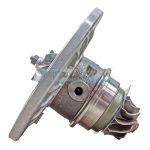
When the CHRA has bearing play, shaft wobble, or oil leakage, replace the core. A quality reman unit rebuilt to OEM tolerances is the smart money for a fleet truck. PT Turbo has been rebuilding turbochargers since 1978, which is more than 45 years of turning cores into reliable, balanced units. Browse the remanufactured turbochargers inventory, or if you want your original core rebuilt with new bearings, seals, and a balanced rotating assembly, use the turbocharger rebuild service.
Cost Comparison
| Option | Typical Parts Cost | Best For |
|---|---|---|
| Actuator only | see actuator prices | Clean vanes, good CHRA, boost codes |
| Remanufactured turbo | Quoted by part number | Worn bearings, shaft play, oil leaks |
| New OEM turbo | $689 to $2,205 (8 listings) at PT Turbo | Warranty-sensitive fleets, latest revision |
Price ranges in this article are general estimates to help with budgeting, not PT Turbo quotes. Our current prices are on each product listing, and our rebuild prices are on the turbo rebuild price list.
Add roughly 3 to 5 hours of labor for the R&R on a 4HK1, depending on truck condition and access. Shop labor rates of $120 to $160 per hour put the labor portion around $400 to $800.
Step-by-Step NPR/NQR Turbocharger Replacement
This is the general procedure for a 4HK1 diesel. Always let the engine cool completely before starting to avoid warped exhaust hardware and burns.
- Disconnect the batteries. The N-Series has dual batteries. Kill both to protect the ECM.
- Tilt the cab. Release the cab latch and tilt forward for full access to the engine bay. Support it properly.
- Drain coolant and remove intake plumbing. Pull the air intake duct, charge air cooler pipe, and any EGR connections tied to the turbo outlet.
- Disconnect the actuator. Unplug the actuator connector (on an older wastegated turbo, the boost reference hose).
- Remove oil feed and drain lines. The oil feed banjo bolt and the lower drain line must come off. Cap them immediately to keep debris out.
- Unbolt the coolant lines feeding the center housing on water-cooled variants.
- Remove the exhaust downpipe/V-band from the turbine housing outlet. Penetrating oil the night before makes this far easier.
- Unbolt the turbo from the exhaust manifold. These studs and nuts are heat-seized. Work slowly, and replace any studs that back out with the nut.
- Lift the turbo out. Clean all mating surfaces and inspect the manifold gasket, oil feed line, and drain gasket. Replace every gasket. Do not reuse them.
- Prime the new turbo. Pour clean engine oil into the oil feed port and spin the shaft by hand before installing. Dry starts kill new turbos in seconds.
- Install in reverse order. Torque manifold nuts to spec (typically around 18-22 ft-lb, verify for your engine), and use anti-seize on exhaust threads.
- Calibrate the actuator and clear codes with a scan tool. Confirm vane sweep and boost targets on a test drive.
Before first start, crank the engine for a few seconds with it kept from starting (the service manual names the fuse or connector to unplug) to build oil pressure through the new turbo. Then start and idle for several minutes to confirm no oil or exhaust leaks.
How to Make Your Replacement Turbo Last
Isuzu turbos rarely die of old age. They die from neglect. Extend the life of your new or reman unit with these habits:
- Idle down before shutdown. After a hard pull or highway run, let the engine idle 2 to 3 minutes so the turbo sheds heat and the oil keeps flowing.
- Stay on top of oil changes. The VGT bearings depend on clean oil. Extended intervals cause the coking and sludge that seize bearings and gum up vanes.
- Fix boost leaks fast. A cracked charge pipe or loose clamp makes the turbo work harder and run hotter to hit its target.
- Clean or exercise the VGT vanes. On soot-heavy stop-and-go trucks, periodic actuator sweep and vane cleaning prevent the sticking that kills actuators.
If you run mixed fleets, the same discipline applies across platforms.
The habits that protect a 4HK1 turbo protect every diesel in your yard. Hot shutdowns, stretched oil intervals, and ignored boost leaks kill turbos the same way whether they sit behind a four-cylinder N-Series or a larger medium-duty engine. Build the idle-down and oil change discipline into your driver routine and your maintenance schedule, and the turbo stops being the part that strands you.
When a turbo does fail, diagnose before you throw parts at it. Confirm whether the fault is a stuck actuator, a tired CHRA, or a boost leak downstream, then match the fix to the actual problem. That approach keeps trucks on the road and keeps you from paying for a full turbo when a calibrated actuator would have done the job.
Frequently Asked Questions
How much does an Isuzu NPR/NQR turbocharger replacement cost?
Turbocharger replacement typically ranges from $1,500 to $3,500 including parts and labor, depending on whether you use OEM or aftermarket parts. Labor alone can account for several hours of shop time.
What are the signs of a failing turbocharger on an Isuzu NPR or NQR?
Common symptoms include loss of boost, the truck entering limp mode, excessive smoke, whining noises, and reduced power under load. These issues often appear on high-mileage 4HK1 or 4HE1 engines.
Can I replace the Isuzu NPR turbocharger myself?
Yes, a mechanically experienced owner can replace the turbo with the right tools and this step-by-step guide. However, proper diagnosis and following torque specs are critical to avoid repeat failures.
Need a Turbocharger?
PT Turbo has rebuilt and sold turbochargers since 1978. We stock remanufactured units for Cummins, Duramax, Power Stroke, Detroit Diesel, and more — backed by a 12-month unlimited mileage warranty. Units in stock at our shop in San Bernardino, CA ship the same day when ordered before 2 PM Pacific, Monday through Friday.
📞 (909) 824-1020 · 346 S I St. #3, San Bernardino, CA 92410 · [email protected]
More From PT Turbo
- Detroit Diesel Series 60 Turbocharger Guide: Garrett & BorgWarner S400 Replacement & Cost
- John Deere 6068 Turbocharger Guide: PowerTech Agricultural & Construction Applications
- Isuzu 4HK1 Turbocharger Guide: NPR, NQR & Construction Equipment Applications
 VW & Audi 1.9 TDI Turbocharger Guide (105 HP BXE, BLS): Symptoms, Replacement & Parts