Cummins vs Duramax Turbocharger Reliability: Which Has Fewer Problems?
When owner-operators and fleet managers weigh Cummins vs Duramax turbocharger reliability, the honest answer is that both platforms have proven turbochargers, but they fail in different ways and for different reasons. Both the Ram’s Cummins 6.7L and GM’s Duramax 6.6L run variable geometry turbos today, yet the hardware and the way the vanes are controlled are not the same. Understanding those differences is the key to predicting what will go wrong, when, and what it takes to fix it.
At PT Turbo, we have been rebuilding turbochargers since 1978, more than 45 years, and we stock both new and remanufactured units for these engines. This guide breaks down the turbos each engine family used, how their control systems differ, and where the real trouble spots are.
What Turbo Each Engine Actually Runs
You cannot compare reliability without first knowing the exact turbo on the engine. Both the Cummins and the Duramax went through several turbo generations, and the control strategy changed along the way.
| Engine | Years | Turbo | Type / Control |
|---|---|---|---|
| 5.9L Cummins (24V) | 1998.5-2002 | Holset HX35W / HY35W | Fixed geometry, wastegated |
| 5.9L Cummins | 2004.5-2007 | Holset HE351CW | Fixed geometry, electronically controlled wastegate |
| 6.7L Cummins | 2007.5-2012 | Holset HE351VE | Variable geometry, electronic actuator |
| 6.7L Cummins | 2013-on | Holset HE300VG | Variable geometry, electronic actuator |
| Duramax LB7 | 2001-2004 | IHI RHG6 | Fixed geometry, wastegated |
| Duramax LLY/LBZ/LMM | 2004.5-2010 | Garrett GT3788VA | Variable geometry, oil-moved vanes |
| Duramax LML | 2011-2016 | Garrett GT3788VA (its own version) | Variable geometry, oil-moved vanes |
| Duramax L5P | 2017-on | BorgWarner VGT | Variable geometry, electronic actuator |
The older fixed-geometry units, the Holset HX35W turbochargers, the HY35W, the HE351CW, and the Duramax LB7’s IHI RHG6, are the simplest and the most forgiving. No vanes to foul, and the only actuator is a simple wastegate one. For the full story on the 5.9L Holsets, see our Ram 5.9L Cummins turbocharger guide.
The Core Difference: How the Vanes Are Moved
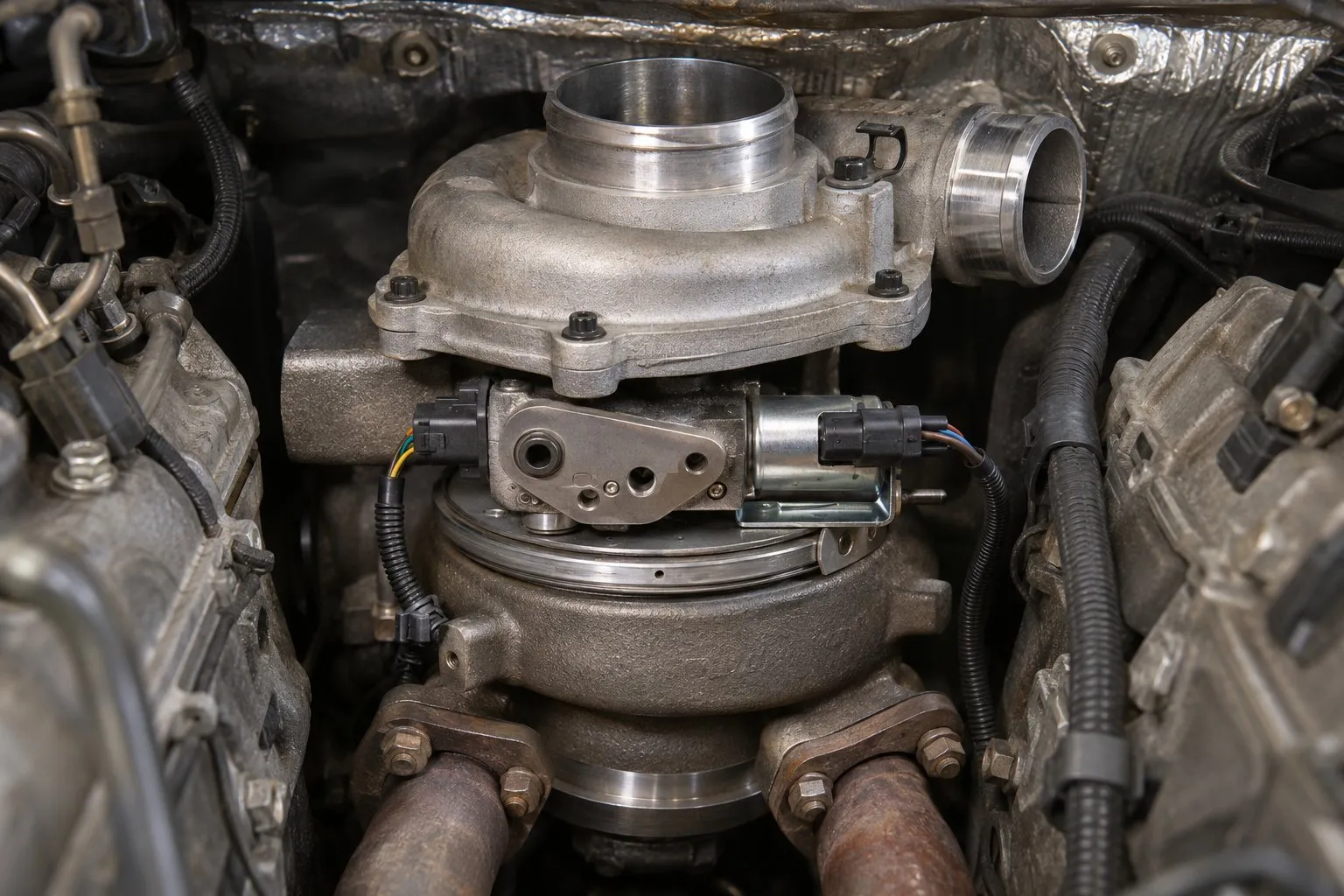
Once both engines went to variable geometry turbochargers, their reliability stories split along one line: how the vanes are controlled.
The Duramax GT3788VA on the LLY through LML moves its vanes with engine oil. The ECM drives a VGT solenoid on the turbo’s center housing, which meters oil to a piston that turns the unison ring, and a separate vane position sensor reports back. There is no electric actuator, no stepper motor, and no vacuum unit on these Garrett VGTs.
The Cummins 6.7L does it electrically. Both the Holset HE351VE and the later HE300VG use a sliding nozzle moved by an electronic actuator, in every model year. These Holsets also carry coolant lines, which the 5.9L wastegated turbos never had, to protect that actuator. Our HE351VE vs HE300VG comparison covers these two in depth.
This matters because the failure modes follow the control method. An oil-operated system is at the mercy of oil quality and soot. An electronic actuator is a serviceable part with its own wiring, gears, and calibration.
Turbos we list for the GT3788VA, HE351VE and HE300VG
Listings for the turbo models named in this guide that can be ordered online today. Several part numbers can fit one engine by year and rating, so match the number on your turbo’s tag, or call (909) 824-1020 and we will match it for you.
All GT3788VA listings · All HE351VE listings · All HE300VG listings
Cummins vs Duramax Turbocharger Reliability by Failure Mode
Here is where the two platforms actually diverge in the field. Neither is fragile, but they punish different kinds of neglect.
Duramax weak points
- Sticking vanes. Because the Garrett VGT relies on clean engine oil to drive the vane piston, varnish and soot in dirty oil slow vane movement. Light throttle driving, short trips, and stretched oil-change intervals all let deposits build.
- Vane position sensor and solenoid. The Duramax has a vane position sensor the Cummins VGTs do not use in the same way. A sensor or solenoid fault can set a code such as P2563 (boost control position sensor circuit range/performance).
- Soot loading. Light-load operation lets soot pack the vane pack. On high-pressure EGR engines like these, the EGR gas returns to the intake after the compressor, so it does not pass the turbine, but heavy sooting from combustion still fouls the nozzle over time.
Cummins weak points
- Actuator trouble. The electronic actuator is the part most often discussed on the 6.7L. A failing actuator can set P003A (position exceeded learning limit) or, on later trucks, P226C (boost control slow response), which an FCA bulletin ties to varnish in the VGT housing.
- Sliding nozzle sticking. Like any VGT, soot and carbon can bind the sliding nozzle, which shows up as overboost when stuck closed or low boost when stuck open.
- Calibration after service. The Holset actuator must be calibrated to its own turbo with the INSITE routine. Replace it wrong and you chase codes. This is a service discipline issue, not a design weakness.
One thing both engines share: most turbo failures trace back to the oil supply, not to the turbo being poorly built. Coked oil, a neglected feed line, a stretched drain interval, those take out bearings on either brand. Garrett itself reports that the large majority of turbo failures are oil-related and well under one percent are manufacturing defects.
Which Platform Has Fewer Problems?
If you line up the generations, a few patterns hold.
The simplest, most trouble-free turbos on either side are the fixed-geometry units: the 5.9L Holsets and the LB7’s IHI RHG6. No vanes and nothing to calibrate; the only actuator is a simple wastegate one. If raw reliability is the only metric, the pre-VGT trucks win on both sides.
Among the variable geometry trucks, the comparison is closer than internet lore suggests. The Duramax’s oil-driven Garrett is mechanically clean with no external actuator to fail, but it lives or dies on oil cleanliness and is prone to vane sticking when owners stretch oil changes or do nothing but light-load city miles. The Cummins electronic Holset adds an actuator as a wear item, but that actuator is a replaceable, calibratable part rather than a reason to condemn the whole turbo.
Put plainly: the Duramax VGT rewards clean oil and regular highway load, while the Cummins VGT rewards correct electronic service work. Abuse the oil and the Duramax vanes seize. Botch the actuator calibration and the Cummins throws codes. Treat either one right and both go a long way.
| Reliability Factor | Cummins 6.7L (HE351VE / HE300VG) | Duramax LLY-LML (GT3788VA) |
|---|---|---|
| Vane control | Electronic actuator | Engine oil via VGT solenoid |
| External wear part | Actuator (serviceable) | None; sensor and solenoid instead |
| Most sensitive to | Actuator service / calibration | Oil cleanliness and soot |
| Typical sticking symptom | Overboost or low boost | Slow or stuck vanes, low boost |
| Common codes | P003A, P226C | P2563 |
| Cooling | Coolant lines to actuator | Oil-cooled |
Keeping Either Turbo Alive
The maintenance rules overlap more than the brand arguments suggest. Both the Garrett and the Holset VGTs want the same habits.
- Clean oil, on schedule. This is the single biggest lever on both engines. The Duramax needs it to move the vanes; both need it to protect the bearings. Use the oil category the engine maker specifies.
- Let it work. Regular load and highway miles help keep the vanes free of soot. Nothing but short, light-throttle trips invites sticking on either turbo.
- Cool down after hard work. A few minutes of idle after towing or a hard pull lets the center housing shed heat before shutdown, which protects the oil in the bearing housing.
- Watch exhaust temperature when towing. Keep pre-turbo EGT in check; sustained high heat is hard on any turbine.
When a VGT does fail, do not just bolt on the turbo. Replace the oil feed line rather than reusing it, confirm the drain is clear and runs downhill, and prime the new unit per the maker’s first-start steps: fill the oil inlet with clean engine oil, turn the wheel by hand, and crank or idle a few minutes before load. On the Cummins, calibrate the actuator to the turbo with the proper tool.
Repair, Reman, or New
Both of these turbos are good candidates for a quality rebuild. The Holset sliding-nozzle units and the Garrett GT3788VA come apart, get new bearings, seals, and thrust parts, and go back together balanced on a vibration sorting rig.
PT Turbo stocks both remanufactured turbochargers and new units for these engines, and we remanufacture in-house with most rebuilds shipping in 3 days or less. Rebuilt units carry a 12-month, unlimited-mileage warranty. For exact pricing on your model, see our turbo rebuild price list or send us the number off the turbo’s tag through our rebuild service page.
Because both engine families changed turbos across model years, order by the part number on the data plate, not by the truck. Casting numbers only narrow the search; the tag number and the wheel sizes confirm the exact unit. For the Ram side, our 6.7L Cummins turbocharger guide and the BorgWarner fitment guide both help you pin down the right part.
Frequently Asked Questions
Does the Cummins or Duramax turbo last longer?
Neither brand has a clear lifespan advantage; no turbo or engine maker publishes a turbo life in miles, and both the Holset on the 6.7L Cummins and the Garrett on the Duramax last longest with clean oil and regular load. The difference is in how they fail. The Duramax vanes are oil-driven and sensitive to dirty oil, while the Cummins has an electronic actuator as a serviceable wear item.
Why do Duramax turbo vanes stick?
The Garrett GT3788VA moves its vanes with engine oil through a VGT solenoid, so varnish and soot from stretched oil changes or constant light-load driving slow the vane piston and the unison ring. Clean oil on the maker’s schedule and regular highway load are the best defense. A persistent position fault often shows as code P2563.
Can I rebuild my Cummins or Duramax turbo instead of buying new?
Yes. Both the Holset sliding-nozzle turbos and the Garrett VGT are rebuildable with new bearings, seals, and thrust parts, then balanced on a vibration sorting rig. PT Turbo has been doing this since 1978 and stocks both new and remanufactured units; send the number off the turbo’s data plate so the right unit is matched to your truck.
Need a Turbocharger?
PT Turbo has rebuilt and sold turbochargers since 1978. We stock remanufactured units for Cummins, Duramax, Power Stroke, Detroit Diesel, and more — backed by a 12-month unlimited mileage warranty. Units in stock at our shop in San Bernardino, CA ship the same day when ordered before 2 PM Pacific, Monday through Friday.
📞 (909) 824-1020 · 346 S I St. #3, San Bernardino, CA 92410 · info@ptturbo.com