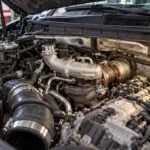
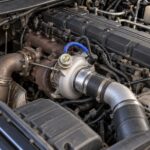
Caterpillar C9 Turbocharger Guide: BorgWarner S310 for Machine & Truck Applications
The Caterpillar C9 is one of the most versatile 8.8L inline-six diesels Cat ever built, powering everything from on-highway trucks and buses to excavators, wheel loaders, and stationary gensets. On most ratings its breathing system is built around a BorgWarner S310 turbocharger, and when that unit starts smoking, hunting boost, or whining like a banshee, the whole machine goes down. If you wrench on C9s for a living, knowing how the S310 behaves across machine and truck applications is the difference between a one-day fix and a week of guessing. This guide walks through the real specs, failure patterns, replacement parts, and install hardware you need to get a C9 back to full boost.
BorgWarner S310 on the C9: What You’re Actually Working With
Most C9 ratings use a turbo from BorgWarner’s S310 family, part of the S300 frame. Our catalog lists the S310G080 for the 315 hp rating, the S310G116 across the 285 to 400 hp ratings, and the S310G119, S310G122 and S310C080 for other C9 builds. A few ratings use a different unit (we also list an S200AG048 and S400-frame turbos for C9 engines), so read the tag on the turbo and have your engine serial number ready. Knowing which one you have before ordering parts saves a painful return.
The C9 was built in on-highway, machine and generator versions, and the later C9.3 is a different engine with its own turbos. Match parts by engine serial number and the number on the turbo tag, not by the name on the valve cover.
For this guide we’re focused on the single S310 applications that make up the bulk of the C9 fleet in trucks, buses, and earthmoving equipment. If you’re chasing the bigger brother engine, our Caterpillar C15 Turbocharger Guide covers the heavy on-highway side in depth.
C9 Turbos in Our Catalog
| Turbo | C9 rating listed |
|---|---|
| BorgWarner S310G080 | 315 hp |
| BorgWarner S310G116 | 285 to 400 hp |
| BorgWarner S310G119, S310G122, S310C080 | Other C9 builds |
Current stock and prices for these are in our Caterpillar turbos section.
Common C9 Turbo Failure Symptoms (And What They Mean)
The S310 is a robust turbo, but the C9’s wide duty cycle, especially in construction equipment that idles hard and runs dusty, drives a predictable set of failures. Here’s how to read the symptoms by severity before you pull the unit.
| Symptom | Likely Cause | Severity |
|---|---|---|
| Blue/gray smoke at startup | Worn seals, oil past compressor/turbine | Moderate |
| Whining or whistling under load | Bearing wear, shaft play, boost leak | Moderate to high |
| Low power / sluggish throttle | Stuck wastegate, boost leak | High |
| Boost hunting / surging | Failing actuator, restricted intake, carbon buildup | High |
| Grinding or metal-on-metal | Bearing failure, wheel contact | Critical — stop engine |
| Excessive oil in charge piping | Failed seals, blocked drain line | High |
Don’t Skip the Root Cause: Oil and Air Are the Killers
We’ve rebuilt enough C9 turbos to tell you that the unit rarely fails on its own. Two things take out S310 bearings and seals more than anything else:
- Oil supply problems — A restricted or coked oil feed line starves the journal bearings. Hot shutdowns on equipment that’s been working hard bake the oil in the line. If you replace a turbo and don’t replace or clean the feed line, you’ll be doing it again in a few thousand hours.
- Dirty intake air — Construction C9s eat dust. A compromised air filter or a leak in the intake boot downstream of the filter sandblasts the compressor wheel. Always inspect the full intake tract.
The same lesson applies across the diesel world. We make the same point in our Cummins QSB Turbocharger Guide for industrial and construction units, where duty cycle dictates turbo life more than mileage ever does.
Replacement Options: New, Remanufactured, or Rebuild
When the S310 is done, you’ve got three paths. PT Turbo has been in the turbocharger business since 1978, more than 45 years, and we stock all three because each makes sense for a different customer and budget.
| Option | Typical Cost Range | Best For | Turnaround |
|---|---|---|---|
| New OEM/BorgWarner | $$$$ | Warranty-sensitive fleets, latest spec | In stock / order |
| Remanufactured | $$$ | Best value, OEM performance | In stock |
| Rebuild your core | $$ | Keeping your original casting, cost control | Bench time |
For most owner-operators and fleet managers, a quality reman is the smart money. A properly remanufactured S310 is rebuilt to OEM tolerances with new bearings, seals, and a balanced CHRA, and it costs a fraction of new. Browse our remanufactured turbochargers to see current C9 stock, or check the full turbo catalog if you’re cross-referencing part numbers.
If your housing is good and you want to keep your original casting, our turbo rebuild service brings the S310 back to spec with VSR balancing on every unit. That’s the right call when downtime allows and you want to control cost without gambling on an unknown core.
Installation Kits and Gaskets You’ll Need
Here’s where techs lose time and money: reusing old gaskets and hardware. The S310 mates to the exhaust manifold and oil lines with sealing surfaces that don’t tolerate reuse. Pull the old turbo, scrape every mating face clean, and install with a fresh kit. A fresh gasket set is cheap insurance against a boost or oil leak that pulls the turbo back off in a week.
Ajusa makes high-quality Caterpillar installation kits that cover the gaskets, seals, and hardware for C9 and related Cat turbo jobs. PT Turbo stocks several to match different applications:
- Installation kits are listed by turbo part number: send us the number on your turbo and we will match the kit.
Not sure which kit matches your serial-number build? Send us your engine arrangement number and we’ll confirm fitment before you order. Contact PT Turbo here and a real technician will sort it out.
Install Best Practices for the S310
- Prime the bearings. Before first start, pour clean engine oil into the oil feed port and spin the shaft by hand to coat the journals. Dry starts kill new turbos.
- Replace the oil feed line. If it’s coked, it will starve the new unit. Clean or replace it every time.
- Check the drain. A restricted oil drain pressurizes the center housing and blows seals. Make sure it’s clear and routed without kinks.
- Torque the manifold and V-band correctly. Uneven torque warps the turbine housing flange and causes exhaust leaks that mimic a failing turbo.
- Idle before you load it. Let the engine idle two to three minutes after start so oil pressure stabilizes through the bearing system.
One more habit that pays off: after that initial idle, take the machine through a few light load cycles before you put it to full work. This lets you watch for boost leaks, oil weeping at the drain, or any unusual noise while everything is still accessible and easy to recheck. Catching a loose clamp or a weeping gasket in the first ten minutes beats pulling panels again after the unit is buried under a shift of dust.
Do the install right and a healthy S310 will outlast the next set of injectors. Skip the feed line, reuse a gasket, or load it cold, and you’ll be back under the hood before the warranty paperwork is filed. The turbo is only as good as the oil, air, and install discipline around it.
Frequently Asked Questions
What turbocharger does the Caterpillar C9 use?
Most Caterpillar C9 ratings use a BorgWarner S310 turbocharger, for example the S310G080 on the 315 hp rating. A few ratings use other units, so confirm by the tag on the turbo and the engine serial number.
What are common signs of a failing C9 turbocharger?
Common symptoms include excessive smoking, hunting or fluctuating boost, and a high-pitched whining noise. These issues often signal worn bearings, seal failure, or a damaged compressor wheel.
Is the same S310 turbo used on every C9?
No. The S310 family covers most C9 ratings, but the exact part number changes with the horsepower rating and the engine arrangement. Order by the number on the turbo tag or by engine serial number.
Further reading: Learn more about BorgWarner.
Need a Turbocharger?
PT Turbo has rebuilt and sold turbochargers since 1978. We stock remanufactured units for Cummins, Duramax, Power Stroke, Detroit Diesel, and more — backed by a 12-month unlimited mileage warranty. Units in stock at our shop in San Bernardino, CA ship the same day when ordered before 2 PM Pacific, Monday through Friday.
📞 (909) 824-1020 · 346 S I St. #3, San Bernardino, CA 92410 · [email protected]