Garrett GT35 Series Turbocharger: Medium Diesel & Performance Applications
The Garrett GT35 Series Turbocharger is one of the most widely used large-frame Garrett platforms in both medium diesel service and the performance aftermarket, spanning factory variable-nozzle diesel units and free-spinning ball-bearing builds that have anchored high-output engine swaps for years. Understanding how the frame is named, which versions carry vanes, and how boost is controlled on each one is the difference between ordering the right cartridge and sending back a turbo that never fit your engine. At PT Turbo, a family-owned turbocharger specialist in business since 1978, we deal with this frame across both sides of the catalog: new units and in-house remanufactured cores.
This guide breaks down the GT35 frame family, its close GT37 relatives, how the diesel versions move their nozzles, and what actually fails on them.
How Garrett names the GT35 series
In Garrett’s GT, GTX and GTB model names the first two digits are the frame size and the last two are the compressor wheel outer diameter in millimeters. A GT3582 therefore rides on the 35 frame with an 82 mm compressor wheel, while a GT3576 uses the same frame with a 76 mm wheel. Above 100 mm the leading 1 is dropped, so a four-digit name never tells you a wheel is over 100 mm on its own.
This matters because the 35 frame sits right next to the 37 frame, and the two get mixed up constantly. The Ford 6.0L and Duramax factory variable-geometry turbos are 37-frame units (GT3782VA and GT3788VA), not GT35 parts, even though they look similar and share Garrett’s VA nozzle design. For sizing and parts, always go by the full number stamped on the turbo, not the engine name.
Garrett’s own model pages are the fastest way to confirm a specific unit; their catalog and knowledge center lists wheel dimensions and part-number suffixes for the current lineup.
Medium diesel applications of the GT35 frame
On medium-duty trucks the 35-frame Garrett shows up in both wastegated and variable-nozzle form. The Hino J08C-TI 8.0L in 1997-2004 FD, FE, FF and SG trucks uses a wastegated Garrett GT3576D (Hino 24100-3251); other J08C versions, such as the J08C-TA, use different turbos. The GT3576D is a fixed-geometry turbo where boost is capped by a wastegate rather than a moving nozzle. The later J08E 7.7L in the North American Hino 238, 258, 268 and 338 trucks carries a Garrett variable-nozzle turbo with an electronic actuator (parts sellers list a 40-frame GT4082 / GTA4082 unit for the earlier trucks and a 35-frame GTB3576 for some later Hino numbers) that must be calibrated to the turbo after replacement.
UD / Nissan Diesel used the same frame as well: many FE6TA and FE6TC engines run a Garrett GT3576DL (Nissan part 14201-Z5905), while the FE6T and some FE6TA versions use IHI units instead. These are not Mitsubishi turbos despite common parts-counter confusion.
Because the actuator type drives the repair, here is how the common 35-frame diesel members differ:
| Unit | Type | Boost control | Typical application |
|---|---|---|---|
| GT3576D | Fixed geometry | Wastegate | Hino J08C-TI 8.0L (1997-2004) |
| GTB3576 | Variable nozzle | Electronic actuator (calibrated to the turbo) | Hino J08E, some later versions (earlier J08E: GT4082 / GTA4082) |
| GT3576DL | Fixed geometry | Wastegate | UD/Nissan Diesel FE6TA, FE6TC |
| GT3582R | Fixed geometry | Internal or external wastegate (housing-dependent) | Performance builds |
Performance applications of the Garrett GT35 Series Turbocharger
On the performance side the 35 frame is best known through the ball-bearing GT3582R and its GTX3582R successor. The R-suffix units run a ball-bearing center cartridge, which spools faster and tolerates transient loads better than a journal-bearing unit, and they are a staple of serious gasoline and diesel builds in the roughly 400-plus horsepower range depending on the housing and fueling. You can see what we stock for the frame on our GT3582R turbochargers page.
Garrett’s later generations moved the frame forward. GTX Gen II turbos pair an 8 mm dual ceramic ball-bearing cartridge with an upgraded compressor wheel, and the G-Series takes it further with new compressor and turbine wheels on a shorter dual ceramic ball-bearing cartridge. When you cross-shop these, remember the G-Series naming is different: the number after the dash is a horsepower rating, not a wheel size, so a G30-770 is not a 30 mm wheel.
For sizing a diesel to a 35-frame turbo, the useful rule of thumb is roughly 0.11 to 0.14 lb/min of airflow per horsepower. That airflow target, not the turbo’s model number, is what tells you whether a GT3576 or a GT3582 compressor is the right choice for your power goal. Match the compressor map to your actual airflow, then pick the turbine housing A/R for the response you want.
If your build sits between the Garrett and BorgWarner catalogs, our BorgWarner fitment guide covers the S300 and S400 frames that overlap the same airflow band.
The GT37-frame VGT diesel cousins
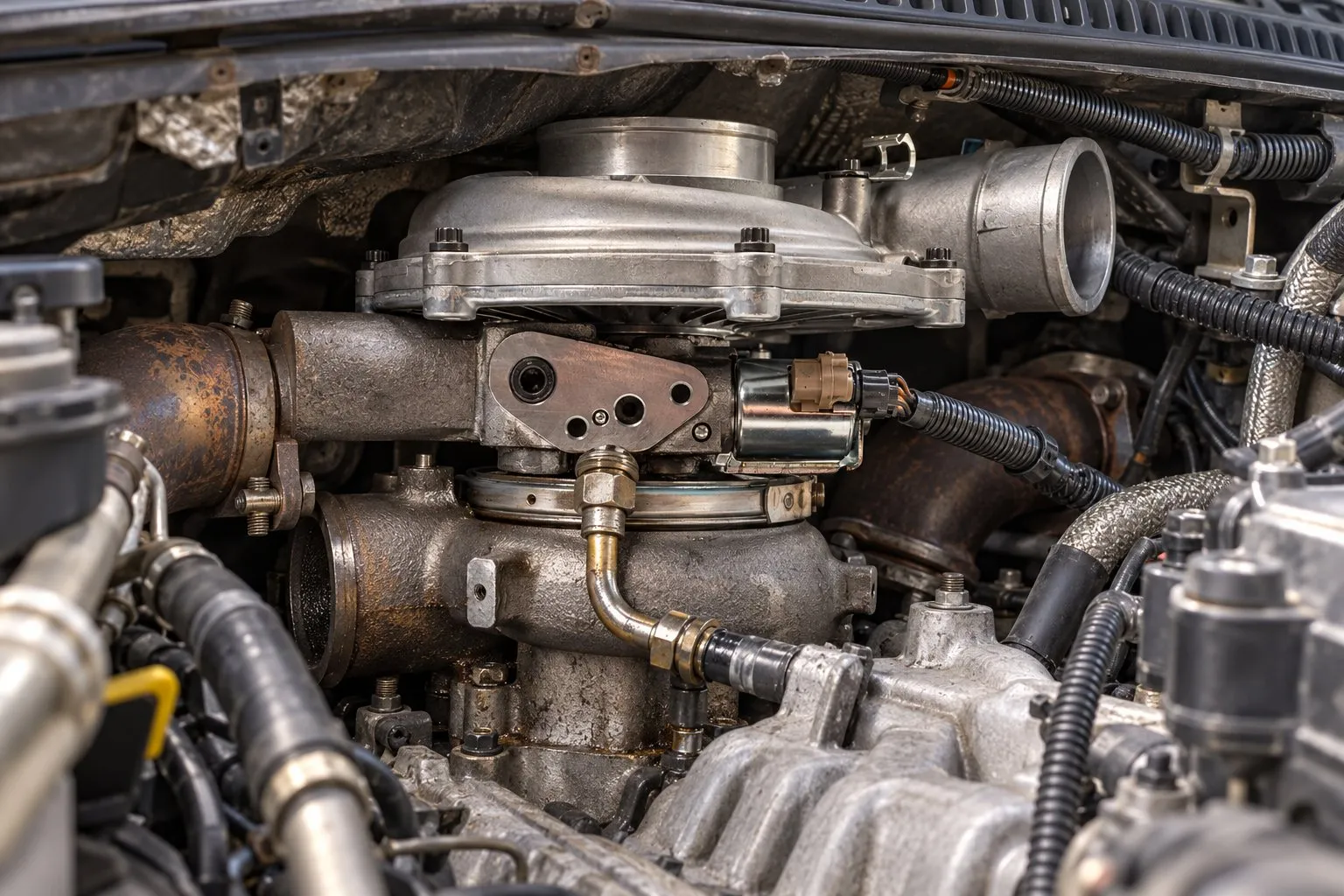
Buyers searching the 35 frame almost always run into the 37-frame variable-geometry diesel turbos, so they are worth separating cleanly. The factory Ford 6.0L Power Stroke turbo is a Garrett GT3782VA (also listed as GT37VA, 725390 early and 743250 later). Its vanes are moved by engine oil through a PCM-driven VGT control solenoid; there is no electric actuator and no vane position sensor, so commanded-versus-actual vane codes do not apply to it. See our GT3782VA turbochargers page for what we carry.
The Duramax LLY, LBZ and LMM (and the LML with its own version) use the Garrett GT3788VA. On these the ECM drives a VGT solenoid on the center housing that meters oil to a piston which turns the unison ring, and a separate vane position sensor reports position. There is no electric, stepper or vacuum actuator on these turbos. Parts for that unit live on our GT3788VA turbochargers page.
If you want more airflow out of a Duramax, Garrett’s PowerMax Stage 1 (GT3794VA, 773540-5001S) is a 37-frame upgrade with a 65 / 94 mm compressor wheel and a Garrett estimate of 590 hp, replacing the GT3788VA on 2004.5-2009 trucks (Garrett’s application list). Garrett states its performance kits are not legal for use on public roads. The design principle behind all of these, a variable-geometry turbine, is the same whether the nozzle is moved by oil or by an electronic actuator.
How GT35-frame turbos fail and what to check
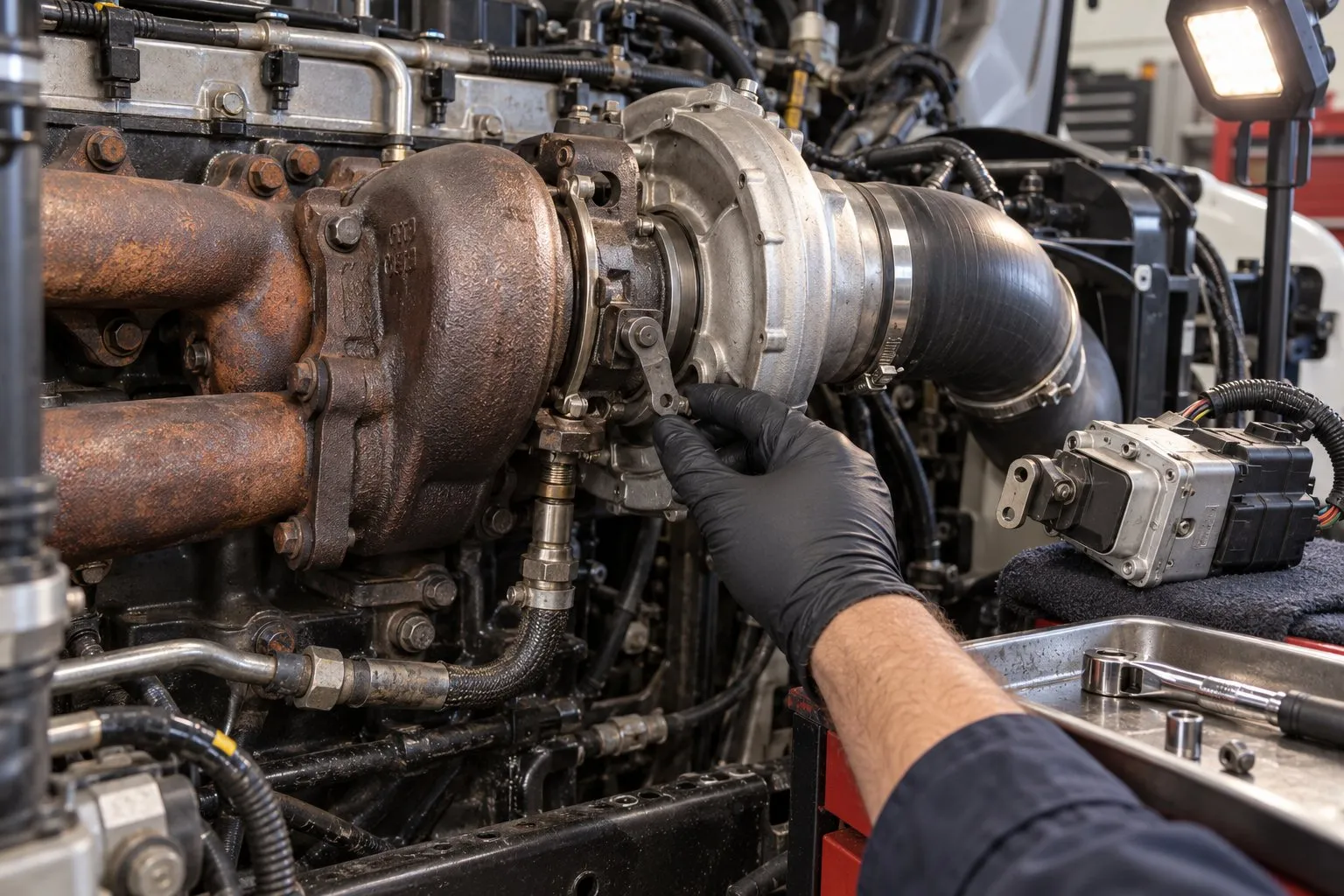
Across the whole frame, most turbo failures trace back to the oil supply rather than to the turbine or compressor wheel itself. A coked or restricted feed starves the bearings; a kinked or blocked drain backs oil up past the seals and shows as oil at both ends. Before you condemn a center section, check the oil level, the feed line, the drain, the air filter and the crankcase breather.
| Symptom | What usually fails first | What to check |
|---|---|---|
| Low boost, slow spool, black/gray smoke | Wastegate not seating, nozzle stuck open, boost leak | Intake and charge piping, wastegate linkage, up-pipes |
| Overboost, high drive pressure | Variable nozzle stuck closed | Vane movement, solenoid, actuator calibration |
| Oil in charge pipe or exhaust | Compressor or turbine seal (after drain/breather ruled out) | Breather, oil level, drain angle and gasket |
| Shaft noise, bearing play you can feel in-and-out | Bearings | Axial play, wheel contact with housing |
Some side-to-side shaft play is normal on a journal-bearing turbo with no oil pressure. Condemn the unit for in-and-out play you can feel, wheel contact with the housing, or play beyond the maker’s limit, never for any movement at all. On the electronically actuated variable-nozzle units like the Hino J08E, never move the actuator arm by hand; unbolt the actuator and move the vane lever instead, then calibrate with the service tool.
New, remanufactured, or rebuilt through PT Turbo
PT Turbo brings 45-plus years of experience to this frame and stocks both new turbos and in-house remanufactured cores out of our San Bernardino, California shop. For a worn factory unit, a remanufactured turbo or a rebuild of your own core is usually the most cost-effective path, and our in-house VSR balancing means the cartridge is finished to each model’s pass limit before it ships.
When rebuild cost comes up, we do not quote from memory: the price is confirmed after inspection and before any work starts, and you can see our published figures on the turbo rebuild price list. Our rebuild service covers the GT35 and GT37 frames, and most rebuilds ship in 3 days or less. Remanufactured units are backed by a 12-month, unlimited-mileage warranty, with a 30-day core return.
Not sure which number you have? Send us the full part number off the compressor-housing data plate and we will match it. You can reach the shop through our contact page or at (909) 824-1020.
Turbos we list for the GT3782VA, GT3788VA and GT3582R
Listings for the turbo models named in this guide that can be ordered online today. Several part numbers can fit one engine by year and rating, so match the number on your turbo’s tag, or call (909) 824-1020 and we will match it for you.
All GT3782VA listings · All GT3788VA listings · All GT3582R listings
Frequently Asked Questions
Is a GT3582 the same frame as a GT3782?
No. A GT3582 rides on the 35 frame with an 82 mm compressor wheel, while a GT3782 is a 37-frame unit, also with an 82 mm wheel. They are related but different turbos, so always order by the full number on the data plate rather than by the engine or by wheel size alone.
Does the Ford 6.0L or Duramax GT-series turbo have an electric actuator to replace?
No. The Ford 6.0L GT3782VA and the 2004.5-2016 Duramax GT3788VA move their vanes with engine oil through a VGT solenoid, not an external electric actuator. The Duramax also has a separate vane position sensor, while the 6.0L has none, so vane position codes do not apply to the Ford unit.
Can PT Turbo rebuild my GT35 core or do I have to buy a replacement?
Both options are available. We rebuild your own core in-house or supply a remanufactured unit, and we also stock new turbos. For current pricing on a specific number, check the rebuild price list or call the shop and we will confirm after inspection.
Need a Turbocharger?
PT Turbo has rebuilt and sold turbochargers since 1978. We stock remanufactured units for Cummins, Duramax, Power Stroke, Detroit Diesel, and more — backed by a 12-month unlimited mileage warranty. Units in stock at our shop in San Bernardino, CA ship the same day when ordered before 2 PM Pacific, Monday through Friday.
📞 (909) 824-1020 · 346 S I St. #3, San Bernardino, CA 92410 · [email protected]
More From PT Turbo
 Garrett GT2056V Turbocharger: Mercedes OM642 & Dodge Sprinter Application Guide
- Garrett GT1749V Turbocharger: VW TDI & Audi A4 Common Failure & Replacement
- Audi 2.0L TDI Turbocharger Guide: A3, A4, A5 & Q3 Common Failures & Replacement
- BorgWarner S200 Turbocharger: CAT C7, John Deere & Agricultural Applications