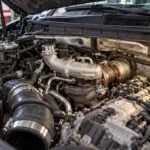
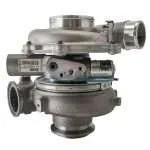
Cummins ISB 5.9L Turbocharger Guide: HX35 vs HE351CW for Dodge Ram Applications
If you’re running a 12-valve 6BT or 24-valve ISB 5.9L Cummins under the hood of a Dodge Ram, the turbocharger bolted to that exhaust manifold is the single biggest factor in how your truck pulls, spools, and survives a 350,000-mile life. The two chargers that bracket this platform are the Holset HX35 of the 1994 to 2002 trucks and the larger HE351CW of the 2004.5 to 2007 trucks (the 2003 to 2004 trucks carry the HY35 or HE341CW in between). All of them are wastegated; the 5.9L Ram never had a variable-geometry turbo. Knowing which one you have, how it behaves, and when to rebuild versus replace will save you downtime and money. This guide breaks down both units the way a mechanic who has rebuilt thousands of them would explain it.
PT Turbo has been in the turbocharger business since 1978, more than 45 years of pressing wheels, balancing shafts, and matching the right Holset to the right application. We stock both new and remanufactured units for the 5.9L Cummins, so let’s get into the technical details that actually matter on the bench.
HX35 vs HE351CW: What’s Bolted to Your Cummins
Both are fixed-geometry, wastegated Holsets. The difference is size and control: the HX35 has a mechanical wastegate that answers to boost pressure, and the HE351CW is a larger turbo whose wastegate is commanded by the engine computer. The HE341VE that is sometimes named for these trucks is a different, variable-geometry turbo used on medium-duty versions of the ISB; it was never fitted to the Ram.
The HX35 (written HX35W in its wastegated form, which is what the Ram has) showed up on the 1994-2002 Dodge Ram 2500/3500 trucks (some 1994 engines still had the earlier WH1C). It’s a workhorse: a 54mm compressor wheel, a wastegate to control boost on the top end, and a reputation for being nearly bulletproof. The HE351CW arrived with the 325-horsepower common-rail engine in the 2004.5-2007 trucks: a bigger wastegated turbo, with its wastegate under the engine computer’s control so boost follows the calibration.
| Spec | HX35 / HX35W | HE351CW |
|---|---|---|
| Type | Fixed geometry, wastegated | Fixed geometry, wastegated |
| Application years | 1994-2002 Ram 2500/3500 | 2004.5-2007 Ram 2500/3500 |
| Size | The smaller of the two (~54mm compressor wheel) | Larger compressor and turbine, sized for the 325 hp engine |
| Boost control | Mechanical wastegate | Wastegate commanded by the engine computer |
| Variable geometry | No | No (it arrived with the 6.7L and the HE351VE) |
Why the HX35 Stays the Performance Favorite
Ask ten owner-operators which 5.9L turbo they’d want for a built truck and most will say the HX35. The reasons are mechanical and honest:
- Simplicity. No electronics at all: a wastegate diaphragm and a single rotating assembly.
- Durability. The journal bearing center section tolerates abuse, heat cycles, and the occasional missed oil change better than most.
- Upgrade path. The HX35 housing family interchanges with HX40 compressor covers and aftermarket wheels, so you can step up airflow without reinventing the manifold mount.
The trade-off is spool. A stock HX35 lags a little down low, and on a heavily loaded 12-valve you’ll feel that turbo lag before the boost gauge climbs. For towing-focused builds, many shops drop in a smaller exhaust housing (a 12cm or 14cm) to bring the boost on sooner.
If you want the deeper breakdown of how the HX35, HY35, and HE351CW compare across the whole 5.9L platform, our companion piece Ram 2500/3500 5.9L Cummins Turbocharger Guide: HX35, HY35 & HE351CW Explained covers the variants in detail.
Living With the HE351CW
The HE351CW is the same kind of turbo as the HX35, with one more thing that can go wrong: its wastegate is driven by the engine computer through a control solenoid. When the wastegate sticks or the solenoid or actuator stops answering, the truck sets underboost or overboost codes and feels flat or surges.
What kills these turbos in the field:
- A sticking wastegate or a failed wastegate control solenoid or actuator.
- Shaft play and oil coking from heat soak after hard pulls without a cool-down.
- Compressor wheel damage from debris when an intake boot splits.
There are no vanes to soot up, so a worn HE351CW with good housings is a normal rebuild rather than a write-off. Variable geometry did not reach the Ram until the 6.7L; if you also run a newer truck, it is explained in our Cummins ISB 6.7L Turbocharger Guide: Variable Geometry Operation & Common Failures.
New, Remanufactured, or Rebuild: Picking Your Path
This is the decision that comes up on every counter call. Here’s how the three options stack up for a 5.9L turbo.
| Option | Typical cost range | Best for |
|---|---|---|
| New Holset | $499 to $3,018 (206 listings) at PT Turbo | Warranty-critical, no-downtime fleet trucks |
| Remanufactured | $1,641 to $2,479 (2 listings) at PT Turbo | Best value, OEM performance, daily drivers and work trucks |
| Rebuild your core | $475 at PT Turbo (price list) | Original housing match, keeping your casting |
For most owners, a quality remanufactured unit is the sweet spot. A proper reman gets a new CHRA or fully reconditioned center section, new bearings and a balanced shaft. PT Turbo’s remanufactured turbochargers are built to OEM spec and tested, which is why they hold up on trucks that earn their keep.
If your housing is good and you want to keep your original casting, our turbo rebuild service reconditions the unit you send in. That’s the right call when you’ve got a numbers-matching truck or a hard-to-source housing.
Installation Hardware You’ll Actually Need
A turbo is only as reliable as the gaskets and fasteners holding it. Reusing an old, crushed exhaust gasket or a tired oil drain seal is how a fresh turbo turns into a comeback. Match the kit to the job:
- Installation kits are listed by turbo model. Send us the number on your turbo and we will match the gasket and hardware kit for your HX35, HY35 or HE351CW, including the oil feed and drain seals that get reused far too often.
One field tip: always prime the new turbo with clean oil through the feed port and crank the engine with the fuel cut before first start. A dry start is the fastest way to wipe a fresh bearing.
Upgrading Your 5.9L: How Far Can You Push It
The 5.9L block and rotating assembly are famously strong, so the turbo often becomes the limiting factor when you start adding fuel. On the HX35 platform, the move is typically a larger compressor wheel or a step into the HX40 or a compound setup once you’re chasing 500-plus horsepower. The HE351CW is already the largest of the three factory turbos, so owners of the 2004.5 to 2007 trucks who are chasing power usually go straight to a larger aftermarket charger or a compound setup.
If you ever migrate to a newer truck, the 6.7L brought variable geometry with it.
The big-picture takeaway for upgrading is to match the turbo to the fuel and the duty cycle, not the other way around. A charger sized for 600 horsepower will drive like a dog when you’re empty and crawling through town, and one tuned for quick spool will run out of breath the moment you dump real fuel into it. Decide what the truck does most of the time, then size the compressor and housing to that job.
Whichever way you go, the rules that keep a stock turbo alive keep a built one alive too: clean oil on the schedule, a cool-down before shutdown after a hard pull, and no dry starts. Push the fuel past what the turbo can move and you trade boost for exhaust temperature, and heat is what cracks turbine housings and cokes bearings long before the wheel ever gives up.
Know which unit you’re starting with, be honest about the power you actually need, and the 5.9L will reward you with the kind of mileage that made this engine a legend in the first place.
Price ranges in this article are general estimates to help with budgeting, not PT Turbo quotes. Our current prices are on each product listing, and our rebuild prices are on the turbo rebuild price list.
Turbos we list for the HX35 and HE351CW
Listings for the turbo models named in this guide that can be ordered online today. Several part numbers can fit one engine by year and rating, so match the number on your turbo’s tag, or call (909) 824-1020 and we will match it for you.
Frequently Asked Questions
What is the difference between the HX35 and HE351CW turbocharger?
Both are fixed-geometry, wastegated Holset turbos. The HX35 (1994 to 2002 trucks) has a mechanical wastegate; the larger HE351CW (2004.5 to 2007 trucks) has a wastegate controlled by the engine computer. Neither is a variable-geometry turbo.
Which turbocharger came on the 12-valve vs 24-valve Cummins 5.9L?
The 12-valve and the 1998.5 to 2002 24-valve engines used the HX35 or HX35W (the HY35W on later 24-valve automatics). The 2003 to 2004 common-rail trucks used the HY35 or HE341CW, and the 2004.5 to 2007 trucks the HE351CW. All of them are wastegated.
How long does a Cummins ISB 5.9L turbocharger last?
A properly maintained HX35 or HE351CW turbocharger on the Cummins ISB 5.9L can survive well past 350,000 miles. Regular oil changes and proper cool-down practices are key to maximizing turbo lifespan.
Further reading: Learn more about turbocharger technology.
Shopping by part number?
Every part number we stock for the Holset HX35 and Holset HE351CW is on one page, with live prices and stock: Holset HX35 turbos and parts · Holset HE351CW turbos and parts.
Need a Turbocharger?
PT Turbo has rebuilt and sold turbochargers since 1978. We stock remanufactured units for Cummins, Duramax, Power Stroke, Detroit Diesel, and more — backed by a 12-month unlimited mileage warranty. Units in stock at our shop in San Bernardino, CA ship the same day when ordered before 2 PM Pacific, Monday through Friday.
📞 (909) 824-1020 · 346 S I St. #3, San Bernardino, CA 92410 · [email protected]
More From PT Turbo
- Freightliner Cascadia Turbocharger Guide: DD13, DD15 & DD16 Applications by Year
 Ram 1500 EcoDiesel Turbocharger Guide: 3.0L VM Motori Failures & Replacement
- Caterpillar 3126 Turbocharger Guide: School Bus & Medium Duty Replacement
- Duramax LBZ Turbocharger Guide: GT3788VA Problems & Replacement (2006-2007)