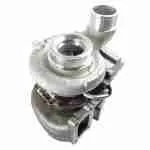
Caterpillar C18 Turbocharger: Heavy Equipment & Generator Applications Guide
The Caterpillar C18 turbocharger is one of the hardest-working forced induction units in the heavy equipment and standby power world. If you run C18-powered haul trucks, wheel loaders, marine gensets, or prime power generators, you already know this 18.1-liter inline-six builds its torque on boost pressure, and when the turbo goes soft, everything downstream suffers. This guide breaks down the C18 turbocharger by application, the failure modes that actually put units on the bench, and the parts you need to do the job right the first time.
PT Turbo has been rebuilding and supplying diesel turbochargers since 1978. Over 45 years in, we’ve seen every way a C18 turbo can fail, and we stock both new and remanufactured units along with the installation hardware to back them up.
C18 Engine Platform: Why the Turbo Setup Varies So Much
The C18 ACERT is a versatile block. Caterpillar tunes it for everything from about 460 horsepower in machines such as the D9T dozer up past 800 horsepower in marine and high-performance ratings, and the turbocharger arrangement changes with the rating. That matters because there is no single “C18 turbo.” Depending on serial number prefix, emissions tier, and application, you may be looking at a single fixed-geometry turbo, a series-sequential twin setup, or a parallel twin arrangement.
Common C18 applications and their typical boost setups:
- Generator sets (prime and standby): Usually single or twin fixed-geometry turbos optimized for steady-state load. These run thousands of hours at near-constant RPM, so bearing wear and oil coking are the primary enemies.
- Off-highway trucks and wheel loaders: Series-turbocharged on many ACERT ratings, with a low-pressure and high-pressure stage working together across the rev range.
- Marine propulsion: Parallel or series twins with aftercooling, often the highest-stressed of the bunch because of sustained high-load operation.
- Industrial and pump/compressor drive: Frequently single-turbo, similar duty cycle to gensets.
Before you order anything, pull the engine serial number and arrangement number. The C18 shares a lot of architecture and parts logic with its smaller sibling, and if you also run the 15-liter platform, our Caterpillar C15 Turbocharger Guide covers overlapping failure patterns worth knowing.
Common C18 Turbocharger Failure Modes
A C18 turbo rarely just quits. It tells you it’s dying for weeks if you know the symptoms. Here is how the failures stack up by severity and what they cost you in lost performance.
| Symptom | Likely Cause | Severity | If Ignored |
|---|---|---|---|
| Blue/gray smoke at startup or under load | Worn seals, oil leaking into compressor or turbine housing | Moderate | Oil consumption, fouled aftercooler, eventual EGT spike |
| Whining or siren-like noise rising with RPM | Bearing wear, shaft play, contact between wheel and housing | High | Catastrophic wheel failure, debris into engine |
| Low boost / sluggish power, high EGTs | Cracked housing, leaking charge piping, worn compressor wheel | Moderate to High | Overfueling, derate, head and piston damage |
| Excessive shaft end play (visible at the wheel) | Thrust bearing failure from oil starvation or contamination | High | Wheel-to-housing contact, total turbo loss |
| Oil in the intake/charge piping | Failed compressor-side seal, blocked drain, crankcase pressure | Moderate | Aftercooler contamination, runaway risk |
The two killers on the C18, especially in genset duty, are oil coking and oil starvation. Gensets that get shut down hot without a cool-down cycle bake the oil in the center housing, which chokes the bearing oil supply and destroys the next start. If you run standby power, a controlled cool-down before shutdown is the single cheapest way to extend turbo life.
Don’t Replace the Turbo Without Finding Root Cause
Most repeat turbo failures we see on the bench trace back to something the turbo didn’t cause: a plugged oil drain, a collapsing supply line, contaminated oil, or a restricted air filter pulling the compressor into surge. Cut open the old unit, inspect the bearings, and check oil flow before bolting on a replacement. A new turbo into a dirty oil system is a warranty claim waiting to happen.
New vs. Remanufactured C18 Turbochargers
For most heavy equipment and generator owners, a quality remanufactured turbo is the smart money. A properly reman’d unit uses a new or fully reconditioned CHRA, new bearings, new seals, and is balanced to OEM tolerance. The performance is identical to new for a fraction of the cost.
| Factor | New OEM | Remanufactured |
|---|---|---|
| Cost | Highest | Lower than new |
| Lead time | Can be long on backorder | Usually in stock |
| Performance | Factory spec | Factory spec when done right |
| Core charge | None | Yes, refundable on return |
| Best for | Warranty-critical new builds | Fleet, repower, downtime-sensitive jobs |
PT Turbo stocks remanufactured turbochargers built to OEM tolerances, and if you’d rather restore your existing unit, our in-house turbocharger rebuild service handles C18 cores with full balancing and testing. For the complete catalog, you can shop all turbos here.
Installation Kits and Gaskets You Actually Need
Here is where a lot of C18 turbo jobs go sideways. Techs reuse old gaskets, oil feed lines, and mounting hardware to save an hour, and then chase an oil leak or a boost leak for the next week. Every turbo install on a C18 should go in with fresh gaskets, drain seals, and supply line hardware. The cost of a kit is nothing compared to pulling the turbo a second time.
Ajusa makes some of the best-fitting CAT installation kits in the aftermarket, and PT Turbo stocks the part numbers that cover C-series turbo work:
- Installation kits are listed by turbo part number: send us the number on your turbo and we will match the kit.
Because the C18 turbo arrangement varies by serial number, confirm your specific gasket and fitting requirements before ordering. If you’re not sure which kit matches your engine, contact PT Turbo with your serial and arrangement number and we’ll match it for you.
C18 Turbo Installation Best Practices
Whether you’re putting in a new, reman, or rebuilt unit, the C18 rewards a disciplined install. Here is the process that keeps turbos alive past the warranty period:
- Prime the bearing before startup. Pour clean engine oil into the oil inlet and spin the shaft by hand. Dry starts kill bearings in seconds.
- Inspect and clear the oil drain. A restricted drain pressurizes the center housing and pushes oil past the seals. This is the number one cause of “new turbo leaking oil” calls.
- Check the oil supply line for collapse or coking. On high-hour gensets, replace it. It’s cheap insurance.
- Clean the charge air cooler and piping. If the old turbo shed oil or metal, that debris is sitting in the intercooler waiting to go into the engine; if the old wheel shed metal, replace the intercooler, because fragments cannot reliably be flushed out.
- Torque the V-band and mounting hardware to spec. Over-torque cracks housings, under-torque leaks boost.
- Idle and cool down at startup. Let it idle to confirm oil return before bringing it up to load.
If you run mixed fleets, the same discipline applies across platforms.
The priming step, the drain check, and the cool-down habit matter just as much on your smaller CAT blocks and other makes as they do on the C18. Build the process into your shop routine once and your techs stop guessing. A turbo that goes in clean, oiled, and torqued right is a turbo you don’t see again until it’s earned its hours.
That consistency is what separates a turbo that lives out its service life from one that comes back on a trailer in six months. Find the root cause, install with fresh hardware, and give the bearing oil before the first start. Do those three things every time and the C18 will hold boost right where Caterpillar set it.
Frequently Asked Questions
What are the signs of a failing Caterpillar C18 turbocharger?
Common symptoms include reduced power and torque, excessive black or blue smoke, whining or grinding noises, and slow boost response. Low boost pressure under load is a key indicator of turbo wear.
What applications use the Caterpillar C18 turbocharger?
The C18 turbocharger is used in haul trucks, wheel loaders, marine gensets, and prime or standby power generators. It supports the 18.1-liter inline-six engine across many heavy-duty platforms.
How often should you replace a Caterpillar C18 turbocharger?
Replacement intervals depend on operating hours, load conditions, and maintenance, but turbos typically last several thousand hours. Regular oil changes and air filter service significantly extend turbo life.
Further reading: Learn more about turbocharger technology.
Need a Turbocharger?
PT Turbo has rebuilt and sold turbochargers since 1978. We stock remanufactured units for Cummins, Duramax, Power Stroke, Detroit Diesel, and more — backed by a 12-month unlimited mileage warranty. Units in stock at our shop in San Bernardino, CA ship the same day when ordered before 2 PM Pacific, Monday through Friday.
📞 (909) 824-1020 · 346 S I St. #3, San Bernardino, CA 92410 · [email protected]
More From PT Turbo
- Caterpillar C7 Turbocharger: Common Failures, Part Numbers & Replacement Guide
- Duramax L5P Turbocharger Guide: What Changes in the 2017+ Generation
- Isuzu 4HK1 Turbocharger Guide: NPR, NQR & Construction Equipment Applications
 Cummins ISB 5.9L Turbocharger Guide: HX35 vs HE351CW for Dodge Ram Applications