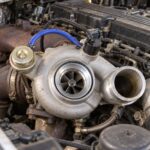
Why you must let your diesel idle before shutoff comes down to one thing: heat management inside a turbocharger that spins over 100,000 RPM and runs hotter than most people realize. Shut the engine off the second you pull into the yard and you are trapping that heat right where it does the most damage. After 45+ years rebuilding turbochargers here at PT Turbo, we have torn down more heat-soaked, coked-up center sections than we can count, and nearly every one traces back to the same operator habit.
This guide breaks down exactly what happens inside your turbo at shutdown, how long you actually need to idle, and how to protect the most expensive rotating assembly in your diesel.
What Actually Happens Inside a Hot Turbocharger
A turbocharger has two wheels on a common shaft: the turbine wheel driven by exhaust gas, and the compressor wheel that packs air into your intake. That shaft rides on a bearing system fed and cooled by pressurized engine oil.
Under load, exhaust gas temperatures at the turbine housing can hit 1,200 to 1,400 degrees Fahrenheit. The center housing bearing is right next to that inferno, protected only by constant oil flow carrying the heat away.
The moment you shut the engine off, the oil pump stops. Oil flow stops. But the turbine housing is still radiating stored heat into the center section. If the shaft is still spinning down with no fresh oil to cushion and cool it, you have a real problem building.
You can read the mechanical basics of how these units work on the turbocharger overview at Wikipedia, but the shutdown physics are what matter here.
Coking: The Silent Turbo Killer
When oil sits in a hot center housing with no flow, it does not just get warm. It cooks. The trapped oil oxidizes and hardens into a black, carbon-like deposit called coke.
Coking is the number one cause of premature turbo failure we see on trucks that never got a proper cooldown. Here is the chain reaction it sets off:
- Hardened coke restricts the oil feed and drain passages
- Restricted flow starves the bearings on the next cold start
- The journal bearings and thrust bearing wear out fast
- Shaft play increases, wheels contact the housings, and the unit fails
Coke deposits are also abrasive. Once they break loose, they circulate through the bearing system like sandpaper. A turbo that could have run 300,000-plus miles can be scrap in a fraction of that from repeated hot shutdowns.
Why You Must Let Your Diesel Idle Before Shutoff: The Cooldown Rule
The idle period lets oil keep flowing while the turbine housing sheds its stored heat and the shaft winds down safely. It is the cheapest insurance you will ever put on a turbocharger.
How long you idle depends on how hard the engine was working right before you stopped. A truck that just crested a mountain grade fully loaded needs far more cooldown than one that idled through a parking lot.
| Driving Condition Before Shutoff | Recommended Idle Time | Reason |
|---|---|---|
| Light city driving, low load | 30 to 60 seconds | Turbo never reached peak temp |
| Highway cruising, moderate load | 1 to 2 minutes | Sustained heat needs to dissipate |
| Heavy load, towing, or grades | 2 to 3 minutes | Turbine housing is at maximum temp |
| Extended hard pull, hot ambient | 5 minutes or more | Maximum heat soak risk |
A practical rule of thumb: if you drove the last few miles easy, at parking-lot speeds, you have already cooled the turbo. If you pulled in hot off the interstate under load, give it those few minutes at idle before you kill the key.
Cold Start Matters Too: Warm-Up Before Load
Cooldown gets the attention, but the flip side is just as important. Do not stab the throttle on a cold diesel. Cold oil is thick and slow to reach the turbo bearings.
Give the engine a minute or two at idle on a cold start so oil pressure stabilizes and flow reaches the center housing before you demand boost. Loading a turbo before the oil is moving properly is a fast track to bearing wear on the intake side.
This matters even more on the platforms we support daily, from the 5.9L Cummins HX35 and HY35 units to the Ford 7.3L Powerstroke TP38 and GTP38 turbos. Every one of them lives or dies by clean oil flow at the right temperature.
Variable Geometry Turbos and Actuators Add Another Layer
Modern diesels increasingly run variable geometry turbochargers (VGTs), which use movable vanes to control exhaust flow across the turbine. You can see how the vane mechanism works in this variable-geometry turbocharger explanation.
VGTs add moving parts that also suffer from heat soak and carbon buildup. When exhaust soot and coke accumulate on the vanes or the actuator linkage, the vanes stick. A stuck VGT throws boost codes, causes limp mode, and kills fuel economy.
Proper cooldown reduces the coking that seizes those vanes. But when an actuator does fail, it needs replacing with the correct calibrated unit. We stock both pneumatic and electronic actuators, new and remanufactured.
If you are running a big-bore over-the-road engine, our Cummins ISX turbocharger guide covering the HE400VG, HE451VE, and HE561VE breaks down how those VGT units differ and where actuator calibration matters most.
Emissions Systems and Regen Cycles Complicate Shutdown
On post-2007 diesels, the aftertreatment system changes the shutdown equation. During a diesel particulate filter regeneration cycle, exhaust temperatures spike dramatically to burn off soot.
Never shut a truck down mid-regen if you can help it. Exhaust temps are at their highest, which means the turbine housing is loaded with heat. Killing the engine right then is the worst-case heat-soak scenario for the turbo.
Systems like exhaust gas recirculation also push soot back through the intake, accelerating carbon buildup that compounds coking problems over time. Clean oil, proper cooldown, and finishing regen cycles all work together to keep the turbo healthy.
New vs Remanufactured When the Turbo Does Fail
Even with perfect habits, turbos wear out. When yours does, you have real choices, and we stock new units and remanufacture in-house. Here is how they stack up:
| Factor | New Turbocharger | Remanufactured Turbocharger |
|---|---|---|
| Cost | Highest | Typically 30 to 50% less |
| Core components | All new | Inspected housing, all new bearings, seals, and CHRA parts |
| Balancing | Factory balanced | VSR balanced to OE spec |
| Availability | Depends on model | Wide range in stock |
| Warranty | Full | Backed warranty from PT Turbo |
Our remanufactured turbochargers are rebuilt to OE tolerances and balanced on precision equipment, not just cleaned and painted. If you would rather keep your original housing, our turbocharger rebuild service restores your unit with new internals.
Not sure which turbo you have?
Start with the nameplate tag riveted to the compressor housing. It carries the part number and serial that tell us exactly what you are running and which core, bearings, and actuator it needs. If the tag is missing or unreadable, note your engine make, model, and year, then measure the compressor and turbine wheel diameters.
Those few numbers let us match your unit the first time and spare you the guesswork of ordering the wrong CHRA or an actuator that will not calibrate. Get the identification right and everything else, cooldown habits included, goes a lot further toward keeping that rotating assembly alive.
Frequently Asked Questions
How long should you let a diesel idle before shutting it off?
Let your diesel idle for roughly 2 to 3 minutes after hard work to allow the turbocharger to cool. Lighter driving may need less time, but always give the turbo a chance to shed heat.
What happens if you shut off a diesel without letting the turbo cool down?
Shutting off immediately traps heat in the turbocharger and stops oil flow, causing oil to bake and coke inside the bearings. Over time this leads to bearing failure and premature turbo damage.
Do modern turbo diesels still need a cooldown period?
Yes, even modern turbos benefit from a cooldown after heavy loads, though some vehicles have electric coolant pumps or turbo timers that help. When in doubt, let it idle briefly before shutoff.
Need a Turbocharger?
PT Turbo has rebuilt and sold turbochargers since 1978. We stock remanufactured units for Cummins, Duramax, Power Stroke, Detroit Diesel, and more — backed by a 12-month unlimited mileage warranty and same-week shipping from San Bernardino, CA.
📞 (909) 824-1020 · 346 S I St. #3, San Bernardino, CA 92410 · [email protected]