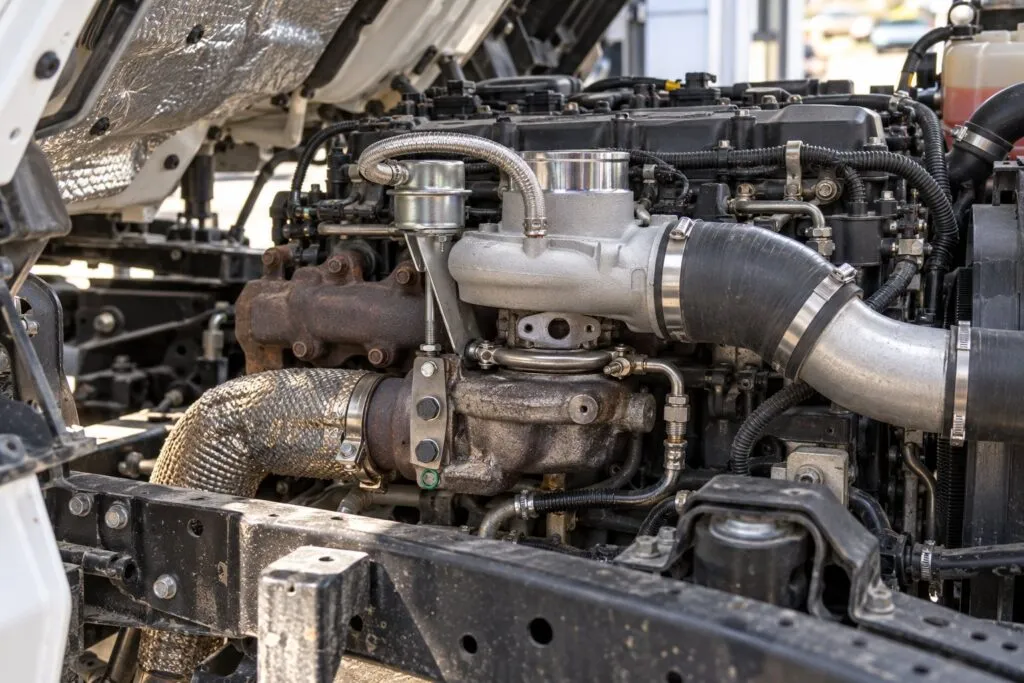
The Holset HE200WG Turbocharger is the compact wastegated workhorse behind millions of Cummins ISF engines and light commercial diesels running in delivery vans, cab-forward trucks, and midsize work platforms. It is small, boost-responsive, and built to handle modern emissions-era demands, which is exactly why it shows up in so many Foton and other Cummins-powered chassis around the world. If you turn wrenches on light commercial diesels, you will eventually meet this turbo, and understanding how it works saves you guesswork when boost goes soft or the check-engine light comes on.
At PT Turbo we have been diagnosing, rebuilding, and supplying Holset units for over 45 years, and the HE200 family is one of the most common small-frame turbos coming across our bench. This guide covers specs, the engines it bolts to, failure patterns, and how to decide between repair and replacement.
What the Holset HE200WG Turbocharger Is Built For
The HE200WG is a single-stage, wastegated turbocharger from the small end of Holset’s HE range. The “WG” designation tells you it uses a mechanical wastegate rather than the variable-geometry nozzle ring found on its sibling, the HE200VG turbochargers. That makes the WG version simpler, cheaper to maintain, and a popular choice on engines that do not need the fine-grained exhaust control of a VGT setup.
Its job is to deliver quick spool at low RPM for stop-and-start commercial duty while keeping back pressure manageable on smaller displacement diesels. The wastegate actuator, usually a pneumatic canister, bleeds excess exhaust around the turbine wheel once target boost is reached. On many ISF applications the wastegate is electronically controlled through the ECM, so a fault here can be mechanical, pneumatic, or electrical.
If you want the background on how wastegated turbos regulate boost, this overview of turbocharger operation is a solid primer before you dig into diagnostics.
Engines and Vehicles That Use the HE200WG
The HE200WG is tightly tied to the Cummins ISF2.8 and ISF3.8 four-cylinder diesels, the compact engines Cummins designed for light and medium commercial use. These engines power a huge range of global platforms, and the HE200WG shows up across most of them.
- Cummins ISF2.8: Foton Tunland pickups, light delivery vans, and small cab-over trucks
- Cummins ISF3.8: Mid-size box trucks, buses, and agricultural equipment
- Light commercial chassis: various OEM-badged trucks built on Cummins ISF driveline packages
Because the ISF uses a cooled exhaust gas recirculation system, the turbo lives in a hotter, dirtier environment than on older engines without EGR. If your application runs EGR, understanding how exhaust gas recirculation loads the intake and exhaust side helps explain why carbon buildup around the wastegate is so common on these units.
HE200WG Specifications at a Glance
Exact wheel trims and actuator calibration vary by part number and application, so always verify against the nameplate on your unit. The table below gives the general operating envelope for the HE200WG family on ISF engines.
| Attribute | HE200WG Typical Spec |
|---|---|
| Configuration | Single-stage, wastegated |
| Boost control | Mechanical / electronic wastegate actuator |
| Engine family | Cummins ISF2.8 / ISF3.8 |
| Bearing system | Journal bearing |
| Typical displacement range | 2.8L to 3.8L, 4-cylinder |
| Emissions compatibility | Euro IV / Euro V with EGR and DPF |
Many ISF installations pair the turbo with a diesel particulate filter downstream. Poor turbo performance, over-fueling, or incomplete combustion can accelerate soot loading, so a failing HE200WG often shows up first as a DPF regeneration complaint. The basics of how a diesel particulate filter traps and burns soot are worth reviewing if you are chasing regen faults.
Common HE200WG Failure Symptoms and Causes
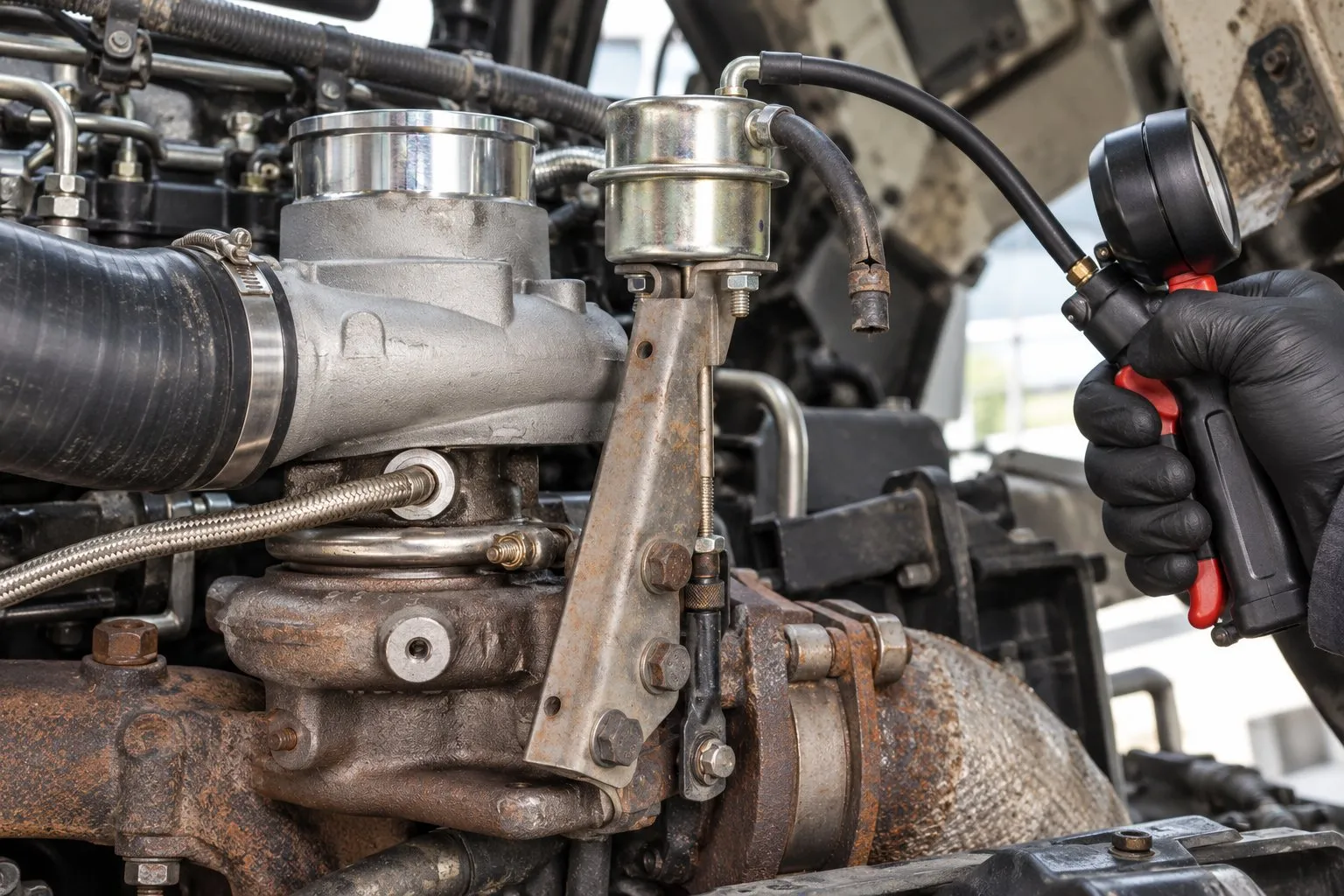
Small-frame Holset turbos are durable, but the operating conditions on emissions-era ISF engines create predictable wear patterns. Catching these early keeps a repair from turning into a scattered turbine wheel.
Symptom Severity Table
| Symptom | Likely Cause | Severity |
|---|---|---|
| Sluggish low-end boost | Wastegate stuck open or carboned, weak actuator spring | Moderate |
| Over-boost / boost spikes | Wastegate not opening, actuator rod seized | Moderate to high |
| Whistling or siren noise | Compressor seal leak, worn bearings | High |
| Blue smoke on startup | Oil seal failure, shaft play | High |
| Oil in intake piping | Center housing seal leak, blocked drain | High |
| Frequent DPF regens / codes | Low boost, poor combustion from turbo fault | Moderate |
| Grinding or metallic contact | Bearing failure, wheel-to-housing contact | Critical |
The single most common failure we see on the bench is wastegate related. Carbon from EGR and heat-cycling can seize the actuator linkage, which either holds the gate shut (over-boost) or props it open (no boost). Before condemning the whole unit, verify actuator movement and check for a cracked or leaking vacuum/pressure line.
The second big killer is oil supply. These journal-bearing units depend on clean oil at the right pressure. Extended oil intervals, a clogged feed line, or coking after a hot shutdown will wipe the bearings and let the shaft walk. Once you see shaft play or oil in the compressor housing, the cartridge needs attention.
Repair, Rebuild, or Replace Your Holset HE200WG Turbocharger
When an HE200WG fails, you have three real paths, and the right one depends on the condition of the housings and center section. The good news is that the castings on these Holset units are robust and usually reusable, which makes rebuilding a cost-effective option.
If the turbine and compressor housings are intact and only the cartridge is worn, a professional rebuild restores the unit to balanced, spec-correct condition. Our turbocharger rebuild service covers the full teardown, inspection, replacement of bearings, seals, and wheels as needed, and VSR balancing before the unit ships back. You can see model-specific pricing on our turbo rebuild price list rather than guessing at a number.
If you need a turnkey unit with no core turnaround delay, a remanufactured turbocharger is the fastest way to get a truck back on the road. For current availability and pricing on the exact part you need, check the HE200WG turbochargers model page or call our team at (909) 824-1020.
New vs Remanufactured HE200WG
| Factor | New | Remanufactured |
|---|---|---|
| Fit and spec | OEM exact | Restored to OEM spec |
| Lead time | Depends on stock | Often in stock, fast turnaround |
| Cost | Highest | Lower than new |
| Core charge | None | Usually applies |
| Warranty | Yes | Yes, from PT Turbo |
For most fleet and owner-operator budgets, a quality reman or rebuild delivers OEM performance at a lower cost than a brand-new unit. Because PT Turbo stocks both new and remanufactured parts, we can match the solution to your downtime tolerance and budget rather than forcing one option.
Related Cummins Turbos Worth Knowing
The HE200WG sits at the small end of a large Holset family, and techs who service ISF engines often work on the bigger B-series Cummins turbos too. If you also run 5.9L or 6.7L Cummins pickups, these guides cover the turbos you will see most often.
- For 6.7L applications, see our Ram 2500/3500 6.7L Cummins turbocharger guide.
- For the earlier 5.9L trucks, the HX35, HY35 and HE351CW guide breaks down each option.
- For the variable-geometry side of the Cummins world, the ISB 6.7L VGT operation and failures guide is directly relevant.
If you are deciding between a wastegated and variable-geometry setup on a larger platform, the variable-geometry turbocharger reference explains the tradeoffs that also apply to the HE200VG versus HE200WG decision on ISF engines.
Frequently Asked Questions
What is the difference between the HE200WG and HE200VG?
The HE200WG uses a mechanical wastegate to control boost, while the HE200VG uses a variable-geometry nozzle ring with an electronic actuator. The VG version offers finer boost control and better low-end response but is more complex and more expensive to service. The WG version is simpler and more forgiving, which is why it is common on many ISF commercial applications.
Can a stuck wastegate be fixed without replacing the whole turbo?
Often, yes. If the turbine and compressor wheels and bearings are healthy, a seized wastegate caused by carbon buildup can be cleaned, freed, and recalibrated during a rebuild. The key is catching it before over-boost or a dragging gate damages the wheels. Verify actuator travel and the condition of the pressure line before deciding.
How do I know which HE200WG part number I need?
Read the nameplate stamped on the center housing or compressor cover, since wheel trims and actuator calibration differ by application even within the HE200WG family. Have that number ready along with your engine model and year. PT Turbo can confirm the correct unit if you call (909) 824-1020 or reach out through our contact page.
Shopping by part number?
Every part number we stock for the Holset HE200WG is on one page, with live prices and stock: Holset HE200WG turbos and parts.
Need a Turbocharger?
PT Turbo has rebuilt and sold turbochargers since 1978. We stock remanufactured units for Cummins, Duramax, Power Stroke, Detroit Diesel, and more — backed by a 12-month unlimited mileage warranty and same-week shipping from San Bernardino, CA.
📞 (909) 824-1020 · 346 S I St. #3, San Bernardino, CA 92410 · [email protected]
More From PT Turbo
 Jeep Grand Cherokee EcoDiesel Turbocharger Guide: 3.0L VM Motori Replacement
- Mercedes OM642 Turbocharger Guide: Sprinter, E350d, ML350 & GL350 Replacement
- Holset HX35W Turbocharger: Wastegate Version for Cummins 5.9L Explained
- IHI Turbocharger Complete Model Guide: RHF, RHB, VF & Marine Series Reference