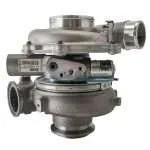
If you run a Caterpillar C13, you already know this engine is a workhorse. Found in everything from on-highway trucks to wheel loaders and gensets, the C13 turbocharger is the single most important component standing between you and the boost numbers that move 80,000-pound loads. When that turbo starts to fail, fuel economy drops, EGTs climb, and downtime hits your bottom line fast. This guide walks you through every symptom, every diagnostic step, and the complete replacement process, with the exact installation kits and parts you need to get the job done right.
PT Turbo has been rebuilding and supplying diesel turbochargers since 1978. That is over 45 years of hands-on experience with Caterpillar units, and we stock both new and remanufactured C13 turbos along with the gasket and hardware kits that keep your install leak-free. Let’s get into it.
How the Caterpillar C13 Turbocharger Works
The C13 is a 12.5-liter inline-six built on the ACERT platform, and depending on the application and emissions year, it runs either a single fixed-geometry turbo or a series turbo arrangement. The on-highway C13 (CPD, KCB, LEE serial prefixes) commonly uses a Garrett GT-series unit, while industrial and marine variants vary by rating.
The basics never change. Exhaust gas spins the turbine wheel, which is connected by a common shaft to the compressor wheel. That compressor packs more air into the intake, raising volumetric efficiency and letting the C13 burn more fuel cleanly to make its 380 to 470+ horsepower ratings. The shaft rides on a floating bearing system fed by pressurized engine oil. When that oil supply gets dirty, runs low, or the bearing wears, the whole assembly is on borrowed time.
Understanding this matters because nearly every C13 turbo failure traces back to one of three things: oil contamination, foreign object damage, or overspeed from a tuning or sensor problem. Diagnose the root cause or your replacement turbo will fail the same way.
Symptoms of a Failing C13 Turbocharger
A dying turbo rarely quits all at once. It gives you warning signs. The trick is reading them before you grenade the unit and send debris into the intercooler and cylinders. Here are the symptoms ranked by how urgently they need attention.
| Symptom | Likely Cause | Severity |
|---|---|---|
| Blue/gray smoke at startup or under load | Worn seals, oil pushing past bearings into intake or exhaust | High |
| Loss of power, sluggish throttle response | Low boost, damaged compressor wheel, or actuator fault | High |
| Whining, grinding, or siren-like noise | Worn shaft bearings, wheel-to-housing contact | Critical |
| Excessive oil consumption | Failed turbo seals | Medium |
| High exhaust gas temperatures (EGT) | Restricted airflow, failing turbo, boost leak | High |
| Boost-related fault codes (low boost / actuator) | Sensor, actuator, or mechanical turbo failure | Medium |
| Visible shaft play / oil in the intake piping | Bearing wear, imminent failure | Critical |
If you hear that high-pitched siren whine that changes with engine speed, stop driving. That is the sound of a shaft bearing letting go, and continuing to run it risks the compressor or turbine wheel contacting the housing and sending metal downstream.
Diagnosing the C13 Turbo Before You Condemn It
Plenty of “bad turbos” are actually good turbos choked by something else. Before you pull the unit, run through this checklist. It takes 30 minutes and saves you from replacing a part that was never the problem.
1. Check for Boost Leaks First
A cracked charge pipe, blown intercooler boot, or split hose mimics a dead turbo perfectly. Pressurize the intake side and listen, or use soapy water at every clamp and joint. Low boost codes are very often a leak, not the turbo itself.
2. Inspect the Air Filter and Intake Restriction
A plugged air filter starves the compressor and drives EGTs up. Check the restriction gauge. A clogged filter can also pull dust past a damaged seal and chew the compressor wheel.
3. Check Shaft Play
Pull the intake pipe and grab the compressor nut. Radial play (side to side) of more than a few thousandths, or any contact between the wheel and housing, means the bearings are gone. Axial play (in and out) should be barely perceptible. Excessive in-out movement points to a worn thrust bearing.
4. Inspect the Compressor and Turbine Wheels
Look for chipped, bent, or eroded blades. Dust erosion sands the leading edges to a knife point. FOD (foreign object damage) leaves impact marks. Oil coating on the compressor side means the seals are leaking.
5. Verify Oil Supply and Drain
Pull the oil feed line and confirm clean, full-pressure oil flow. A coked or restricted feed line is the number one killer of replacement turbos. A blocked drain line forces oil past the seals. Always inspect both.
6. Check the Wastegate and Read the Codes
The C13 has no variable geometry turbo, so there is no vane actuator to sweep. On ACERT engines the high-pressure turbo has a wastegate: check that its actuator and control line hold pressure and that the gate moves freely and seats. A gate stuck open gives low boost with no bearing problem at all. Read the codes with Cat ET before you take anything apart.
C13 Turbocharger Replacement: Step by Step
Once you have confirmed the turbo is bad, replacement is straightforward but exacting. Cleanliness is everything. A single piece of grit in the oil feed will take out a brand-new unit.
- Let the engine cool and disconnect the batteries. Hot turbo housings will burn you and warm components are easy to over-torque.
- Remove the heat shielding, intake and exhaust piping, oil feed and drain lines. Cap every opening immediately to keep debris out.
- Disconnect the wastegate actuator line on the high-pressure turbo of an ACERT engine, and note the actuator rod position.
- Unbolt the turbo from the exhaust manifold. Penetrating oil and patience beat snapped studs. Expect carbon-seized fasteners on high-mileage engines.
- Clean every mating surface down to bare metal. Old gasket material and carbon ruin the seal on the new unit.
- Prime the new turbo with clean engine oil through the feed port and spin the shaft by hand before installing. This prevents a dry start.
- Install with a fresh gasket and hardware kit, torque to spec in sequence, and reconnect oil lines with new seals.
- Before first start, crank with fueling disabled (or per CAT procedure) to build oil pressure, then idle for several minutes to confirm flow and check for leaks.
Do not reuse old gaskets, lock plates, or oil line seals. This is where a complete installation kit pays for itself. PT Turbo stocks the Ajusa CAT installation kits that cover the gaskets, seals, and hardware for C-series turbo jobs:
- Installation kits are listed by turbo part number: send us the number on your turbo and we will match the kit.
Match the kit to your specific serial number and turbo configuration. If you are not sure which one fits your C13, our team can cross-reference it. Just contact PT Turbo with your engine serial and arrangement number.
New vs Remanufactured C13 Turbochargers: Cost and Value
The big decision for most fleets and owner-operators is whether to buy new or remanufactured. Both have a place. Here is how they stack up.
| Factor | New OEM | Remanufactured |
|---|---|---|
| Typical price range | $2,142 to $3,061 (3 listings) at PT Turbo | Quoted by part number |
| Core charge | None | Yes, refundable |
| Availability | Can be backordered | Usually in stock |
| Warranty | Full factory | Strong, when built right |
| Best for | New equipment, max service life | Cost-conscious repairs, older units |
Price ranges in this article are general estimates to help with budgeting, not PT Turbo quotes. Our current prices are on each product listing, and our rebuild prices are on the turbo rebuild price list.
A properly remanufactured turbo, built with new bearings, seals, a balanced CHRA, and updated wheels, performs to the same spec as new at roughly half the cost. The key word is “properly.” A reman is only as good as the shop behind it.
When you buy reman, ask whether the CHRA was balanced on a VSR machine before it shipped. A shop that cuts corners on balancing or reuses marginal wheels sends you a turbo that whines and fails inside a season. The right builder documents the bearing clearances, pressure-tests the housings, and stands behind the work.
That is the standard we have held since 1978. Whether you go new or reman on your C13, the install only lasts if the root cause is fixed and the unit was built to spec. Nail both and you get full service life out of whichever route fits your budget.
Frequently Asked Questions
What are the symptoms of a failing Caterpillar C13 turbocharger?
Common signs include reduced fuel economy, rising exhaust gas temperatures (EGTs), low boost pressure, excessive smoke, and unusual whining noises. Loss of power under load is often the clearest indicator.
How do you diagnose a Caterpillar C13 turbocharger problem?
Start by checking boost pressure and EGTs, then inspect for shaft play, oil leaks, and damaged compressor or turbine blades. Reviewing fault codes and intake/exhaust restrictions helps confirm the issue.
How much does it cost to replace a Caterpillar C13 turbocharger?
Replacement costs typically range from $2,000 to $5,000 including parts and labor, depending on whether you use a new, remanufactured, or aftermarket turbo. Labor and related components affect the final price.
Further reading: Learn more about turbocharger technology.
PT Turbo rebuilds Caterpillar C13 turbochargers to specification. See our turbo rebuild service.
Need a Turbocharger?
PT Turbo has rebuilt and sold turbochargers since 1978. We stock remanufactured units for Cummins, Duramax, Power Stroke, Detroit Diesel, and more — backed by a 12-month unlimited mileage warranty and same-week shipping from San Bernardino, CA.
📞 (909) 824-1020 · 346 S I St. #3, San Bernardino, CA 92410 · [email protected]
More From PT Turbo
 Duramax LLY Turbocharger: Symptoms, Garrett GT3788VA Replacement & Cost (2004-2005)
- Detroit DD13 Turbocharger: Failure Symptoms, EGR Interaction & Replacement Options
- Duramax LBZ Turbocharger Guide: GT3788VA Problems & Replacement (2006-2007)
- International ProStar Turbocharger Guide: MaxxForce 13 Replacement & Upgrade Options