What Is a Variable Geometry Turbocharger? How VGT Works & Common Failures
What is a variable geometry turbocharger, and why has it become so common on modern diesel pickups and many medium and heavy-duty engines? If you turn wrenches for a living or run a fleet, you already know these units behave differently than the old fixed-geometry turbos, and when they fail, they fail in ways that leave a lot of techs scratching their heads. This guide breaks down exactly how a VGT works, why manufacturers went this direction, and the failures we see most often here at PT Turbo after more than 45 years in the turbocharger business.
What Is a Variable Geometry Turbocharger (VGT) and How It Differs From a Fixed Turbo
A variable geometry turbocharger, also called a VGT, VNT (variable nozzle turbine), or VG turbo, uses movable vanes or a sliding nozzle ring inside the turbine housing to change the effective area the exhaust gas flows through. By narrowing or widening that flow path, the turbo can control exhaust gas velocity across the turbine wheel on demand.
A traditional fixed-geometry turbo has one compromise built into its housing. Size it for low-end response and it chokes at high RPM. Size it for top-end power and it lags off idle. A VGT greatly reduces that tradeoff by physically changing its geometry as engine conditions change.
At low RPM, the vanes close down to speed up exhaust flow and spool the turbine fast, cutting turbo lag. At high RPM, the vanes open wide to flow maximum volume without creating excessive backpressure. If you want the deeper engineering background, the variable-geometry turbocharger overview on Wikipedia is a solid starting point.
How a VGT Actually Works: Vanes, Actuators, and Control
On most designs (Garrett, BorgWarner, IHI), a ring of pivoting vanes sits inside the turbine housing around the turbine wheel. Holset turbos, such as the one on the Cummins ISB 6.7L, slide a nozzle ring in and out instead. On the pivoting-vane designs, a unison ring links all the vanes together so they open and close in unison. An actuator drives the unison ring, or the Holset nozzle ring, through a linkage or gear set.
The actuator is where the control happens, and it comes in two main flavors:
- Pneumatic (vacuum or boost pressure) actuators use engine vacuum or boost against a diaphragm and spring to position the vanes. Simple, durable, and common on many Garrett and Mitsubishi applications.
- Electronic actuators use a motor, internal gears, and a position sensor commanded directly by the ECM. More precise, but more expensive and more sensitive to heat and soot.
A third arrangement uses engine oil: on the Ford 6.0L and 2011-2019 6.7L Power Stroke and on the 2004.5-2016 Duramax, a solenoid meters oil to a piston that moves the vanes, and there is no separate actuator to replace. On pneumatic systems, the ECM controls a solenoid that regulates the vacuum or pressure signal to the actuator. When you replace one of these, calibration matters.
Why Diesels Rely on VGT Technology
VGT technology took over the diesel world for three big reasons: response, efficiency, and emissions.
The emissions piece is the one a lot of people overlook. A VGT can intentionally close its vanes to build exhaust backpressure, which drives exhaust gas recirculation (EGR) flow. That same backpressure control is used to raise exhaust temperature during diesel particulate filter (DPF) regeneration cycles.
In other words, the turbo is now part of the emissions system, not just the air system. That is why so many modern diesels use a VGT, and why a stuck VGT can throw regen and EGR codes that seem unrelated to the turbo at first glance.
You will find VGTs on the Ford 6.0L, 6.4L and 6.7L Powerstroke, the Cummins ISB 6.7L, the Duramax LLY and later, and countless medium and heavy-duty applications. We cover several of these in detail, including the Cummins ISB 6.7L VGT operation guide and the Duramax LMM turbocharger guide.
Common VGT Failures and What Causes Them
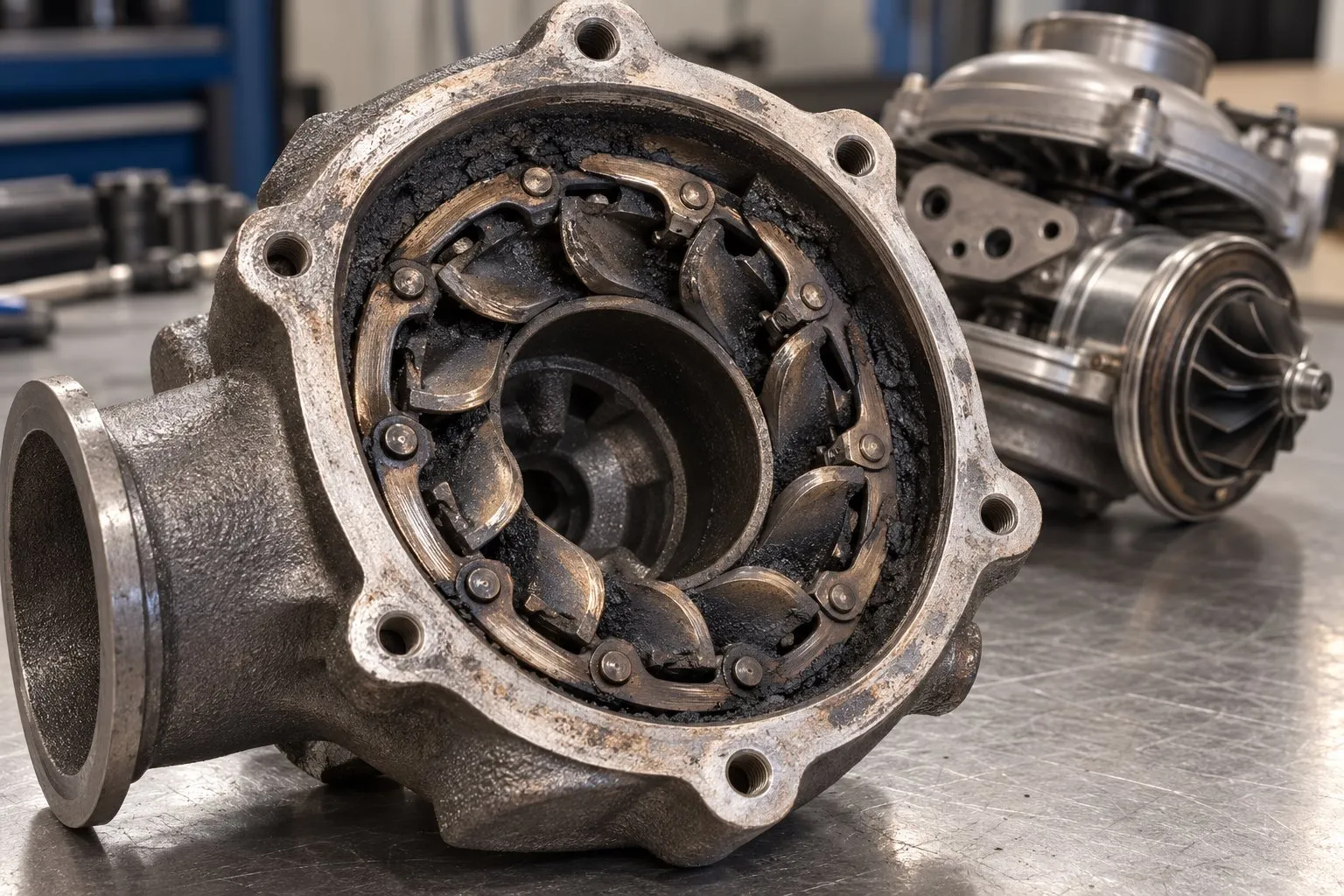
Almost every VGT failure traces back to one thing: the vanes not moving freely. Whether the root cause is soot, heat, or an electrical fault, the symptom set overlaps heavily.
Sticking or Seized Vanes From Carbon and Soot
This is the number one killer. Exhaust soot and carbon build up between the vanes and the unison ring, gumming up the mechanism until it binds. Short trips, extended idling, and malfunctioning EGR systems accelerate the buildup.
Once the vanes stick, the actuator can no longer position them correctly. You get low boost, high boost, or wildly inconsistent boost depending on where they froze.
Actuator Failure
Pneumatic actuator diaphragms crack and leak with age and heat, losing the ability to hold position. Electronic actuators fail from heat-soaked electronics, worn internal gears, or a failed position sensor. Either way, the vanes stop responding to commands.
A failing actuator often shows up as a check engine light with a turbo actuator or underboost/overboost code before you feel a major power loss. Catching it early and swapping just the actuator can save a full turbo replacement.
Bearing and Shaft Wear
The core itself still wears like any turbo. Oil starvation, contaminated oil, and coked oil in the center housing lead to bearing failure, shaft play, and eventually wheel contact with the housing. Blue smoke, oil in the intake, and a noticeable whine are the classic tells.
VGT Failure Symptoms by Severity
Use this table to triage a suspected VGT problem before you tear anything down.
| Severity | Symptoms | Likely Cause | Typical Action |
|---|---|---|---|
| Early | Check engine light, minor boost inconsistency, occasional regen fault | Actuator drift, light soot buildup on vanes | Test actuator, clean vanes, replace actuator if out of spec |
| Moderate | Noticeable power loss, sluggish spool, overboost or underboost codes | Sticking vanes, failing actuator diaphragm or motor | Replace actuator, service or rebuild turbine section |
| Severe | Blue or black smoke, whining, oil in intake, shaft play, limp mode | Seized vanes, bearing failure, wheel damage | Rebuild or replace the complete turbocharger |
Repair Options: Actuator, Rebuild, or Replace
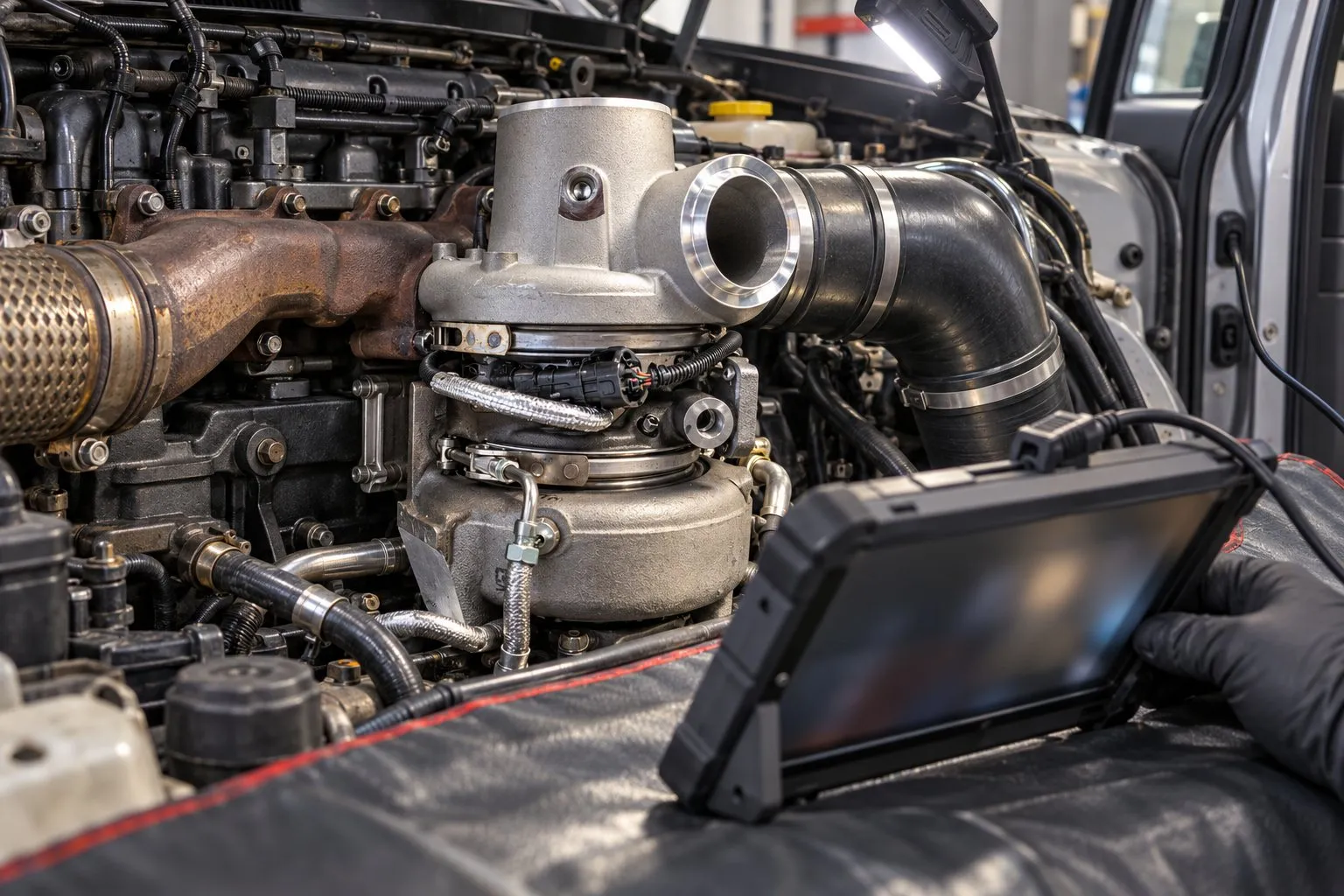
Not every VGT problem means a new turbo. The right fix depends on what actually failed, and this is where working with a shop that knows these units pays off.
If the core is healthy and only the actuator has failed, replacing the actuator is by far the most cost-effective repair.
When the vanes are sticking but not destroyed, a proper cleaning and turbocharger rebuild service restores factory function at a fraction of new cost. When the core is damaged, a remanufactured turbocharger is the smart middle ground between a used unit of unknown history and a full-price new one.
New vs Remanufactured VGT: Cost and Value
| Option | Typical Cost Range | Best For | Warranty Confidence |
|---|---|---|---|
| Actuator only | see actuator prices | Healthy core, failed actuator | High when matched to application |
| Rebuild service | Labor plus parts | Serviceable core, stuck vanes | High with a proven shop |
| Remanufactured turbo | Below new, above used | Damaged core, best value swap | High, backed by warranty |
| New OEM turbo | Highest | Fleet standardization, warranty needs | Highest |
PT Turbo has been rebuilding and supplying turbochargers since 1978. We stock both new and remanufactured parts, and we can help you figure out whether you need an actuator or a complete unit before you spend money you do not have to.
Frequently Asked Questions
How does a variable geometry turbocharger work?
A VGT uses movable vanes or a sliding nozzle ring inside the turbine housing to adjust exhaust gas flow, optimizing boost across the entire RPM range. This reduces turbo lag and improves both low-end torque and top-end power.
What are the most common VGT failures?
The most common failures include stuck or seized vanes from carbon and soot buildup, actuator faults, and sticking due to lack of maintenance or poor fuel quality. These issues often trigger limp mode and reduced boost.
Can you clean a variable geometry turbocharger instead of replacing it?
In many cases, yes—if the vanes are only carboned up and not physically damaged, cleaning the mechanism can restore proper function. However, worn bearings or a damaged actuator typically require replacement.
Need a Turbocharger?
PT Turbo has rebuilt and sold turbochargers since 1978. We stock remanufactured units for Cummins, Duramax, Power Stroke, Detroit Diesel, and more — backed by a 12-month unlimited mileage warranty. Units in stock at our shop in San Bernardino, CA ship the same day when ordered before 2 PM Pacific, Monday through Friday.
📞 (909) 824-1020 · 346 S I St. #3, San Bernardino, CA 92410 · [email protected]
More From PT Turbo
 Turbocharger Replacement Cost by Engine: Price Guide for Diesel Trucks & Equipment
- Turbocharger Oil Leaks: Causes, Diagnosis & When to Replace vs Reseal
- Agricultural Equipment Turbocharger Buying Guide: John Deere, Case, Kubota & More
- Caterpillar C15 Turbocharger Replacement Cost: New, Reman & Rebuild Compared