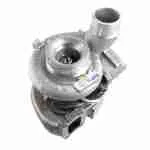
The Garrett GT3788VA turbocharger is the variable geometry unit bolted to every 2011–2016 6.6L Duramax LML, and if you turn wrenches on GM heavy-duty trucks you already know it’s a different animal from the LLY, LBZ, and LMM units that came before it. GM moved the actuator, changed the vane control strategy, and tightened up emissions tolerances, which means the failure patterns and repair procedures are their own thing. This guide breaks down how the GT3788VA works, what fails, how to diagnose it, and what it costs to fix it right.
What the GT3788VA Is and Where It Lives
The GT3788VA is a single variable-geometry turbocharger feeding the LML Duramax, the 397-horsepower, 765 lb-ft version of the 6.6L that ran from the 2011 through 2016 model years in Silverado and Sierra 2500/3500 HD trucks. Like the LMM unit before it, it uses electronically controlled vanes in the turbine housing to change exhaust gas velocity across the compressor wheel. At low RPM the vanes close down to spool the turbo fast and kill turbo lag. Under load and at higher RPM they open to flow more volume and keep exhaust back pressure in check.
Where the LML differs from earlier trucks is the emissions hardware surrounding it. The LML was GM’s first Duramax with a diesel exhaust fluid (DEF) SCR system, and the turbo works alongside a downstream aftertreatment package that runs hotter and demands cleaner vane operation. That matters, because carbon and soot buildup on the vane mechanism is the number one killer of these units.
Key GT3788VA Specifications
| Spec | Detail |
|---|---|
| Engine | 6.6L Duramax LML (2011–2016) |
| Turbo type | Single variable geometry (VGT/VVT) |
| Compressor wheel | ~61 mm inducer |
| Vane control | Electronically actuated via smart actuator |
| Rated engine output | 397 hp / 765 lb-ft |
| Common failure point | Vane sticking from soot, actuator faults |
How the Variable Geometry System Actually Works
The vanes inside the turbine housing pivot on a unison ring. An actuator drives that ring, and the ECM commands vane position based on desired boost, engine load, EGR flow, and exhaust brake demand. When you feather the throttle on a grade with a loaded trailer, the ECM is constantly repositioning those vanes to hold boost and manage back pressure.
That constant movement is also the system’s weakness. The vanes ride in a soot-laden exhaust stream at high temperature. Over tens of thousands of miles, carbon accumulates on the vane posts and unison ring. The mechanism starts to bind, the actuator has to fight harder to move it, and eventually you get sticking, incomplete travel, or a hard fault. This is the same fundamental problem you see across the Duramax VGT family, and it’s worth reading our Duramax LMM turbocharger guide and LBZ GT3788VA guide for how the design evolved.
Common GT3788VA Failure Symptoms
Vane and actuator problems on the LML rarely announce themselves with a bang. They creep in as drivability complaints that get worse until a code sets. Here’s what to watch for, sorted by severity.
| Symptom | Likely Cause | Severity |
|---|---|---|
| Sluggish spool, laggy throttle response | Early vane soot buildup | Low |
| Weak exhaust brake performance | Vanes not closing fully | Low to moderate |
| Surging or hunting boost | Sticking unison ring, actuator overcorrecting | Moderate |
| Overboost / underboost codes (P0234, P0299, P003A) | Vane travel out of range | Moderate to high |
| Limp mode, reduced power | Actuator fault or seized vanes | High |
| Whistling, oil in intake, shaft play | Bearing or seal failure | High |
The code you’ll see most often is P003A, which flags a turbocharger boost control position performance problem. It typically points to the actuator calibration or vane mechanism not hitting commanded position. Before you condemn the turbo, confirm whether the fault is the actuator or the vanes themselves.
Diagnosing Actuator vs. Vane Failure
This is where a lot of shops waste money by throwing a complete turbo at a problem the actuator alone could fix. The GT3788VA uses a smart actuator that reports position back to the ECM, and it can be diagnosed.
- Scan for codes first. P003A, P0045, P0046, P0234, P0299 all point toward the boost control circuit. Note freeze frame data.
- Command the actuator with a scan tool. Use bidirectional controls to sweep the vanes. If the actuator won’t drive to commanded position or reports errors, the actuator is suspect.
- Feel for mechanical binding. With the turbo cool and safe to access, a properly functioning mechanism moves smoothly through its full range. Notchy or stuck movement means carbon buildup in the vanes, and that’s a turbine housing problem, not just an actuator.
- Check for shaft play and oil. Excessive axial or radial play at the shaft, or oil pooling in the compressor housing, means the center cartridge is done. No actuator swap fixes that.
If your diagnosis lands on the actuator, replacing that component alone can save you well over a thousand dollars versus a full turbo. If the vanes are physically seized or the bearings are gone, you’re rebuilding or replacing the unit.
Replacement Actuators for the GT3788VA and Related Garrett VGTs
A calibrated Garrett actuator is not a plug-and-play generic part. It has to match the turbo and be calibrated to the vane travel range.
Match the part number to your specific turbo before ordering. If you’re not sure which actuator your unit takes, our team has been sorting out Garrett applications since 1978, so contact PT Turbo with your turbo tag numbers and we’ll get you the right part.
New vs. Remanufactured GT3788VA: Cost Breakdown
When the center cartridge or vane assembly is toast, you’re choosing between a new turbo, a quality remanufactured unit, or a rebuild of your existing core. For most fleet and owner-operator budgets, a properly remanufactured turbo delivers OEM function at a fraction of new pricing.
| Option | Typical Cost | Notes |
|---|---|---|
| New GT3788VA | $1,863 to $1,966 (2 listings) at PT Turbo | Highest cost, full factory spec |
| Remanufactured turbo | $1,339 (1 listing) at PT Turbo | OEM performance, tested, warrantied |
| Rebuild your core | $700–$1,200 (estimate) | Best value if core is salvageable |
| Actuator only | see actuator prices | When vanes and cartridge are healthy |
PT Turbo carries both new and remanufactured turbochargers, and every reman unit is balanced, tested, and calibrated before it ships. If your core is in good shape, our turbocharger rebuild service restores the vane mechanism, replaces the bearings and seals, and recalibrates the actuator to spec. You can also browse all our turbochargers to find your application.
Prevention: Keeping the GT3788VA Alive
These turbos die from neglect more than from mileage. A few habits extend their life considerably:
- Let it idle down. After hard pulls, give the turbo 60 to 90 seconds to cool before shutdown. Coking oil in the bearing housing kills seals.
- Stay on top of oil changes. Clean oil at the right interval protects the center cartridge bearings and seals, which is where contaminated or coked oil does its damage first.
- Don’t interrupt regens. Letting the aftertreatment complete its cycles keeps soot loading down, and less soot in the exhaust stream means less carbon packing onto the vanes and unison ring.
- Keep the EGR system honest. A sooty, poorly flowing EGR circuit dumps more carbon through the turbine housing and accelerates the vane binding that eventually sets codes.
- Exercise the vanes. On trucks that spend their lives at light load, the occasional full-throttle pull and use of the exhaust brake sweeps the mechanism through its full travel and helps keep deposits from locking it up.
None of this is exotic. It’s the same discipline that keeps any Duramax healthy, and the turbo is just one more component that rewards it. Catch the drivability complaints early, diagnose the actuator versus the vanes before you spend money, and you’ll get the full service life out of a GT3788VA instead of replacing it twice.
Price ranges in this article are general estimates to help with budgeting, not PT Turbo quotes. Our current prices are on each product listing, and our rebuild prices are on the turbo rebuild price list.
Frequently Asked Questions
What trucks use the Garrett GT3788VA turbocharger?
The Garrett GT3788VA is the variable geometry turbocharger installed on every 2011–2016 6.6L Duramax LML engine in GM heavy-duty trucks.
How is the GT3788VA different from earlier Duramax turbos?
GM relocated the actuator, revised the vane control strategy, and tightened emissions tolerances, giving the GT3788VA a distinct failure pattern compared to the LLY, LBZ, and LMM units.
What causes the GT3788VA variable vanes to fail?
The variable vanes commonly stick or fail due to soot buildup, carbon deposits, and actuator wear, especially under tighter emissions operating conditions.
Further reading: Learn more about Garrett Motion.
Shopping by part number?
Every part number we stock for the Garrett GT3788VA is on one page, with live prices and stock: Garrett GT3788VA turbos and parts.
Need a Turbocharger?
PT Turbo has rebuilt and sold turbochargers since 1978. We stock remanufactured units for Cummins, Duramax, Power Stroke, Detroit Diesel, and more — backed by a 12-month unlimited mileage warranty and same-week shipping from San Bernardino, CA.
📞 (909) 824-1020 · 346 S I St. #3, San Bernardino, CA 92410 · [email protected]