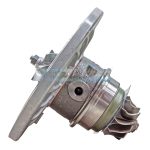
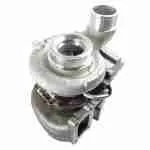
International MaxxForce DT Turbocharger: VGT Actuator Problems & Replacement
If you run International trucks with the MaxxForce DT, sooner or later the VGT actuator is going to put a truck on the shoulder. The variable geometry turbocharger on this engine is the heart of its emissions and boost strategy, and when the actuator that controls those vanes goes bad, you get derated power, black smoke, poor fuel economy, and a dash full of codes. This is one of the most common failures we see roll through the shop, and after 45+ years rebuilding turbos here at PT Turbo, we can tell you the actuator is usually the culprit long before the turbine or compressor wheel ever wears out.
This guide breaks down how the MaxxForce DT VGT system works, the symptoms and fault codes that point straight at the actuator, and exactly what it takes to replace it right the first time.
How the MaxxForce DT VGT Turbocharger Works
The MaxxForce DT is a 7.6L inline-six that International rolled out around 2007 to replace the legendary DT466. Through 2009 it carries a single BorgWarner variable geometry turbocharger (VGT; catalogued as the B2UV on the 2007 to 2009 MaxxForce DT, after the S300V of the 2004 to 2006 DT466) with movable vanes in the turbine housing; from 2010 the engine moved to two turbochargers in series, which this guide does not cover. By changing the angle of those vanes, the ECM controls how much exhaust energy hits the turbine wheel, which lets the engine build boost fast at low RPM and bleed off drive pressure up top.
On the MaxxForce DT, that vane movement is driven by an electronic actuator bolted to the turbo. Its motor turns the unison ring, the vanes sweep open or closed, and the actuator reports its position back to the ECM so it can close the loop. It is a durable design when everything is healthy, but soot, heat cycling, and moisture take their toll on both the actuator and the vane mechanism.
If you have worked on other variable geometry setups, the concept will feel familiar. The same failure logic applies to GM applications like our Duramax LMM variable geometry turbo guide and the Duramax LML GT3788VA guide. The hardware differs, but the diagnostic mindset carries over.
Common MaxxForce DT VGT Actuator Problems
The actuator itself fails a few different ways, and knowing which one you are dealing with saves you from throwing parts at the truck.
- Internal actuator failure: The motor, gears or electronics fail with age, heat and moisture. The actuator can no longer hold or move the vanes to the commanded position.
- Stuck or lazy vane movement: Carbon and soot build up in the unison ring and vane pack. The actuator may be fine, but it cannot overcome the drag, so it reads as an actuator fault.
- Position sensor drift: The feedback sensor sends the ECM a false position, and the ECM sets a range or performance code even when the mechanicals are moving.
- Wiring and calibration faults: A poor connection, or an actuator that was never calibrated to the turbo, keeps it from hitting its targets.
Here is how the symptoms typically stack up by severity:
| Severity | Symptoms | Likely Cause |
|---|---|---|
| Early | Slight power loss, mild turbo lag, occasional pending code | Soot buildup, lazy vane movement |
| Moderate | Black smoke under load, poor fuel economy, low boost codes | Actuator fault, sensor drift |
| Severe | Engine derate/limp mode, no boost, overboost fault, hard start | Failed actuator, stuck vanes |
Fault Codes and Diagnosis
When the VGT actuator acts up, the MaxxForce DT will typically log SPN/FMI codes tied to the turbo actuator position, boost pressure, or the actuator control circuit. On the dash you will often see reduced power warnings, and the engine may pull itself into a derate to protect the driveline.
Before you condemn the actuator, run through this sequence:
- Pull all active and pending codes. Look for actuator position, boost, and circuit faults together. A single boost code alone might be a leak, not the turbo.
- Check the connector and wiring. Corrosion or a damaged harness at the actuator mimics a bad actuator.
- Command the actuator with a scan tool. Watch commanded versus actual position. If it will not track, the actuator or the vanes are the problem.
- Inspect for mechanical bind. With the engine off and cool, check that the linkage and unison ring move freely. Heavy carbon means the vanes are stuck, and a new actuator alone will not fix it.
- Inspect the exhaust and intake for boost leaks. A blown charge pipe or leaking clamp will throw low boost codes that look like a turbo fault.
Doing this legwork tells you whether you need a fresh actuator, a full turbo rebuild, or just a leaking pipe. It is the same disciplined approach we preach across every platform, including the twin-turbo setup covered in our Ford 6.4L Powerstroke twin turbo guide.
Replacement Actuators for the MaxxForce DT
If diagnosis points to the actuator, replacing it is far cheaper than a complete turbo. The actuator is matched to the turbo part number, so the number on the turbo tag decides which one fits.
Always confirm the part number and calibration against your turbo before ordering, since a mismatched actuator will not track position correctly.
Not sure which actuator matches your turbo? Reach out to our team through the PT Turbo contact page with your turbo part number and we will confirm the correct unit before you spend a dime.
New Actuator vs Remanufactured Turbo: What Makes Sense
The big decision is whether to replace just the actuator or step up to a complete turbo. It comes down to what actually failed and how many miles are on the unit.
| Option | Best For | Approx. Cost | Notes |
|---|---|---|---|
| Replace actuator only | Good turbo, confirmed actuator failure, free-moving vanes | Quoted by part number | Fastest, cheapest fix. Requires proper calibration. |
| Turbo rebuild service | Worn bearings, stuck vanes, shaft play | Varies by unit | Restores full turbo with new actuator and vane pack. |
| Remanufactured turbo | High mileage, multiple failures, downtime-sensitive fleets | Varies by unit | Complete tested assembly, minimal downtime. |
If the vanes are stuck with carbon or you feel shaft play, do not just bolt on a new actuator. It will fail the same way in short order because the mechanicals are the real problem. In that case a turbo rebuild service or a fully tested remanufactured turbocharger is the smarter money. For fleets where downtime is the enemy, a reman unit off the shelf gets the truck back to work the same day. You can browse the full lineup on our shop page.
Replacement Tips to Get It Right the First Time
- Calibrate the new actuator. Many replacement actuators require a setup procedure so the ECM learns the correct open and closed vane positions. Skip this and you will chase phantom codes.
- Clean the vane mechanism. If you have the turbo apart, decarbon the unison ring and vanes so the fresh actuator is not fighting drag.
- Check the connector before you button up. A new actuator is only as good as its wiring, so confirm the plug is clean, dry and fully seated.
- Verify commanded versus actual after install. Sweep the actuator with your scan tool and watch it track full travel both directions before the truck leaves the shop. If it hesitates or overshoots, sort it now rather than on the roadside.
- Clear and recheck codes. Erase the old faults, run the engine through load, and confirm nothing returns. A code that comes right back means you missed a boost leak or a stuck vane.
Get the diagnosis right and match the actuator to the turbo, and this repair is a half-day job that keeps the truck earning. Cut corners on calibration or ignore a carboned-up vane pack, and you will be back under the hood with the same codes before long.
Frequently Asked Questions
What are the symptoms of a bad VGT actuator on a MaxxForce DT?
Common symptoms include derated engine power, black smoke, poor fuel economy, and multiple fault codes on the dash. The truck may also go into limp mode, forcing you to pull over.
Can you clean a MaxxForce DT VGT actuator instead of replacing it?
Sometimes cleaning carbon buildup from the turbo vanes can restore function, but if the electronic actuator itself has failed, replacement is usually the only reliable fix.
How much does it cost to replace a MaxxForce DT VGT actuator?
The actuator is priced by turbo part number, and the job includes calibrating it to the turbo. It costs far less than a turbocharger, provided the vanes move freely. Contact PT Turbo with the number on the turbo tag for a quote.
Further reading: Learn more about variable-geometry turbochargers.
Need a Turbocharger?
PT Turbo has rebuilt and sold turbochargers since 1978. We stock remanufactured units for Cummins, Duramax, Power Stroke, Detroit Diesel, and more — backed by a 12-month unlimited mileage warranty. Units in stock at our shop in San Bernardino, CA ship the same day when ordered before 2 PM Pacific, Monday through Friday.
📞 (909) 824-1020 · 346 S I St. #3, San Bernardino, CA 92410 · [email protected]
More From PT Turbo
 VW & Audi 1.9 TDI Turbocharger Guide (105 HP BXE, BLS): Symptoms, Replacement & Parts
- International MaxxForce 13 Turbocharger: Common Failures & Best Replacements
- Ram 2500/3500 6.7L Cummins Turbocharger Guide: HE351VE vs HE300VG & Replacement Cost
- Kenworth T680 Turbocharger Guide: PACCAR MX-13 Replacement & Maintenance