The Holset HE400WG Turbocharger is a wastegated turbo for 9 to 13 liter engines: the Cummins ISLe, the Volvo and Mack 11-liter, DAF and PACCAR engines and others. If you run one of these in a truck, bus or machine, you already know how much rides on getting the boost control right. This unit replaced older fixed-geometry Holset designs on many mid-range applications, giving fleets a simpler, more serviceable alternative to the variable-geometry (VGT) turbos found elsewhere in the Cummins lineup.
At PT Turbo we’ve been rebuilding and supplying Holset units for more than 45 years, and the HE400WG comes across our bench regularly. This guide covers the application specifics, wastegate operation, common failure points, and what your real replacement options look like.
What the Holset HE400WG Is and Where It Lives
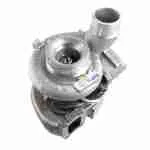
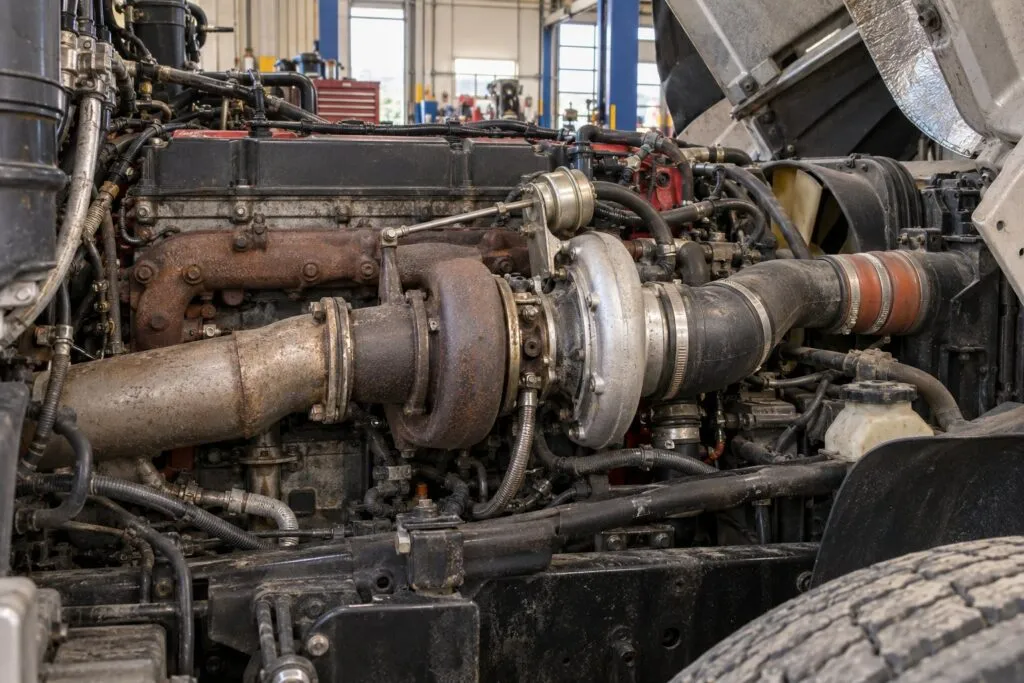
The HE400WG is a single-stage, wastegated turbocharger built by Holset (now under the Cummins Turbo Technologies umbrella). Unlike the VGT-equipped HE351VE and HE300VG found on pickup Cummins engines, the HE400WG uses a traditional internal wastegate with a pneumatic actuator to manage boost. That makes it mechanically simpler and, in many shops, easier to diagnose.
You’ll find the HE400WG on the following platforms:
- Cummins ISLe 8.9L (the export version of the ISL): trucks and buses
- Volvo and Mack 11-liter (MD11)
- DAF / PACCAR PR engines
- Weichai WD615, Liebherr D9508 and other industrial engines
These are workhorse engines in the 300 to 400+ horsepower range, and the wastegate turbo is calibrated to deliver strong low-end response for stop-and-go vocational duty cycles. If you’re cross-shopping the pickup-truck Cummins turbos instead, our Ram 2500/3500 6.7L Cummins turbocharger guide breaks down the VGT side of the family.
How the HE400WG Wastegate Actually Works
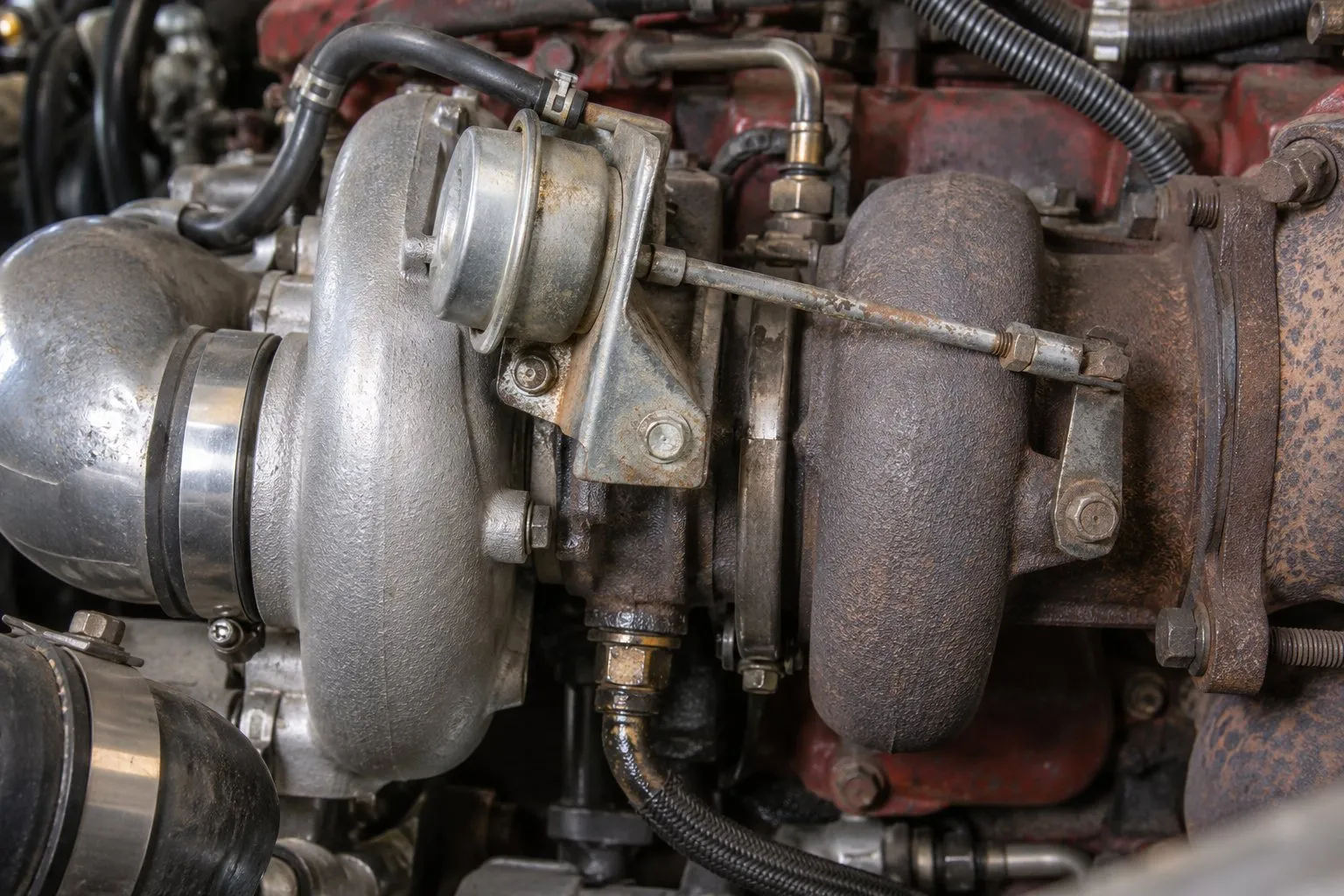
The wastegate is the heart of this turbo’s boost control strategy. A spring-loaded pneumatic actuator mounts to the compressor housing and connects via a rod to the wastegate flapper valve inside the turbine housing.
As boost pressure builds, it’s routed to the actuator diaphragm. When pressure exceeds the calibrated setpoint, the diaphragm overcomes the internal spring and pushes the rod, cracking the wastegate open. Exhaust gas then bypasses the turbine wheel, capping shaft speed and preventing overboost. When boost drops, the spring closes the gate again.
This closed-loop mechanical system is reliable, but it lives or dies by actuator health. A leaking diaphragm, a corroded rod, or a seized wastegate flapper will throw off boost control immediately. For a deeper look at how forced-induction fundamentals work across designs, the turbocharger overview at Wikipedia is a solid primer.
Why the Actuator Is the Part You Replace Most
In our experience the actuator fails long before the cartridge does. Heat cycling, road salt, and diaphragm fatigue take their toll. The good news is that a fresh actuator is far cheaper than a full turbo, and swapping one can restore proper boost on an otherwise healthy unit.
If you’re not sure which actuator matches your build or setpoint, send us your turbo part number and casting numbers through our contact page and we’ll match it correctly the first time.
Common HE400WG Failure Symptoms
Diagnosing a wastegate turbo is more straightforward than chasing a VGT fault, but the symptoms still overlap with fueling and sensor issues. Use this table to triage before you condemn the turbo.
| Symptom | Likely Cause | Severity |
|---|---|---|
| Low boost / sluggish acceleration | Wastegate stuck open or weak actuator spring | Moderate |
| Overboost codes / boost spikes | Wastegate stuck closed or seized flapper | High |
| Whining or grinding on spool | Worn bearings or shaft play in the cartridge | High |
| Blue smoke on startup / acceleration | Failed oil seals in the center housing | High |
| Excessive rattle at idle | Loose wastegate linkage or heat-shield fatigue | Low to Moderate |
Before pulling the turbo, verify shaft play by hand, inspect the actuator rod for free travel, and confirm your boost pressure feed line isn’t cracked or restricted. Many “dead” HE400WG turbos are actually victims of a failed actuator or a split hose.
Checking Shaft Play and Wastegate Function
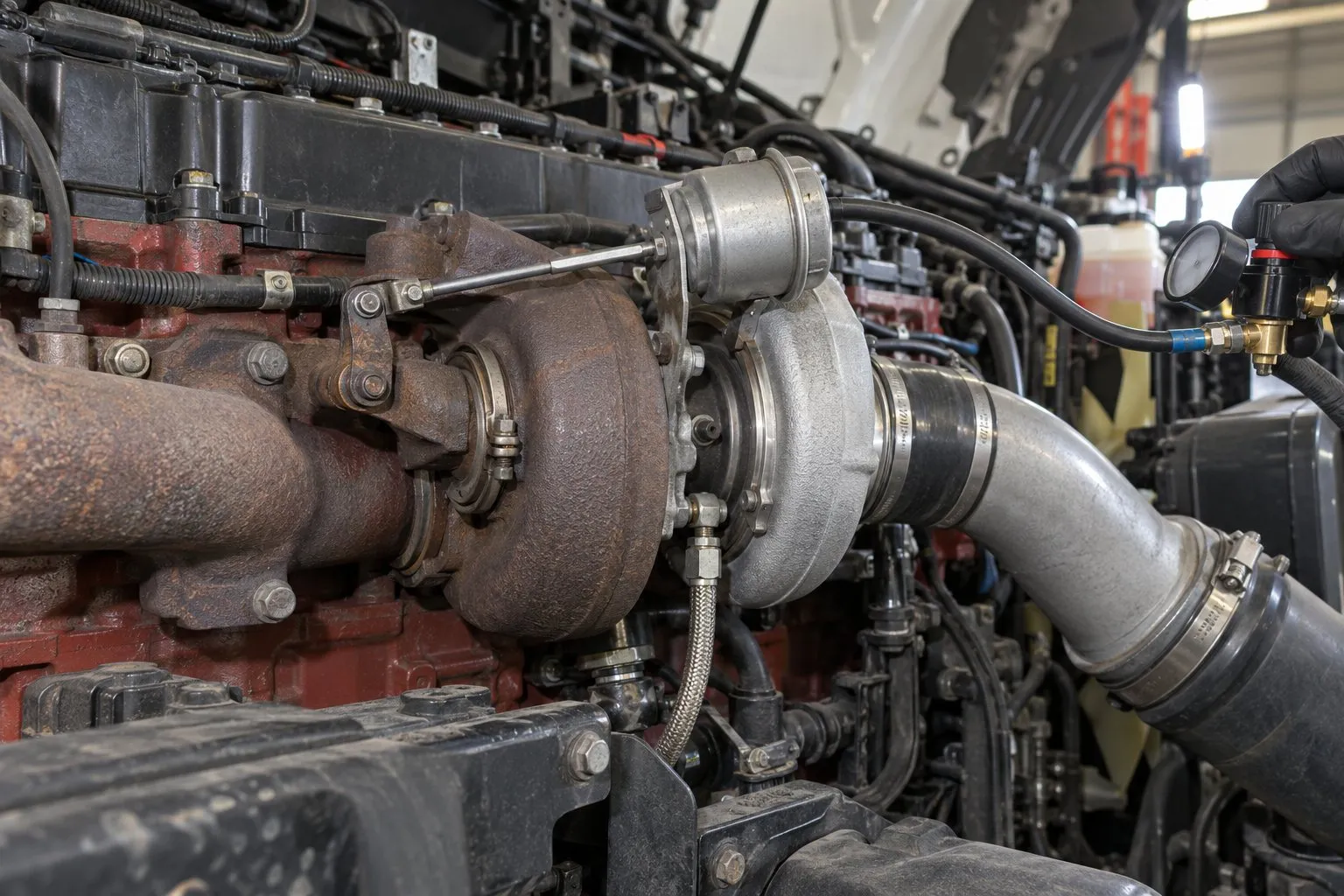
A proper field inspection takes about ten minutes and saves you from swapping good parts. Follow this sequence:
- Axial and radial play: Grab the compressor nut and rock the shaft. Radial movement is normal within spec, but any contact between the wheel and housing means the cartridge is done.
- Actuator travel: Apply regulated shop air to the actuator port (stay within the rated setpoint) and confirm the rod strokes smoothly and returns fully.
- Wastegate flapper: With the actuator disconnected, move the linkage by hand. It should open and close without binding. A seized flapper from carbon buildup is a common overboost culprit.
- Oil seals: Inspect both the compressor and turbine sides for oil film. Wet compressor wheels usually point to failed seals or a restricted drain.
If the cartridge shows wear but the housings are clean, a rebuild is often the smart call. Our turbocharger rebuild service restores HE400WG units to spec with new bearings, seals, and a VSR-balanced rotating assembly.
Holset HE400WG Turbocharger Replacement Options and Cost
When the core is beyond a simple actuator swap, you’ve got three realistic paths: a new OEM unit, a remanufactured turbo, or a full rebuild of your existing core. Here’s how they compare.
| Option | Typical Cost Range | Best For | Turnaround |
|---|---|---|---|
| New Holset | $654 to $2,920 (19 listings) at PT Turbo | Warranty-critical fleets, new builds | In stock to several days |
| Remanufactured turbo | Quoted by part number | Best value for most owners | Ships fast, often same day |
| Rebuild your core | From $575 at PT Turbo (price list) | Uncommon castings, downtime-tolerant jobs | Depends on shop queue |
For most owner-operators and fleets, a remanufactured turbocharger hits the sweet spot on price and reliability. A properly reman’d HE400WG carries a new actuator, new bearings and seals, and a balanced cartridge, delivering OEM performance at a real savings. Browse the full lineup on our turbo shop page.
Pricing varies by exact part number, emissions year, and whether your application uses EGR. Speaking of which, the interplay between the turbo and the exhaust gas recirculation system matters on later engine calibrations, so always match the turbo to your engine’s serial number.
HE400WG vs Variable-Geometry Cummins Turbos
Owners moving between platforms often ask how the wastegated HE400WG stacks up against VGT units.
The trade-off comes down to simplicity versus low-end flexibility. A VGT constantly adjusts its nozzle (a sliding ring on a Holset, pivoting vanes on other makes) to tailor exhaust flow across the entire rev range, which sharpens throttle response and helps drive EGR flow on emissions-heavy calibrations. The HE400WG gives up that infinite adjustability, but in exchange you get a turbo with far fewer moving parts, no nozzle sticking from soot, and no electronic actuator calibration to chase when something goes wrong.
For vocational duty cycles that hammer the same boost range all day, that mechanical simplicity is a feature, not a compromise. There’s less to fail, diagnosis is faster, and a roadside actuator swap can get a truck moving again without a laptop. The VGT platforms earn their keep where fine boost control and tighter emissions targets demand it, but where an engine is specified with one, the wastegate turbo is the lower-maintenance, lower-stress path over the life of the engine.
Price ranges in this article are general estimates to help with budgeting, not PT Turbo quotes. Our current prices are on each product listing, and our rebuild prices are on the turbo rebuild price list.
Frequently Asked Questions
What engines use the Holset HE400WG turbocharger?
PT Turbo lists the HE400WG for the Cummins ISLe, the Volvo and Mack 11-liter, DAF and PACCAR PR engines and several industrial engines. Most North American ISL and ISC engines use the HX40W or a variable geometry turbo instead.
Is the HE400WG a wastegated or variable-geometry turbo?
The HE400WG is a wastegated turbocharger, using a wastegate to control boost rather than a variable-geometry nozzle. It replaced older fixed-geometry Holset designs on many mid-range applications.
Why is proper boost control important on the HE400WG?
Correct wastegate and boost control ensures reliable performance, prevents overboost damage, and maximizes engine longevity across demanding applications.
Shopping by part number?
Every part number we stock for the Holset HE400WG is on one page, with live prices and stock: Holset HE400WG turbos and parts.
Need a Turbocharger?
PT Turbo has rebuilt and sold turbochargers since 1978. We stock remanufactured units for Cummins, Duramax, Power Stroke, Detroit Diesel, and more — backed by a 12-month unlimited mileage warranty and same-week shipping from San Bernardino, CA.
📞 (909) 824-1020 · 346 S I St. #3, San Bernardino, CA 92410 · [email protected]