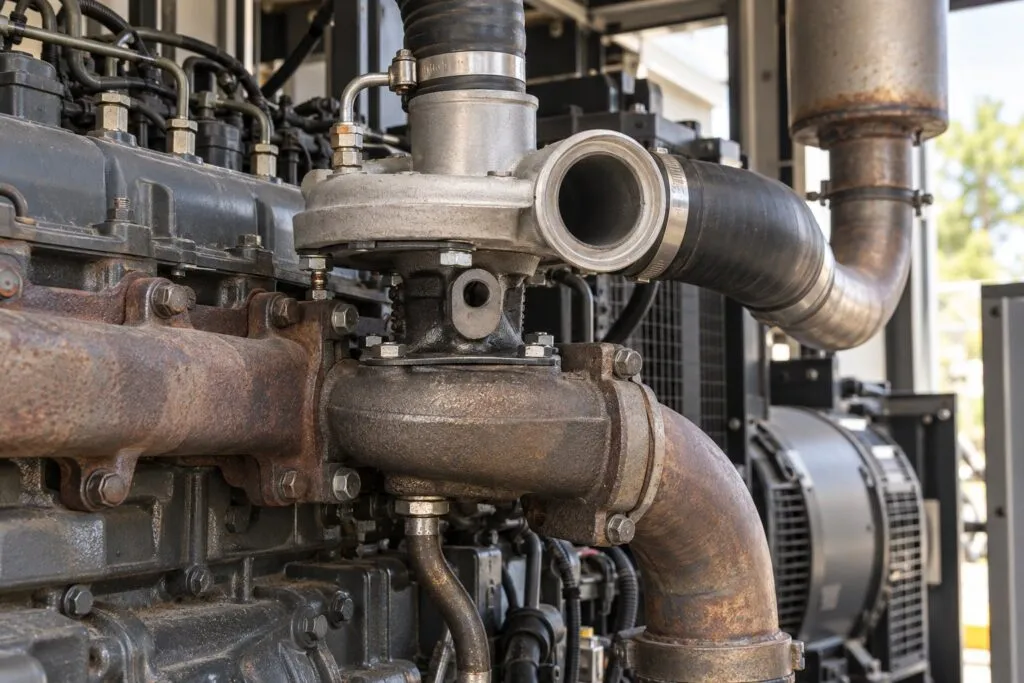
The BorgWarner Schwitzer S1B Turbocharger is one of the workhorse boosting units you will find bolted to small and mid-size diesel engines running in tractors, combines, generator sets, and off-highway machinery. It belongs to the Schwitzer S1 frame (later sold as the S100), one size below the S2 / S200, and in PT Turbo’s catalog it is listed for engines of roughly 2 to 4.5 liters (Deutz 1012, VM Motori, Sisu, Perkins, John Deere) that need reliable, low-maintenance forced induction under sustained load. For fleet managers and owner-operators who keep iron running season after season, understanding this turbo pays off in uptime.
At PT Turbo we have been rebuilding and supplying turbochargers since 1978, better than 45 years of hands-on experience with Schwitzer, Garrett, Holset, and Mitsubishi units. This guide covers what the S1B is, where it lives, how to spot failure, and how to keep it earning its keep.
What the BorgWarner Schwitzer S1B Turbocharger Is Built For
The S1B is a fixed-geometry, single-stage turbocharger. It uses a journal-bearing center housing rotating assembly (CHRA) cooled and lubricated by engine oil. Most agricultural and industrial variants are wastegated or run a fixed exhaust housing sized to the application, rather than variable-geometry vanes.
That simplicity is the whole point. In a combine cab miles from a dealer, or a standby genset that has to fire on demand, fewer moving parts means fewer things to fail. The S1B trades the fast spool and emissions tuning of a variable-geometry turbocharger for rugged, predictable service life.
Typical duty for the S1B frame:
- Agricultural tractors and self-propelled sprayers
- Combine harvesters and forage equipment
- Industrial and standby generator sets
- Skid steers, small wheel loaders, and telehandlers
- Irrigation and stationary power units
You will find the S1B on engine platforms from Deutz, Perkins, Deere Power Systems, and various Chinese and European industrial diesels. Exact part numbers vary by OEM calibration, so always match the casting numbers on your existing unit before ordering.
Key Specifications and Frame Sizing
The S1B slots below the larger S2 and S3 frames in the Schwitzer lineup. Its compressor and turbine wheels are sized for smaller-displacement engines where a big frame would lag badly and never come up on the boost curve. Below is a general reference for where the S1B lands relative to its siblings.
| Frame | Typical Engine Displacement | Common Applications | Bearing Type |
|---|---|---|---|
| S1B | About 2 to 4.5 L | Ag tractors, gensets, skid steers | Journal |
| S200 / S2 | About 4 to 9 L | Medium-duty truck, industrial | Journal |
| S300 / S3 | 7.0 to 14.0 L | Heavy truck, large industrial | Journal |
Because sizing overlaps between platforms, the S1B is often cross-referenced with S200-series applications. If you run larger machinery, our Caterpillar C9 guide covers a larger frame in detail. For the general engineering principles behind any of these units, the turbocharger overview on Wikipedia is a solid primer.
Recognizing a Failing S1B Turbocharger
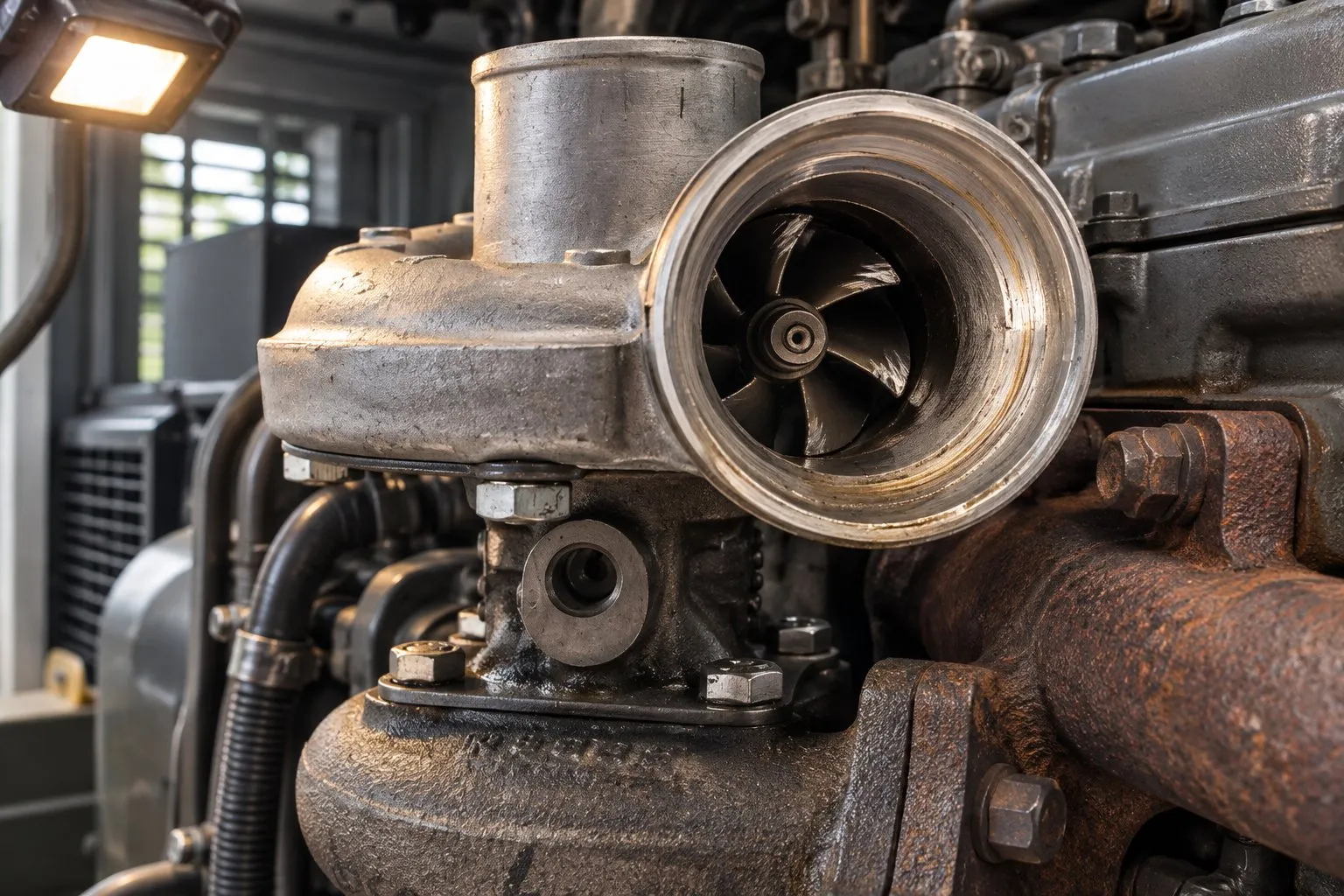
An S1B rarely dies without warning. Catching symptoms early is the difference between a CHRA rebuild and a scored block from ingested debris. Here is how symptoms progress by severity.
| Severity | Symptoms | Likely Cause |
|---|---|---|
| Early | Slight power loss, faint whistle change, minor oil film at compressor outlet | Seal wear, small boost leak, dirty air filter |
| Moderate | Visible blue smoke, higher oil consumption, sluggish spool, audible bearing noise | Worn journal bearings, damaged seals, shaft play |
| Severe | Heavy smoke, no boost, grinding, wheel contact with housing, metal in intake | Bearing failure, oil starvation, foreign object damage |
Check radial and axial shaft play by hand with the intake pipe off. A healthy S1B has a small amount of radial movement but the wheel should never touch the housing. Any hard contact or grinding means the CHRA is done.
Oil starvation is the number one killer on ag and genset units that sit for long stretches. Always prime the oil feed after storage before loading the engine. On the intake side, a neglected air filter will send dust straight through the compressor wheel, and abrasive erosion is not repairable.
Actuators and Boost Control on the S1B and Related Units
Wastegated S1B units and their cousins across the Schwitzer, Garrett, and Mitsubishi lines rely on a pneumatic actuator to regulate boost. When the actuator diaphragm fails or the rod seizes, you get overboost, underboost, or erratic power delivery that owners often mistake for a dead turbo.
Replacing the actuator is far cheaper than replacing the whole turbocharger, so it is always worth diagnosing first.
To test an actuator, apply regulated air or vacuum per spec and watch the rod travel. It should move smoothly and hold pressure. A rod that sticks, leaks down, or does not reach full travel needs replacement. Always set the rod length to the OEM figure after fitting, since even a couple of turns off will throw your boost curve out of range.
On engines that use exhaust gas recirculation to meet emissions targets, actuator health also affects how the boost and EGR systems balance under load. Get the actuator right before chasing ghosts in the emissions plumbing.
New vs Remanufactured S1B: Making the Call
For most agricultural and industrial owners, a quality remanufactured S1B delivers the same service life as new at a substantial discount. A proper reman is not a cleaned-up used part. It is a fully disassembled unit with new bearings, seals, thrust components, and a balanced CHRA, tested before it ships.
| Factor | New OEM | Remanufactured |
|---|---|---|
| Typical cost | Highest | 30 to 50% less |
| Lead time | Can be long for ag parts | Often in stock |
| Service life | Full | Comparable when done right |
| Core charge | None | Usually applies |
PT Turbo stocks both new and remanufactured turbochargers, and every reman leaves the shop balanced and tested. If your existing S1B housing and wheels are sound but the center section is worn, our turbo rebuild service can restore your original unit and keep your exact OEM calibration.
Owners running other industrial diesels often ask us to spec across platforms. Our Cummins QSB industrial guide and Cummins ISL turbocharger guide are useful companions if you manage a mixed fleet. Pickup and light-truck owners can also compare notes in our Cummins ISB 5.9L HX35 vs HE351CW guide.
Installation and Longevity Tips for the S1B
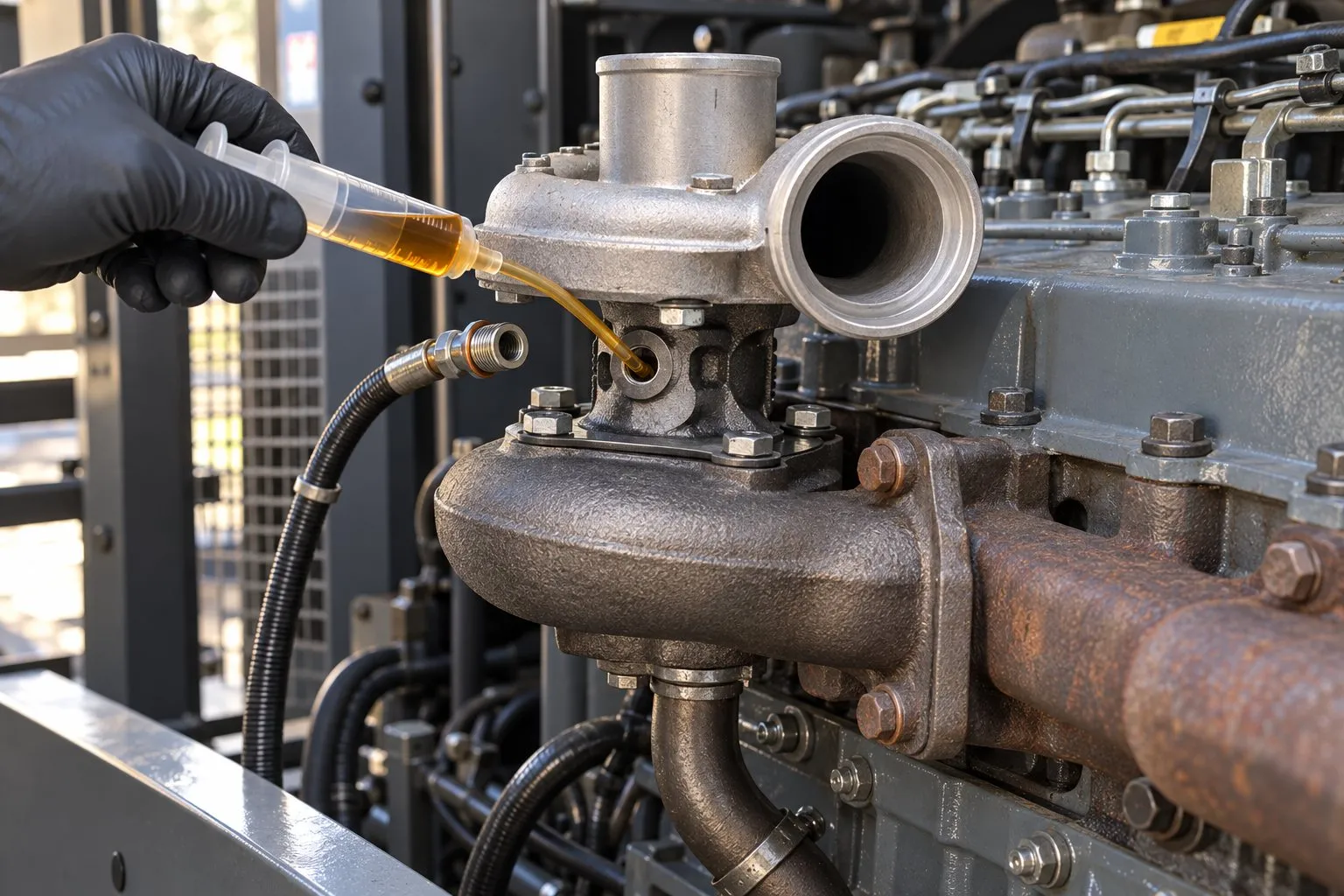
A turbo failure is often a symptom of something else. Fixing the cause is what makes the new or rebuilt unit last. Follow these steps every time.
- Replace the air filter and inspect the intake tract for debris before fitting.
- Change the engine oil and filter, then prime the oil feed line before the first start so the bearings are not spinning dry.
- Inspect the oil drain line for kinks, sludge, or restriction. A blocked drain pressurizes the center housing and pushes oil past the seals.
- Clear the crankcase ventilation system, since excess crankcase pressure reads as a turbo seal leak and fails the new unit the same way.
- Hand-turn the shaft and confirm free rotation with no contact before buttoning up the charge piping.
- After start, idle the engine for a few minutes to confirm oil pressure and seat the seals before putting it under load.
Just as important is how the machine gets shut down. After a hard pull or a long day in the field, let the engine idle before cutting it off so the turbine shaft bleeds off heat and the oil keeps flowing. Killing a hot turbo instantly bakes the oil in the center housing, and that coked residue is what grinds down the bearings on the next cold start.
Treat the S1B as part of a system rather than a standalone part. Clean air in, clean oil through, and a controlled cooldown will get you season after season out of a new or properly remanufactured unit.
Frequently Asked Questions
What engines use the BorgWarner Schwitzer S1B Turbocharger?
It’s fitted to smaller diesel engines, roughly 2 to 4.5 liters in PT Turbo’s listings, commonly found in tractors, combines, generator sets, and off-highway machinery.
What turbocharger family does the S1B belong to?
The S1B belongs to the Schwitzer S1 frame (later sold as the S100), one size below the S200, and is engineered for reliable, low-maintenance forced induction.
Why is the S1B considered a workhorse turbocharger?
It delivers dependable, low-maintenance boosting for demanding agricultural and industrial applications, making it a durable choice for off-highway diesel engines.
Shopping by part number?
Every part number we stock for the BorgWarner S1B is on one page, with live prices and stock: BorgWarner S1B turbos and parts.
Need a Turbocharger?
PT Turbo has rebuilt and sold turbochargers since 1978. We stock remanufactured units for Cummins, Duramax, Power Stroke, Detroit Diesel, and more — backed by a 12-month unlimited mileage warranty and same-week shipping from San Bernardino, CA.
📞 (909) 824-1020 · 346 S I St. #3, San Bernardino, CA 92410 · [email protected]