Intercooler Failure Symptoms: How a Bad Intercooler Damages Your Turbocharger
Recognizing Intercooler Failure Symptoms early is one of the cheapest ways to protect an expensive turbocharger, because a compromised intercooler quietly starves your engine of dense, cool air and forces the turbo to work harder than it was ever designed to. On a diesel, that added strain doesn’t stay contained. It cascades into overheating, oil contamination, and eventually bearing failure. At PT Turbo, we’ve spent more than 45 years rebuilding turbos that were killed by problems the owner blamed on the turbo itself, when the real culprit was sitting upstream in the charge-air system.
This guide breaks down exactly how a bad intercooler damages your turbocharger, the warning signs to watch for, and what it costs to fix things before you’re staring at a full rebuild.
What the Intercooler Actually Does for Your Turbo
When a turbocharger compresses intake air, that air heats up dramatically, often exceeding 300°F on a hard-working diesel. Hot air is less dense, which means fewer oxygen molecules per cubic foot and worse combustion. The intercooler (also called a charge-air cooler) sits between the turbo and the intake manifold to pull that heat back out.
Cooler, denser air means more complete combustion, lower exhaust gas temperatures, and less thermal load on the turbo. When the intercooler fails, that entire chain breaks down. If you want the deeper theory on this relationship, we covered it in detail in our article on how intercoolers and turbochargers work together.
The key point for this discussion is simple. The turbo and intercooler are a system. Damage one, and you stress the other.
Common Intercooler Failure Symptoms to Watch For
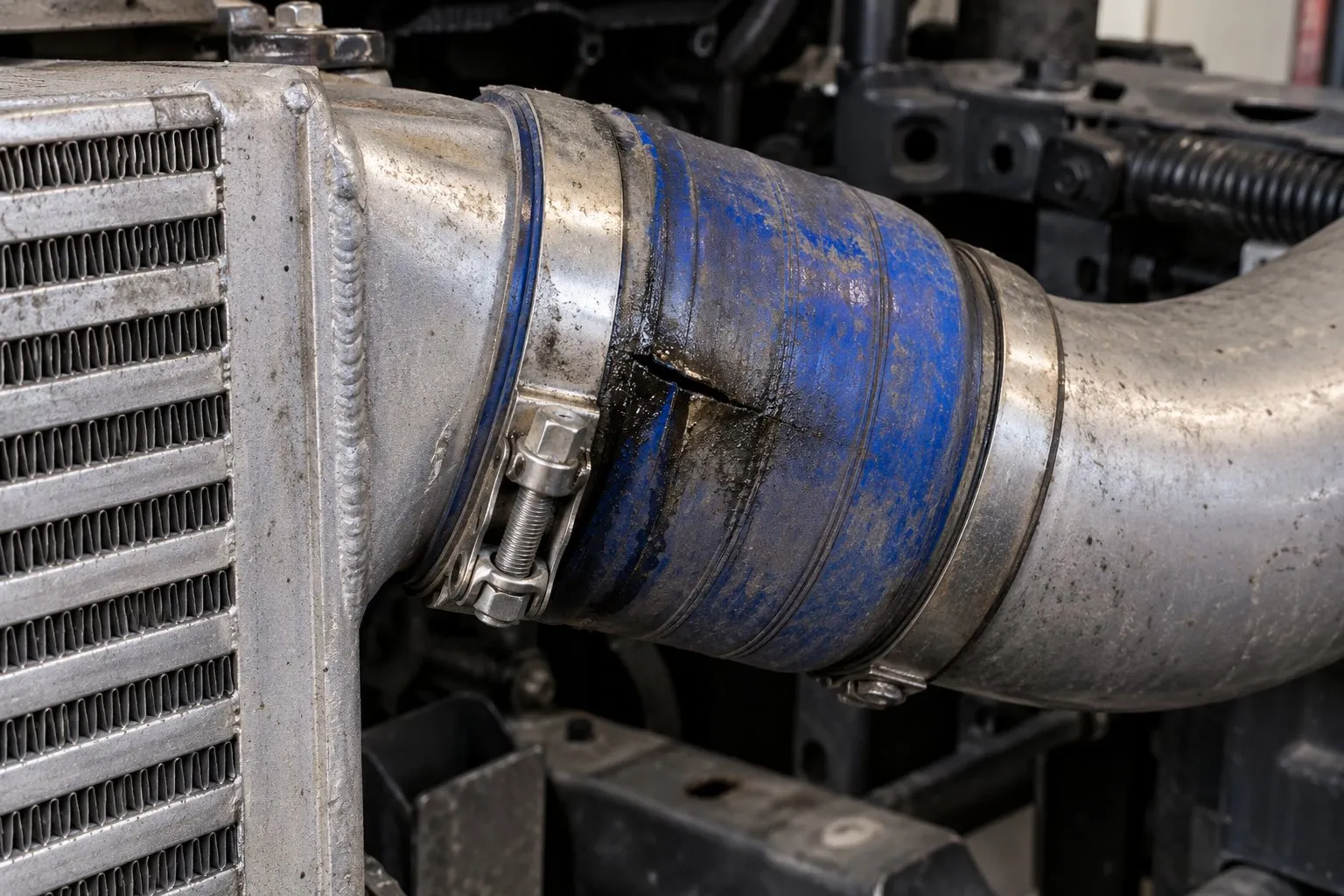
Most intercooler problems fall into two categories: leaks and blockages. Both change how the turbocharger behaves, and both leave signs you can catch during a normal walkaround or a short test drive.
Intercooler Failure Symptoms You Can Diagnose Yourself
- Loss of power and sluggish acceleration. A leaking intercooler bleeds off boost pressure, so the engine never sees the airflow it was tuned for.
- Higher exhaust gas temperatures (EGTs). Hotter intake air raises combustion temps, which shows up on your pyrometer and cooks the turbine side of the turbo.
- Black smoke on acceleration. Less oxygen means incomplete combustion and unburned fuel exiting as soot.
- Elevated boost or turbo “hunting.” A restricted or clogged core creates backpressure, causing the wastegate or actuator to cycle erratically.
- Poor fuel economy. The ECU compensates for weak air delivery by adding fuel, and mileage drops.
- Oily residue in the intercooler or piping. A film of oil often points to a turbo seal issue, but pooled oil can also restrict airflow and reduce cooling efficiency.
- Whistling or hissing under load. Cracked end tanks or split boots leak pressurized air with an audible sign.
If you catch several of these together, don’t just clear the codes and keep driving. The turbo is almost certainly running hotter and spinning faster than it should to make up the difference.
How a Bad Intercooler Physically Damages the Turbocharger
This is the part most drivers underestimate. A failing intercooler doesn’t just cost you performance. It shortens the life of a component that costs hundreds or thousands to replace.
Overspeeding and Bearing Wear
When boost leaks out of a cracked intercooler or loose coupler, the turbo has to spin faster to try to hit target boost. That overspeed condition pushes the compressor and turbine wheels past their designed RPM limits, accelerating wear on the thrust and journal bearings. Bearing failure is the number one reason turbos land on our rebuild bench.
Excessive Heat Soak
A clogged or oil-fouled intercooler can’t shed heat properly, so intake temps climb. That heat radiates back into the turbo’s center housing and pushes oil past its breakdown point. Coked oil turns into abrasive deposits that grind away at bearings and shaft surfaces. You can read more about the fundamentals of how turbos manage this heat on Wikipedia’s turbocharger overview.
Actuator and Wastegate Strain
Erratic boost pressure from a leaking intercooler forces the wastegate or pneumatic actuator to work overtime, constantly cycling to control a target it can never quite hit. Over time, that wears out the actuator diaphragm and linkage. A worn actuator then compounds the problem by failing to regulate boost at all.
Replacing a worn actuator early is far cheaper than letting uncontrolled boost destroy the whole turbo.
Intercooler Failure Symptoms by Severity
Not every symptom means the same level of urgency. Use this table to gauge how quickly you need to act and what the likely impact on the turbo is.
| Severity | Symptoms | Effect on Turbo | Recommended Action |
|---|---|---|---|
| Mild | Slight power loss, minor MPG drop | Minor overspeed, added wear | Pressure test the charge-air system |
| Moderate | Black smoke, rising EGTs, boost hunting | Heat soak, actuator strain | Repair leak, inspect actuator and turbo |
| Severe | Major power loss, whistling, oil pooling | Bearing wear, seal failure risk | Stop driving, inspect turbo immediately |
The longer a severe leak or blockage goes unaddressed, the more likely you cross from a cheap intercooler repair into a full turbo replacement.
How to Diagnose an Intercooler Problem Properly
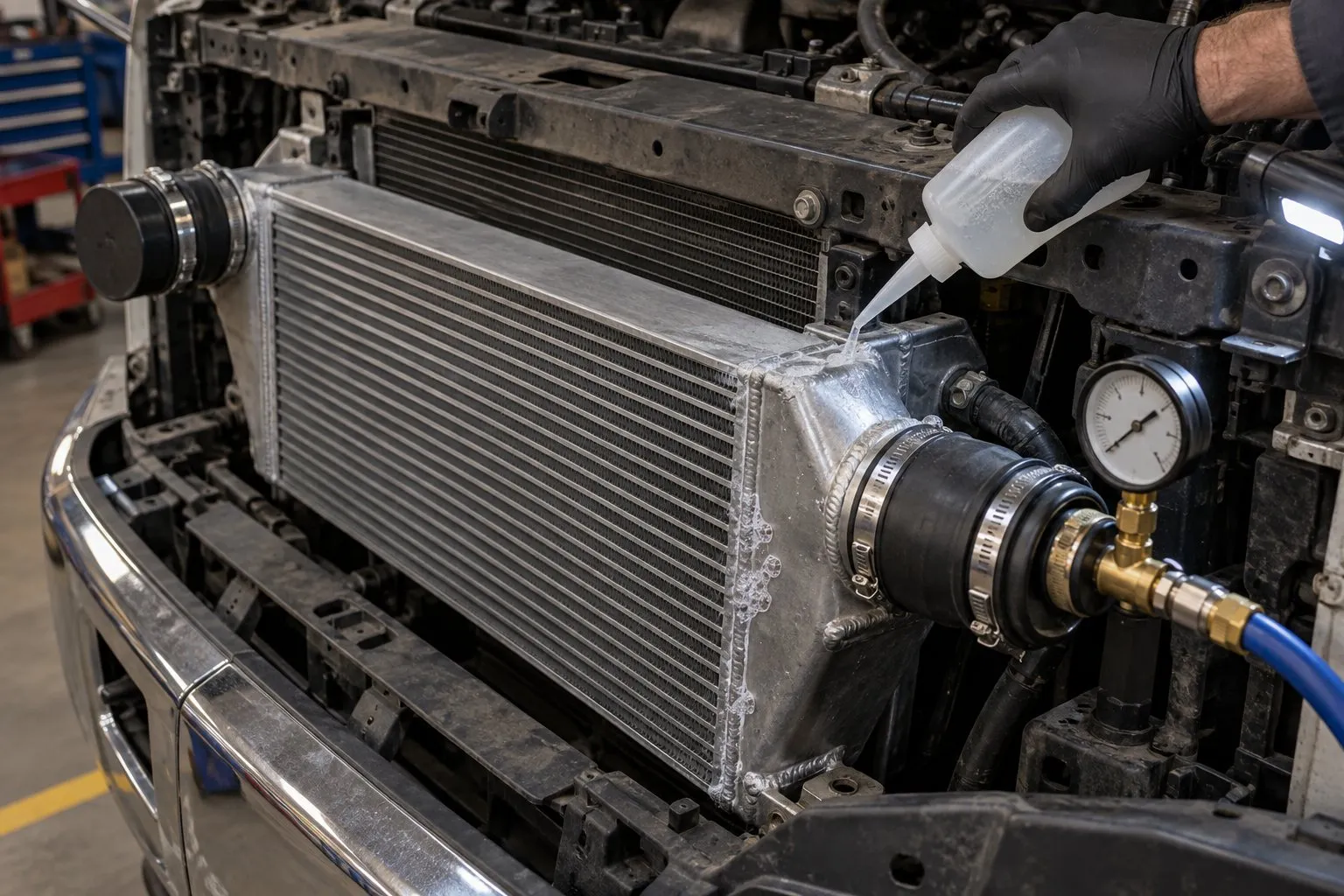
Guessing wastes money. Here is the sequence we recommend to isolate the intercooler from the turbo, EGR, or DPF as the actual source.
- Pressure test the charge-air system. Cap the intercooler outlet and pressurize to around 20-30 PSI. A drop points directly to a leak in the core, end tanks, or couplers.
- Inspect all boots and clamps. Cracked silicone and loose T-bolt clamps mimic a bad intercooler and are far cheaper to fix.
- Check for oil in the piping. Heavy oil suggests a turbo seal issue, which changes the repair plan entirely.
- Rule out EGR and DPF issues. A clogged EGR system or restricted DPF can produce similar power loss and smoke.
- Log boost and EGT data. Compare actual boost against target. A steady gap under load confirms a charge-air leak.
If the intercooler passes the pressure test but you still have symptoms, the turbo itself may be the problem. That’s when a proper inspection or rebuild pays for itself.
Repair Options and Cost Comparison
Once you’ve confirmed the damage, you have a few paths forward depending on how far the failure progressed. If the turbo was caught early, you may only need an intercooler repair and an actuator. If it ran hot for too long, the turbo may need rebuilding or replacement.
| Option | Typical Cost Range | Best For | Warranty Consideration |
|---|---|---|---|
| New OEM turbocharger | $442 to $13,412 (1933 listings) | Late-model trucks under warranty | Full OEM coverage |
| Remanufactured turbocharger | $525 to $8,461 (260 listings) | Fleet and owner-operator value | Warranty-backed, near-OEM performance |
| Turbo rebuild service | $450 to $975 for most turbos at PT Turbo (price list) | Keeping your original unit | Depends on core condition |
| Actuator replacement only | see actuator prices | Early boost control issues | New part warranty |
Price ranges in this article are general estimates to help with budgeting, not PT Turbo quotes. Our current prices are on each product listing, and our rebuild prices are on the turbo rebuild price list.
For most working trucks, a remanufactured turbocharger delivers the best balance of cost and reliability.
Frequently Asked Questions
What are the most common intercooler failure symptoms?
Common symptoms include reduced engine power, poor fuel economy, excessive exhaust smoke, and elevated intake air temperatures. You may also notice oil residue in the intercooler or piping.
Can a bad intercooler damage the turbocharger?
Yes, a failing intercooler forces the turbo to work harder to compensate for less dense, hotter air, leading to overheating, oil contamination, and premature turbo failure.
Is it safe to drive with a failing intercooler?
Driving with a failing intercooler is risky because it strains the turbocharger and engine, potentially causing expensive damage. It’s best to inspect and repair it promptly.
When intercooler debris has damaged the turbo, PT Turbo’s turbo rebuild service can rebuild it.
Need a Turbocharger?
PT Turbo has rebuilt and sold turbochargers since 1978. We stock remanufactured units for Cummins, Duramax, Power Stroke, Detroit Diesel, and more — backed by a 12-month unlimited mileage warranty. Units in stock at our shop in San Bernardino, CA ship the same day when ordered before 2 PM Pacific, Monday through Friday.
📞 (909) 824-1020 · 346 S I St. #3, San Bernardino, CA 92410 · [email protected]