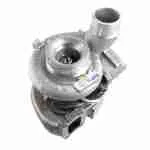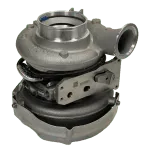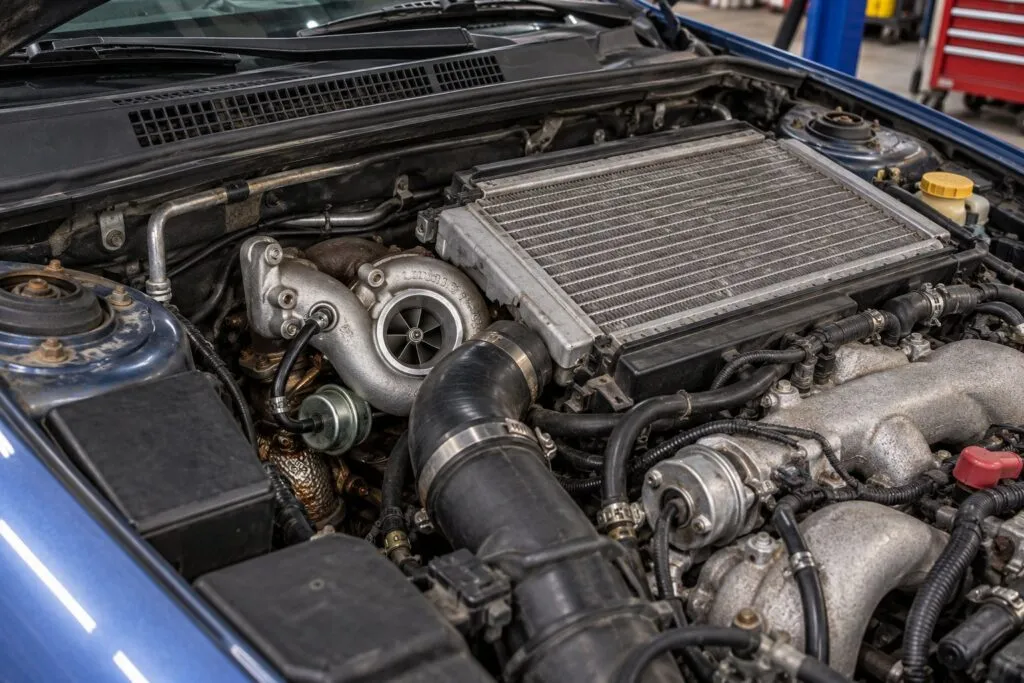
The IHI VF40 Turbocharger is the factory snail bolted to the 2005-2006 Subaru Legacy GT and Outback XT, feeding boost to the turbocharged 2.5L EJ255 boxer four. If you own one of these cars or keep them running in a shop, knowing exactly which turbo fits, how it behaves, and what kills it will save you from throwing the wrong part at a boost problem. PT Turbo has been handling turbochargers since 1978, more than 45 years, and this guide lays out the VF40 application, its known failure modes, and your rebuild and replacement options.
What the IHI VF40 Turbocharger Is and Where It Fits
The VF40 is an IHI-built turbocharger used on Subaru’s turbocharged 2.5L platform. It mounts low on the EJ255 and runs off exhaust gas like any gasoline turbo, pushing charge air through the top-mount intercooler and into the intake manifold.
Fitment matters more than anything else here. The VF40 is the correct factory unit for a specific window of cars:
- 2005-2006 Subaru Legacy GT (EJ255)
- 2005-2006 Subaru Outback XT (EJ255)
From 2007 through 2009, the same cars moved to the IHI VF46, which interchanges with the VF40. That interchange is useful to know when you are sourcing a replacement, but always confirm by reading the number stamped on the turbo itself before you order. A wrong turbo is worse than no turbo, and the Subaru turbo family uses close-looking VF numbers across very different cars.
Don’t Confuse the VF40 With the WRX and STI Turbos
Subaru spread several different IHI and Mitsubishi turbos across its lineup in these years, and they do not freely swap. Keeping them straight stops a lot of mis-orders:
- Legacy GT / Outback XT 2005-2006: IHI VF40
- Legacy GT / Outback XT 2007-2009: IHI VF46 (interchanges with the VF40)
- WRX 2002-2008 and Forester XT 2004-2013: Mitsubishi TD04L turbochargers
- WRX 2009-2014: IHI VF52
- WRX STI 2004-2006: IHI VF39; 2007: VF43; 2008 on: VF48
The Legacy GT and Outback XT run their own VF40/VF46 turbos, not the WRX’s TD04L and not the STI’s VF-series units. Match the tag, not the model year memory.
How the VF40 Works on the EJ255
The VF40 is a conventional exhaust-driven turbocharger. Hot exhaust spins the turbine wheel, the shaft drives the compressor wheel, and the compressor packs air into the intercooler and intake. Boost is managed by a wastegate that bleeds exhaust around the turbine once target pressure is reached. If you want a refresher on the fundamentals, this overview of turbocharger operation is a solid primer.
The VF40 rides on a floating journal bearing lubricated by engine oil. That matters when you are inspecting a used unit. With no oil pressure on the bench, some side-to-side shaft play is completely normal on a journal-bearing turbo. What you never want to feel is in-and-out (axial) play you can move with your fingers, any contact between the wheels and their housings, or radial play beyond the maker’s limit. Condemn a turbo for those, not for the small rock you feel in a healthy cartridge.
Common VF40 Failure Modes
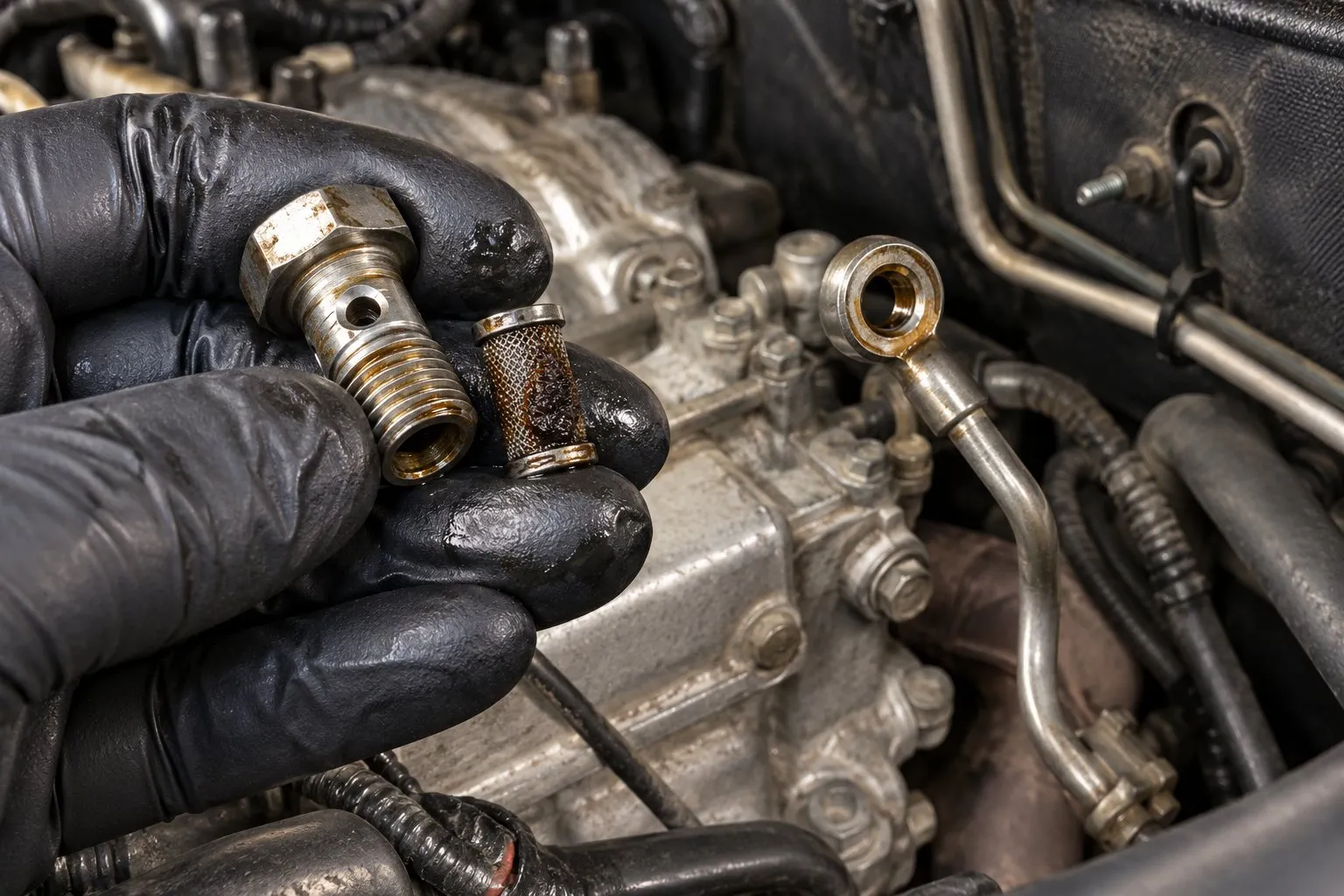
These turbos earn their reputation on the EJ255, and most of what takes them out traces back to oil supply and the engine’s banjo-bolt screen. Knowing the failure chain helps you fix the cause, not just the symptom.
Oil Starvation and the Banjo Filter Screen
The oil feed to the turbo passes through a small banjo bolt with an internal screen. As the engine ages and oil change intervals stretch, that screen clogs with sludge and starves the bearing. The turbo then wears fast, the shaft develops play, and the seals follow. If you replace a VF40 without addressing the oil supply, the new unit lives on borrowed time.
When you service or replace one of these turbos, flush the oil feed line, confirm good flow, and sort out the banjo screen situation. Clean oil at the right volume is the single biggest factor in how long the next turbo lasts.
Oil in the Charge Pipes or Exhaust
A VF40 can only put oil into the intake side past the compressor seal, and into the exhaust side past the turbine seal. Before you blame the turbo, remember that a thin film of oil in the charge pipes is normal on any engine with a PCV system routing crankcase vapor through the intake.
Check the breather system, the air filter, the oil level, and the turbo’s oil drain first. The drain is a gravity return that must run downhill back to the pan. A restricted or kinked drain backs oil up and pushes it past the seals, which looks exactly like a failed turbo but is not.
Bearing Wear and Shaft Play
Once oil supply has been compromised, bearing wear shows up as excessive shaft play, blue smoke, whining, or a noticeable drop in boost. At that point the cartridge needs attention. A worn VF40 that is still spinning can let a wheel touch its housing, and from there you are looking at a full rebuild or replacement.
| Symptom | Likely Cause | Severity |
|---|---|---|
| Blue smoke on throttle, low boost | Worn bearing / failed seals from oil starvation | High |
| Whining or siren noise under boost | Bearing wear, shaft play | High |
| Oil film in charge pipes only | Often normal PCV routing; check breather and drain first | Low to moderate |
| Slow spool, won’t hit target boost | Wastegate not seating, boost leak, or exhaust leak upstream of turbine | Moderate |
| Rattling debris inside turbo | Compressor or turbine wheel damage | Critical, stop driving |
Boost Problems That Aren’t the Turbo
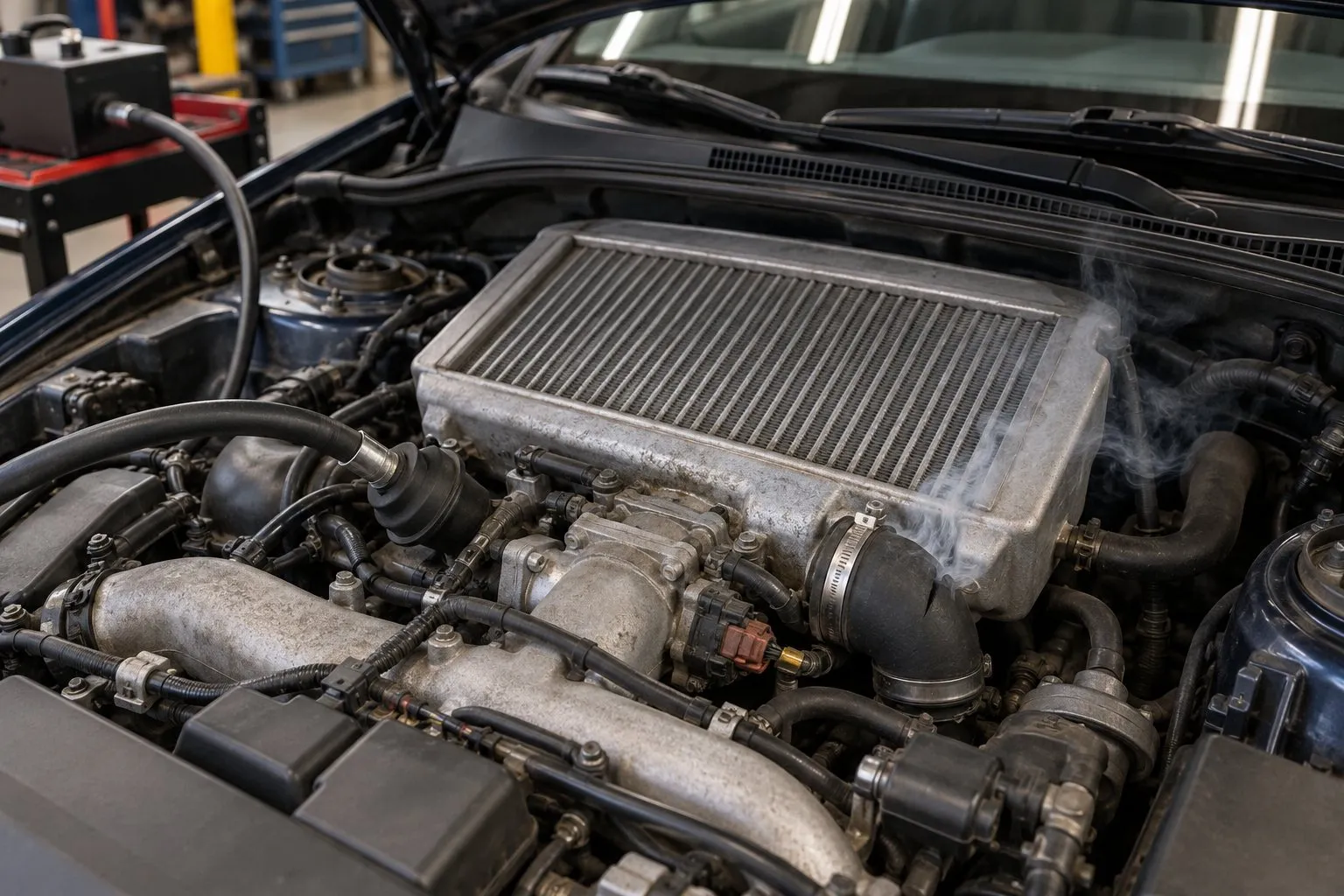
Before condemning a VF40, rule out the cheaper suspects. A wastegate flapper that does not seat lets exhaust slip past the turbine, giving you low boost and slow spool, not boost creep. A leak in the up-pipe or exhaust manifold upstream of the turbine lets exhaust escape before it does any work, so you get low boost, lazy spool, and higher exhaust temperatures.
Boost leaks between the compressor and the intake, cracked intercooler piping, a tired recirculation or bypass valve, and failing boost control solenoids all mimic a dying turbo. Pressure-test the charge system and inspect the wastegate actuator before you pull the turbo off the car.
One more note on remove-and-replace work: if you ever need to crank the engine without starting it during diagnosis, disable fueling by Subaru’s documented procedure. Cutting spark alone does not stop the injectors, so follow the procedure and do not guess your way through it.
New, Remanufactured, or Rebuilt VF40
You have three honest paths back to full boost, and the right one depends on your budget, your timeline, and the condition of your core.
- New turbo: a fresh unit with zero wear history. PT Turbo stocks new turbochargers alongside remanufactured ones.
- Remanufactured turbo: a remanufactured turbocharger is torn down, cleaned, fitted with new bearings and seals, reassembled with a new or reground shaft and wheels as needed, then balanced. It is the value sweet spot for most owners.
- Rebuild your own core: if your housings and wheels are good, our turbo rebuild service restores your exact unit. This keeps your original castings and is often the most economical route when the core is sound.
Every cartridge we build is balanced on a Vibration Sorting Rig (VSR) so the finished turbo spins true at speed. For current rebuild pricing on the VF40, see our turbo rebuild price list, which lists real prices by model rather than ballpark figures.
| Option | What You Get | Best For |
|---|---|---|
| New | Zero-hour unit, no core history | Owners who want the longest service life up front |
| Remanufactured | New bearings, seals, balanced cartridge, ready to bolt on | Most Legacy GT / Outback XT owners |
| Rebuild your core | Your original housings restored and balanced | Sound cores, cost-conscious repairs |
Rebuild turnaround is 3 to 5 business days after inspection. For new and remanufactured VF40 availability and current pricing, check the product page or call PT Turbo at (909) 824-1020. You can also browse the full catalog at our turbo store.
Installation and Longevity Tips for the IHI VF40 Turbocharger
A VF40 that fails early almost always failed because something upstream was ignored. Do these things and the next turbo lasts:
- Flush or replace the oil feed line and address the banjo bolt screen before fitting the turbo.
- Prime the new turbo with clean oil and confirm good oil drainage back to the pan.
- Pressure-test the intercooler and charge pipes so you don’t chase a boost leak after install.
- Clean any debris out of the intercooler. Anything left in there goes straight into the engine, not back into the compressor.
- Stick to short oil change intervals with a quality synthetic. Oil quality is the turbo’s lifeline.
- Let the engine idle briefly before shutdown after hard driving so the bearing sheds heat.
If you are unsure whether your car came with a VF40 or a VF46, or you want help matching a replacement, contact PT Turbo with the number off the turbo tag and we will confirm the right part.
For Subaru’s diesel models, see our Subaru EE20 2.0L diesel turbocharger guide, which covers the Outback and Forester.
Frequently Asked Questions
Will a VF46 turbo fit my 2005-2006 Legacy GT or Outback XT?
Yes. The IHI VF46 used on the 2007-2009 Legacy GT and Outback XT interchanges with the VF40 on the earlier EJ255 cars. Always confirm by reading the number stamped on the turbo before ordering, since Subaru used several close-looking VF numbers across different models.
What usually causes a VF40 to fail?
Oil starvation is the most common root cause. The small screen in the turbo oil feed banjo bolt clogs with sludge over time and starves the bearing, leading to shaft play, seal failure, and smoke. Flushing the oil feed and sorting the banjo screen when you service the turbo is the key to a long-lasting repair.
Is it better to rebuild my VF40 or buy a remanufactured one?
If your housings and wheels are sound, rebuilding your own core keeps your original castings and is often the most economical route. If the core is damaged or you want a ready-to-bolt unit with minimal downtime, a remanufactured VF40 is the better call. Pricing for both is listed by model on our rebuild price list and product pages, or call (909) 824-1020.
Need a Turbocharger?
PT Turbo has rebuilt and sold turbochargers since 1978. We stock remanufactured units for Cummins, Duramax, Power Stroke, Detroit Diesel, and more — backed by a 12-month unlimited mileage warranty and same-week shipping from San Bernardino, CA.
📞 (909) 824-1020 · 346 S I St. #3, San Bernardino, CA 92410 · [email protected]