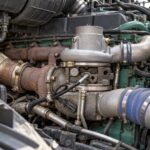
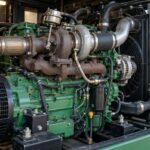
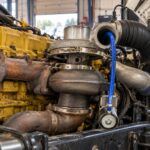
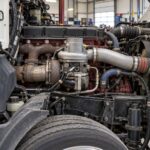
Caterpillar 336 Excavator Turbocharger Guide: C9.3 Engine Replacement & Cost
Use this Caterpillar 336 excavator turbocharger guide when a C9.3-powered 336 loses power in the cut, smokes under load or leaks oil at the turbo, and you need to know what to replace and how to order it right the first time. It covers how to identify the turbo, how it fails in excavator work, what to check before you condemn it, and what each replacement option involves.
PT Turbo is a family-owned shop in San Bernardino, California, and we have been rebuilding turbochargers since 1978. After more than 45 years, with our own in-house rebuild service, one rule still applies to every excavator turbo: find out why the old one failed before the replacement goes on.
Identify the C9.3 Turbo by Its Tag, Not the Engine Name
The C9.3 runs a single turbocharger. It never uses two turbos in series. Caterpillar does not build its own turbos. Suppliers such as Garrett and BorgWarner do, so a factory-fitted unit carries the turbo maker’s part number and usually the Caterpillar part number too.
The nameplate sits on one of the housings. BorgWarner puts it on the compressor housing. Photograph the plate and the engine serial number before the turbo comes off. Do not order by a number cast into a housing, because one casting serves many different turbos. A casting number only narrows the search.
Do not cross-reference by engine name either. The older C9 shows how far one engine family can spread. Most ratings are listed with the BorgWarner S310 family (S310G080, S310CG080, S310G116, S310G122). Some machine ratings carry a BorgWarner S200 version (S200AG or S200ACG), and our catalog lists an S200AG048 for the C9. The 2007-on C9 truck engines used a variable-vane turbo. The C9.3 follows the same rule: the number on the tag decides.
| Item | C9 | C9.3 |
|---|---|---|
| Turbo arrangement | Single turbo | Single turbo, never series |
| Turbos listed | BorgWarner S310 family on most ratings; S200AG / S200ACG on some machine ratings; variable-vane turbo on 2007-on truck engines | Not set by the engine name; read the tag |
| How to order | Part number on the turbo tag | Part number on the turbo tag, plus the engine serial number |
| Interchange between the two | Do not assume it | Do not assume it |
| Fault reporting | Caterpillar diagnostic codes | Caterpillar diagnostic codes (no OBD-II P-codes on machine engines) |
The same rule holds across Cat’s lineup. Our Caterpillar C15 turbocharger guide shows how one engine name can cover very different turbos by serial prefix and rating.
How C9.3 Turbos Fail in Excavator Duty
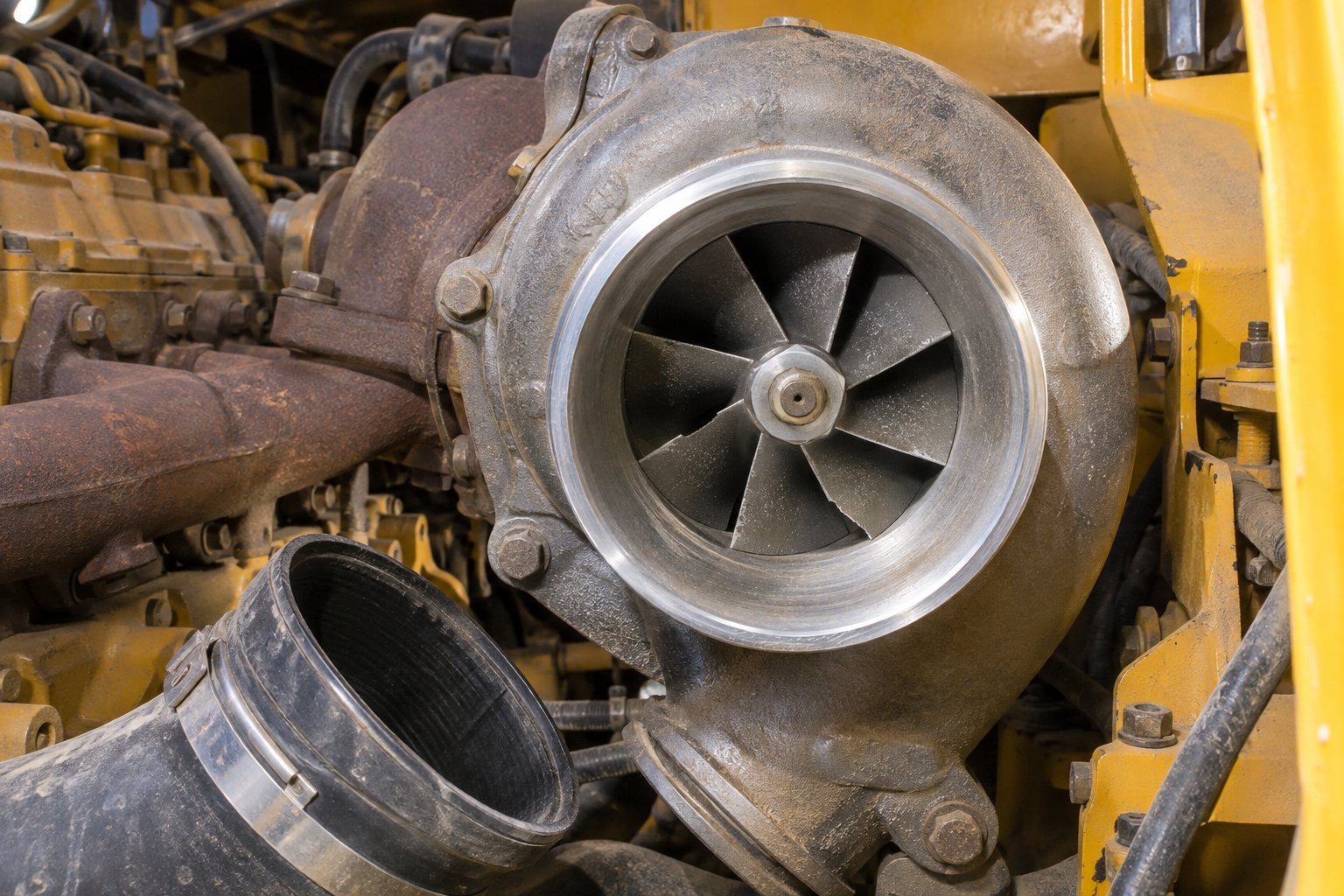
Garrett states that more than 90 percent of turbo failures come from oil starvation or oil contamination, and it names foreign objects as the third main cause. Its guidance is on garrettmotion.com. Excavator duty exposes the turbo to all three: long idle periods, heavy hydraulic load that can come on before the engine is warm, dusty air, and shutdowns right after a hard cycle.
Oil starvation
Starvation means the bearings ran without enough oil. The usual causes are low oil pressure, a blocked or leaking feed line, or a start after service before oil reached the turbo. Putting full hydraulic load on a cold engine is another trigger. Let oil pressure come up and keep the work light until the engine is warm.
Contaminated oil
Carbon is the most common contaminant. Engine wear debris, dirt let in during servicing, a faulty filter bypass and degraded oil follow. The result is scored journals and bearings. Journal bearings in a turbo are bronze, so copper rising on an oil report against your own baseline deserves attention. Use the lab’s limits for your engine and oil.
Hot shutdown and long idle
If you key off right after a heavy digging or lifting cycle, oil sits in a hot center housing and cokes. That is carbon damage, not starvation, and the coke later works into the bearings and the drain. Idle down for the cool-down time given in the machine’s Operation and Maintenance Manual.
Long idling causes a different problem. Oil from long idle shows up at the turbine end first and usually clears once the engine works under load. On its own, it does not prove a failed seal.
Dust and foreign objects
The pipe between the air filter and the compressor inlet is under suction. A crack or loose clamp there cannot leak boost. It pulls unfiltered dust into the compressor, which shows up as pitting on the inlet edges of the blades. Bent or chipped blades mean something solid hit the wheel. Replace the air filter when the restriction indicator calls for it, because a restricted inlet also pulls oil past the compressor-end seal.
Drain and crankcase pressure
Oil leaves the turbo by gravity. A kinked, coked or crushed drain backs oil up in the center housing and pushes it past the seals at both ends. High crankcase pressure from a worn engine has the same effect. Neither one starves the bearings, but both get blamed on the turbo.
Turbos we list for the S200
Listings for the turbo models named in this guide that can be ordered online today. Several part numbers can fit one engine by year and rating, so match the number on your turbo’s tag, or call (909) 824-1020 and we will match it for you.
Symptoms and Checks Before You Condemn the Turbo
| Symptom | Check first | Points to the turbo when |
|---|---|---|
| Low power, black or dark gray smoke | Air filter restriction, charge-air leaks, exhaust leaks before the turbine | Wheel damage, wheel contact with the housing, or in-and-out shaft play you can feel |
| Blue-gray smoke, oil in the charge pipes | Breather, air filter, oil level, drain line (a light oil film from crankcase vapor is normal) | Oil is pooled in the pipes and the items to the left are ruled out |
| Whine or siren under load | Exhaust leaks before the turbine and boost leaks at every joint | A wheel rubs the housing or the blades are bent |
| Oil on the outside of the center section | Feed and drain gaskets and lines | Rarely: this is an external leak, not a seal failure |
| Intake manifold pressure codes | The sensor, its wiring, and the leaks above | The codes appear together with physical damage at the turbo |
Read the C9.3’s codes with Cat Electronic Technician (Cat ET) or a compatible tool. Machine engines do not use OBD-II P-codes. When you check boost under load, compare it with Caterpillar’s test figure for your rating, not a number someone remembers.
With the pipes off, check the shaft. Some side-to-side rock is normal on a journal-bearing turbo with no oil pressure. Axial (in-and-out) play on a journal-bearing unit typically runs 0.001 to 0.004 in, which you will barely feel. In-and-out play you can clearly feel, or a wheel that touches its housing when rocked, condemns the turbo.
Replacing the Turbo on a C9.3 Correctly
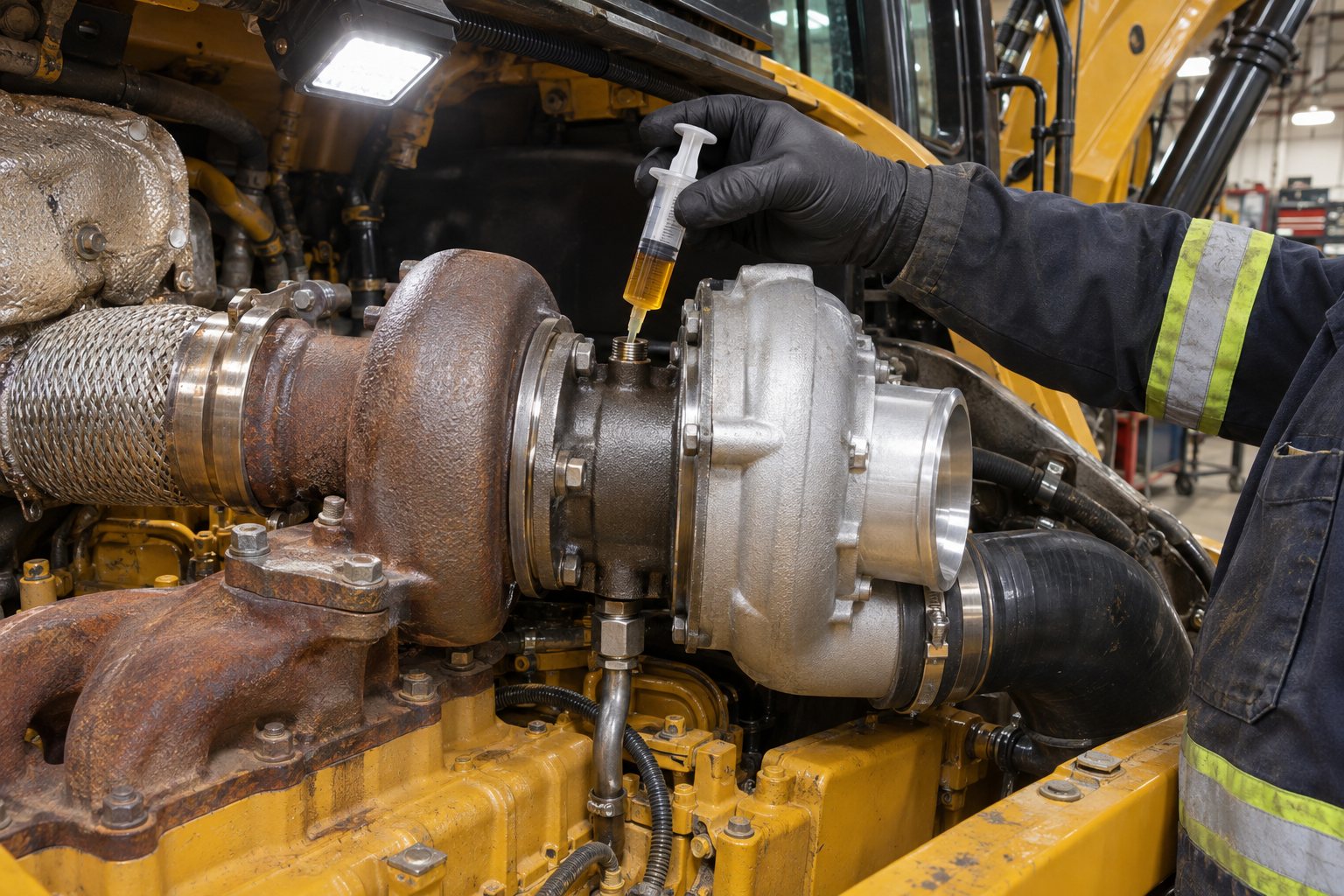
A new or rebuilt turbo fitted to an engine with an uncorrected fault will fail the same way. Work through these steps before and during installation:
- Fix the cause first. Check oil supply and pressure, the air filter and inlet piping, the drain, and crankcase ventilation.
- Fit a new oil feed line after a bearing failure or coked oil. Do not flush and reuse the old one.
- Check the drain. It must run downhill, within about 15 to 20 degrees of straight down, enter the pan above the oil level, and be clear of coke.
- Use new gaskets and put no sealant on the oil inlet or drain gaskets.
- Replace the charge air cooler if the compressor wheel shed metal. MAHLE advises replacement because metal in the fins cannot be flushed out reliably. Clean or replace the charge piping as well.
- Trace turbine damage. Damage on the turbine wheel’s inlet edges means debris came from the engine side. Find the source before the new turbo sees it.
- Handle any actuator by its type. If the tag shows a turbo with an actuator, follow the maker’s procedure. Pneumatic units are tested with a pump. Electronic units are calibrated to the turbo with a service tool, and their arm must never be forced by hand.
Before first start, fill the oil inlet with clean engine oil, about 2 oz (50 to 60 cc) or the supplied syringe, and turn the wheel by hand. Crank 10 to 15 seconds without starting, with fueling disabled by Caterpillar’s service-manual procedure. Then start the engine, idle 3 to 4 minutes per Garrett’s installation guide, and check for oil, exhaust and air leaks before you put it under load. There is no break-in schedule.
C9.3 Turbo Replacement Cost: Rebuild, Remanufactured or New
The turbo is only part of the bill. Other parts that failed with it (feed line, charge air cooler, piping) add to the cost. Labor is the book time for your machine multiplied by your shop’s rate, and every day the 336 sits idle also costs money. The turbo number on the tag sets the parts price, so there is no single figure for every C9.3.
| Option | What you get | Timing | Cost compared with new | Best when |
|---|---|---|---|---|
| Rebuild your turbo | Your core with new bearings, seal rings and thrust parts. VSR balanced, leak tested, visually inspected, actuator or wastegate function checked | Most rebuilds ship in 3 days or less | Lower than new | The housings and wheels can be reused |
| Remanufactured | Tested, flow-tested, with the actuator calibrated before it ships. Core returned within 30 days | Depends on core supply for your number | Lower than new | You need a turbo now and have a good core |
| New | A new unit from the turbo maker | Depends on the listing for your number | Highest of the three | The housings or wheels are damaged, or there is no core |
For a rebuild, we confirm the price after inspection and before any work starts. The turbo rebuild price list shows current rebuild pricing by turbo, and the turbocharger rebuild service page explains how to send your core. To buy a unit, search all turbos or the remanufactured turbochargers by the number on your tag. Current pricing is on the product page, or call (909) 824-1020.
Our warranty runs 12 months. On remanufactured units the customer pays return shipping on the core, and if you need more than 30 days to return it, call ahead and we can usually work with you. Equipment fleets can arrange priority and rush turnaround, or have us stock their common cores, by phone or through Contact PT Turbo.
Frequently Asked Questions
Does the C9.3 in a Cat 336 use twin turbos?
No. The C9.3 runs a single turbocharger, never two in series. Identify yours by the part number on the nameplate, and record the engine serial number as well.
Will a C9 turbo fit a C9.3?
Do not assume it will. The C9 alone is listed with BorgWarner S310 and S200-family turbos depending on the rating, and its 2007-on truck engines used a variable-vane unit. Match the number on the tag of the turbo coming off, or call (909) 824-1020 with the tag number and the Cat part number.
Why is there oil at the exhaust after my 336 idles for a long time?
Oil from long idle appears at the turbine end first and usually clears once the engine works under load. If it persists under load, check the drain line and crankcase pressure before blaming the turbo’s seals.
Need a Turbocharger?
PT Turbo has rebuilt and sold turbochargers since 1978. We stock remanufactured units for Cummins, Duramax, Power Stroke, Detroit Diesel, and more — backed by a 12-month unlimited mileage warranty. Units in stock at our shop in San Bernardino, CA ship the same day when ordered before 2 PM Pacific, Monday through Friday.
📞 (909) 824-1020 · 346 S I St. #3, San Bernardino, CA 92410 · info@ptturbo.com
More From PT Turbo
 Volvo D13 Turbocharger Guide: Holset HE451VE, Symptoms & Replacement Options
- John Deere PowerTech Turbocharger Replacement Guide: 4045, 6068 & 6090 Engines
- Caterpillar C9 Turbocharger Guide: BorgWarner S310 for Machine & Truck Applications
- Mack Pinnacle Turbocharger Guide: MP8 Highway Tractor Applications by Year